In the dynamic realm of digital marketing, a landing page serves as a pivotal standalone web page meticulously crafted to achieve a singular objective: compelling visitors to undertake a specific, predefined action. Stripped of extraneous navigation and distractions, its design ethos revolves around a solitary call-to-action (CTA). The efficacy and structural nuances of a landing page are entirely contingent upon this intended action, ranging from capturing email addresses and selling products to promoting webinars or announcing pre-launch initiatives. Misalignment between the page type and its objective is a primary contributor to underperformance in digital campaigns.
Recent research conducted by AWeber underscores the indispensable role of landing pages, with over 90% of small business owners who utilize them deeming them important or very important to their overarching marketing strategy. The pertinent question for contemporary businesses is not whether to integrate landing pages, but rather discerning which type to deploy and precisely when. Understanding the diverse functionalities and strategic applications of each landing page type is paramount for optimizing conversion rates and maximizing return on investment.
The Foundational Role of Landing Pages in Digital Strategy
Landing pages are more than mere web pages; they are highly specialized tools designed for conversion rate optimization. Unlike a homepage that offers a broad overview of a business, a landing page narrows the focus, eliminating potential exits and guiding the visitor toward one specific outcome. This deliberate design significantly improves the likelihood of a conversion. The strategic deployment of various landing page types reflects a sophisticated understanding of the customer journey, addressing distinct needs and stages of engagement. From initial awareness to final purchase, each type plays a critical role in nurturing prospects and driving business growth.
1. Webinar Landing Page: Driving Event Registrations
A webinar registration page is specifically engineered to promote an upcoming online event and efficiently gather sign-ups. Its core function is to inform prospective attendees about the webinar’s content, presenter(s), schedule, and, crucially, the tangible benefits of participation. Effective webinar pages prioritize the attendee’s potential transformation or learning outcome over the presenter’s credentials. For instance, a headline like "Unlock the Secrets to Your First Email Automation in 60 Minutes" resonates more powerfully than a mere speaker biography. Presenter credentials, while valuable for credibility, are strategically placed after the primary value proposition has been established.
Why it Works: Attendees register for webinars driven by the expected outcome and the solutions they seek. A page that leads with the transformative value directly addresses the visitor’s fundamental question: "What’s in it for me?" This outcome-oriented approach significantly enhances conversion rates.
When to Use It: Essential for promoting live or recorded webinars, requiring a dedicated page to funnel registrations. It’s also a crucial component in a broader webinar promotion strategy that includes email marketing and social media outreach.
2. Ebook Landing Page: Leveraging Content for Lead Generation
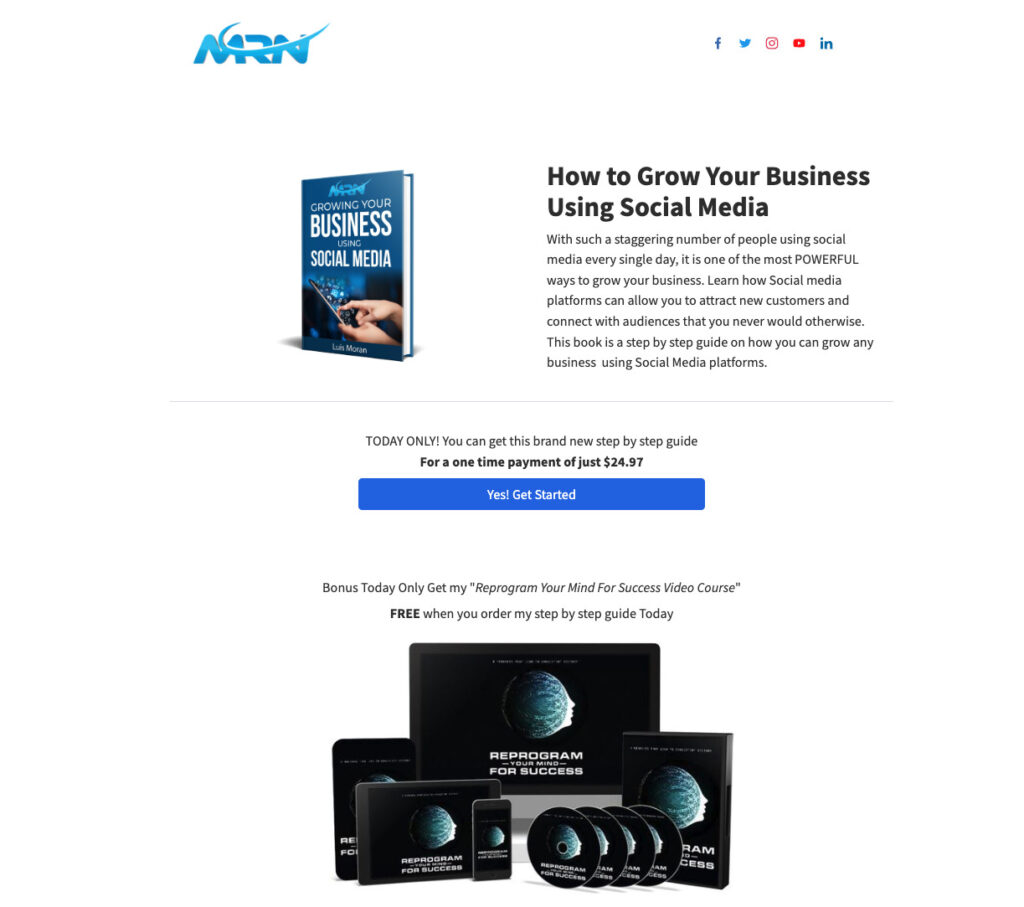
An ebook landing page is a specialized destination created to promote and facilitate the download or purchase of an electronic book. It serves as a comprehensive hub where visitors can explore the ebook’s content, understand its benefits, and proceed with acquisition. This type of page has gained immense popularity among aspiring entrepreneurs seeking to monetize their expertise by selling ebooks online, circumventing traditional publishing models.

Why it Works: Ebooks function exceptionally well as "lead magnets," offering substantial value in exchange for contact information. They establish authority, provide in-depth information, and can significantly grow an email list by attracting individuals genuinely interested in the topic. The perceived value of an ebook makes the exchange of an email address a fair and appealing transaction.
When to Use It: Ideal for content marketers, authors, and businesses looking to generate leads, build an email list, or directly sell digital products. It’s particularly effective when offering valuable, niche-specific content that addresses a target audience’s pain points.
3. Ecommerce Landing Page: Targeted Product Sales
Distinct from a general product catalog, an ecommerce landing page is meticulously designed to spotlight a specific product or a narrow category. Its primary purpose is to convert traffic originating from a single, targeted source, such as a paid advertisement. A dedicated ecommerce landing page, when paired with a relevant ad, consistently outperforms ads directing traffic to a generic homepage or broader shop page in terms of conversion rates. These pages typically feature high-quality product images, transparent pricing, a prominent call-to-action (CTA), social proof (reviews, testimonials), and concise answers to common purchase-related queries.
Why it Works: The focused nature of an ecommerce landing page eliminates decision fatigue by presenting visitors with one product, one offer, and one clear action. This singularity of purpose is a key driver of higher conversion rates compared to pages offering too many choices.
When to Use It: Indispensable when running paid advertising campaigns to sell a specific product, or when a marketing campaign requires a bespoke page that aligns perfectly with its unique messaging, rather than relying on a generic store page.
4. Lead Magnet Landing Page: Value-Driven List Building
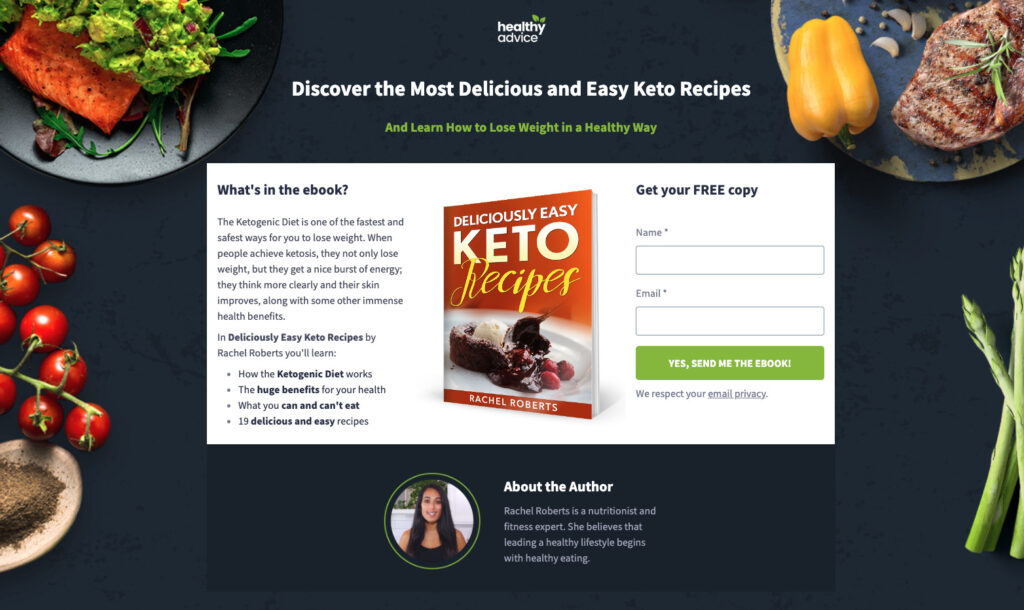
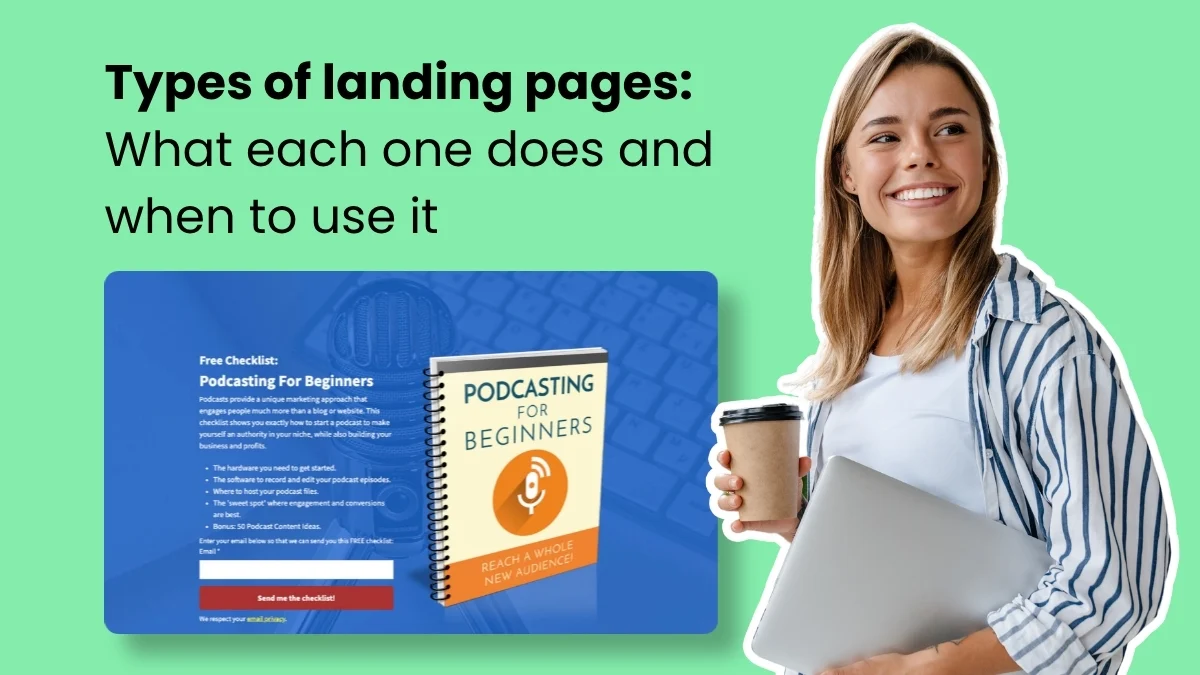
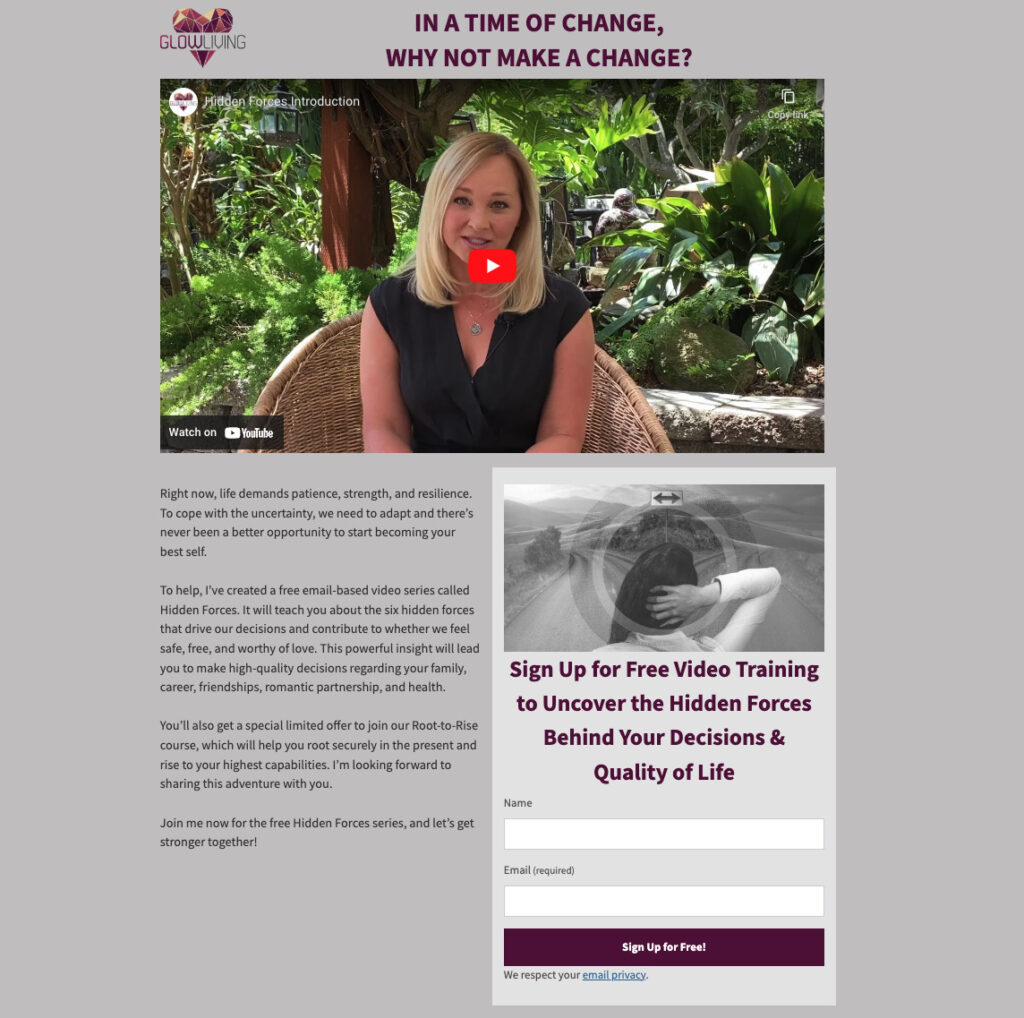
A lead magnet landing page offers a valuable resource—such as an ebook, template, checklist, free course, or toolkit—in direct exchange for a visitor’s email address. Unlike basic lead capture pages, the intrinsic value of the content itself is the primary draw. A compelling lead magnet page emphasizes the immediate outcome or solution the visitor will gain from the resource, rather than focusing on the brand behind it.
Why it Works: The effectiveness of a lead magnet page stems from the perceived value of the offer. When the resource directly addresses a current problem or need of the audience, providing an email address feels like a fair and worthwhile exchange. The page’s role is to highlight the resource’s benefits, not to sell the brand directly.
When to Use It: Optimal when a business has created a high-value resource that genuinely appeals to its target audience. Lead magnets are among the most rapid and efficient methods for building a highly engaged email list of individuals already predisposed to a specific topic or solution.
5. Squeeze Page: Minimalist Email Capture
A squeeze page represents a streamlined, highly minimalist lead capture page. Its sole function is to acquire an email address, devoid of extensive descriptions or detailed benefit lists. Typically, it comprises a concise headline, one or two sentences of compelling copy, an email input field, and a clear call-to-action button. Squeeze pages differentiate themselves from standard lead capture pages by exclusively requesting an email address, minimizing friction and decision fatigue for the visitor.
Why it Works: The minimalist design of a squeeze page removes nearly all reasons for hesitation. With only one action and one field, visitors are left with a simple choice: opt-in or exit. This extreme simplicity is particularly effective in keeping the cost per lead low when utilizing paid traffic sources.
When to Use It: Primarily employed when running paid advertisements where maintaining a low cost per lead is crucial. It is also highly effective for capturing emails from a warm audience already familiar with the brand, who require minimal convincing.
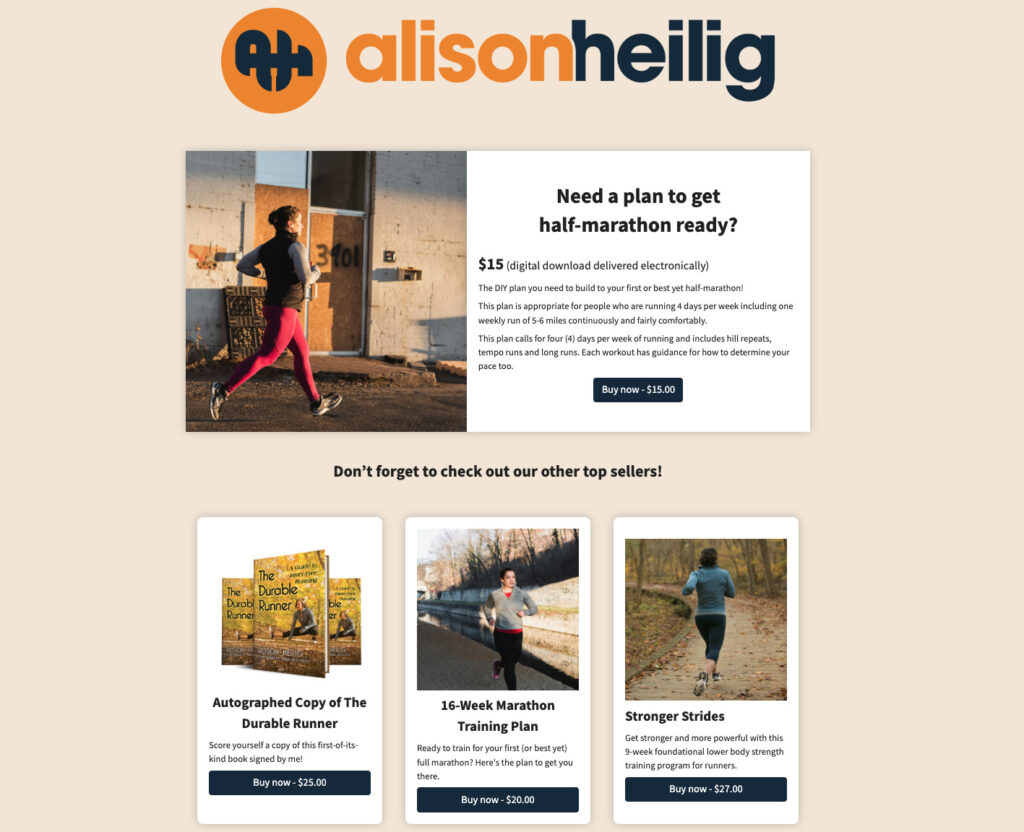
6. Podcast Landing Page: Cultivating Direct Audience Relationships
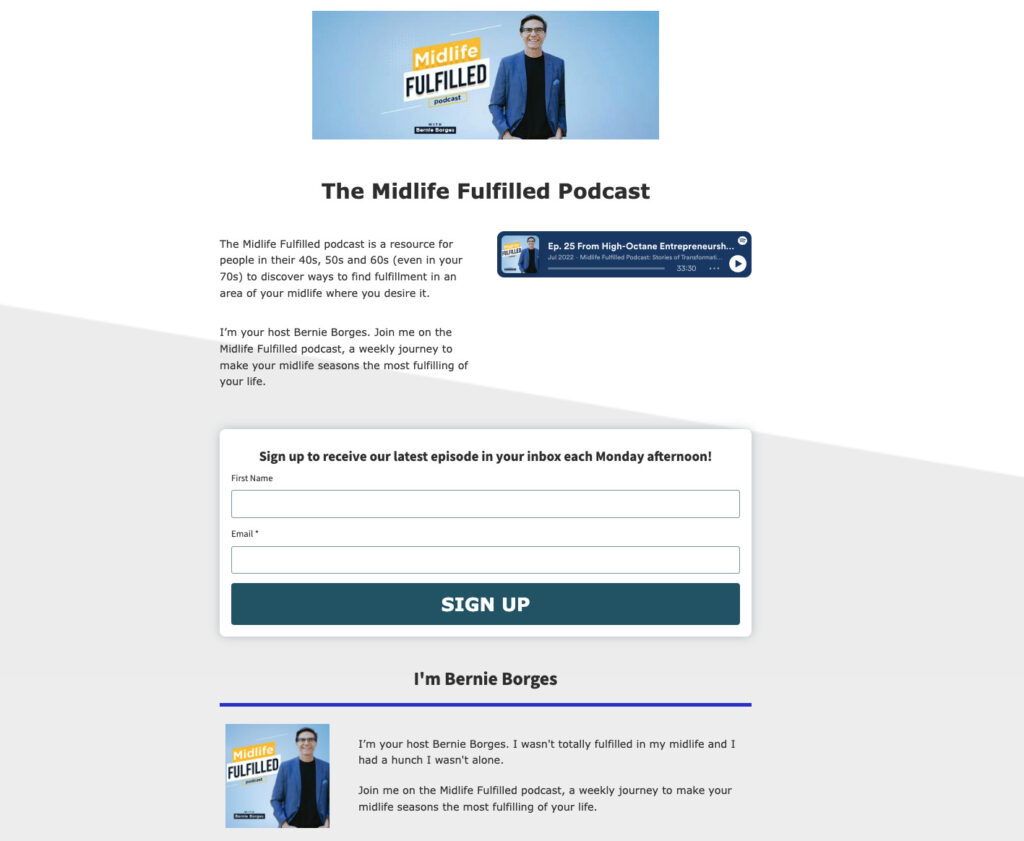
A podcast landing page is designed to promote a specific show or episode, providing listeners with a clear pathway to subscribe or join an email list for updates. The importance of migrating podcast listeners onto an email list cannot be overstated, as streaming platforms retain control over content distribution and audience access. An email list offers a direct, algorithm-independent channel to communicate with listeners.
Why it Works: This page type enables a critical transition: converting a platform-dependent listener into an owned subscriber. Once on an email list, creators can directly notify listeners about new episodes, share exclusive bonus content, promote merchandise or services, and engage without being subject to platform algorithms or notification limitations.
When to Use It: Essential for podcasters focused on audience growth and building a direct relationship beyond the confines of streaming platforms. It safeguards against changes in platform policies and ensures consistent audience engagement.
7. PPC Landing Page: Maximizing Paid Search ROI
A PPC (pay-per-click) landing page is custom-built for traffic originating from paid search campaigns. Its design is hyper-focused on achieving "message match" with the exact keyword or advertisement that prompted the visitor’s click. Discrepancy between the ad’s promise and the landing page’s content, such as an ad for "email newsletters for restaurants" leading to a generic email marketing page, invariably results in high bounce rates. Google’s Quality Score system heavily rewards this message alignment, leading to lower cost-per-click and improved ad rankings.
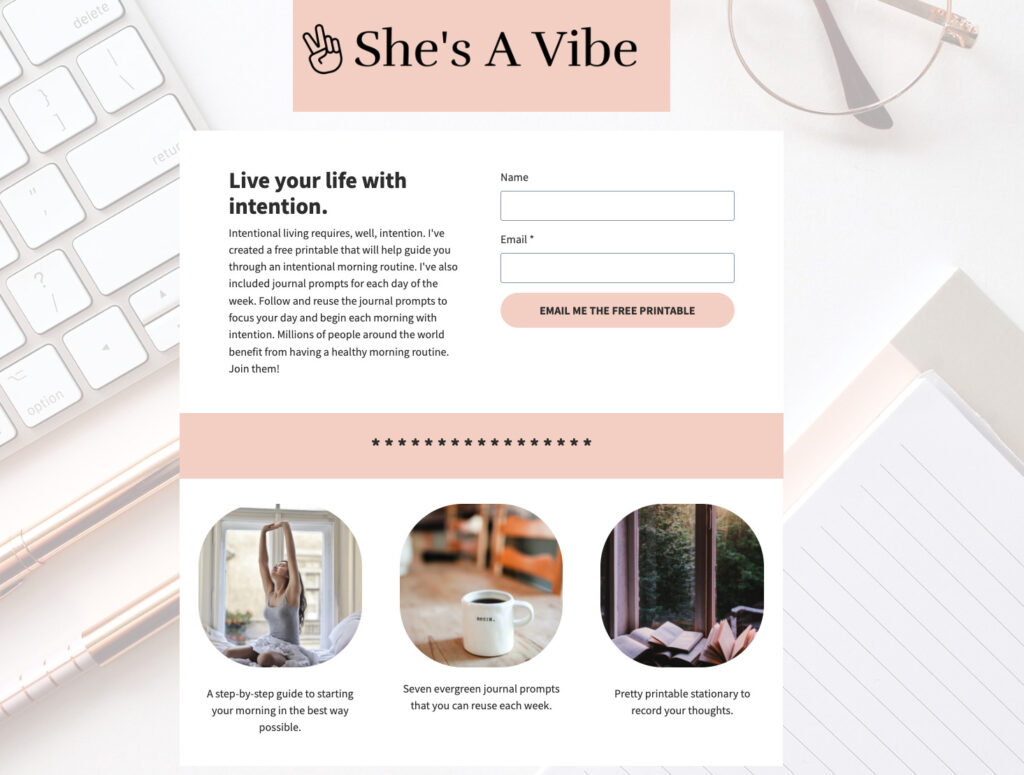
Why it Works: Given the inherent cost of paid traffic, every visitor landing on an irrelevant page represents wasted ad spend. A meticulously crafted PPC landing page protects this investment by delivering precisely what the ad promised. This direct relevance significantly boosts conversion rates and simultaneously enhances the ad’s Quality Score, optimizing campaign performance.
When to Use It: Mandatory for every paid search advertising campaign. Ideally, each ad group or distinct keyword theme should be linked to its own dedicated landing page, rather than a shared homepage, to maximize relevance and conversion.
8. Thank You Page: Optimizing Post-Conversion Engagement
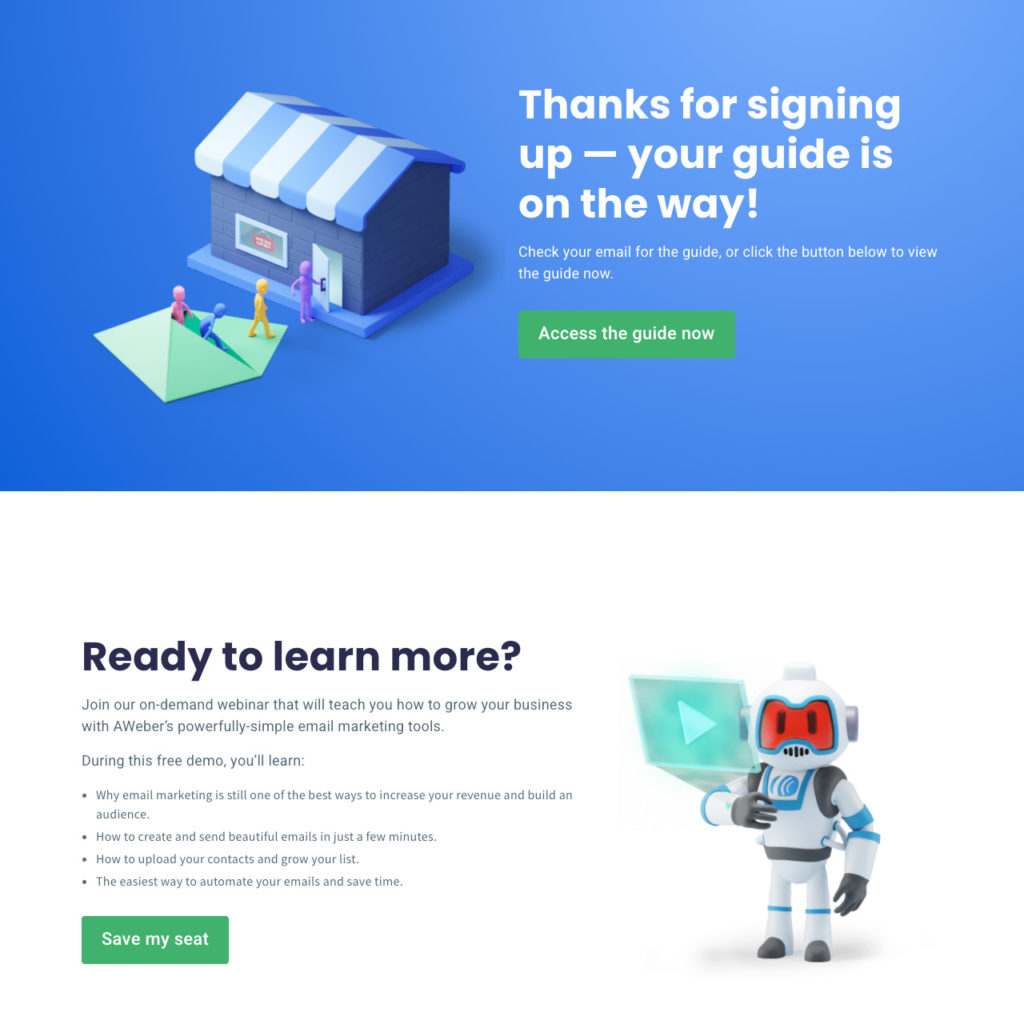
A thank you page appears immediately after a visitor completes a desired conversion—be it a sign-up, a download, or a purchase. Its primary roles are to confirm the successful action and to clearly outline the next steps. Often underutilized, a thank you page presents a unique opportunity to engage a visitor at their peak level of commitment.
Why it Works: The thank you page captures a visitor at their highest point of engagement. Having just completed an action, they are "bought in," and this momentum can be leveraged. A well-designed thank you page can transform a single conversion into a secondary one, offering an upsell, a cross-sell, an invitation to follow on social media, or a prompt to book a consultation.
When to Use It: Should be implemented after every form submission, purchase, or sign-up. Each conversion event should direct users to a customized thank you page that extends the customer journey rather than terminating it.
9. Video Landing Page: Enhancing Engagement Through Visuals
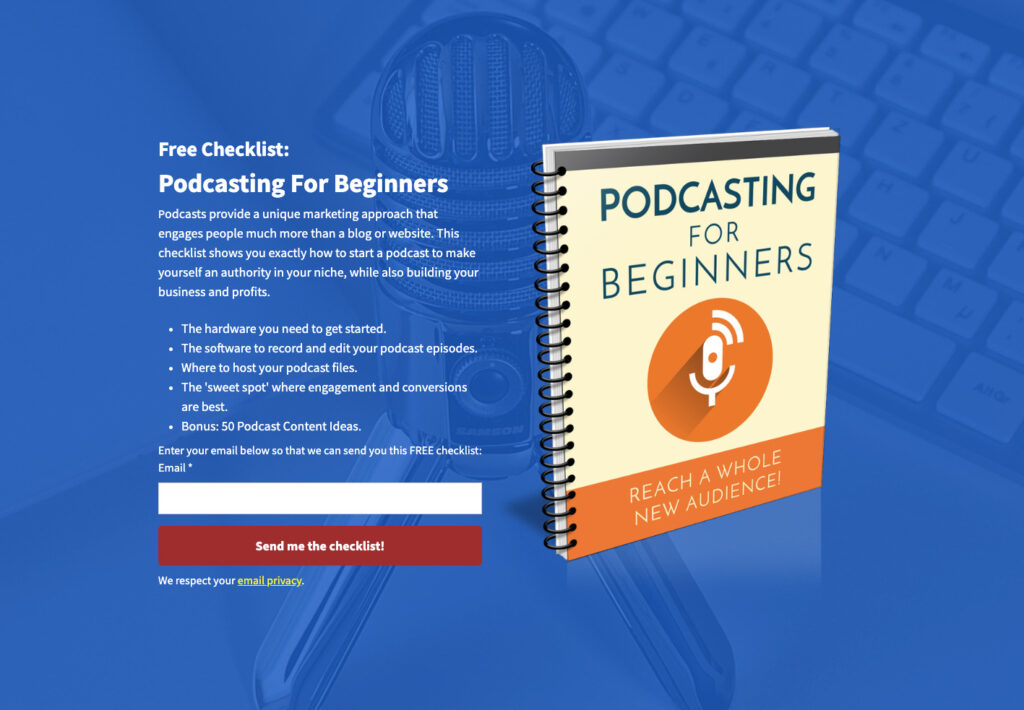
A video landing page utilizes video as the principal medium to convey its message. This video might take the form of a product demonstration, a customer testimonial reel, or a concise explainer. While supporting text is present, it serves to complement and reinforce the video’s core message rather than replacing it.
Why it Works: Visual demonstrations inherently reduce hesitation in a way that static text often cannot. Video fosters trust more rapidly, particularly for complex offers, high-ticket items, or products/services that heavily rely on personality and credibility. A two-minute video demonstration can impart a deeper understanding of a product than several paragraphs of written copy, leading to higher engagement and conversion rates.
When to Use It: Ideal when the offer is inherently visual, when the target audience demonstrates a preference for video content, or when the objective is to establish a strong personal connection before requesting a conversion.
10. Link-in-Bio Landing Page: Social Media Hub
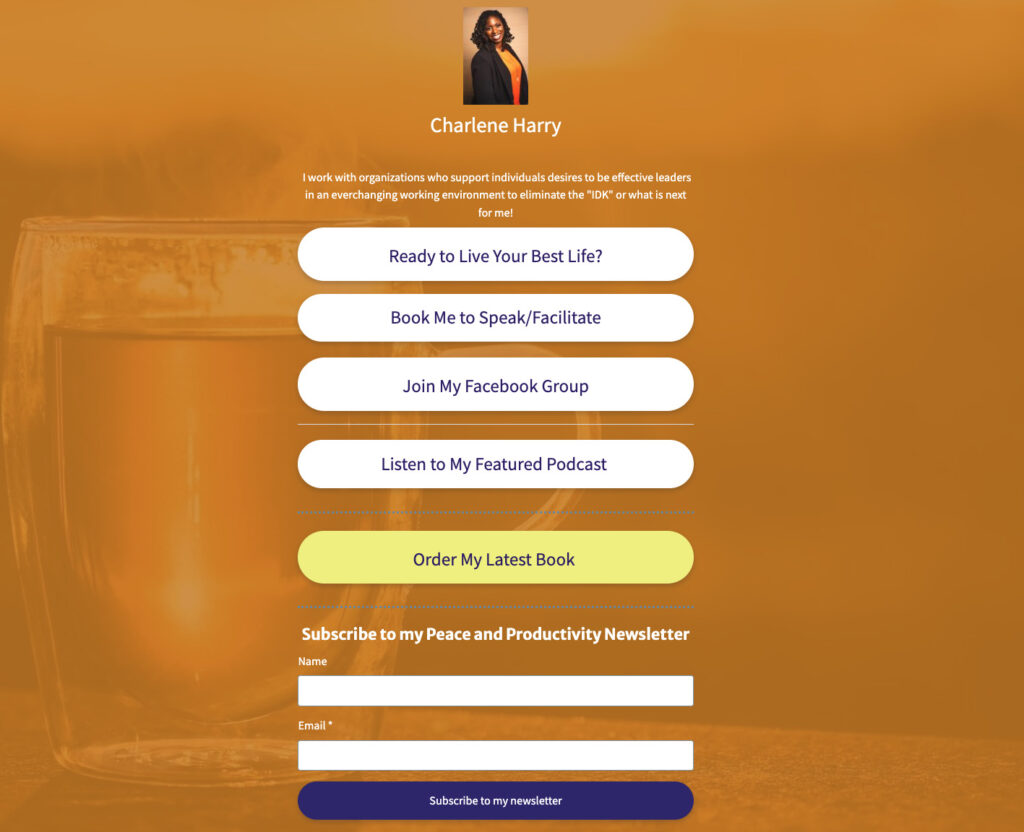
A link-in-bio page is a singular, consolidated web page designed to host multiple links. Given that most social media platforms restrict profiles to a single clickable link, this page type ingeniously solves the limitation by acting as a central hub. From one URL, it can direct followers to a newsletter sign-up, product catalog, latest content, booking page, or any other important destination.
Why it Works: Social media platforms offer vast reach but impose limitations on external navigation. A link-in-bio page removes this constraint, allowing businesses to present a comprehensive array of options. Instead of choosing one link, followers gain access to all desired destinations, maximizing the value derived from social media engagement.
When to Use It: Indispensable for individuals and businesses actively engaged on platforms like Instagram, TikTok, or X (formerly Twitter), providing a single, efficient destination for followers to explore and take action.
11. Pre-Launch Landing Page: Validating Demand and Building Anticipation
A pre-launch landing page is strategically deployed to cultivate interest and anticipation before a new product, service, or feature officially goes live. Its dual purpose is to collect email addresses from individuals eager for launch notifications and to serve as a crucial tool for testing market demand before significant resource allocation.
Why it Works: This page type achieves two critical objectives simultaneously: it builds a highly interested audience for launch day and validates the underlying idea before full investment. Generating sign-ups pre-product indicates genuine market desire, providing invaluable early evidence of viability. Conversely, slow sign-up rates offer crucial feedback, potentially saving resources from a less promising venture.
When to Use It: Essential before any significant product or service launch. A pre-launch page converts initial interest into a dedicated list that can be directly activated on day one, ensuring a strong start.
12. Facebook Landing Page: Converting Social Engagement to Owned Audience
A Facebook landing page is specifically optimized for traffic originating from Facebook ads or a Facebook profile. Its core objective is to convert social media followers into valuable email subscribers or direct buyers. The imperative here stems from the fact that businesses do not own their Facebook audience; the platform dictates content visibility and can alter algorithms at will. Transitioning followers to an email list establishes a direct, algorithm-proof communication channel.
Why it Works: Facebook reach is essentially "rented," while an email list represents an "owned" asset. A Facebook landing page acts as the vital bridge between these two. Every follower who converts to a subscriber becomes a direct contact, irrespective of future platform changes, transforming transient social engagement into a durable audience asset.
When to Use It: Crucial when running Facebook advertising campaigns or when the strategic goal is to convert a social media following into a controlled, direct subscriber list.
13. Lead Capture Landing Page: The Cornerstone of List Building
A lead capture landing page is fundamentally designed to collect contact information, typically an email address, in exchange for a valuable resource. This resource could be a free guide, a checklist, a discount code, or exclusive access to a webinar. The visitor receives immediate value, and in return, the business gains a new lead.
Why it Works: This page type facilitates a direct and clear value exchange. It focuses on the initial step of relationship building rather than an immediate sale. By asking for minimal information (often just name and email), it reduces friction and typically yields higher conversion rates.
When to Use It: When the primary objective is to expand an email list. Lead capture pages are consistently recognized as one of the most reliable and effective tools for list building across small businesses, laying the groundwork for future marketing initiatives.
14. Click-Through Landing Page: Nurturing Cold Traffic for High-Value Conversions
A click-through landing page does not demand immediate action or contact information. Its sole purpose is to educate and "warm up" a visitor, preparing them to click through to a subsequent purchase or sign-up page. Devoid of forms or transaction elements, it focuses purely on providing information designed to build confidence and understanding before the next, higher-commitment step. These pages often sit between an initial advertisement and a final checkout page, offering free trials, product walkthroughs, or detailed feature comparisons.
Why it Works: Cold traffic rarely converts directly on a high-commitment purchase page. A click-through page provides an essential intermediary step, allowing visitors to thoroughly understand an offer without the pressure of an immediate decision. By the time they reach the final conversion page, they are already pre-qualified and more invested, significantly improving the conversion rate for complex or high-value offers.
When to Use It: Ideal when an offer requires extensive explanation before a prospect is ready to commit. If paid traffic yields high drop-off rates on direct purchase pages, a click-through page can effectively bridge that engagement gap, guiding visitors through a more gradual decision-making process.
Strategic Imperatives: Why Specificity Drives Success
The proliferation of landing page types underscores a fundamental principle in modern digital marketing: specificity. In an increasingly crowded digital landscape, generic approaches yield diminishing returns. Each landing page type is a specialized instrument, tuned to a particular stage of the customer journey and designed for a precise conversion goal. The strategic imperative for businesses is to precisely align their marketing objective with the appropriate landing page type. Attempting to achieve multiple, disparate goals on a single page is the most common pitfall, diluting focus and significantly impairing conversion performance.
Choosing the Right Landing Page Type
The selection of the appropriate landing page type flows directly from the primary marketing objective.
- For Email Subscribers: Opt for a lead capture page, squeeze page, or lead magnet page.
- For Warming Up Cold Traffic: A click-through page is ideal before a high-commitment purchase.
- For Direct Sales: A sales page is suitable for high-ticket offers, while an ecommerce page is best for specific products.
- For Event Promotion: Utilize a webinar registration page or a pre-launch page.
- For Paid Search Campaigns: A dedicated PPC landing page is crucial for message match.
The overarching principle remains: focus on one clear goal and build one page specifically for that objective. This targeted approach is the bedrock of effective digital conversion.
The Future of Landing Page Optimization: AI Integration
The evolution of digital marketing tools continues to accelerate, with Artificial Intelligence (AI) poised to revolutionize landing page creation and optimization. Platforms like AWeber are at the forefront, developing AI Landing Page Builders that transform the process from idea to live deployment. Instead of relying on predefined templates, users can describe their desired page—including layout, copy, images, and signup forms—and the AI constructs the entire page. This capability extends to every type of landing page, from lead magnets for checklists to webinar registration pages and pre-launch initiatives. Furthermore, AI tools enable seamless recreation of existing pages from screenshots, complete with branding and offers, and even facilitate direct image editing through natural language commands, eliminating time-consuming stock photo searches or redesign efforts. This marks a significant leap towards democratizing high-performance landing page design, making sophisticated conversion tools accessible to businesses of all sizes.
Frequently Asked Questions About Types of Landing Pages
What is the most common type of landing page?
Lead capture landing pages are the most prevalent. They are designed to collect a visitor’s contact information, typically in exchange for a valuable free resource or offer. Given the relatively low commitment required for conversion compared to a direct purchase, lead capture pages generally achieve higher conversion rates and are widely adopted across virtually every industry and business model.
What is the difference between a squeeze page and a lead capture page?
While both squeeze pages and lead capture pages aim to collect email addresses, they differ significantly in their length and complexity. A standard lead capture page includes more detailed elements such as a compelling headline, a description of benefits, a visual representation of the offer, and a form with multiple fields. In contrast, a squeeze page is intentionally stripped to its absolute minimum: a headline, one or two concise sentences of copy, an email input field, and a button. Squeeze pages are predominantly used in conjunction with paid traffic campaigns where their brevity helps to minimize friction and keep the cost per lead as low as possible.
What types of landing pages work best for building an email list?
The three most effective types for robust email list building are squeeze pages, lead capture pages, and lead magnet pages. Squeeze pages are highly effective for paid traffic due to their low commitment requirement, which helps reduce the cost per lead. Lead capture pages are versatile and perform well across both paid and organic traffic sources. Lead magnet pages are particularly potent when a business possesses a specific, valuable resource—such as a checklist, ebook, or template—that resonates strongly with and is actively desired by its target audience.

 Laily UPN
 Basiran