Siti Muinah
The landscape of digital optimization is undergoing a fundamental shift as organizations move beyond manual A/B testing toward the implementation of autonomous experimentation loops. This evolution, driven by the integration of agentic AI and robust experimentation frameworks like Convert Experiences, allows growth teams to act on test results with unprecedented speed and precision. By utilizing a scheduled agent that reviews every experiment in an account, these loops identify critical issues—such as flags stuck at partial allocation or goals that cease firing—that are frequently overlooked during manual reviews. This transition from human-led monitoring to autonomous execution marks a significant milestone in the field of growth engineering, promising to redefine how software features are validated and deployed at scale.
The Emergence of Loop Engineering
The concept of "loop engineering" gained significant traction following insights from Peter Steinberger, founder of OpenClaw, who posited that the next frontier of productivity lies not in prompting AI agents manually, but in designing autonomous loops that prompt the agents themselves. This philosophy was further codified by Addy Osmani, Director of AI at Google Cloud, who defined loop engineering as the process of "replacing yourself as the person who prompts the agent."
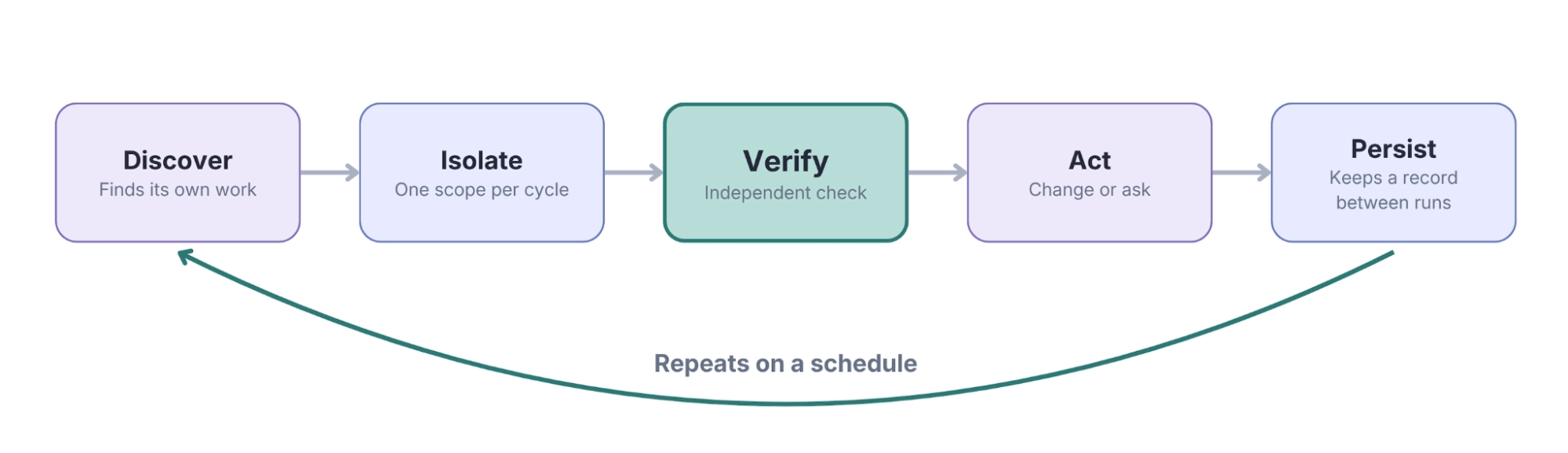
Osmani’s framework identifies five core components essential for successful autonomous systems: automations, worktrees, skills, connectors, and subagents. In the context of digital experimentation, these components translate into a continuous cycle of discovery and action. The primary advantage of this approach is the removal of human latency. In a traditional setup, an experiment might reach statistical significance on a Friday evening, but no action is taken until a human analyst reviews the dashboard on Monday morning. An autonomous loop, by contrast, can detect the result and initiate a rollout or a pause within minutes, significantly increasing the "velocity of learning" within an organization.

Technical Foundations: SDK Integration and the MCP Server
Building an autonomous experimentation loop requires a sophisticated technical stack that bridges the gap between backend code and AI intelligence. At the heart of this architecture is the Model Context Protocol (MCP) server, which provides a standardized way for AI agents, such as Claude, to interact with experimentation data.
Convert Experiences facilitates this through two primary connection methods. The first is a hosted connector designed for interactive chat sessions, which is ideal for manual inquiries. However, for true background automation, engineers increasingly rely on the local MCP server. This version authenticates via an Application ID and Secret Key, signing requests dynamically. Unlike hosted versions that require human re-authentication every 30 days, the local server allows for "set-and-forget" automation, ensuring the loop remains active indefinitely.
The loop interacts with the application through various SDKs, including JavaScript/TypeScript for server-rendered apps, Python for Django or FastAPI services, and PHP for Laravel or WordPress environments. These SDKs share a unified model for flags, rollouts, targeting, and bucketing, ensuring that the autonomous agent can interpret data consistently across different parts of a technology stack.
The Five Stages of the Autonomous Cycle
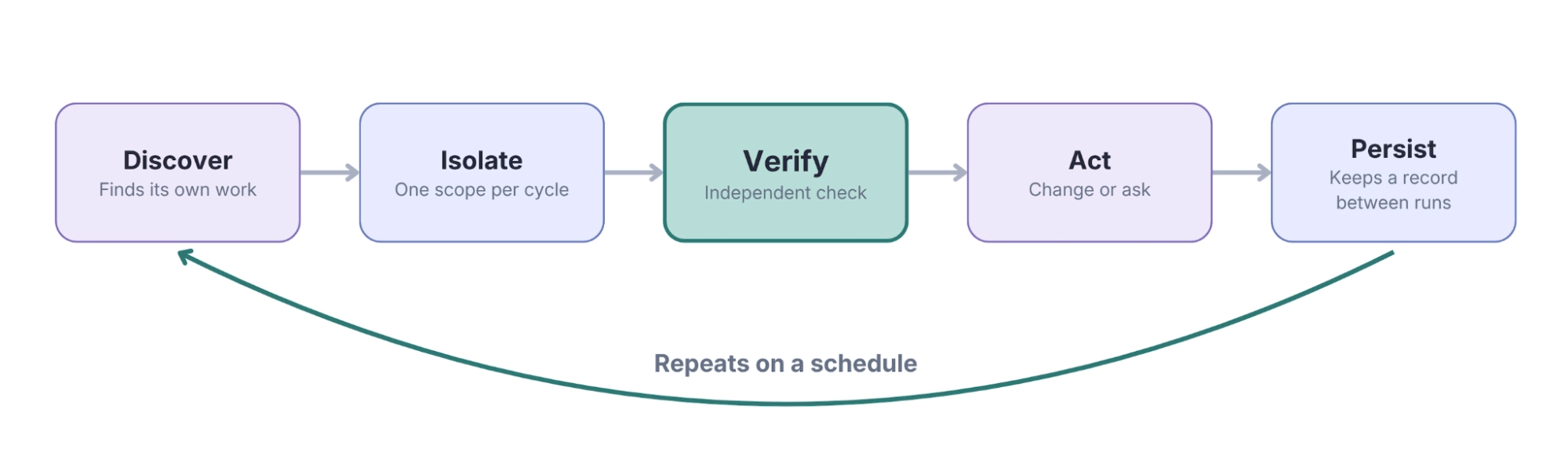
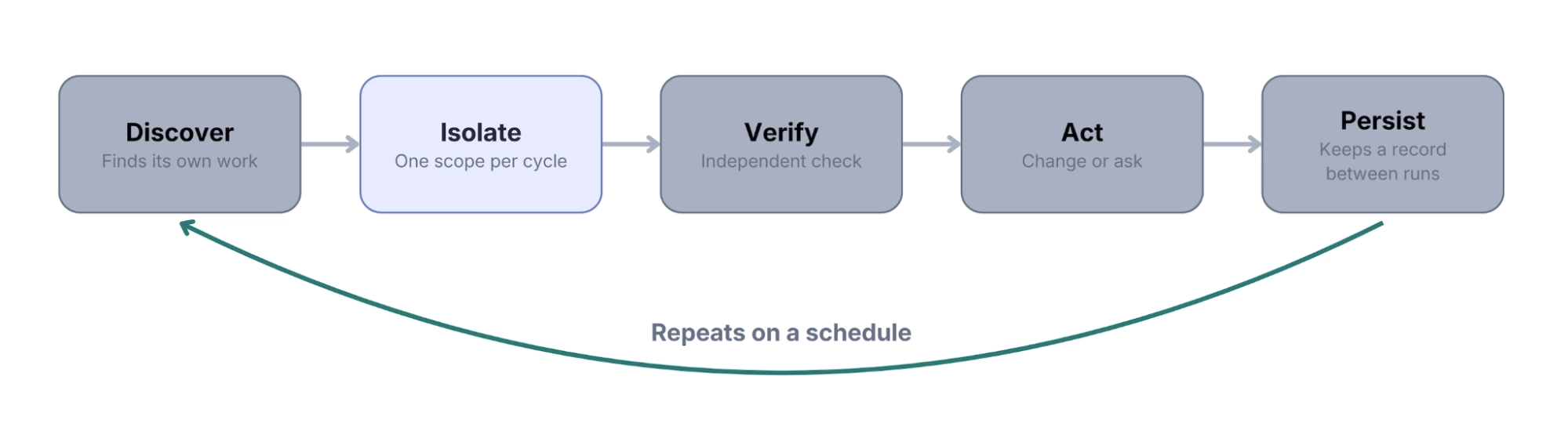
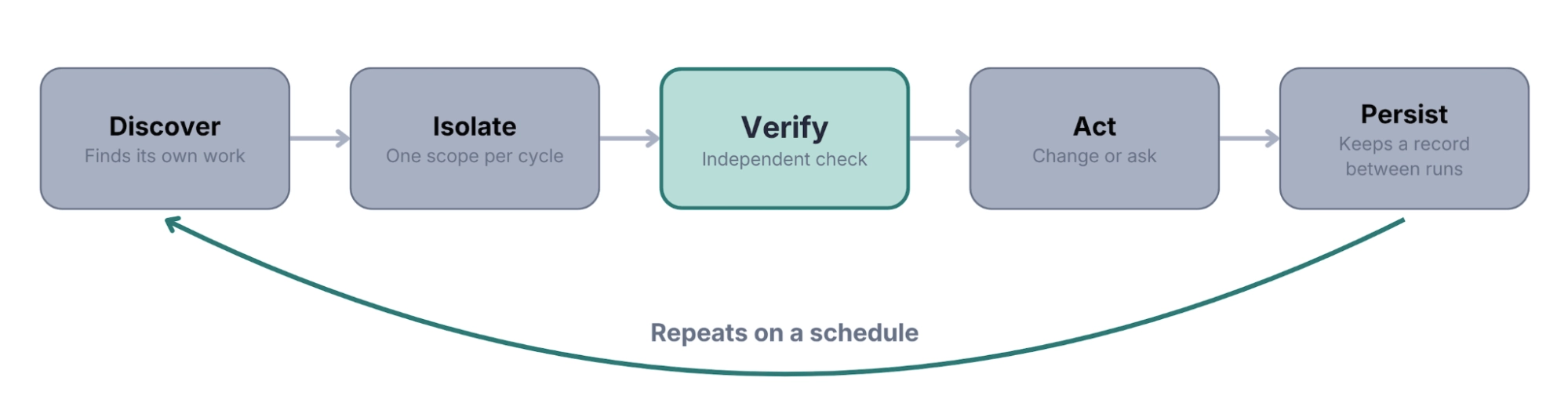
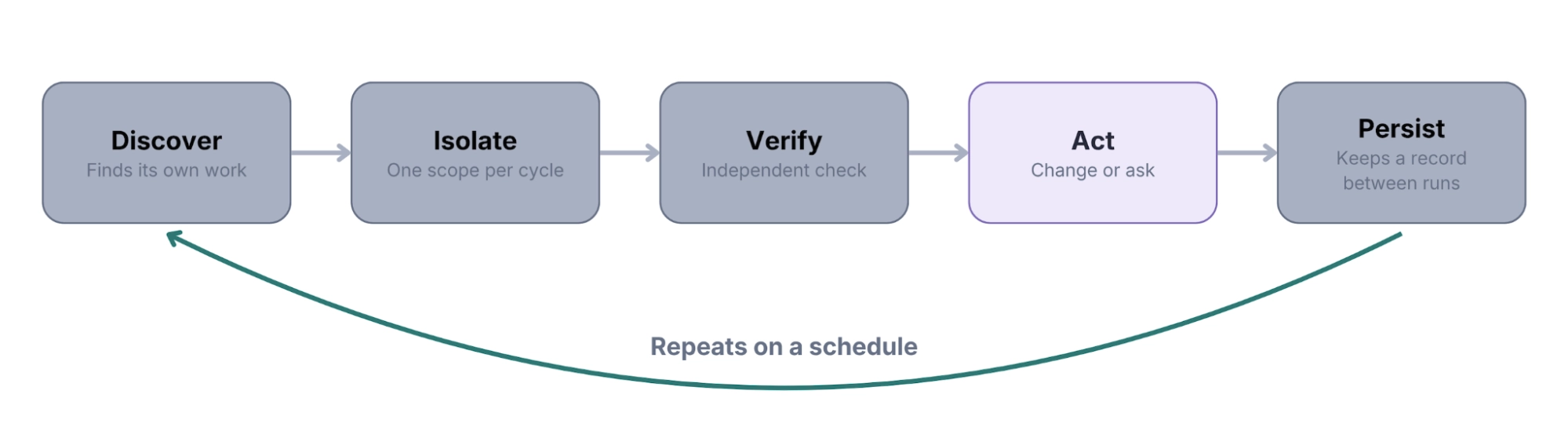
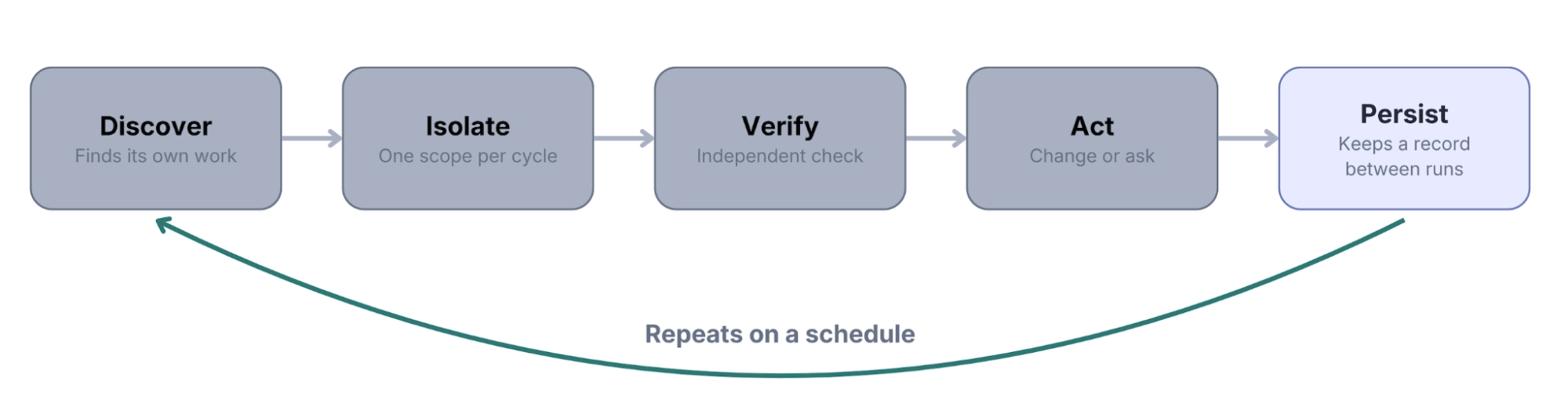
A functional experimentation loop operates through five distinct stages, each mirroring a traditional step in the scientific method but executed with algorithmic speed.
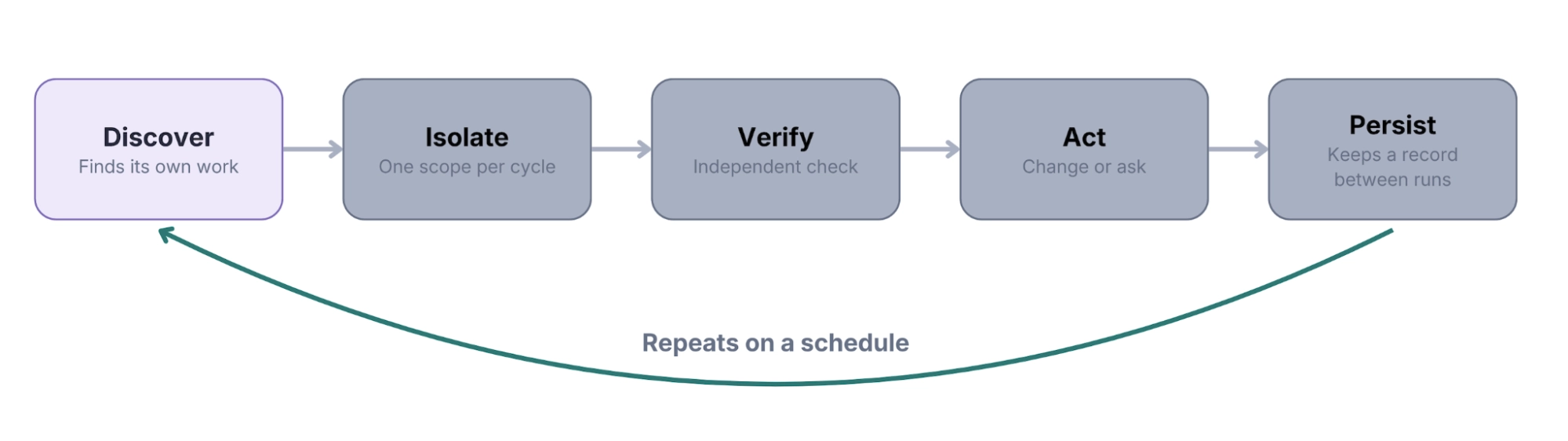
1. Discover: Identifying the Workload
In the discovery phase, the agent queries the account to find live experiments requiring attention. This is not merely a status check; the agent evaluates experiments based on runtime, traffic allocation, and goal activity. Critical to this stage is the identification of "silent failures," such as Sample Ratio Mismatches (SRM) or goals that have stopped recording data. By automating this, teams ensure that no experiment runs on "dirty data" for longer than a single loop cycle.
2. Isolate: Preventing Contamination
Isolation is the experimentation equivalent of "worktrees" in software development. To ensure valid results, the loop must prevent overlapping changes from contaminating data. If two agents or two different processes attempt to modify the same feature flag simultaneously, the resulting data becomes unusable. The isolation stage enforces boundaries, ensuring that the loop waits for previous changes to propagate before initiating new ones.
3. Verify: The Maker-Checker Principle
A critical rule in loop engineering is that the model writing the code or making the decision cannot be the one grading its own work. As Osmani noted, AI models are often "too nice" when evaluating their own outputs. Effective loops utilize a separate, often smaller or more specialized model to perform verification. This stage checks for statistical validity and ensures that the experiment’s guardrail metrics—such as page load time or error rates—have not been negatively impacted.
4. Act: Executing Decisions Within Limits
Once a result is verified, the agent takes action based on pre-defined permissions. This might include pausing an underperforming variation, archiving a completed test, or ramping up traffic for a successful feature rollout. Crucially, the "permission dial" must be finely tuned. While an agent may have the technical capability to delete an experiment, organizational safety protocols usually restrict autonomous actions to non-destructive changes, such as traffic adjustments.
5. Persist: Maintaining Institutional Memory
Because AI agents typically start each cycle with no memory of the previous one, the "persist" stage is vital. The loop records its actions in an external state—such as a database, a spreadsheet, or the platform’s internal change history. This ensures that human operators can audit the agent’s decisions and that the agent itself can understand the context of its previous actions when it begins the next cycle.
Statistical Rigor and the Danger of Continuous Monitoring
One of the most significant risks in autonomous experimentation is the "peeking problem." In standard fixed-horizon testing, statistical validity assumes that results are evaluated only once, after a pre-calculated sample size is reached. If an autonomous loop checks a test every hour and is programmed to act on "significance," the probability of a false positive increases dramatically. Every check is another opportunity for random noise to cross the significance threshold.
To mitigate this, growth engineers are increasingly adopting Sequential Testing. Unlike traditional methods, sequential testing (specifically using Asymptotic Confidence Sequences) is designed for continuous monitoring. It adjusts the confidence intervals in real-time, allowing an agent to stop a test early if a result is overwhelmingly positive or negative, without inflating the false positive rate. Without sequential testing, an autonomous loop can inadvertently become a "noise-hunting machine," shipping features that have no real impact on the business.
Safety Protocols and Human-in-the-Loop Governance
Despite the autonomy of the loop, human oversight remains a non-negotiable component of enterprise-grade systems. Convert Experiences utilizes a Request Approval System to act as a governance layer. When an agent proposes a high-stakes change—such as activating a new feature for 100% of users—the system can be configured to "gate" that change until a human reviewer provides consent.
Security experts emphasize that the credentials used by the loop are the primary safety control. If an agent is granted "Account Owner" status, it can bypass approval rules by design. Therefore, best practices dictate that agents should operate under a limited-access role. This ensures that the loop can perform its routine discovery and monitoring tasks autonomously but must submit a request for any action that exceeds its specific permission set.
Analysis of Implications for Growth Teams
The shift toward autonomous loops represents a reallocation of human capital. Rather than spending hours each week performing manual data "sanity checks" and adjusting traffic sliders, growth engineers and data scientists can focus on higher-order tasks: hypothesis generation, complex qualitative research, and the strategic design of the experimentation program.

Furthermore, the "always-on" nature of these loops provides a safety net for the entire digital experience. In a traditional environment, a broken tracking pixel might go unnoticed for days, resulting in a total loss of experiment data. An autonomous loop, running on a four or six-hour cadence, would detect the drop in conversion events almost immediately, pause the experiment, and alert the engineering team, thereby preserving the integrity of the broader optimization roadmap.
Conclusion and Future Outlook
As we look toward the latter half of the decade, the integration of AI agents into the experimentation lifecycle will likely become the industry standard for high-velocity companies. The transition from "experimentation as a task" to "experimentation as a loop" allows for a more resilient, responsive, and data-driven product development process.

However, the success of these systems depends entirely on the rigor of their construction. Organizations must prioritize statistical safeguards like sequential testing and architectural safeguards like the maker-checker principle. By building autonomous loops that are both empowered to act and constrained by logical boundaries, businesses can achieve a level of optimization at scale that was previously impossible for human teams alone. The future of growth is not just about testing more ideas, but about building the systems that allow those ideas to be validated and deployed with clinical efficiency.


 Nana
 Layla Zulfa