
A profound transformation is currently reshaping the landscape of online information retrieval, fundamentally altering how individuals discover answers and, consequently, how businesses connect with their audiences. The era of traditional search engine results pages (SERPs), dominated by a series of blue hyperlinks requiring users to click through multiple sources, is steadily being augmented, if not superseded, by the advent of artificial intelligence (AI) answer engines. Platforms such as ChatGPT, Perplexity, and Google’s nascent AI Overviews are increasingly becoming the first port of call for users seeking direct, synthesized answers, effectively bypassing the investigative and deliberative steps of navigating numerous web pages. This shift marks a pivotal moment for marketers, moving the core question from "Do we rank?" to the more critical "Do AI search tools even mention us?" This article delves into the mechanics of these AI search tools, analyzes their impact on buyer behavior, and outlines the essential strategies and technologies marketers must adopt to thrive in this evolving digital ecosystem.
A New Era of Information Retrieval: From Links to Answers
The journey of online search has seen several pivotal transformations. Initially, keyword-based search engines like AltaVista and early Google prioritized exact matches and basic indexing. This evolved into sophisticated algorithms capable of understanding semantic relationships and user intent, leading to more relevant results. However, the underlying paradigm remained largely consistent: a query yielded a list of documents or links. The advent of large language models (LLMs) and generative AI, prominently heralded by the public release of OpenAI’s ChatGPT in late 2022, introduced a new dimension. These models demonstrated an unprecedented ability to process natural language queries, synthesize information from vast datasets, and generate coherent, human-like responses.
This technological leap has propelled the concept of an "answer engine" into mainstream consciousness. Unlike traditional search engines that curate a list of potential answers, AI answer engines aim to provide the answer directly, often with accompanying summaries and, in some cases, citations. This distinction is crucial, as it implies a fundamental change in the user experience—from information discovery to information delivery. Google, the long-standing titan of search, has responded to this trend by integrating its own AI-powered features, such as AI Overviews (formerly Search Generative Experience or SGE), into its core search product, acknowledging the irreversible nature of this shift. Other players like Perplexity have built their entire model around verifiable, cited AI-generated answers, carving out a niche focused on factual accuracy and transparency.
The Rise of Zero-Click Journeys: Quantifying the Shift
The impact of AI search on buyer behavior is not merely anecdotal; it is substantiated by compelling data from leading industry analysts. Forrester, a prominent research firm, reported that a staggering 94% of B2B buyers leveraged AI during recent purchase processes. Within this demographic, a significant portion utilized AI for critical pre-purchase activities: 55% for comparing vendors, 54% for researching products, and 47% for constructing internal business cases—all before engaging with a sales representative. Critically, Forrester’s findings indicate that AI answer engines have ascended to become the number one source for vendor research, surpassing traditional vendor websites, sales representatives, and even product experts.
This trend is not confined to the B2B sector. McKinsey research highlights that approximately 50% of consumers across all demographics, including older generations, now rely on AI-powered search for their purchasing decisions. Further underscoring this pervasive adoption, Adobe Digital Insights revealed that 56% of U.S. consumers utilized generative AI during the 2025 holiday shopping season, representing a substantial 45% increase from the previous year. These statistics collectively paint a clear picture: the buyer’s journey is increasingly being completed within the confines of AI interfaces. By the time a prospect initiates direct contact with a vendor, a significant portion of their research and decision-making process has already transpired through AI interactions.

The broader implication of this behavior is the acceleration of the "zero-click" phenomenon. Bain & Company reports that 60% of online searches now conclude without the user clicking through to an external website. AI search is a major contributor to this trend, as users receive their desired information directly within the AI interface, negating the need for further exploration. For marketers, this signals an urgent need to re-evaluate traditional metrics and strategies. Organic traffic, traditionally a cornerstone of digital marketing, may see continued pressure as AI engines synthesize information rather than merely refer users to external sites. The new frontier of visibility lies in being accurately and prominently cited within these AI-generated answers.
Categorizing the AI Search Landscape: Tools for Every Need
To navigate this evolving environment effectively, marketers must understand the distinct categories of AI search tools, each designed to serve different purposes and users. These can be broadly classified into Answer Engines, AI Site Search Tools, and Answer Engine Optimization (AEO) Tools.
-
Answer Engines: The New Frontline for Discovery
Answer engines represent the most visible and widely adopted segment of AI search. These are the platforms like ChatGPT, Google Gemini, and Perplexity, where users input natural language questions and receive synthesized, often conversational, responses. Their core function is to provide a single, direct answer, moving beyond the semantic search capabilities of traditional engines that merely suggest resources. Some answer engines, like Perplexity, prioritize real-time web connectivity and source citation, enhancing credibility, while others, like earlier iterations of ChatGPT, primarily draw from their extensive training data.
These tools are not just for consumers. HubSpot’s AI Trends Report indicates that 40% of marketers rely on answer engines for research, data analysis, and content generation, making them the most popular AI tool among marketing professionals. ChatGPT, in particular, dominates this space, with OpenAI data revealing it processes over 2.5 billion prompts daily. The challenge for marketers lies in influencing what these powerful engines say about their brands, a task that necessitates a shift towards Answer Engine Optimization.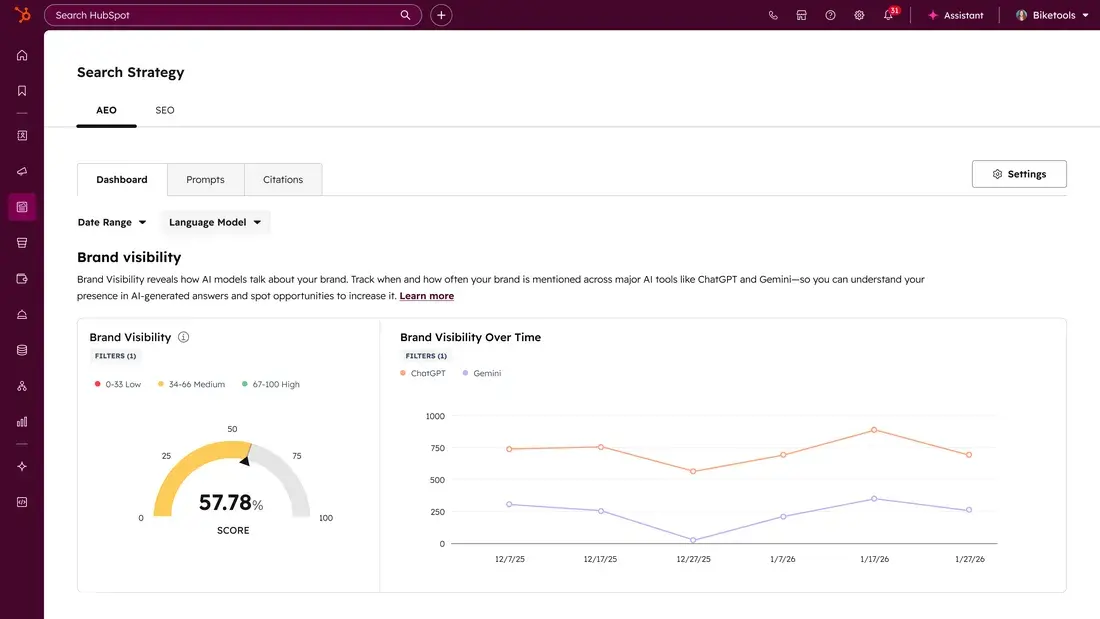
-
Enhancing User Experience with AI Site Search
While answer engines cater to broad external queries, AI site search tools are embedded within specific websites, applications, or internal knowledge bases. Their purpose is to help users efficiently locate relevant information within that particular digital environment, preventing them from leaving the site to find answers elsewhere. Examples include platforms like Algolia, Coveo, and Elasticsearch.
These tools are critical for e-commerce brands, Software-as-a-Service (SaaS) companies, and large enterprises with extensive content libraries or product catalogs. A robust AI site search experience directly impacts user engagement, conversion rates, and even customer support costs. If a visitor cannot quickly find what they need on a company’s website, they are likely to abandon the site and turn to an external answer engine, potentially losing the brand control over the information they receive. Algolia, for instance, has expanded its capabilities with generative AI features like NeuralSearch and Ask AI, offering more intuitive, natural language search experiences within hosted content. Coveo specializes in enterprise solutions, providing personalized recommendations and seamless integration with complex systems like Salesforce and SAP, making it ideal for large organizations managing vast amounts of internal and customer-facing data. -
Navigating Visibility: The Role of AEO Tools
Perhaps the fastest-growing category, AEO (Answer Engine Optimization) tools are specifically designed for marketers. These platforms address the critical need to track and improve brand visibility within AI-generated answers. Traditional SEO analytics are insufficient for this new paradigm, as they focus on organic rankings and clicks rather than AI citations. AEO tools monitor how often a brand appears in responses from leading answer engines (e.g., ChatGPT, Perplexity, Gemini), benchmark this visibility against competitors, and provide actionable recommendations to enhance presence.
The importance of AEO is underscored by the "zero-click" trend. If 60% of searches end without a click, and AI summaries are the primary information source, then appearing in those summaries is paramount for brand discovery. AEO tools fill the analytical gap, offering insights into how AI models perceive and represent a brand’s content.
Strategic Imperatives for Marketers in the AI Era
The rise of AI search mandates a fundamental re-evaluation of marketing strategies. The objective is no longer solely about driving traffic to a website but ensuring a brand’s authoritative presence within AI-generated answers, which now serve as a primary discovery layer.

-
Reimagining Content Strategy for AI Visibility
In the AI-first world, content needs to be not only high-quality and relevant but also structured and authoritative in a way that AI models can easily process and cite. This means prioritizing clarity, factual accuracy, and well-organized information. Content should directly answer common questions, provide comprehensive comparisons, and present data in a verifiable manner. Building strong brand authority through consistent, credible publishing becomes even more critical, as AI models are more likely to reference sources deemed trustworthy and authoritative. Marketers should focus on creating definitive guides, research reports, and transparent product comparisons that are rich in factual detail and readily synthesizable. Structured data, clear headings, and concise summaries within web content will aid AI models in extracting key information for their responses. -
The Criticality of Measurement: Introducing Answer Engine Optimization (AEO)
The biggest challenge for marketers adapting to AI search is measurement. There is no "ChatGPT Search Console" to track impressions or clicks. This is where AEO tools become indispensable. These platforms simulate user prompts, assess brand presence in AI answers, and monitor changes over time. HubSpot AEO, for example, is specifically designed for this purpose, tracking visibility across major answer engines and leveraging CRM data to predict the prompts real buyers are likely to use. This data-driven approach allows marketers to move beyond generic assumptions and tailor their optimization efforts to actual customer behavior. Early adopters using HubSpot AEO have reported significant gains, with AI referral traffic growing by 20% even as overall organic traffic experienced declines, demonstrating the direct impact of focused AEO strategies.
Key Tools for the Modern Marketer’s Stack
Selecting the right AI search tools is crucial for marketers adapting to this new landscape. The best choice depends on specific use cases and objectives.

-
HubSpot AEO: Tailored for Brand Visibility
HubSpot AEO stands out as a dedicated solution for marketers seeking to measure and improve their brand’s appearance in AI answer engines. Unlike general AI tools, it provides an ongoing, focused analysis of brand visibility across platforms like ChatGPT, Perplexity, and Gemini, including emerging features like Google’s AI search. Its unique advantage lies in its integration with CRM data, allowing it to predict buyer-specific prompts and provide highly relevant recommendations. This ensures that optimization efforts are aligned with actual customer journeys. Available with Marketing Hub Pro and Enterprise, or as a standalone, it represents a strategic investment for data-driven marketers. For those seeking an initial assessment, HubSpot’s free AI Search Grader offers a one-time diagnostic snapshot of a brand’s current AI search presence. -
ChatGPT: The Ubiquitous Research Assistant
For everyday research, competitive intelligence, content brainstorming, and quick synthesis, ChatGPT remains the most widely recognized and utilized AI answer engine. Its versatility across creative writing, market research, coding, and multi-step analysis makes it an invaluable general-purpose AI assistant. HubSpot’s research found that 88% of marketers have used ChatGPT in their roles, significantly outranking other AI tools. Its free tier offers substantial utility, with a premium version providing enhanced capabilities. HubSpot’s deep research connector with ChatGPT further allows marketers to integrate CRM customer data, enriching insights and making them actionable. -
Perplexity: Prioritizing Sourced Credibility
When accuracy and source attribution are paramount, Perplexity emerges as a leading choice. Unlike many other answer engines, Perplexity was built with real-time, sourced answers at its core, providing inline citations for every response. This commitment to transparency is vital for tasks requiring high factual integrity, such as competitive research, academic inquiries, or technical topics. Bloomberg’s Tech Summit revealed Perplexity processed 780 million queries in May 2025, demonstrating its rapid adoption, particularly among B2B buyers conducting rigorous vendor evaluations. The Columbia Journalism Review, in a study of eight AI search tools, identified Perplexity as having the lowest error rate in citation accuracy (37%), making it the most reliable option for credible information retrieval. -
Algolia & Coveo: Powering Intelligent Internal Search
For organizations struggling with internal information retrieval or on-site user navigation, AI site search tools like Algolia and Coveo are essential. Algolia is renowned for its speed, developer flexibility, and strong performance in e-commerce and SaaS applications, offering sophisticated search experiences for websites and apps. Its recent foray into generative AI further enhances its capabilities. Coveo, on the other hand, excels in enterprise environments, particularly those with complex knowledge bases or integrations with platforms like Salesforce and SAP. Coveo provides personalized recommendations and a unified search experience across various customer-facing portals, streamlining information access for both customers and employees. Investing in these tools ensures that once visitors arrive within a brand’s ecosystem, they can efficiently find what they need, reducing bounce rates and improving engagement.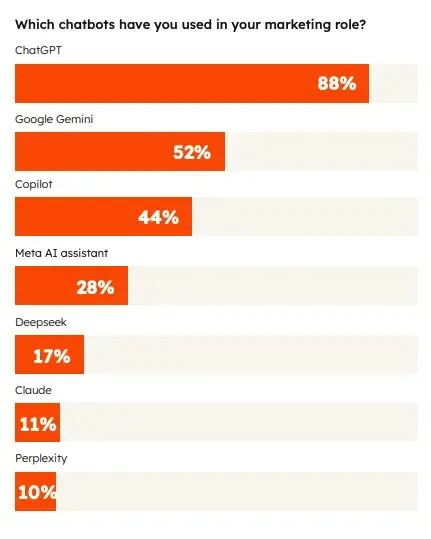
Evaluating AI Search Tools: A Marketer’s Framework
The rapidly expanding AI search tool market can be overwhelming. To make informed decisions, marketers should evaluate tools based on several critical factors:
- Specific Use Case Alignment: Does the tool directly address your most pressing need (e.g., brand visibility, internal research, on-site navigation)?
- Data Integration Capabilities: Can it integrate with your existing marketing stack, especially your CRM, to provide more personalized and relevant insights?
- Accuracy and Reliability: How accurate are the generated answers or visibility reports? For answer engines, how robust are their citation practices?
- Real-time Capabilities: Does the tool access real-time web information, or does it rely solely on static training data?
- Ethical Considerations: Does the tool have clear policies on data privacy, bias mitigation, and responsible AI use?
- Cost-Effectiveness and Scalability: Does the pricing model align with your budget, and can the tool scale with your growing needs?
Frequently Asked Questions: Demystifying AI Search
-
Are AI search tools the same as chatbots?
While many AI search tools incorporate conversational interfaces, they are not identical to all chatbots. The defining characteristic of an AI search tool is its ability to crawl, find, retrieve, or synthesize information. Chatbots, in their broader definition, focus on conversation, task completion, or customer service. Tools like ChatGPT and Gemini exist at the intersection, offering both conversational capabilities and powerful information retrieval functions.
-
What is the difference between AI search tools and AEO tools?
AI search tools are the platforms individual users interact with directly to find information (e.g., ChatGPT, Perplexity, Google AI Overviews). AEO tools, conversely, are designed for marketers to track, analyze, and optimize how their brand appears within those AI search tools. They are two sides of the same coin: one is the channel, the other is the strategic layer for managing presence within that channel. -
How can marketers measure brand visibility in AI answers?
Traditional SEO analytics are insufficient for measuring AI search visibility. There isn’t a "ChatGPT Search Console." AEO tools fill this void by simulating user queries, monitoring if and how a brand’s content is cited in AI-generated answers, and tracking these metrics over time. HubSpot AEO, for example, integrates CRM data to prioritize prompts that reflect actual buyer intent, providing a highly relevant measure of brand presence in AI answers. For a quick, one-time assessment, HubSpot’s free AI Search Grader offers an immediate diagnostic snapshot. -
When does AI site search matter more than web search?
AI site search becomes paramount when users are already within a brand’s digital ecosystem (website, app, product). If a site features a large content library, extensive documentation, or a diverse product catalog, an intelligent internal search experience is crucial for user satisfaction, conversion, and reducing support queries. If users cannot find what they need on-site, they are likely to leave and consult an external AI answer engine, potentially diverting their journey away from the brand. Investing in AI site search tools like Algolia or Coveo is about retaining qualified visitors and facilitating their journey once they’ve arrived.
The Road Ahead: Adaptation is Key

The rapid evolution of AI search presents both significant challenges and unparalleled opportunities for marketers. The fundamental principles of credible content, transparent sourcing, and robust brand authority remain cornerstones of digital success, but the methods of achieving and measuring visibility have irrevocably changed. Answer engines have become the primary information gatekeepers for a growing segment of buyers, making direct citation and accurate representation within these platforms an essential marketing objective.
For marketers, the time for passive observation has passed. The initial step involves understanding your brand’s current standing in the AI search landscape. Utilizing tools like HubSpot’s free AI Search Grader offers a vital starting point. Subsequently, implementing a comprehensive AEO strategy, supported by dedicated tools like HubSpot AEO, is crucial for continuous monitoring, competitive benchmarking, and strategic optimization. The future of online visibility is being written by AI, and proactive adaptation is the only path to continued relevance and growth. The search for the right tools is over; now is the time to act decisively.