
 rifanmuazin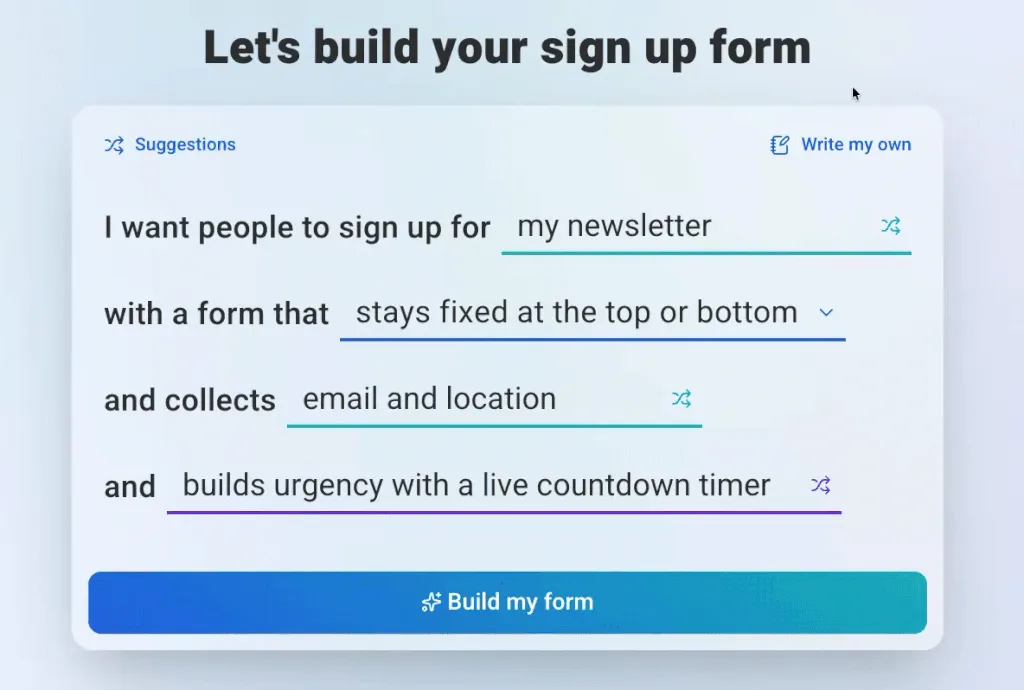
The landscape of digital marketing is undergoing a significant transformation, with Artificial Intelligence increasingly reshaping fundamental processes. A notable development in this evolution is AWeber’s introduction of its AI Signup Form Builder, announced on June 3, 2026. This innovative tool promises to fundamentally alter how businesses approach lead generation and subscriber acquisition, moving away from the often cumbersome and generic nature of traditional template-based form creation towards a highly personalized and efficient AI-driven methodology. The launch marks a pivotal moment, challenging the long-held industry standard of adapting pre-designed templates and instead championing a bespoke approach tailored from the ground up to individual business needs and brand identities.
For decades, the creation of signup forms—critical conduits for capturing audience interest and building email lists—has largely relied on templates. While these pre-built structures offered a quicker starting point than coding from scratch, they often presented a paradox: what began as a shortcut frequently devolved into a time-consuming customization ordeal. Businesses found themselves spending considerable hours adjusting fields, rewriting generic headlines, tweaking color schemes, and rearranging layouts in an arduous attempt to align a universal template with their specific brand voice and offer. This backward-engineering process, starting from a generalized solution and working towards a unique fit, has long been a source of frustration for marketers and business owners alike. The inherent inefficiency of such a system, where a “one-size-fits-all” approach invariably fails to perfectly fit anyone, has created a significant demand for more intuitive and contextually aware solutions.
The Evolution of Digital Forms: A Historical Perspective
The journey of web form development mirrors the broader evolution of the internet itself. In the early days, creating any interactive element on a website, including a simple signup form, required direct coding expertise. Developers meticulously crafted HTML forms, styled them with CSS, and added functionality with JavaScript. This era, while offering ultimate customization, was prohibitively slow and expensive for most small businesses. The advent of content management systems (CMS) and dedicated form builders brought about the first wave of simplification, introducing visual interfaces and drag-and-drop functionalities. This was followed by the widespread adoption of template galleries, offering users a library of pre-designed forms. The promise was speed and ease, allowing users to select a template and quickly deploy a form. However, this convenience often came at the cost of genuine brand alignment and precise message delivery. The initial excitement of readily available templates soon gave way to the realization that these generic starting points necessitated extensive and often tedious modifications to truly reflect a business’s unique offerings and aesthetic.
The Pitfalls of Traditional Template-Based Forms
The core issue with traditional signup form templates stems from their design philosophy: they are built for maximal applicability. This inherent generality, while seemingly advantageous for broad appeal, becomes their primary weakness when applied to specific business contexts. A template might ship with a default headline such as “Subscribe to our newsletter,” which is entirely mismatched if the actual offer is a “free five-day email course on dog training.” Similarly, a template might include three data fields when only one is genuinely necessary for the current conversion goal, or present a two-column layout that clashes with a brand’s minimalist design ethos.
The chasm between a generic template and a fully customized, high-converting form requires substantial effort. This includes intricate copywriting to ensure the message resonates, critical design decisions to maintain brand consistency, and often complex field logic to optimize data collection. Industry data suggests that marketers can spend anywhere from 30 minutes to several hours customizing a single template, often exceeding the time it would take to build a bespoke form with clear, specific instructions from the outset. Furthermore, templates tend to “anchor” creative thinking, guiding users to adapt around an existing structure rather than fostering a ground-up design process informed directly by audience needs and business objectives. This often results in forms that, while functional, lack distinctiveness and optimal conversion potential.

AWeber’s AI-Powered Paradigm Shift
AWeber’s AI Signup Form Builder directly addresses these long-standing challenges by fundamentally reorienting the form creation process. Instead of beginning with a template, the AI builder initiates the process with the user, leveraging advanced AI capabilities to generate forms that are inherently customized. The system offers three primary modes of interaction, each designed to streamline the creation of highly relevant and effective forms:
-
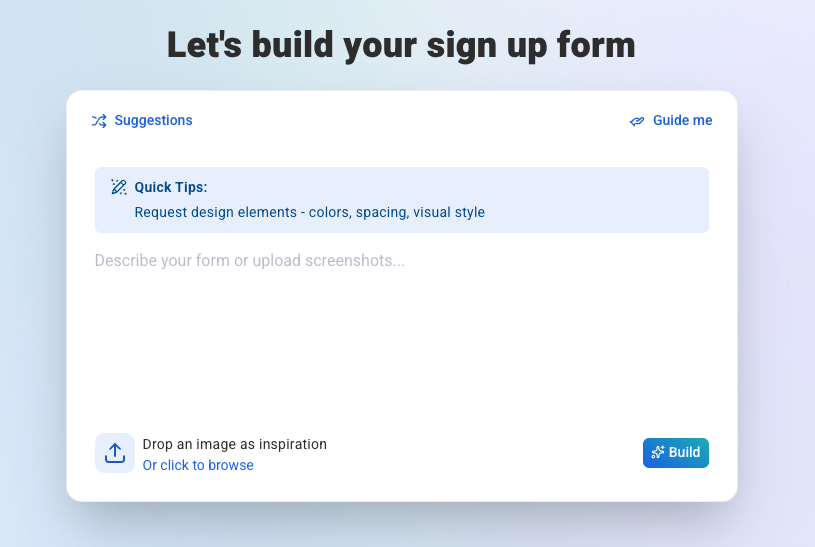
Descriptive Prompting: Users can articulate their needs in natural, plain language. For instance, a prompt like “A simple one-field form for a free guide on meal planning for busy parents” enables the AI to generate a form complete with a relevant headline, appropriate fields (e.g., email address), and persuasive copy that precisely fits the described offer. This method eliminates the need for manual selection and extensive modification, delivering a highly pertinent draft instantaneously.
-
Design Inspiration via Screenshot: Recognizing that visual inspiration often precedes creation, AWeber’s AI builder allows users to upload screenshots of existing forms they admire from anywhere online. The AI analyzes the design, gleaning insights into layout, structure, and aesthetic cues. It then synthesizes these elements, applying them to create a new form customized to the user’s specific brand and content. This feature transforms passive inspiration into actionable design, offering the benefits of desired aesthetics without the painstaking manual replication or the restrictive obligation to copy.
-
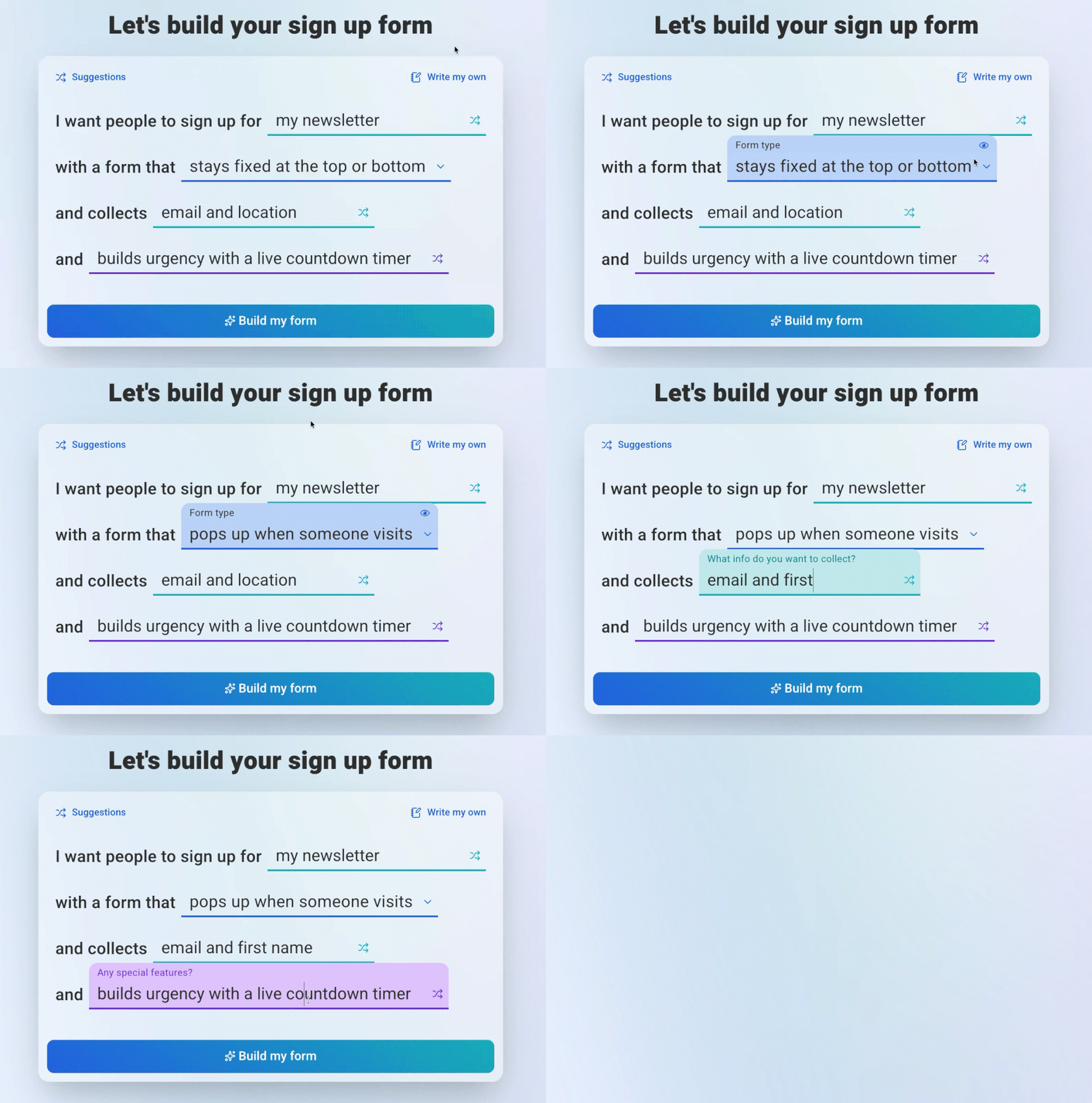
Guided Questionnaires: For users who prefer a more structured approach, the builder offers guided prompts. By answering a series of targeted questions about their target audience, the specific offer, and overarching conversion goals, the AI meticulously assembles a form. This method ensures that every element of the form, from the call to action to the necessary data fields, is directly informed by strategic inputs, leading to highly optimized outputs.
Beyond the initial generation, the AI builder facilitates refinement through natural language conversation. Users can issue commands such as “shorten the headline,” “add a checkbox for terms and conditions,” or “change the button text to ‘Get My Guide Now.'” The form dynamically updates in response, bypassing the need to navigate complex settings panels or field editors. This conversational interface drastically reduces the iteration cycle, enabling rapid adjustments and fine-tuning that align perfectly with evolving campaign needs. Comparisons with traditional drag-and-drop builders highlight the AI builder’s superior speed and qualitative output, demonstrating a significant leap in efficiency and design quality.
Quantifying the Impact: Efficiency, Conversion, and Brand Consistency
The shift from template-driven to AI-generated forms carries substantial implications for business efficiency, conversion rates, and brand consistency. Industry reports indicate that poorly designed or generic signup forms can significantly depress conversion rates, with average figures often hovering between 1% and 3%. However, highly optimized, personalized forms can achieve conversion rates upwards of 10-15%, sometimes even higher for compelling offers. AWeber’s AI builder aims to bridge this gap by creating forms that are not merely functional but also highly persuasive and brand-aligned from inception.
The time savings alone are a compelling factor. By automating the initial design and copywriting phases, businesses can potentially reduce the time spent on form creation by as much as 70-80%. This reclaimed time can be redirected towards core business activities, strategic planning, or further optimization of marketing campaigns. Moreover, the AI’s ability to generate unique, on-brand copy and design ensures that a fitness coach receives a form distinct from that of a B2B SaaS tool, addressing specific audience needs and reinforcing brand identity across all touchpoints. This level of customization, previously attainable only through significant design and copywriting investment, is now accessible to businesses of all sizes, democratizing high-quality marketing assets.
Industry Reactions and Expert Commentary
The introduction of AWeber’s AI Signup Form Builder has garnered considerable attention within the digital marketing community. Industry analysts view this as a significant step forward in marketing automation. “This move by AWeber is indicative of a broader trend where AI is moving from a supplementary role to a foundational one in marketing technology,” commented Sarah Chen, a senior analyst at MarTech Insights. “By making highly customized form generation accessible and efficient, AWeber is lowering the barrier to entry for effective lead capture, particularly for small businesses and solo entrepreneurs who often lack dedicated design resources. This will undoubtedly set a new standard for what users expect from form builders.”
AWeber leadership highlighted the company’s commitment to empowering its users. “Our goal has always been to simplify complex marketing tasks and enable our customers to focus on what they do best,” stated an AWeber spokesperson. “The AI Signup Form Builder is a testament to that mission, leveraging cutting-edge AI to deliver unparalleled customization and efficiency, ensuring that every form truly belongs to the business it serves.” Feedback from early testers echoes this sentiment, with many praising the intuitiveness and speed of the new tool. Alycia, a fitness coach utilizing the builder, remarked, “Creating a form that perfectly captured the essence of my brand and my specific offer used to be a headache. With the AI builder, it’s incredibly fast and accurate, allowing me to focus on coaching rather than fiddling with design elements.”
Strategic Implications for Businesses and the MarTech Landscape
The strategic implications of AWeber’s AI Signup Form Builder extend across various business sectors and the broader MarTech ecosystem. For small businesses and independent entrepreneurs, it represents a significant advantage, enabling them to produce professional, high-converting forms without the need for extensive design skills or financial investment in external agencies. This levels the playing field, allowing them to compete more effectively in crowded digital marketplaces. Resource allocation can be optimized, shifting focus from tedious customization to content creation and customer engagement.
Marketing agencies, too, stand to benefit from increased efficiency. The AI builder can accelerate the prototyping and deployment of client forms, allowing agencies to scale their services and deliver custom solutions more rapidly. This enables them to take on more projects and focus their human talent on high-level strategy and complex campaign management. For the MarTech industry, AWeber’s innovation is likely to spur further competition and accelerate the adoption of AI-powered features across various marketing tools. It demonstrates a clear path forward for how AI can move beyond simple automation to generative capabilities that fundamentally enhance user experience and output quality.
Looking Ahead: The Future of AI in Marketing Automation
The launch of AWeber’s AI Signup Form Builder is not merely an incremental update; it signifies a paradigm shift towards intelligent, context-aware marketing automation. As AI technology continues to advance, future iterations of such tools are expected to integrate even more sophisticated features. This could include predictive analytics to suggest optimal form layouts based on historical conversion data, dynamic content generation that adapts forms in real-time based on visitor behavior, and deeper integrations with CRM systems to create highly personalized user journeys from the very first interaction. The vision is a future where marketing assets are not just easy to build, but inherently smart, learning and adapting to maximize effectiveness with minimal human intervention.
AWeber’s AI Signup Form Builder heralds a new era for lead generation, where bespoke design and optimal conversion are no longer luxuries but standard expectations. By enabling businesses to build their first form in minutes, tailored precisely to their unique offers and brand identity, AWeber is empowering marketers to focus on meaningful engagement rather than technicalities. The company invites interested parties to explore this new frontier in marketing automation, offering a 14-day free trial to experience the transformative power of AI-generated signup forms and begin collecting subscribers who will receive a personalized welcome from the moment they sign up.









