In the meticulous world of digital marketing, where every pixel and word is often scrutinized, one crucial element frequently falls victim to oversight: the email footer. While marketers dedicate countless hours to perfecting subject lines, agonizing over call-to-action buttons, and A/B testing preview text, the footer often receives a perfunctory copy-paste from the previous campaign. This prevalent practice, however, represents not only a significant missed opportunity for brand reinforcement but, more critically, a potential compliance risk with severe ramifications. The email footer, far from being a mere afterthought, stands as the most consistent piece of real estate in every electronic message dispatched, simultaneously serving as a legally mandated component and a powerful tool for cultivating subscriber trust and solidifying brand identity.
The Underestimated Power of a Well-Constructed Footer
The journey of an email from sender to recipient is fraught with challenges, from navigating spam filters to capturing fleeting attention in crowded inboxes. Marketers are trained to prioritize the "above the fold" content, believing that initial impressions dictate engagement. While this holds truth, the footer, despite its subordinate position, carries an outsized responsibility. It is the anchor of an email, providing essential context and pathways that validate the sender’s legitimacy and respect the recipient’s autonomy. When thoughtfully constructed, it clearly communicates the sender’s identity, offers accessible channels for communication, and, crucially, provides an unambiguous exit route for those who no longer wish to receive messages. This latter point transcends mere courtesy; it is a fundamental legal requirement enshrined in various global legislations.

Navigating the Regulatory Landscape: A Mandate for Compliance
The legal framework governing commercial email communication is complex and continually evolving, with significant penalties for non-compliance. These regulations underscore the footer’s critical role in ensuring that marketing efforts remain within legal boundaries.
-
The CAN-SPAM Act (Controlling the Assault of Non-Solicited Pornography And Marketing Act) in the United States: Enacted in 2003, CAN-SPAM sets national standards for the sending of commercial email. Key requirements directly impacting the footer include:
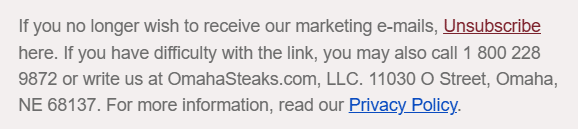
- A conspicuous and clear unsubscribe mechanism: Recipients must have the option to opt-out of future emails, and the unsubscribe process must be honored within 10 business days. Hiding this link or making the process difficult is a direct violation.
- A valid physical postal address: Senders must include their legitimate physical postal address, which can be a post office box registered with the U.S. Postal Service or a private mailbox registered with a commercial mail receiving agency.
- Clear identification of the sender: While not exclusively a footer element, the footer often reiterates or confirms the sender’s identity.
Violations of CAN-SPAM can result in penalties of up to $50,120 per email, highlighting the severe financial risks associated with neglecting footer requirements.
-
CASL (Canada’s Anti-Spam Legislation): Widely regarded as one of the strictest anti-spam laws globally, CASL, effective since 2014, mandates explicit consent for sending commercial electronic messages. Its footer-related requirements include:
- Identification of the sender: Both the individual and organization sending the message must be clearly identified.
- Contact information: The sender’s mailing address and either a telephone number, email address, or website address must be provided.
- A clear and accessible unsubscribe mechanism: Similar to CAN-SPAM, an easy-to-use unsubscribe option is mandatory and must be processed within 10 business days.
CASL carries the potential for administrative monetary penalties of up to CAD $1 million for individuals and CAD $10 million for organizations per violation, making meticulous footer management imperative for businesses engaging with Canadian audiences.
-
GDPR (General Data Protection Regulation) in the European Union: Implemented in 2018, GDPR focuses broadly on data privacy and consumer rights. While not prescribing specific footer elements as rigidly as CAN-SPAM or CASL, its principles heavily influence footer content:
- Transparency and consent: The footer often links to a privacy policy, explaining how subscriber data is collected, stored, and used, in alignment with GDPR’s transparency requirements.
- Right to erasure and data portability: While not directly in the footer, the presence of a preference center or a clear contact point facilitates users exercising these rights.
- Clear unsubscribe options: GDPR reinforces the necessity of an easy opt-out, as continuous unsolicited communication can be viewed as a breach of consent.
Non-compliance with GDPR can lead to significant fines, up to €20 million or 4% of annual global turnover, whichever is higher, emphasizing the global reach and impact of these regulations on email marketing practices.
Beyond these major legislations, other regional laws like the California Consumer Privacy Act (CCPA) in the US, and industry-specific regulations (e.g., HIPAA for healthcare-related communications) also impose strict data handling and communication standards that footers indirectly support through links to privacy policies and terms of service. The "quick check" from the original article — "if you removed everything from your footer except the address and the unsubscribe link, would you still be compliant?" — serves as a stark reminder of these non-negotiable legal minimums.
Building Trust and Enhancing Brand Identity: Beyond the Legal Minimums
While compliance is non-negotiable, a well-crafted footer offers benefits far beyond merely avoiding legal pitfalls. It acts as a subtle yet powerful signal of professionalism, transparency, and brand consistency. A footer featuring a legitimate address, a functional unsubscribe link, and clear sender information communicates to subscribers that they are dealing with a credible business that respects their inbox and their choices. Conversely, neglecting these details, or attempting to obscure them, can instantly undermine an otherwise brilliant campaign, raising suspicions and increasing the likelihood of an email being marked as spam.
Essential Elements for an Effective Email Footer
To strike the right balance between compliance and brand building, an email footer should strategically incorporate several key elements:
- Physical Postal Address: As mandated by CAN-SPAM and CASL, this provides legal transparency and grounds the sender in a real-world location, enhancing credibility.
- Clear and Functional Unsubscribe Link: This is paramount. Hiding this link, making it small, or embedding it in complex navigation frustrates recipients, leading them to mark the email as spam. Spam complaints severely damage sender reputation and deliverability, far more than a direct opt-out. Industry data consistently shows that providing an easy unsubscribe option reduces spam complaints by a significant margin.
- Sender Identification and Copyright Information: Clearly stating the company name and year of copyright reinforces ownership and brand identity. Including a logo, as noted in the original article’s first example, further enhances brand recognition.
- Link to Privacy Policy: Crucial for GDPR and other data protection laws, this link informs subscribers how their data is handled, stored, and protected, fostering trust and transparency.
- Link to Terms of Service/Use: If applicable, this outlines the legal agreements between the company and its users, providing further transparency.
Optimizing for Engagement: "Nice-to-Have" Elements
Once the legal and essential boxes are checked, the footer transforms into a valuable space for enhancing subscriber experience and driving further engagement.
- Preference Center Link: This allows subscribers to customize the types and frequency of emails they receive. Instead of a full unsubscribe, a preference center offers a nuanced alternative, empowering users and often retaining them on the list in a more engaged capacity. This is a strategic move to reduce churn and improve overall subscriber satisfaction.
- Social Media Links: Connecting to social profiles expands the brand’s digital footprint and offers alternative channels for engagement. It’s a natural extension of the brand’s online presence.
- Website Link: A direct link back to the main website provides easy navigation for curious subscribers or those looking for more information, increasing web traffic and potential conversions.
- "Forward to a Friend" Option: This is an organic growth mechanism, encouraging subscribers to share valuable content with their networks.
- Company Motto or Mission Statement: A concise statement can subtly reinforce brand values and purpose, connecting with subscribers on an emotional level.
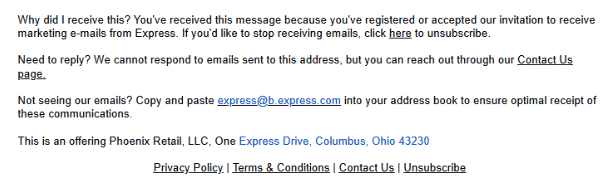
- Explanation of Why the Recipient is Receiving the Email: As highlighted in one of the original article’s examples, a brief reminder like "You are receiving this email because you registered on our website" can significantly reduce spam complaints. Many users mark emails as spam simply because they’ve forgotten they opted in. This simple clarification can jog their memory and prevent negative action.
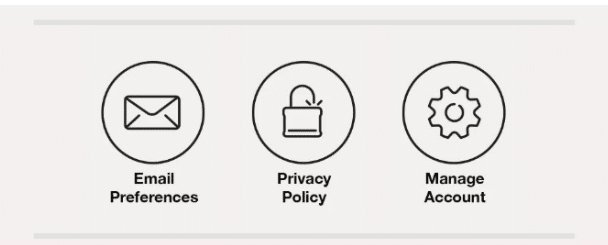
- Accessibility-Focused Call-to-Action Buttons: The Omaha Steaks example from the original article beautifully illustrates this. By providing larger, clear CTA-style buttons for actions like managing preferences or unsubscribing, it significantly improves accessibility, especially for mobile users or those with visual impairments. This commitment to inclusive design demonstrates respect for all subscribers.
Strategic Best Practices for Footer Design and Management
An effective footer isn’t just about what’s included, but also how it’s presented and maintained.
- Keep it Clean and Concise: A cluttered footer, overflowing with a dozen links and disclaimers, overwhelms users and is particularly difficult to navigate on mobile devices. Prioritize essential elements and add only those extras that genuinely add value and enhance user experience. Simplicity aids readability and impact.
- Don’t Bury the Unsubscribe Link: This cannot be overstated. Attempts to hide the unsubscribe link are counterproductive. Frustrated subscribers will not spend time searching; they will mark the email as spam, triggering a more damaging outcome for sender reputation and deliverability. Transparency builds trust, even in parting ways.
- Design for Mobile-First: With a vast majority of emails now opened on mobile devices, the footer must be fully responsive. Text should remain legible without zooming, and clickable links or buttons should be adequately spaced to prevent mis-taps. The Omaha Steaks example of large, tappable buttons is an excellent illustration of mobile-first accessibility.
- Maintain Consistency Across Campaigns: A uniform footer format, consistent fonts, colors, and branding elements across all email campaigns fosters familiarity and reinforces brand identity. This consistency builds sender recognition and trustworthiness over time, making emails feel legitimate and professional.
- Regularly Test All Links: Broken unsubscribe links, dead social media icons, or outdated privacy policy links are common, yet entirely avoidable, mistakes. Every link within the footer must be tested before a campaign is deployed, especially after template updates or website redesigns. A non-functional unsubscribe link is a compliance violation and a source of immense subscriber frustration.
- Periodically Revisit and Update: The regulatory landscape is dynamic, and businesses evolve. A physical address that was accurate two years ago, a social media channel no longer actively used, or an outdated privacy policy can quickly become a liability or a dead end for subscribers. A comprehensive review of the email footer should be conducted at least once annually to ensure all information is current, compliant, and relevant.
The Broader Impact: Sender Reputation and Deliverability
The implications of a neglected or poorly executed email footer extend far beyond individual email interactions. They directly impact a brand’s sender reputation and, consequently, the deliverability of all future email campaigns. Internet Service Providers (ISPs) and email clients closely monitor user engagement, including spam complaints and unsubscribe rates. A surge in spam complaints, often a direct result of hidden or broken unsubscribe links, signals to ISPs that the sender is distributing unwanted mail. This can lead to:

- Lower Sender Score: A numerical rating that ISPs use to assess the trustworthiness of an email sender.
- Increased Spam Folder Placement: Emails from low-reputation senders are more likely to be diverted to spam folders, severely impacting open rates and campaign effectiveness.
- Blacklisting: In severe cases, senders can be blacklisted by ISPs, meaning their emails will be outright blocked, effectively crippling their email marketing efforts.
Conversely, a compliant, user-friendly footer contributes to a healthy sender reputation. When subscribers can easily manage their preferences or opt-out gracefully, they are less likely to mark emails as spam, signaling positive engagement to ISPs. This, in turn, improves deliverability, ensuring that marketing messages reach their intended audience. Tools like Validity Engage, mentioned in the original article, are designed to leverage AI-powered email intelligence and vast data networks to help marketers monitor and optimize deliverability, ensuring compliance and robust sender reputation automatically.
Conclusion
The email footer, often relegated to an afterthought in the extensive planning of email marketing campaigns, carries a weight disproportionate to its size. It is a critical nexus where legal compliance, brand integrity, and subscriber trust converge. Treating it with the same strategic intentionality and design rigor applied to the rest of the email campaign is not merely a best practice; it is a fundamental requirement for sustainable and effective digital communication. By meticulously crafting a footer that is compliant, transparent, accessible, and aligned with brand values, marketers can transform this often-ignored section into a powerful asset that protects their business, builds lasting relationships with their audience, and ultimately, drives superior marketing outcomes. Neglecting the footer is a gamble no serious marketer can afford to take.

 Laily UPN
 Basiran