
 rifanmuazin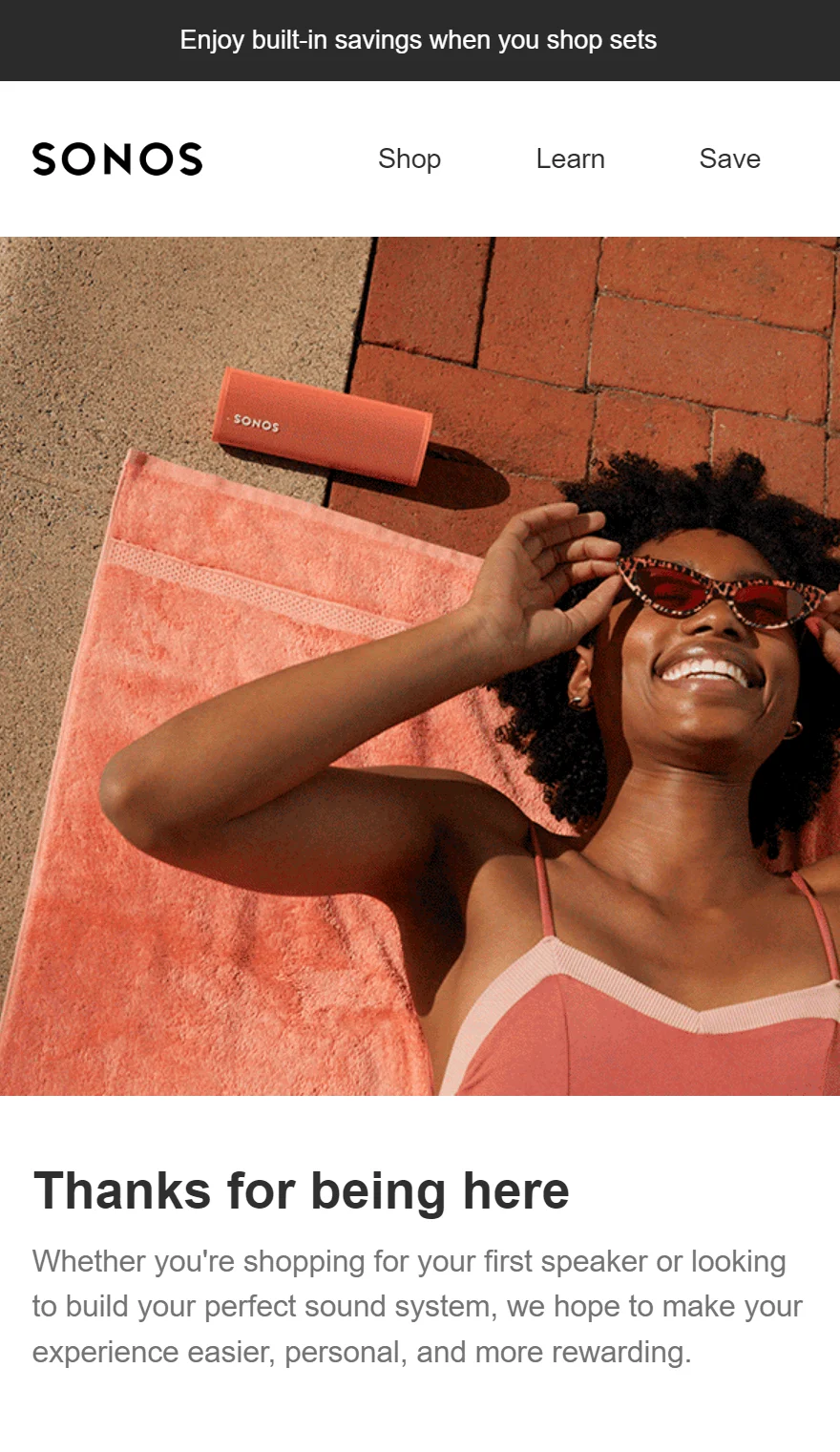
Welcome emails represent a pivotal touchpoint in the customer journey, with recent industry analysis highlighting their significant impact on revenue generation and customer retention, positioning them as a critical component of successful e-commerce strategies. These initial communications, when crafted with personalization and value delivery in mind, can substantially boost a brand’s financial performance and foster enduring customer relationships. Data from Omnisend users, for instance, reveals an impressive average of $6.30 in revenue generated per welcome email, underscoring their potent commercial value. Furthermore, these emails boast exceptional engagement metrics, achieving click-to-conversion rates as high as 52.98%, second only to purchase confirmations in terms of immediate customer intent.
This high level of receptivity stems from customer expectation; individuals who actively subscribe to newsletters or complete purchases anticipate a follow-up. This window of high intent presents an unparalleled opportunity for businesses to solidify new relationships, drive early sales, and lay the groundwork for long-term loyalty. However, merely sending a generic "thank you" risks squandering this prime moment, missing the chance to convert initial interest into sustained engagement and revenue. Effective welcome email strategies encompass a series of carefully designed communications, leveraging compelling subject lines, personalized greetings, valuable incentives, and clear calls-to-action to maximize their impact. Ongoing testing and optimization of these elements are crucial for continuous improvement in open rates, click-throughs, and conversion rates.

The Foundational Role of Welcome Emails
In the dynamic landscape of digital commerce, the first impression often dictates the trajectory of a customer relationship. Welcome emails serve as this crucial inaugural interaction, acting as a digital handshake that extends beyond a simple transaction or subscription. They bridge the gap between initial interest and committed engagement, setting the tone for future communications and brand perception. For businesses, this translates into a direct impact on the bottom line. The substantial revenue per email figure and high conversion rates reported by platforms like Omnisend emphasize that welcome emails are not merely courtesy messages but powerful sales and retention tools.

Industry benchmarks often place the average open rate for marketing emails between 15-25%, with click-through rates typically hovering around 2-5%. In contrast, the 33.79% open rate for welcome emails observed in 2025, while trailing some other transactional messages, still significantly outperforms general marketing blasts. This highlights the inherent advantage of communicating with a highly engaged audience—those who have just demonstrated explicit interest in a brand. The implication is clear: neglect or poor execution of welcome emails is a direct forfeiture of potential revenue and customer goodwill.
Key Elements for Maximizing Welcome Email Effectiveness

To harness the full potential of welcome emails, several critical components must be meticulously integrated:
- Engaging Subject Lines: The subject line is the gatekeeper to the email’s content. While a portion of subscribers may open welcome emails regardless, a compelling subject line significantly boosts open rates by creating anticipation and hinting at value. Generic phrases like "Thank you for subscribing" often lead to lower engagement. Instead, subject lines should be personalized, benefit-oriented, or curiosity-inducing. Examples such might include "Hi [Name], welcome to [Brand] – here’s your exclusive offer!" or "Your journey with [Brand] begins now – discover what’s inside!"
- Personalized Greetings: Addressing customers by name immediately establishes a more personal connection, making the email feel less like an automated message and more like a direct communication. This personalization extends to referencing their recent interaction, whether it was a subscription, a purchase, or a download.
- Upfront Value and Incentives: Offering an immediate incentive, such as a discount code, free shipping, or access to exclusive content, capitalizes on the customer’s initial enthusiasm. This not only encourages a first purchase but also reinforces the value of being a subscriber. The placement of the discount should be prominent, and its terms clear.
- Brand Story and Ethos: A welcome email is an ideal canvas to share the brand’s unique story, mission, and values. This helps new customers connect with the brand on a deeper, emotional level, fostering loyalty beyond transactional interactions. A brief, compelling narrative (around 60 words) can convey the brand’s identity without overwhelming the reader.
- Social Proof: Incorporating testimonials, star ratings, or customer reviews builds trust and credibility. Seeing that others have had positive experiences with the brand can significantly influence a new subscriber’s decision to engage further or make a purchase.
- Clear Calls-to-Action (CTAs): Every welcome email should guide the customer towards the next desired action, whether it’s "Shop Now," "Explore Our Bestsellers," "Learn More About Us," or "Connect on Social Media." CTAs should be visually prominent and use action-oriented language.
- Setting Expectations: Clearly outline what subscribers can expect from future communications – the frequency, type of content, and benefits of staying subscribed. This transparency helps manage expectations and reduces the likelihood of unsubscribes.
The Strategic Welcome Email Series
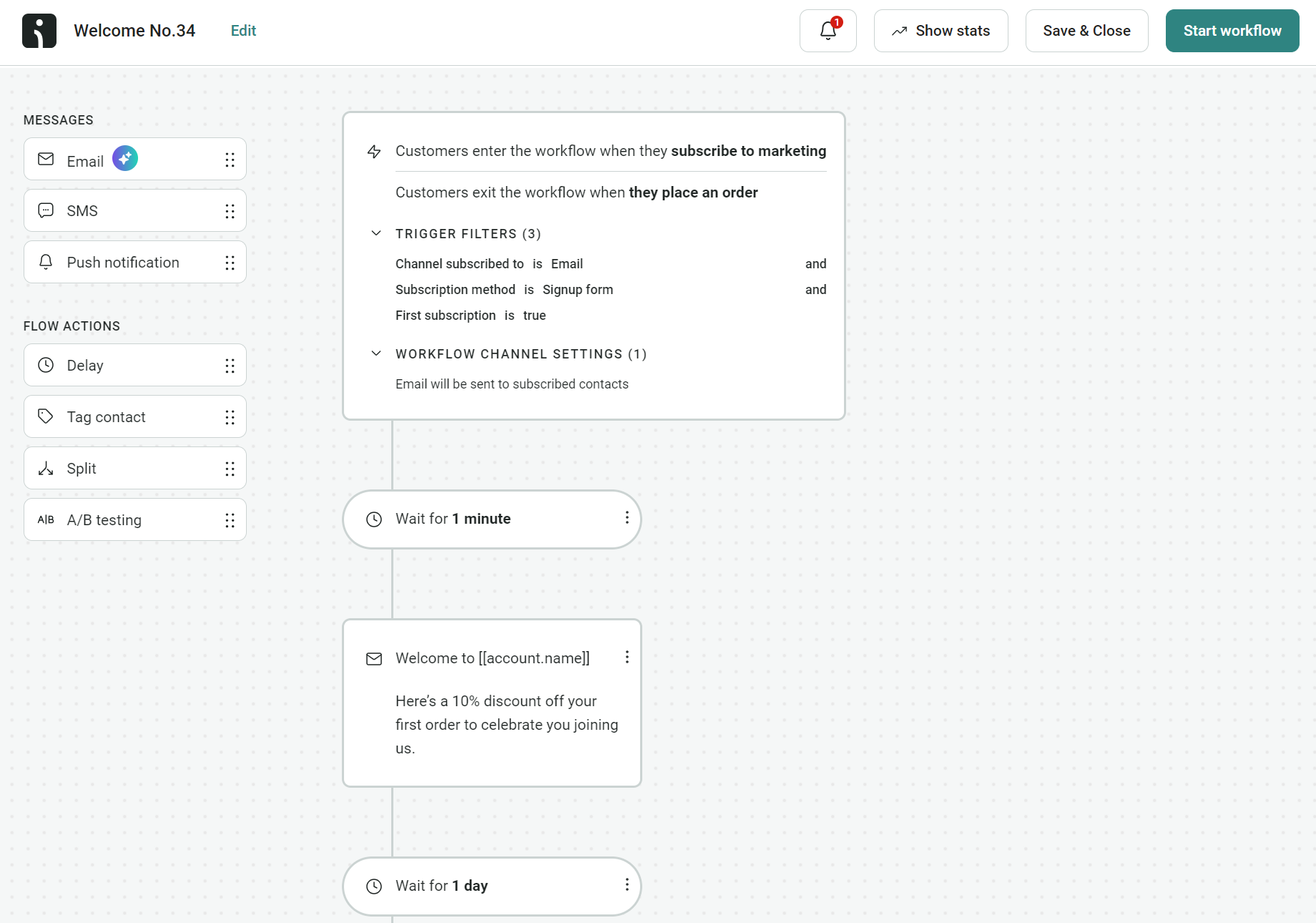
While a single welcome email is a good start, a strategically designed welcome series significantly amplifies engagement and conversion potential. A multi-part sequence allows brands to progressively build the relationship, deliver more value, and guide customers through a curated journey. Omnisend’s pre-built welcome flow, for instance, often includes three emails triggered at intervals like one minute, one day, and four days after the initial interaction.
A typical welcome email series might follow this structure:

- Email 1 (Immediate – "Thank You & Welcome"): Sent within minutes of subscription or purchase. Its primary goal is to acknowledge the customer’s action, deliver any promised incentive (e.g., discount code), and briefly introduce the brand. This email should be warm, personalized, and set initial expectations.
- Email 2 (Day 1-2 – "Brand Story & Value Proposition"): Sent 24-48 hours later. This email delves deeper into the brand’s identity, sharing its unique story, values, or key differentiators. It might showcase popular product categories or highlight unique selling points. This is an opportunity to build emotional connection.
- Email 3 (Day 3-5 – "Social Proof & Call to Explore"): Sent a few days after the second. This email leverages social proof (reviews, testimonials) to build trust and provides a stronger nudge towards exploration or purchase. It might feature specific product recommendations based on browsing history or popular items, reinforcing the call to action from the first email.
This phased approach prevents information overload and allows the brand to tell a more complete story, gently nurturing the customer towards a purchase or deeper engagement. Personalization within a series is crucial; dynamic content that references past purchases, browsing behavior, or expressed preferences can make each email feel highly relevant and combat the "manufactured" feel of an automated sequence.
Diverse Welcome Email Templates for Varied Objectives
Different welcome email templates serve distinct purposes, catering to various customer segments and brand strategies. Businesses can adapt these templates to align with their specific goals:
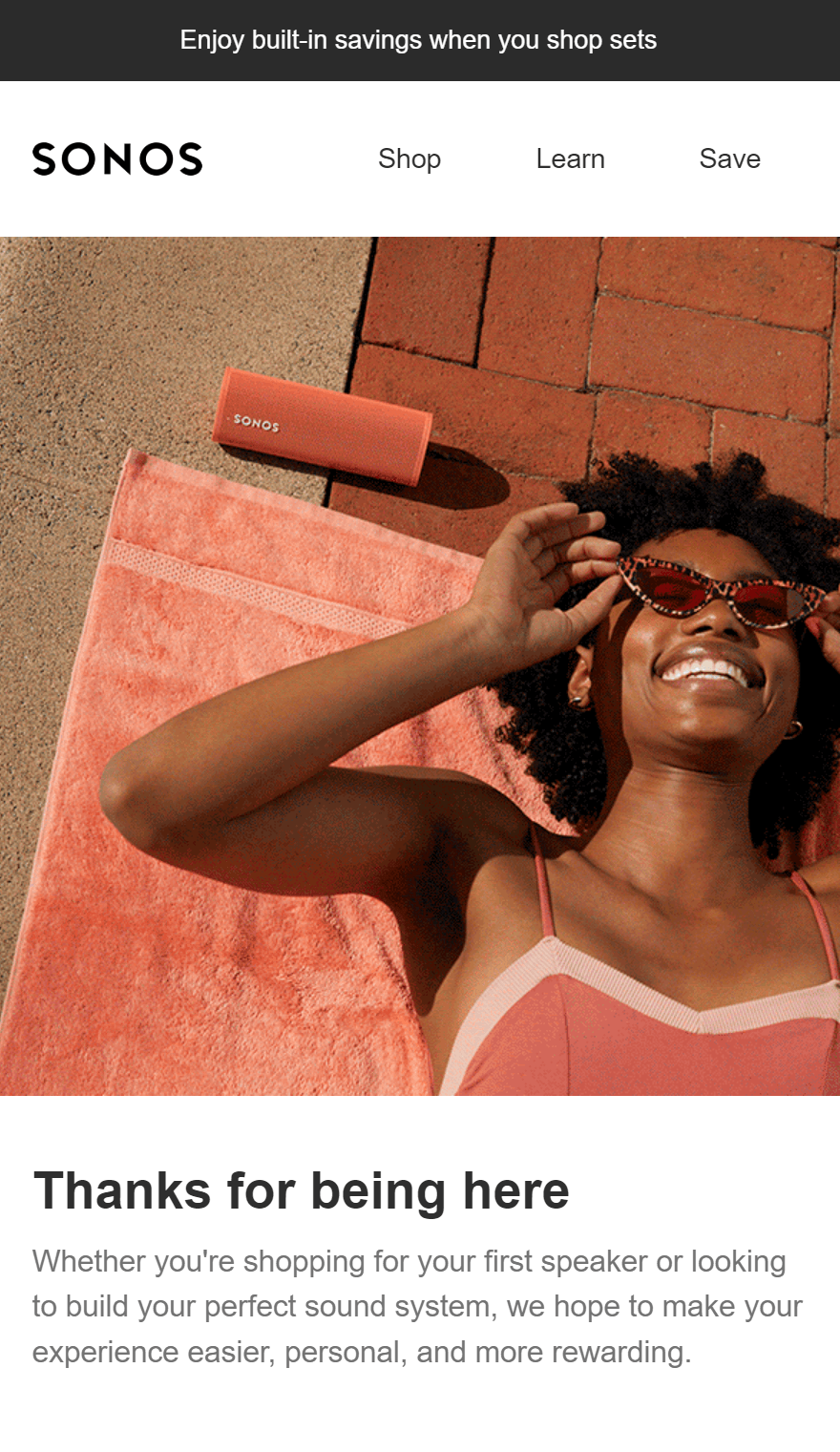
- The "Thank You for Subscribing/Signing Up" Email: Primarily for new subscribers via forms. It immediately thanks the subscriber, confirms their subscription, and outlines what they can expect. For purchasers, this flow should be separate to avoid redundancy with order confirmations. Sonos exemplifies this with a direct "Thanks" heading and clear expectation-setting paragraphs.
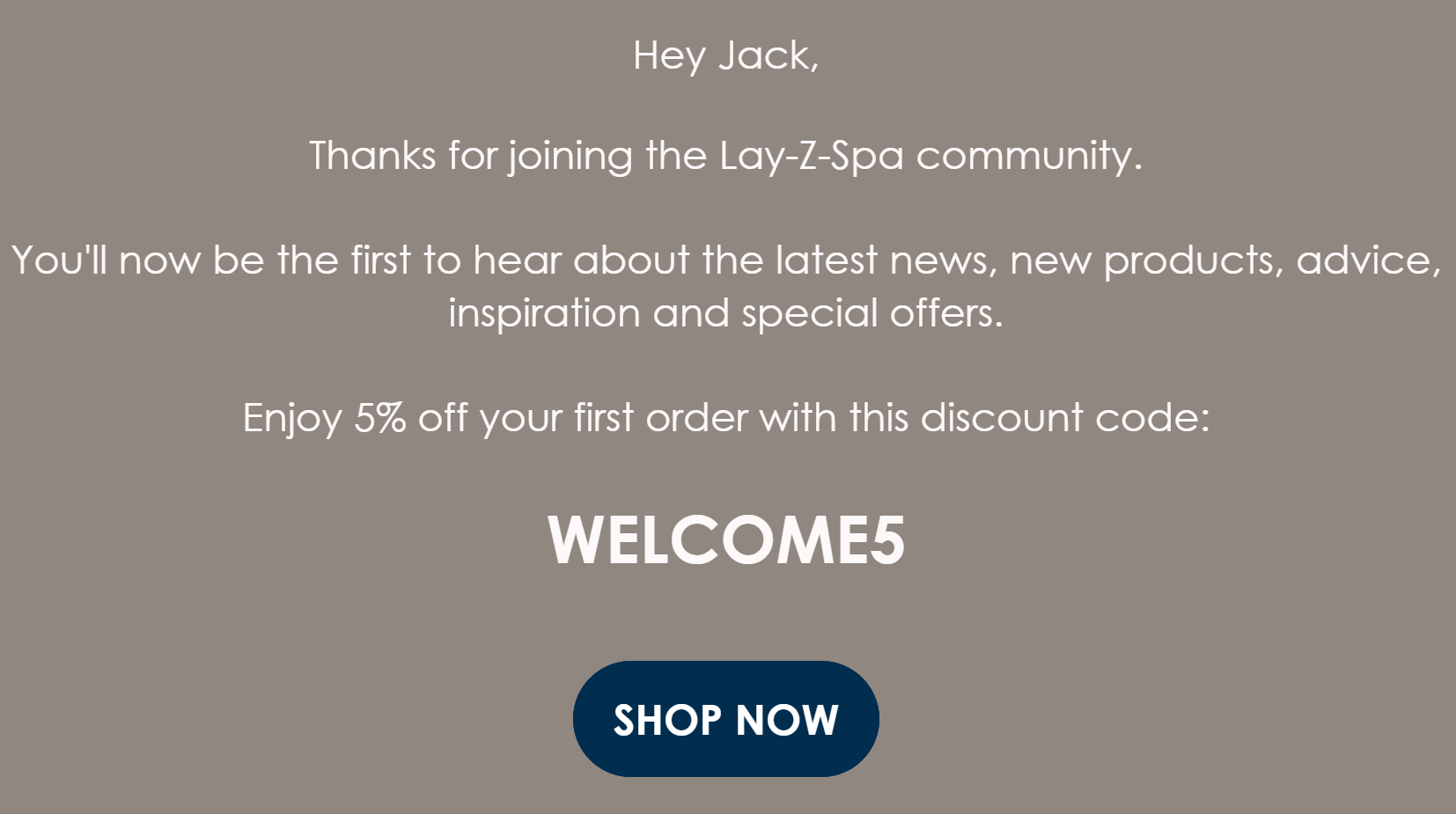
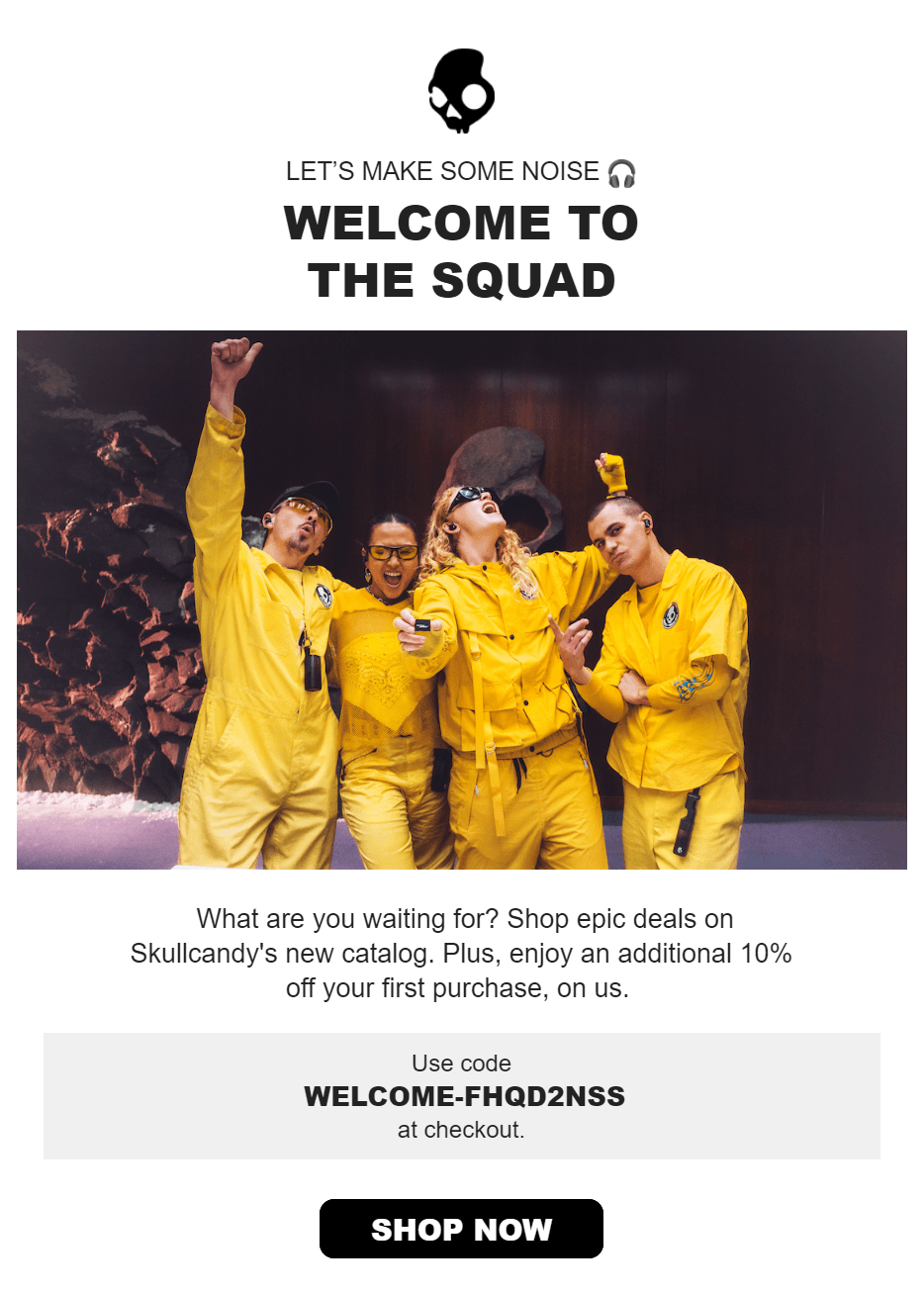
- The Discount Welcome Email: Ideal for subscribers attracted by an initial offer. This email prominently displays the discount code, its terms, and subtly encourages immediate use by showcasing popular products. Skullcandy’s "WELCOME TO THE SQUAD" message paired with a discount code is a strong example of combining brand voice with an incentive.
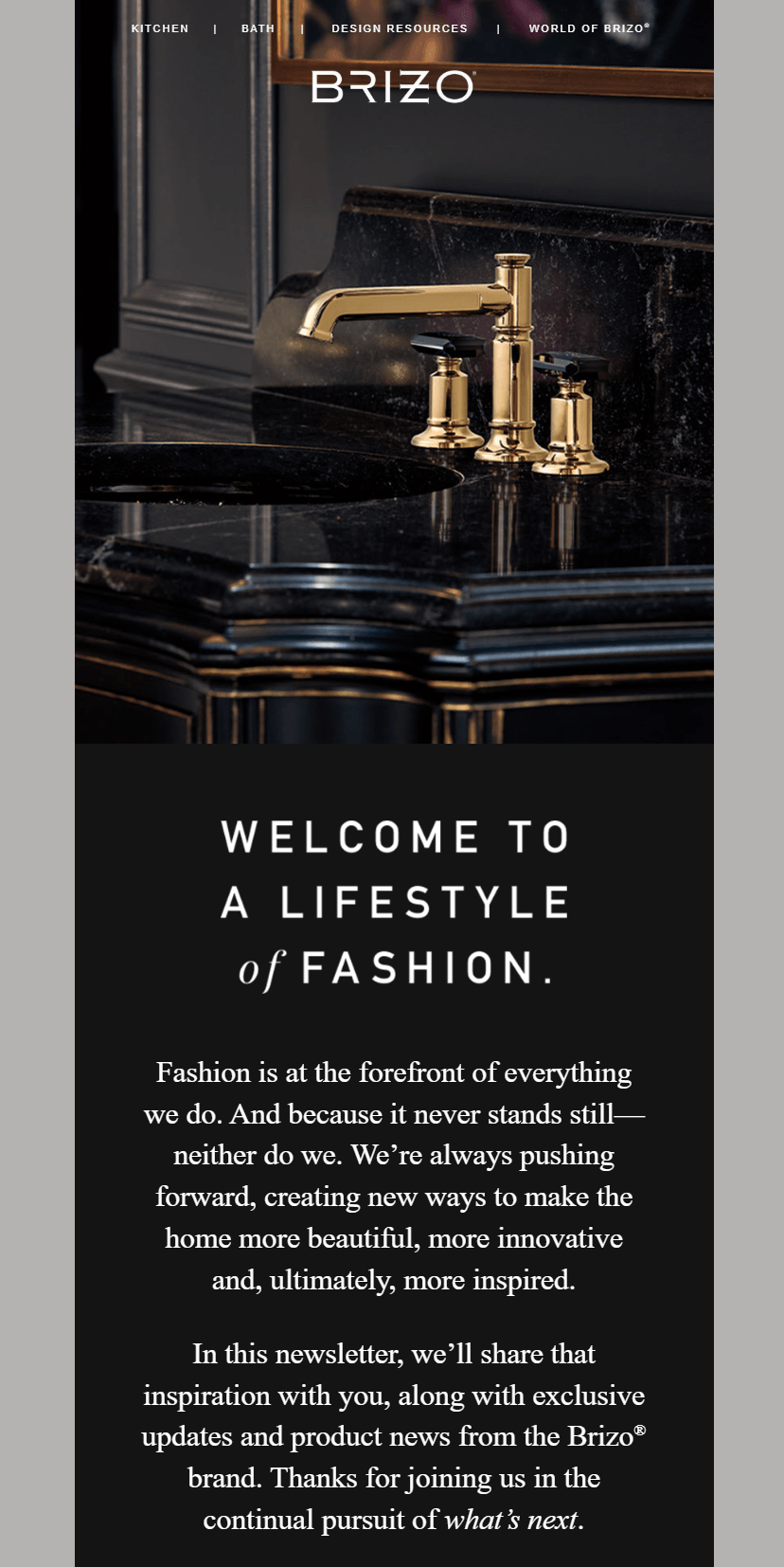
- The Brand Story Email: Focuses entirely on the brand’s narrative, origin, and values. This template is powerful for building emotional connections and differentiating the brand. Luxury faucet brand Brizo uses this to convey its positioning and vision, making it suitable for brands with a rich history or unique ethos.
- The Social Proof Email: Reinforces credibility by showcasing customer testimonials, ratings, and reviews. It assures new subscribers of the brand’s quality and customer satisfaction. Frugi, a children’s clothing retailer, effectively uses star ratings and images of happy children to build trust.
- The Brand Differentiation Email: Highlights what makes the brand unique, whether it’s sustainable practices, handcrafted quality, or a particular lifestyle focus. This is particularly effective for brands in competitive niches or those with strong ethical values. LoveBeeBaby’s use of "honeycomb-style" facts about handmade products and organic cotton is a creative example.
- The "Personal Letter from the Founder" Email: Designed to create an intimate, high-touch experience, often reserved for high-value customers or VIPs. While automated, the tone is deeply personal, coming directly from a founder or key executive, expressing genuine appreciation. This often uses plain text to enhance authenticity, as seen in the Luxury Hamper Club example.
Optimizing for Sustained Performance
The journey of welcome email optimization is continuous. While email marketing tools provide baseline metrics like open, click, and conversion rates, true ROI comes from iterative testing and refinement.
- A/B Testing: This involves creating two versions of an email (A and B) with a single variable changed (e.g., subject line, CTA button color, image, offer) and sending them to different segments of your audience. Analyzing which version performs better provides data-driven insights for future campaigns. For instance, testing "Spring Sale! Hurry, offer valid only this week" against "50% off for all spring items!" might reveal a significant difference in click rates, guiding future subject line choices.
- Personalization and Segmentation: Beyond just using a customer’s name, personalization can extend to dynamic content based on browsing history, past purchases, or demographic data. Segmenting audiences allows for highly tailored welcome experiences, recognizing that a first-time purchaser might need a different welcome than a newsletter subscriber.
- Timing and Frequency: Experiment with the delays between emails in a series. While Omnisend suggests a 1-minute, 1-day, 4-day sequence, optimal timing can vary by industry and audience. Some products might benefit from a quicker follow-up, while others require more time.
- Content Refinement: Regularly review email content for clarity, conciseness, and effectiveness. Are the benefits clear? Is the call-to-action compelling? Are there any points of friction?
- Mobile Responsiveness: Given that a significant portion of emails are opened on mobile devices, ensuring templates are fully responsive and load quickly is paramount.
The success story of FiGPiN, a retailer of enamel character pins, vividly illustrates the power of an optimized welcome series. Their three-part automated welcome sequence achieved a remarkable 63% open rate and a 22% conversion rate. Crucially, these automated emails, despite accounting for only 9% of total email sends, generated 24% of the brand’s total email revenue. This case study underscores the disproportionate impact well-executed welcome flows can have on overall marketing performance and revenue.
Broader Implications and Strategic Imperatives
In conclusion, welcome emails are far more than a formality; they are a strategic imperative for any e-commerce business aiming for sustainable growth and robust customer relationships. They represent the peak of customer intent, offering an unparalleled opportunity to:
- Maximize Customer Lifetime Value (CLTV): By fostering early engagement and driving initial purchases, welcome emails set the stage for repeat business and higher CLTV.
- Reduce Customer Churn: A well-crafted welcome experience can significantly reduce the likelihood of early unsubscribes or customer disengagement by immediately demonstrating value and building rapport.
- Strengthen Brand Loyalty: Beyond transactions, welcome emails help establish an emotional connection, turning new customers into brand advocates.
- Optimize Conversion Funnels: They act as a critical step in the sales funnel, guiding new leads towards conversion with relevant information and compelling offers.
Platforms like Omnisend provide businesses with the sophisticated tools needed to master welcome emails, offering pre-built automation flows, multichannel capabilities (integrating SMS and web push notifications), A/B testing functionalities, and comprehensive analytics with revenue attribution. These tools empower brands to create personalized, high-converting welcome experiences that not only meet customer expectations but consistently exceed them, transforming initial interest into lasting brand advocacy and substantial revenue gains. The strategic investment in optimizing welcome email templates is, therefore, not just a best practice, but a fundamental driver of e-commerce success in an increasingly competitive digital marketplace.









