


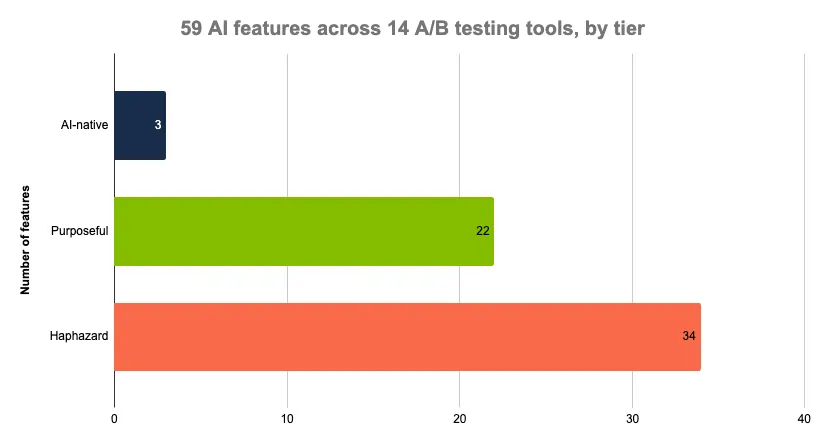
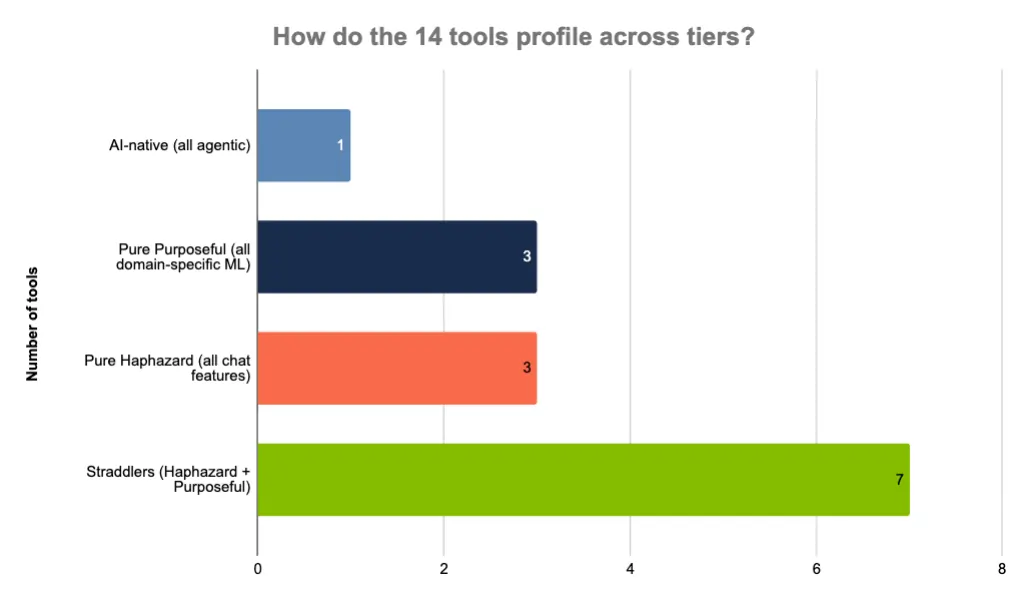
The landscape of digital experimentation has reached a critical inflection point as of June 2026, characterized by a proliferation of artificial intelligence claims that often obscure the actual technical utility of the tools. A comprehensive audit of 14 leading A/B testing platforms reveals that while 71% of vendors prominently feature AI in their primary marketing headers, the majority of these implementations remain superficial. Of the 59 distinct AI features analyzed across the industry, 58% were identified as "chat-based wrappers"—interfaces that translate natural language into existing software commands without introducing new analytical capabilities. Only 37% of features utilize domain-specific models to provide genuinely new functionality, and a mere 5% represent a fully agentic, AI-native approach to optimization.

This investigation, based on official vendor documentation and live product assessments retrieved in June 2026, suggests that the term "AI-powered" has become the modern equivalent of the "smart" label applied to televisions in the early 2010s. In that era, a "smart TV" could range from a device with a fully integrated operating system to one with a single internet-enabled port. Similarly, in the current experimentation market, the AI label provides little clarity regarding whether a tool offers a sophisticated predictive engine or a simple large language model (LLM) integration.
A Taxonomy of Intelligence: The Three Tiers of AI Implementation
To provide a framework for evaluating these technologies, the audit categorized the 59 features into three distinct tiers based on their underlying mechanisms and the degree to which they innovate beyond existing platform capabilities.

Tier 1: Haphazard Implementations
The most prevalent category, comprising 58% of all features, is defined as "Haphazard." These are typically chat interfaces layered over a product’s pre-existing architecture. In these instances, the AI serves as a translator, converting a user’s plain-language request—such as "create a variant for mobile users in Germany"—into the specific API calls or database entries the platform was already capable of handling.
The audit notes that if the chat interface were removed, the product’s core functionality would remain unchanged. While these features reduce the number of manual clicks required to set up a test, they do not offer a competitive advantage in terms of statistical depth or predictive insight. Most vendors in this category utilize enterprise versions of OpenAI’s GPT or Google’s Gemini, creating a high degree of commoditization across the sector.
Tier 2: Purposeful Implementations
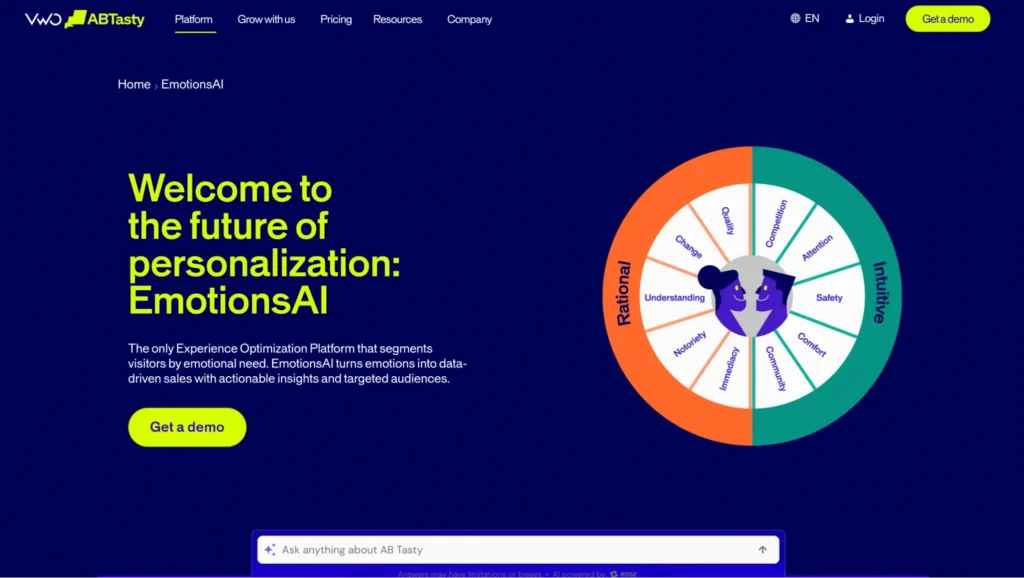
Accounting for 37% of features, "Purposeful" AI represents a significant step up in utility. These features perform tasks that the platform could not previously execute, or could not execute at scale. This tier is characterized by domain-specific models trained on the vendor’s proprietary datasets, such as years of accumulated visitor behavior or conversion patterns. Examples include predictive visitor scoring and emotional-needs segmentation. Because these models rely on private data, they cannot be easily replicated by a third-party LLM, creating a more defensible technological moat for the vendor.
Tier 3: AI-Native Implementations
Representing only 5% of the market (equivalent to three of the 59 features), "AI-native" tools are built entirely around an agentic loop. In this model, the AI does not wait for human instructions to create a test. Instead, it autonomously observes traffic, identifies friction points, proposes hypotheses, executes variants, and rolls out winning experiences. The product is defined by the agent; without it, the tool would effectively cease to exist.
The Competitive Landscape: Tool-Specific Analysis
The audit highlights a wide variance in how established players and newcomers are integrating these technologies.
Optimizely and the Role of Specialized Agents
Optimizely has moved toward a multi-agent strategy through its "Opal" system. Rather than a single chat box, Opal utilizes specialized agents for different functions: one reviews configurations for statistical viability, another drafts hypotheses, and a third summarizes program-level metrics. According to Optimizely’s 2025 Opal AI Benchmark Report, which analyzed 47,000 interactions across 900 companies, users of the Opal system ran 78.7% more experiments than non-users. This suggests that while much of the technology may fall into the "Haphazard" tier, it is successfully removing the operational friction that historically limited experiment velocity.
VWO and Kameleoon: Streamlining Creation
VWO Copilot and Kameleoon’s Prompt-Based Experimentation (PBX) represent the industry standard for Tier 1 integration. Both tools allow users to describe an experiment in natural language to generate variants and audience segments. VWO has integrated image variation generation and session recording summarization, powered by enterprise-grade models where no personally identifiable information (PII) is stored or used for training. Kameleoon has leaned heavily into this positioning, now leading its homepage with its prompt-based capabilities.
AB Tasty and the Shift Toward Predictive Intelligence
In the "Purposeful" category, AB Tasty’s EmotionsAI segments anonymous visitors into ten emotional-needs cohorts within 30 seconds of landing. By utilizing behavioral signals rather than third-party cookies, the model—trained on AB Tasty’s proprietary data—claims to drive a 5-10% revenue lift through automated personalization. Similarly, Kameleoon’s Conversion Score (KCS) uses an in-house machine learning model to provide a 0-100 likelihood-to-convert score for every visitor after a seven-day learning phase.

Traditional Machine Learning: Adobe and Dynamic Yield
It is important to distinguish current generative AI trends from classical machine learning. Adobe Target (via Adobe Sensei) and Dynamic Yield (via AdaptML) have utilized model-based scoring and traffic allocation for years. These "Purposeful" features use recurrent neural networks and NLP to optimize recommendations across channels. While they may not feature the conversational "hype" of 2026, they represent the foundational data science that many newer tools are still attempting to emulate.
The Rise of the Experimentation Agent
The most radical shift in the industry occurred in January 2026 with the launch of Runner AI. Founded by former Google DeepMind engineers, the platform operates as a fully autonomous storefront agent. Unlike traditional tools where a human marketer decides what to test, Runner AI monitors user behavior in real-time and runs continuous multivariate tests on layout, copy, and promotions without manual intervention. This represents the first true "AI-native" platform in the audit, signaling a move away from "A/B testing as a tool" toward "optimization as a service."
Technical Infrastructure: The Role of MCP Servers
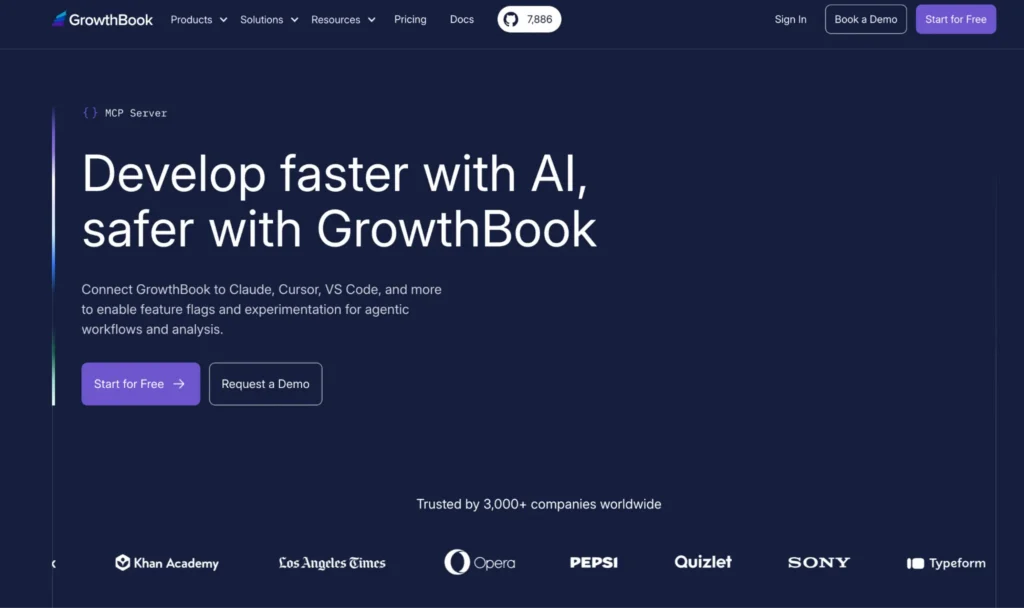
A significant technical trend identified in the audit is the emergence of the Model Context Protocol (MCP). This protocol allows external AI clients—such as Claude Code, Cursor, or ChatGPT—to communicate directly with an experimentation platform’s API.
GrowthBook and Statsig have led the way in this area. GrowthBook shipped the first production MCP server for experimentation in early 2025, enabling developers to manage gates and experiments directly from their coding environment. This shift is critical because it bypasses the need for a vendor-specific chat box. If a developer can control their experimentation platform through a general-purpose AI assistant, the value of a proprietary "haphazard" chat layer diminishes. This highlights a future where the "moat" for a vendor is not their user interface, but the quality of their data and the robustness of their API.
Market Consolidation and Industry Reactions
The rapid advancement of AI has coincided with significant market consolidation. In the past year, four of the 14 tools audited have changed hands:
- VWO and AB Tasty merged under Wingify (Everstone Capital).
- Eppo was acquired by Datadog to form Datadog Experiments.
- SiteSpect was acquired by Monetate and rebranded as Monetate Maestro.
- Convertize was acquired by Glassbox.
This consolidation suggests that AI roadmaps are increasingly being folded into broader "experience platforms." For practitioners, this raises questions about whether specialized AI features will remain distinct capabilities or be diluted into general suite functionalities.

In response to this trend, some vendors are focusing on "Foundational Trust." Dennis van der Heijden, founder of Convert Experiences, has publicly criticized the industry’s rush to release AI features without proper infrastructure. Convert’s strategy focuses on building "plumbing" first—version control, approval workflows, and audit trails. The argument is that once an autonomous agent begins modifying a website, the primary concern for an enterprise is not the AI’s creativity, but the ability to audit, approve, and roll back its changes.
Data Sovereignty and Ethical Considerations
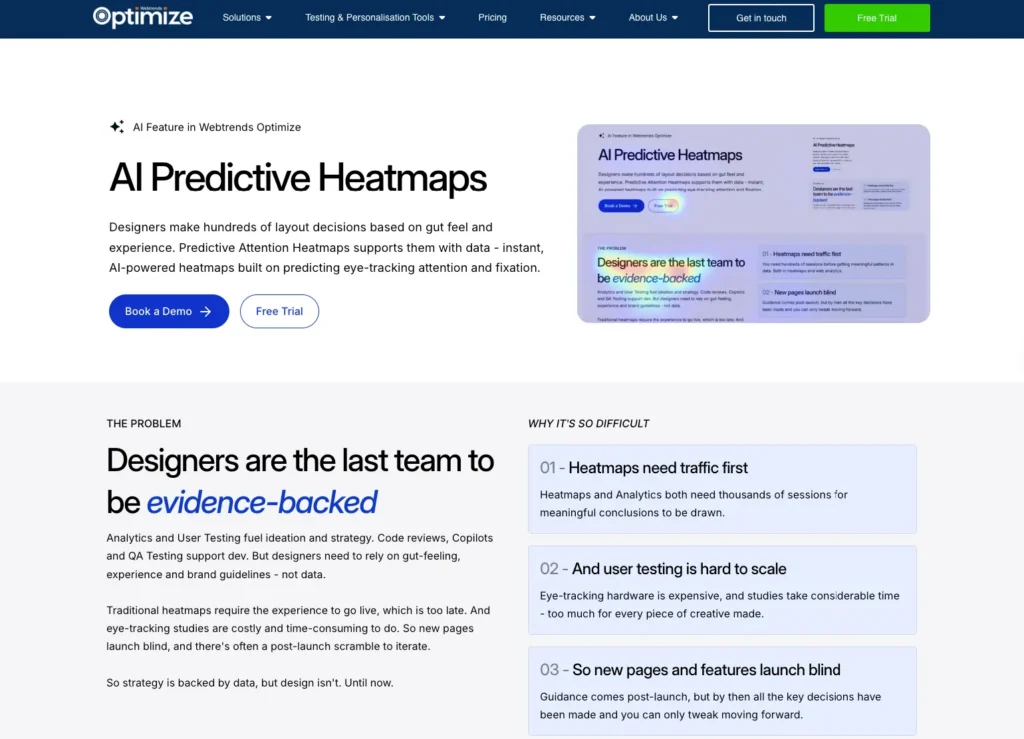
The audit also identified a growing divergence in how vendors handle data privacy. Webtrends Optimize has introduced "Sovereign AI," which utilizes local models on proprietary hardware rather than making third-party API calls to OpenAI or Gemini. Their position is that sending customer experiment data to external LLMs poses a data-sovereignty risk that many vendors are not adequately disclosing. This "privacy-first" AI model represents a new competitive angle in a market increasingly wary of how large models utilize sensitive business data.

Broader Implications for the Experimentation Industry
The findings of this audit suggest that the A/B testing industry is undergoing a "thinning of the herd." The commoditization of the chat-based interface (Tier 1) means that vendors can no longer rely on "generative" features to command a premium price.
The real value in the 2026 market lies in Tier 2 (Purposeful AI) and Tier 3 (AI-native) implementations. For businesses, the takeaway is clear: when evaluating a platform’s AI claims, the "mechanism test" should be applied. If the AI is removed, and the core capability of the tool remains, the feature is likely a productivity enhancer rather than a strategic innovation.

As the industry moves toward a more agentic future, the role of the human experimenter is also shifting. The focus is moving away from the manual setup of tests and toward the supervision of AI agents. The successful experimentation programs of the late 2020s will likely be those that pair "AI-native" speed with "Foundational" human-led governance and proprietary, domain-specific data models.







