


The global eCommerce A/B testing software market is projected to reach a valuation of $12.5 billion by 2032, expanding at a compound annual growth rate (CAGR) of 16.2%. This significant financial trajectory underscores a fundamental shift in digital retail strategy: experimentation is no longer a peripheral activity but a core pillar of modern business growth. As the digital marketplace becomes increasingly saturated in 2026, the ability to systematically test product pages, promotional banners, and checkout sequences has transitioned from a competitive advantage to an operational necessity.
The current landscape of digital commerce is defined by rising customer acquisition costs (CAC) and diminishing returns on traditional advertising. Consequently, the industry’s focus has pivoted toward conversion rate optimization (CRO) and maximizing the value of existing traffic. This guide provides an exhaustive analysis of the premier A/B testing platforms available for eCommerce enterprises in 2026, offering insights into how these tools facilitate continuous experimentation to drive measurable revenue growth.

The Strategic Importance of Experimentation in 2026
In the high-stakes environment of online retail, even marginal adjustments to the user interface can yield substantial dividends. A/B testing allows cross-functional teams to deploy variations of navigation flows and checkout experiences while monitoring real-time user reactions. This data-driven approach mitigates the risks associated with "gut-feeling" design changes.
Industry experts emphasize that the most successful eCommerce brands are those that have institutionalized a culture of testing. Cameron Calder, the founder of Hype Digital, noted in a recent industry forum that teams often fall into the trap of implementing changes based on internal assumptions. "What teams really need is proof of concept backed by data, so every change is measured against its actual impact and aligned with business goals, rather than implemented on instinct," Calder stated.
The benefits of a robust experimentation framework are five-fold:

- Conversion Rate Enhancement: By validating changes through statistical significance, teams can identify which specific elements—such as call-to-action (CTA) button colors or product description lengths—actually drive purchases.
- Behavioral Insight at Scale: Modern platforms integrate heatmaps, session recordings, and funnel analysis, allowing retailers to identify friction points where shoppers hesitate or abandon their journey.
- Operational Efficiency: High-tier tools provide the infrastructure to run dozens of simultaneous tests without degrading site performance.
- Friction Reduction: Continuous testing leads to smoother purchase paths, which compounds over time into significantly higher lifetime value (LTV).
- Maximizing Traffic ROI: As the cost of clicks continues to rise, generating more value from existing visitors through optimized average order value (AOV) is the only sustainable path to profitability.
Top A/B Testing Platforms for 2026: A Comparative Analysis
Choosing the correct platform requires a balance between technical capability, ease of use, and integration depth. The following tools represent the vanguard of experimentation technology for the current year.
1. VWO AB Tasty
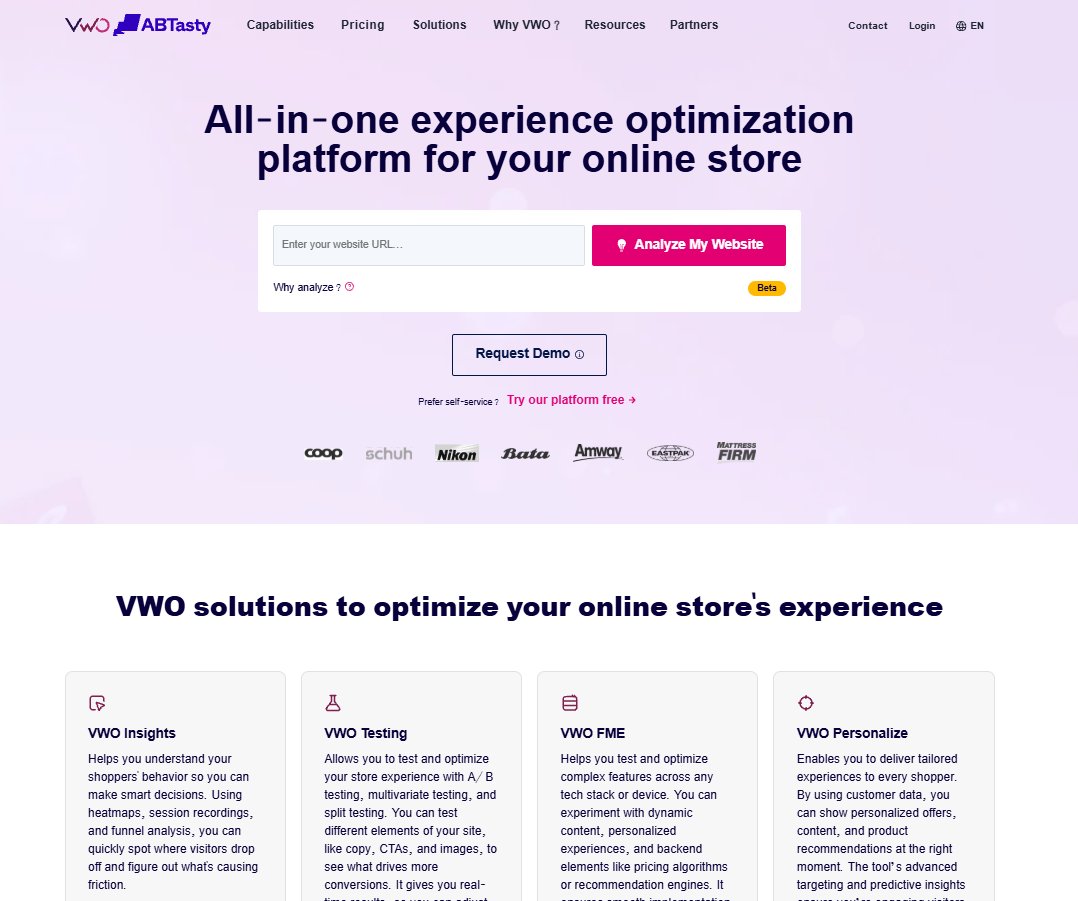
VWO AB Tasty has emerged as a dominant end-to-end experimentation suite, supporting A/B, multivariate, and split URL testing across web, mobile, and server-side environments. Its primary differentiator is the Bayesian SmartStats engine, which provides faster and more reliable decision-making data than traditional frequentist models.
In 2026, VWO has integrated advanced AI capabilities to automate the more tedious aspects of testing, including the generation of test hypotheses and the creation of copy variations. Its strengths lie in its ability to connect qualitative behavioral insights with quantitative performance data. However, users should note that it currently lacks a native merchandising recommendation engine, requiring third-party integrations for those specific functions.
2. Dynamic Yield
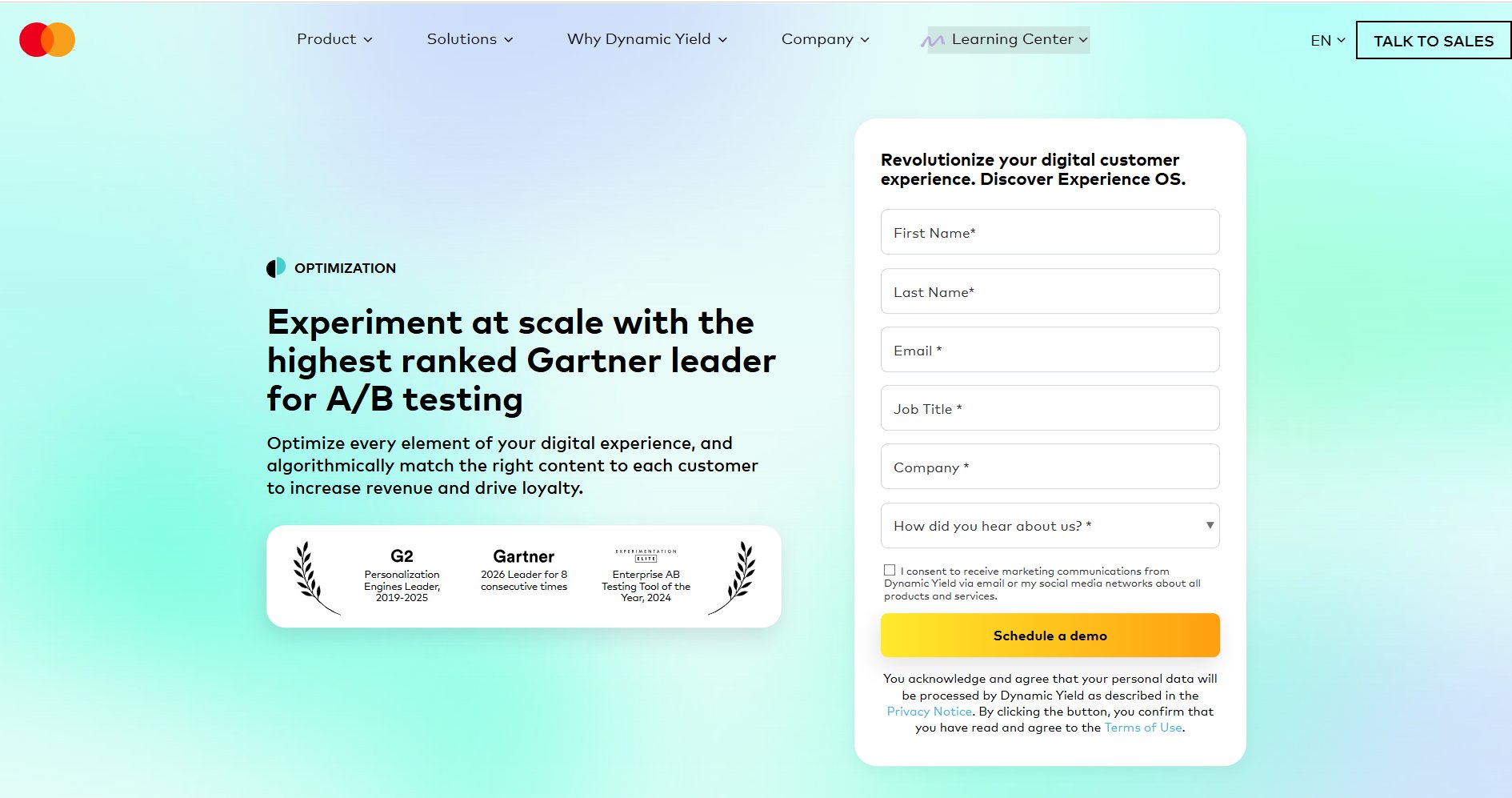
An enterprise-grade solution, Dynamic Yield is often the choice for large-scale digital businesses that require a marriage of personalization and experimentation. Its "Experience OS" centralizes customer data, allowing for omnichannel testing across email, web, and mobile apps.
The platform is particularly noted for its multi-touch campaigns and server-side capabilities. While highly powerful, industry analysts suggest that Dynamic Yield requires a robust internal data team to fully leverage its sophisticated personalization algorithms.
3. Convert Experiences
For businesses seeking an affordable yet comprehensive full-stack solution, Convert Experiences remains a top contender. It is highly regarded for its privacy-first approach and seamless integration with various analytics stacks. It offers advanced audience targeting with over 40 filters, making it ideal for niche segmentation. A notable drawback is the lack of native behavioral analytics like heatmaps, which often necessitates a secondary tool like Hotjar or Microsoft Clarity.
4. Kameleoon
Kameleoon distinguishes itself through AI-powered targeting and its "Widgets Studio." It utilizes contextual bandit algorithms to dynamically allocate traffic to the best-performing variation in real-time. This "self-healing" test approach is particularly useful for short-term promotions where traditional testing cycles might be too slow.
5. Omniconvert
Specifically tailored for direct-to-consumer (D2C) brands, Omniconvert focuses on the entire customer lifecycle. Its "Reveal" product allows for RFM (Recency, Frequency, Monetary) analysis, which helps teams run tests specifically targeted at high-value or at-risk customer segments.
6. Shogun and Unbounce
These tools represent the specialized segment of the market. Shogun is the preferred choice for Shopify and BigCommerce merchants due to its native integration and ease of use for non-developers. Unbounce, conversely, remains the industry leader for landing page optimization, particularly for brands running heavy paid media campaigns that require rapid deployment of dedicated, high-conversion landing pages.

Key Features for the Modern eCommerce Stack
When evaluating these tools, decision-makers must look beyond basic A/B functionality. The following features are essential for a 2026 experimentation program:
- Multi-Campaign Safeguards: As brands run multiple tests simultaneously, "mutual exclusion" features are critical to ensure that a user in one test doesn’t have their experience skewed by another concurrent experiment.
- Visual WYSIWYG Editors: To maintain a high "velocity of experimentation," marketing teams must be able to launch simple frontend tests without waiting for developer sprints.
- Server-Side Testing: For complex changes like pricing algorithms or checkout logic, server-side testing is necessary to prevent the "flicker effect" and ensure data security.
- AI-Driven Insights: Anirban Chakraborty, founder of ConvertPolo, notes that AI is reshaping the industry by reducing the time required for implementation. "AI is set to play a crucial role in making experimentation more efficient and scalable, from inspiration to partial implementation," Chakraborty observed.
Integration Strategies and Implementation
The success of an A/B testing tool is often determined by how it is integrated into the existing eCommerce architecture. There are three primary methods:
Client-Side Integration
This involves placing a JavaScript snippet in the website’s header. It is the fastest way to get started and is ideal for testing UI elements like colors, layouts, and copy.
Server-Side Integration
Led by engineering teams, this method uses SDKs or APIs to execute experiments on the server before the page is rendered. This is essential for testing "deep" features like search algorithms, product recommendations, and backend logic.
Native Platform Integration
Platforms like Shopify and BigCommerce offer native apps (such as Shogun or Intelligems) that automate the connection between the testing tool and the store’s theme, significantly lowering the barrier to entry for smaller merchants.
Measuring Success: Critical KPIs for 2026
Data is only valuable if it is aligned with business outcomes. The most successful eCommerce experiments in 2026 focus on these key performance indicators:
- Revenue Per Visitor (RPV): This is the "north star" metric for many retailers, as it combines conversion rate and average order value to show the true financial impact of a change.
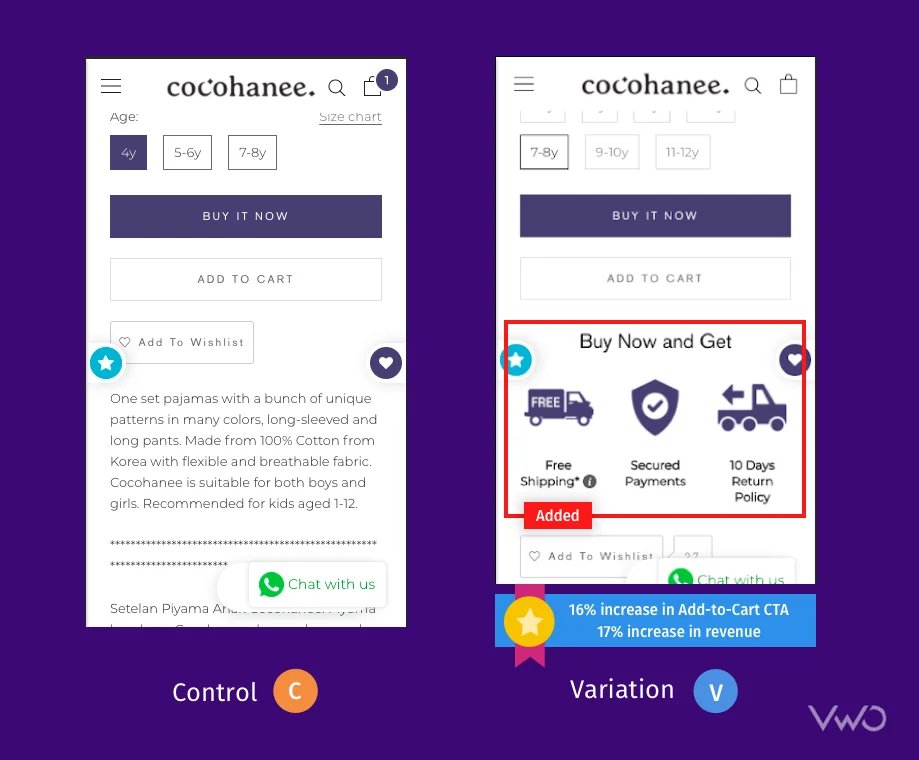
- Average Order Value (AOV): Testing product bundles or "frequently bought together" sections can lead to significant lifts in AOV. For instance, the brand Cocohanee reportedly achieved a 17% increase in AOV through UX improvements validated by testing.
- Cart Abandonment Rate: Reducing friction at the final stage of the funnel is often the most lucrative area for testing. ReplaceDirect, a Dutch retailer, reduced abandonment by 25% by simplifying their checkout overview.
- Customer Lifetime Value (CLV): While harder to measure in a short-term A/B test, sophisticated teams are now using long-term holdout groups to see how site changes affect repeat purchase behavior.
The Future Outlook: Privacy and Performance
As we progress through 2026, the A/B testing industry faces two major challenges: data privacy and site performance. With the continued deprecation of third-party cookies and the tightening of GDPR/CCPA regulations, testing tools are evolving to rely more on first-party data and anonymized behavioral patterns.
Furthermore, Google’s Core Web Vitals remain a critical ranking factor. Modern testing tools have responded by optimizing their code snippets to ensure that running an experiment does not negatively impact page load speeds, which would otherwise negate the gains found through optimization.
In conclusion, the $12.5 billion valuation of the A/B testing market is a testament to the indispensable role of data in the modern eCommerce ecosystem. For businesses to thrive in 2026, they must move beyond static storefronts and embrace a philosophy of continuous, data-backed evolution. By selecting the right tools and focusing on high-impact KPIs, retailers can ensure that every change they make is a step toward greater profitability and a superior customer experience.







