

The landscape of social commerce has undergone a radical transformation leading into 2026, as Meta Platforms Inc. continues to refine how businesses interact with consumers across Facebook and Instagram. While the initial promise of native, on-platform checkout has shifted toward a more integrated discovery-to-website model, the necessity for robust third-party applications has never been greater. For modern retailers, the challenge lies in maintaining a synchronized product catalog, ensuring accurate ad tracking amidst tightening privacy regulations, and managing multichannel distribution. This report analyzes the ten leading applications currently dominating the Meta e-commerce ecosystem, providing a comprehensive overview of their capabilities, market positioning, and technical utility.
The Evolution of Meta Commerce: A Chronological Context
To understand the current state of Facebook e-commerce apps, one must look at the strategic pivots made by Meta over the last several years. In 2020, at the height of the global pandemic, Meta launched "Facebook Shops" to provide a digital storefront for small businesses. By 2023 and 2024, the company transitioned away from processing native payments in several international markets, refocusing its efforts on "Discovery Commerce." This strategy emphasizes using social feeds as a storefront that drives high-intent traffic to a merchant’s own website.
As of June 2026, the priority for merchants has shifted from simple listing tools to sophisticated data-syncing engines. The emergence of the Meta Conversion API (CAPI) as a mandatory successor to the traditional browser-based Pixel has created a new category of "tracking-first" applications. Consequently, the apps listed below are no longer just optional add-ons but are essential infrastructure for any business seeking to capitalize on the nearly three billion active users across Meta’s family of apps.
Comprehensive Analysis of Top Facebook E-commerce Applications
1. Ecwid by Lightspeed: The Entry-Point Specialist
Ecwid remains the premier solution for entrepreneurs who lack a dedicated standalone website. As an "embeddable" commerce engine, it allows users to create a product catalog that lives directly on a Facebook Page or an Instagram profile. Since its acquisition by Lightspeed, the platform has integrated more advanced inventory management features. It is particularly effective for small-to-medium enterprises (SMEs) that require a "standalone" storefront without the overhead of a full Shopify or BigCommerce subscription.
2. CedCommerce: The Shopify All-in-One Integrator
For merchants operating on Shopify, CedCommerce has emerged as the leading alternative to Meta’s native integration. While the official Meta app often faces criticism for synchronization delays, CedCommerce provides real-time catalog updates and a unified dashboard for managing Facebook ad campaigns. Its primary value proposition in 2026 is its ability to handle complex product variants and custom attributes that often fail to sync correctly through standard channels.
3. AdTribes Product Feed PRO: The WooCommerce Standard
In the WordPress ecosystem, AdTribes has solidified its position as the most reliable tool for WooCommerce stores. With over 80,000 active installations, it provides a rules-based engine that allows merchants to filter which products are sent to Facebook. This is critical for stores with thousands of SKUs where only a specific subset is profitable for social advertising.
4. BigCommerce + Feedonomics Surface: Enterprise-Grade Syncing
BigCommerce’s native integration via Feedonomics Surface represents the "managed service" tier of the market. Feedonomics, known for handling massive data sets, allows BigCommerce merchants to optimize their product titles and descriptions specifically for the Facebook algorithm. This "Surface" version provides a lower-cost entry point for merchants who need enterprise-level reliability without the five-figure price tag of the full Feedonomics suite.
5. Meta for Adobe Commerce: The Professional Extension
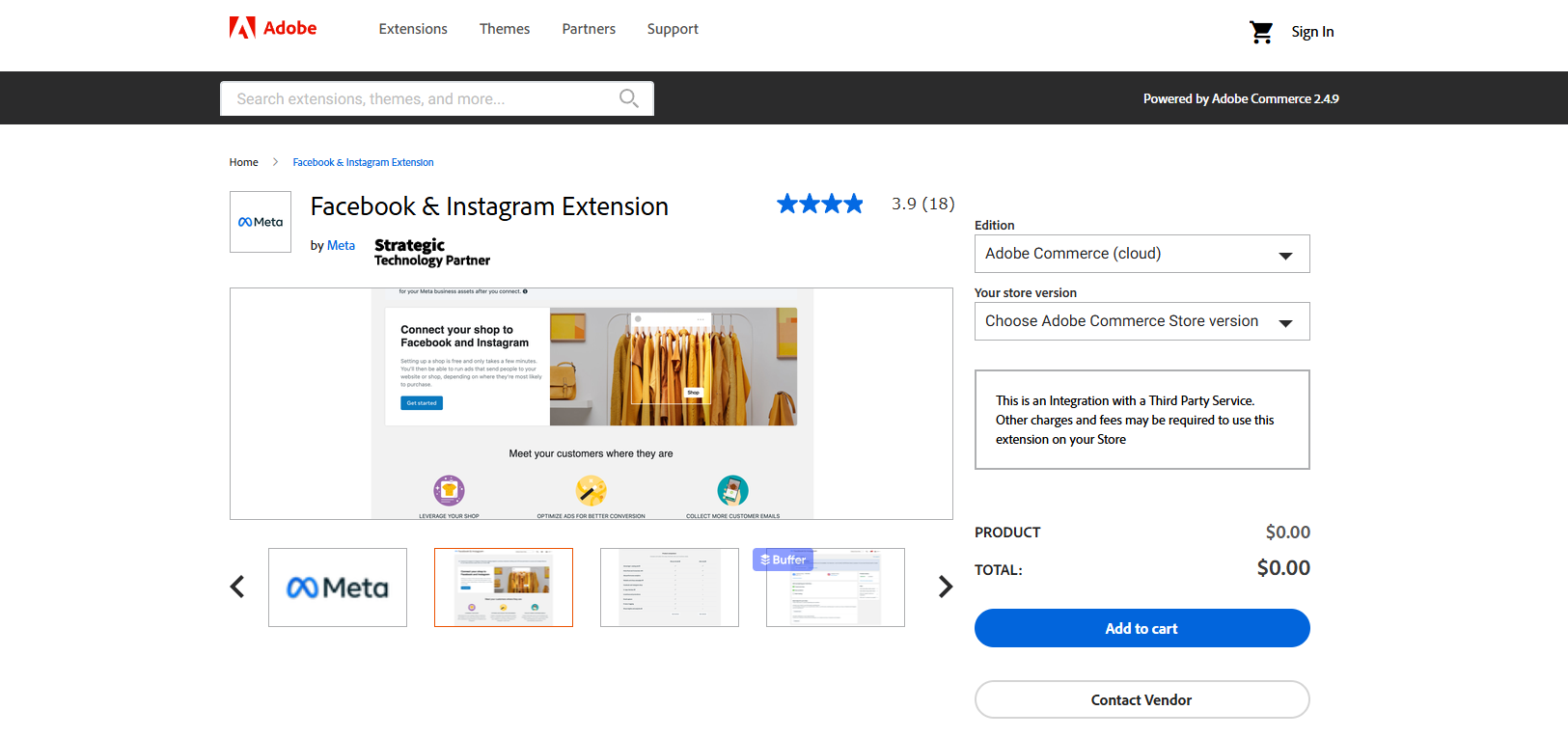
Adobe Commerce (formerly Magento) users typically require more technical control. The official Meta extension for this platform is designed for high-volume retailers who have the developer resources to manage server-side configurations. While it has a steeper learning curve, it offers the most direct connection to Meta’s Business Suite for large-scale catalog management.
6. Flexify: Creative Control and Dynamic Overlays
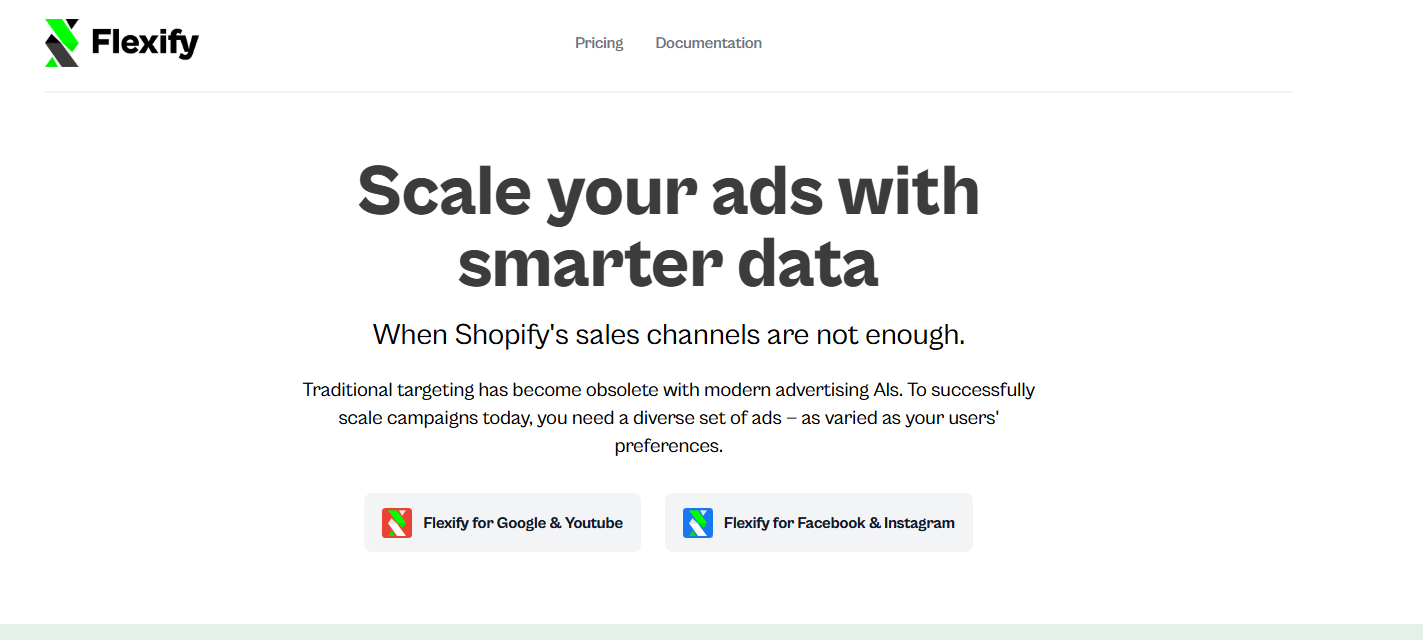
Flexify addresses a specific pain point in social advertising: the visual presentation of dynamic ads. Rather than showing a standard product photo, Flexify allows Shopify merchants to add "overlays" to their Facebook ads, such as "On Sale," "Limited Edition," or branded frames. In an era where visual fatigue is high, this creative control is essential for maintaining high click-through rates (CTR).
7. Omega Facebook Pixel Meta Feed: The Tracking Recovery Solution
Following the privacy changes introduced by iOS 14.5 and subsequent updates through 2025, tracking accuracy became the primary concern for advertisers. Omega specializes in server-side tracking for Shopify. By bypassing the browser and sending data directly from the server to Meta, Omega helps merchants recover "lost" conversion data that ad blockers or privacy settings would otherwise obscure.
8. Pixel Manager Pro for WooCommerce: Precision Data Management
Similar to Omega but built for the WordPress environment, Pixel Manager Pro is widely considered the gold standard for WooCommerce tracking. It prevents "duplicate event" reporting—a common issue where a single purchase is counted twice—and ensures that the "Purchase" value sent to Meta is accurate, including or excluding taxes and shipping based on the merchant’s preference.
9. Channable: Multichannel Rule-Based Management
Channable is positioned for the "power user" who sells on Facebook, Instagram, and dozens of other marketplaces simultaneously. Its strength lies in its "If/Then" logic. For example, a merchant can set a rule: "If the stock is lower than 5 units, do not show this product on Facebook." This prevents wasted ad spend on out-of-stock items, a frequent issue for high-velocity retailers.
10. LitCommerce: The Marketplace Expansion Tool
LitCommerce is designed for merchants who view Facebook and Instagram as just two pieces of a larger puzzle. It allows for the seamless synchronization of catalogs across Meta, Amazon, eBay, and TikTok Shop. For sellers looking to minimize administrative labor, LitCommerce provides a single "source of truth" for inventory across all social and marketplace channels.
Supporting Data: The Economic Impact of Social Discovery
Market data from 2025 and projections for 2026 underscore the importance of these tools. According to recent industry reports, approximately 40% of social media users now utilize Facebook primarily as a tool for product discovery. Furthermore, 62% of social buyers in the United States reported that their most recent purchase originated from a Facebook-based interaction.
The shift toward "off-platform" checkout has not dampened consumer intent. Data indicates that 29% of Instagram users have made a purchase directly influenced by a Reel or Story within the last 30 days. For the merchant, this means the "bridge" between the social app and the web store—maintained by the apps listed above—must be frictionless. Even a one-second delay in mobile load time or a discrepancy in price between the Facebook ad and the website can lead to a 20% drop in conversion rates.
Official Responses and Technical Standards
Meta has remained vocal about its commitment to the "Commerce Accelerator" program, encouraging third-party developers to build more robust CAPI integrations. In a statement regarding the evolution of Commerce Manager, Meta representatives emphasized that "the future of social commerce lies in the quality of data signals." This refers to the accuracy of the product feed and the reliability of the conversion data returned to the platform.
Technical analysts note that by mid-2026, the "Pixel" as we once knew it has become secondary to server-to-server communication. Apps that fail to provide a robust Conversion API (CAPI) setup are quickly losing market share to specialized tools like Omega and Pixel Manager Pro.
Strategic Implications for Retailers
The primary implication for retailers in 2026 is that e-commerce is no longer a "set and forget" operation. The choice of a Facebook e-commerce app directly impacts the Return on Ad Spend (ROAS). If a merchant uses a low-quality sync tool that results in "broken" links or incorrect pricing, Meta’s algorithm will penalize the merchant’s Quality Score, leading to higher advertising costs.
Furthermore, the rise of "Video-First" commerce means that product feeds must now include high-quality video assets. Apps like Channable and Feedonomics have adapted by allowing merchants to map video URLs directly into the Facebook catalog, enabling more engaging Dynamic Product Ads (DPAs).
Conclusion: Navigating the Meta Ecosystem
Selling on Facebook and Instagram in 2026 requires a multi-layered approach. A merchant needs a reliable "Sync" layer to keep the catalog updated, a "Creative" layer to ensure ads look professional, and a "Tracking" layer to measure success. While the native tools provided by Meta offer a starting point, the high-performance merchants of 2026 are increasingly turning to specialized third-party applications to gain a competitive edge in a crowded digital marketplace. Whether a small business starting with Ecwid or a global brand utilizing Channable, the right software stack is now the defining factor in social commerce success.







