rifanmuazin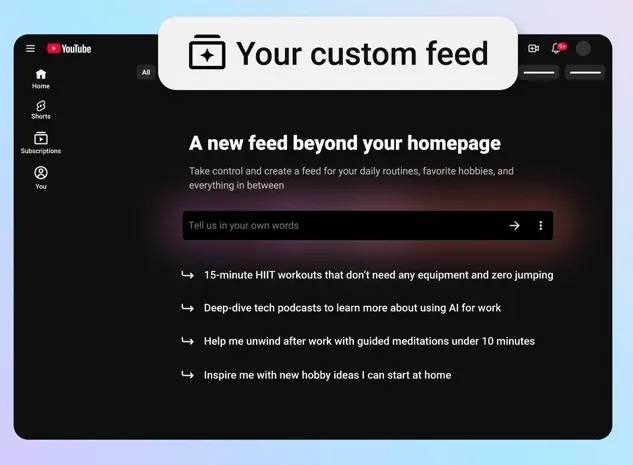
YouTube, the global video-sharing platform owned by Google, is significantly enhancing its user experience with the widespread rollout of an innovative AI-powered custom feed generation process. This new feature empowers users to exercise unprecedented control over their content discovery, moving beyond traditional algorithmic recommendations to a more personalized, conversational approach. The update, initially announced in November, reflects a broader industry trend towards integrating artificial intelligence into user interfaces, mirroring the intuitive interaction styles popularized by AI chatbots.
The Genesis of Personalized Discovery
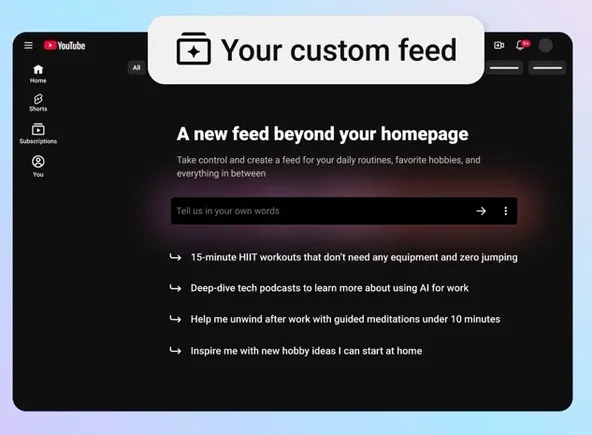
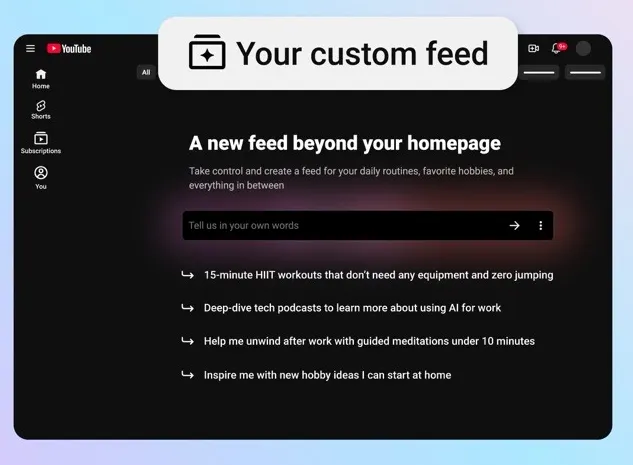
The new “Your Custom Feed” option allows users to articulate their desired viewing experience using natural language prompts. YouTube’s sophisticated AI then interprets these descriptions to generate a dedicated, dynamic content feed tailored to specific interests, moods, or topics. This marks a substantial evolution from YouTube’s long-standing recommendation engine, which primarily relies on watch history, subscriptions, and interaction patterns to suggest content. The platform’s previous discovery mechanisms, while effective in driving engagement, often led to a somewhat passive consumption experience, with users primarily reacting to what the algorithm presented.
As explained by YouTube in its official communication regarding the update, users can now “design a personalized content feed dedicated to your specific interests, moods, or favorite topics, and pin it as a saved chip right to the top of your Home page!” The process is designed to be straightforward: “Simply enter a custom prompt – like ‘give me something different beyond my usual feed’ or ‘help me unwind after work with guided meditations under 10 minutes’ – and we’ll create a new, constantly refreshing feed that you can quickly jump into at any time.” This capability promises to transform content consumption from a largely reactive process to a proactive, user-driven exploration.
A Chronology of Enhanced Discovery
The journey towards this advanced personalization began with preliminary tests and an official announcement in November of the previous year. While specific dates for the initial testing phases were not publicly detailed, the November announcement signaled YouTube’s commitment to refining its discovery tools. The current rollout commenced recently, targeting signed-in viewers within the United States. Availability is presently restricted to the YouTube mobile app and desktop interface, with interactions conducted in English. To access this feature, YouTube has stipulated that users must have their search and watch history enabled in their account settings, a prerequisite that underscores the data-driven nature of the AI’s ability to craft relevant feeds.
The phased rollout is typical for major platform updates, allowing YouTube to monitor performance, gather user feedback, and make iterative improvements before a wider global deployment. This strategic approach ensures system stability and optimizes the user experience, particularly given the novelty of a conversational AI interface for content curation.
The Broader Context: AI’s Ascent in User Experience
YouTube’s adoption of conversational prompts for feed generation is not an isolated development but rather a significant manifestation of the increasing integration of artificial intelligence across digital platforms. The past few years have witnessed a dramatic surge in the capabilities and mainstream adoption of AI chatbots, large language models (LLMs), and generative AI. From Google’s own Bard (now Gemini) to OpenAI’s ChatGPT, these tools have familiarized millions of users with the concept of interacting with AI through natural language, demonstrating AI’s capacity to understand complex queries and generate nuanced responses.
This societal shift in human-computer interaction has naturally influenced user expectations. People are becoming accustomed to expressing their needs in a more conversational, less structured manner and receiving intelligent, contextually aware outputs. YouTube’s custom feed initiative directly capitalizes on this evolving user behavior, aligning its discovery interface with a “less formal discovery style” that resonates with the broader AI trend. This move positions YouTube at the forefront of leveraging conversational AI to tackle the pervasive challenge of information overload, a common predicament for users navigating platforms with billions of videos.
Supporting Data: The Scale of YouTube and the Need for Better Discovery
The necessity for more refined content discovery tools on YouTube is underscored by the sheer scale of the platform. With over 2.7 billion monthly logged-in users and more than 1 billion hours of video watched daily, YouTube is an unparalleled repository of content. Every minute, hundreds of hours of new video are uploaded, creating an ocean of information that can be overwhelming for even the most dedicated user.
Traditional recommendation algorithms, while sophisticated, have limitations. They can sometimes lead to “filter bubbles” or “echo chambers,” where users are primarily shown content that reinforces their existing views or preferences, making it difficult to stumble upon diverse or novel topics. While some users appreciate this consistency, others seek opportunities to broaden their horizons or find content tailored to transient interests or specific moods not captured by their historical viewing patterns. The custom feed feature directly addresses this by allowing users to explicitly request content that deviates from their usual feed or caters to a temporary desire, such as “something different beyond my usual feed” or “relaxing music for studying.”

The global market for AI in media and entertainment is projected to grow substantially, indicating a clear trend towards AI-driven personalization and content creation. YouTube’s investment in this area is a strategic move to maintain its competitive edge and enhance user retention by offering a more responsive and adaptable content ecosystem.
Implications for Users: Enhanced Control and Discovery
For the end-user, the introduction of AI-powered custom feeds presents several significant advantages:
- Granular Control: Users gain unprecedented control over their content stream. Instead of being passive recipients of algorithmic suggestions, they become active architects of their viewing experience. This empowers them to curate feeds for specific purposes, from focused learning to casual entertainment.
- Breaking Filter Bubbles: The ability to explicitly request “something different beyond my usual feed” offers a direct mechanism to escape algorithmic echo chambers. This can lead to the discovery of new creators, genres, and perspectives that might otherwise remain hidden.
- Contextual Relevance: The custom feeds can adapt to momentary needs or moods. A user might want news in the morning, educational content at midday, and calming music in the evening. These different needs can now be addressed with dedicated, easily accessible feeds.
- Reduced Decision Fatigue: Faced with an endless scroll of videos, users often experience decision fatigue. Custom feeds, by narrowing down options based on specific prompts, can streamline the content selection process, making it quicker and more enjoyable to find relevant material.
- Personalized Experience: The feature deepens the personalization aspect of YouTube, making the platform feel more attuned to individual desires and preferences, leading to a more engaging and satisfying overall experience.
However, the efficacy of this feature hinges on the AI’s ability to accurately interpret complex or nuanced queries. While simpler prompts like “guided meditations” might be straightforward, more abstract requests could pose a challenge. YouTube’s ongoing refinement of its AI models will be crucial in ensuring that the system consistently delivers relevant results.
Impact on Content Creators: New Avenues for Discoverability
For the vast ecosystem of YouTube content creators, this update introduces both new opportunities and potential considerations:
- Diversified Discoverability: Creators whose content might not always align with broad algorithmic trends could find new avenues for discoverability. If a user explicitly searches for a niche topic, creators producing high-quality content in that area are more likely to be featured in a custom feed, irrespective of their subscriber count or typical viral potential.
- Emphasis on Specificity: This feature might encourage creators to be more precise with their video titles, descriptions, and tags. Clear, descriptive metadata will become even more vital for the AI to accurately match content to user prompts.
- Engagement with Niche Audiences: Creators focusing on highly specialized topics could benefit from connecting with deeply engaged niche audiences who actively seek out their specific content through custom feeds.
- Potential for Broader Reach: By allowing users to break out of their usual feeds, the system could inadvertently expose creators to new audiences who might not have discovered them through traditional recommendations.
Conversely, creators will need to understand how their content is being interpreted by the AI and how to optimize for conversational search queries. This could involve adapting content strategies to cater to specific user intents expressed through natural language.
Strategic Rationale for YouTube: Competitive Edge and AI Leadership
YouTube’s deployment of AI-powered custom feeds is a strategic move driven by several key factors:
- Competitive Differentiation: In an increasingly crowded digital landscape, where platforms like TikTok excel at hyper-personalized, short-form content delivery, YouTube needs to continually innovate its discovery mechanisms. This feature provides a significant differentiator, offering a level of user-driven customization that is currently unique among major video platforms.
- Leveraging Google’s AI Prowess: As a subsidiary of Google, YouTube benefits immensely from its parent company’s extensive research and development in artificial intelligence. This update showcases Google’s leadership in AI and its practical application to enhance core product offerings.
- Increased User Engagement and Retention: By making content discovery more intuitive, relevant, and engaging, YouTube aims to increase the time users spend on the platform and reduce churn. A more satisfying discovery experience directly translates to higher engagement metrics.
- Data-Driven Optimization: Each interaction with the custom feed feature provides YouTube with valuable data on user intent and content relevance, which can be fed back into its AI models to continuously improve recommendation accuracy and personalization capabilities across the entire platform.
Broader Industry Trends and Future Outlook
The introduction of conversational AI for content discovery on YouTube signals a broader trend that is likely to permeate other digital platforms. We can anticipate other social media, streaming services, and news aggregators exploring similar conversational interfaces to empower users and combat content overload. This shift could lead to a future where users interact with all their digital content through natural language, articulating their precise desires rather than passively scrolling or relying solely on pre-defined categories.
Furthermore, this development has implications for the advertising ecosystem. As users create highly specific, intent-driven feeds, advertisers may gain opportunities for more targeted and contextually relevant ad placements. Imagine ads for meditation apps appearing within a “guided meditations” custom feed, or travel ads within a “European travel vlogs” feed – the potential for hyper-segmentation is significant.
Looking ahead, the custom feed feature is expected to expand its availability beyond the U.S. and English language, eventually reaching YouTube’s global audience. As the AI models mature, the complexity and nuance of prompts they can accurately process will likely increase, offering even more sophisticated personalization options. This move by YouTube is not just an incremental update; it represents a foundational shift in how users will interact with and discover video content, cementing AI’s role as the indispensable architect of our digital experiences.