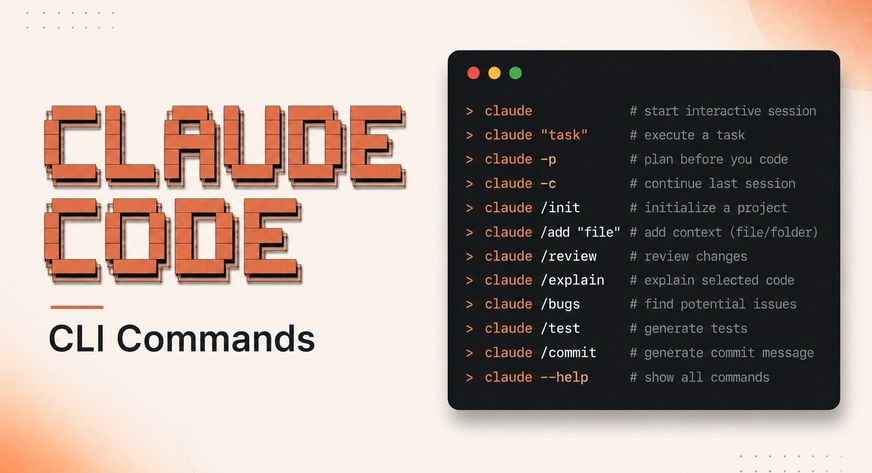
The emergence of terminal-based AI coding assistants has marked a significant shift in the software engineering landscape, with Anthropic’s Claude Code leading the transition toward keyboard-centric, agentic workflows. While many developers initially approach the tool as a conversational interface for code generation, a deeper examination of the Command Line Interface (CLI) reveals a sophisticated suite of hidden features designed for high-stakes enterprise development and automated pipeline integration. As of version 2.1.209, Claude Code has evolved beyond a simple wrapper for large language models (LLMs), offering granular session management, background execution, and robust cost-control mechanisms that are often overlooked in standard documentation.
The Evolution of the AI-Native Terminal
Claude Code represents Anthropic’s strategic move to integrate its Claude 3.5 and 3.7 Sonnet models directly into the developer’s "inner loop." Unlike IDE-based extensions that rely on graphical user interfaces, Claude Code operates within the shell, allowing it to execute bash commands, read file structures, and perform multi-step reasoning tasks autonomously. The recent release of version 2.1 and its subsequent iterations have introduced a series of flags and subcommands that address the primary frictions of AI-assisted coding: context loss, high API costs, and the "spinner-watching" problem where developers remain idle while the agent processes complex tasks.
Industry analysts note that the shift toward CLI-native agents is driven by the need for better integration with existing DevOps tooling. By operating in the terminal, Claude Code can be piped into other utilities, used in shell scripts, and deployed within Continuous Integration (CI) environments, providing a level of flexibility that traditional chat interfaces cannot match.
Advanced Session Management and Context Preservation
One of the most critical aspects of professional software development is the ability to manage multiple workstreams simultaneously. Standard usage of Claude Code often leads to "session fatigue," where developers repeatedly explain project architectures to the model. However, the CLI provides several flags to mitigate this:
- Persistent Context: The
-cflag allows developers to continue the most recent session within a specific directory, ensuring that previous explanations of the codebase remain in the model’s active memory. - Named Sessions: By using the
-n(name) and-r(resume) flags, developers can categorize their work by feature branch or ticket number (e.g.,claude -n "refactor-auth"). This allows for a clean separation of concerns, where the context for a security audit does not bleed into a UI refactor. - Session Branching: The
--fork-sessionflag provides a "Git-like" experience for AI interactions. It allows a developer to branch off an existing conversation to test a high-risk architectural change without corrupting the primary session transcript.
This structured approach to session management is vital for teams working on large-scale repositories where the "token cost" of re-indexing or re-explaining the project can become prohibitive.
Background Agents: Solving the Idleness Problem
A significant bottleneck in AI adoption has been the synchronous nature of the interaction. Developers often wait several minutes for an agent to complete an audit or a large-scale refactor. The introduction of the --bg (background) flag transforms Claude Code into an asynchronous worker.
When a task is initiated with the --bg flag, the CLI immediately returns control of the terminal to the user. The agent continues its operations in the background, managed by a supervisor daemon. Developers can monitor these tasks using the claude agents command, which provides a real-time status of all running and finished sessions. This allows for parallel productivity: a developer can write unit tests in one terminal while a background Claude agent performs a security scan of the API surface in another.
Further management commands, such as claude attach <id> and claude logs <id>, provide the necessary transparency for developers to check in on long-running tasks without interrupting the agent’s flow. The addition of the --exec flag even allows standard bash commands, such as long-running test suites, to be managed under the same background architecture.
Scripting, Piping, and Non-Interactive Integration
The true power of a CLI tool is realized when it can interact with other system utilities. The -p or --print flag is the cornerstone of this capability. It instructs Claude Code to execute a query, print the output to standard out (stdout), and exit immediately.
This functionality enables powerful piping workflows:
- Log Analysis:
cat server.log | claude -p "Identify the root cause of the 500 errors" - Code Review:
git diff main | claude -p "Review this diff for potential memory leaks" - JSON Extraction: Using the
--output-format jsonflag, developers can incorporate Claude’s reasoning into automated scripts, where the output is parsed by tools likejq.
To optimize these scripted calls, the --bare flag disables the auto-discovery of external plugins, MCP servers, and the CLAUDE.md file, significantly reducing the startup latency of the tool.
Economic Management and Cost Control
As AI agents become more autonomous, the risk of unmonitored API spend increases. Anthropic has addressed this by implementing "Effort Levels" and hard budget caps. The --effort flag (ranging from low to high or ultracode in newer versions) allows developers to match the model’s reasoning depth to the task’s complexity. A simple documentation update does not require the same computational resources as a complex database migration.
Furthermore, the introduction of --max-budget-usd and --max-turns provides a safety net for automated tasks. If an agent enters an "infinite loop" or a recursive error-correction cycle, these flags will terminate the session once a specific financial or operational threshold is met. As of version 2.1.217, these caps also apply to subagents, ensuring that complex, multi-agent workflows do not result in unexpected billing surprises.
Permission Architectures and Security Protocols
Security remains a primary concern for organizations integrating AI into their development lifecycle. Claude Code utilizes a tiered permission system to balance autonomy with human oversight. There are six distinct modes, ranging from plan (where the model only describes what it would do) to bypassPermissions (intended for isolated CI environments).
The plan mode has emerged as a favorite among senior engineers, as it allows for a "dry run" of a complex change. The model provides a detailed strategy, which the engineer can review before granting the agent write access to the filesystem. Additionally, the --allowedTools and --disallowedTools flags allow administrators to restrict the agent’s capabilities, such as preventing it from executing specific bash commands like rm -rf or accessing unauthorized MCP servers.
The Model Context Protocol (MCP) and Connectivity
The Model Context Protocol is the standard that allows Claude Code to interact with external data sources such as Jira, Slack, GitHub, and local databases. The CLI has recently been updated with commands to manage these connections more efficiently. The claude mcp list command provides a diagnostic view of all connected servers, while claude mcp login facilitates OAuth flows directly from the terminal.
A particularly useful feature for power users is claude mcp add-from-claude-desktop, which synchronizes server configurations across different Anthropic environments. This integration ensures that the agent has a consistent view of the developer’s ecosystem, whether it is running in a local terminal or a remote SSH session.
Diagnostics and System Health
To maintain the reliability of the tool, Anthropic included the claude doctor command. This diagnostic utility checks the health of the installation, verifies authentication tokens, and identifies syntax errors in configuration files. In cases where custom plugins or hooks cause instability, the --safe-mode flag allows developers to start a clean session with all customizations disabled, facilitating rapid troubleshooting.
The claude update and claude respawn --all commands ensure that developers can stay current with the frequent release cycles of the tool. Given that background agents run on the binary version active at the time of their initiation, the respawn command is essential for migrating long-running tasks to a newly updated version of the software.
Broader Impact on Software Engineering
The move toward highly configurable, CLI-based AI agents signals a maturation of the AI coding market. By providing developers with the tools to manage context, cost, and concurrency, Anthropic is positioning Claude Code as a professional-grade utility rather than a mere novelty.
Experts suggest that as these CLI features become more widely adopted, we will see a shift in the "Inner Loop" of software development. The role of the engineer is evolving from a primary writer of code to a "system orchestrator" who manages a fleet of specialized AI agents. The ability to master the CLI is no longer just a productivity hack; it is becoming a foundational skill for the modern developer. The comprehensive set of flags and commands within Claude Code provides the necessary infrastructure for this new era of automated, intelligent, and highly efficient software production.