The opioid epidemic represents one of the most profound public health challenges in modern American history, evolving from a localized crisis of over-prescription into a national emergency characterized by high mortality rates and complex socioeconomic consequences. While the crisis began with the liberal distribution of prescription painkillers in the late 1990s, it has since transitioned through multiple phases, involving heroin and, most recently, potent synthetic opioids like fentanyl. To understand the scale of this issue, researchers and analysts have increasingly turned to large-scale datasets from the Centers for Disease Control and Prevention (CDC), the United Nations Office on Drugs and Crime (UNODC), and demographic studies to map the trajectory of addiction and death.
The Evolution of an Epidemic: A Three-Wave Chronology
The current crisis did not emerge in a vacuum; rather, it is the result of three distinct "waves" of drug-related mortality that have overlapped to create the current landscape of the epidemic.
The first wave began in the late 1990s, following the introduction of highly potent prescription opioids. Pharmaceutical companies reassured the medical community that patients would not become addicted to prescription opioid pain relievers, leading healthcare providers to prescribe them at greater rates. This increased availability led to widespread diversion and misuse of these medications before it became clear that these medications could, indeed, be highly addictive.
The second wave arrived around 2010, marked by a rapid increase in overdose deaths involving heroin. As authorities began to crack down on "pill mills" and the over-prescription of painkillers, many individuals who had developed a dependency on prescription opioids transitioned to heroin, which was often cheaper and more readily available on the illicit market.
The third and most lethal wave began in 2013, characterized by a significant spike in overdose deaths involving synthetic opioids, particularly illicitly manufactured fentanyl. Fentanyl is approximately 50 to 100 times more potent than morphine and is often mixed into heroin, cocaine, and counterfeit pills, frequently without the user’s knowledge. This has led to a dramatic increase in accidental overdoses, as even a microscopic amount of the substance can be fatal.
Comparative Analysis of Drug Usage and Lethality
When examining data from sources such as FiveThirtyEight and the UNODC, a startling disparity emerges between the prevalence of drug use and the rate of drug-related fatalities. Data suggests that while substances like marijuana or even cocaine may have higher numbers of lifetime users, heroin and synthetic opioids possess a disproportionately high "lethality-to-user" ratio.
In the 20-34 age demographic, heroin usage is more pronounced than in older populations. However, the raw number of heroin users remains relatively small compared to the massive death toll it exacts. This indicates that the danger of opioids is not merely in their popularity, but in their inherent toxicity and the narrow margin for error regarding dosage. In contrast, drugs like cocaine and crack show a broader distribution among older age groups but do not currently mirror the exponential growth in mortality seen in the opioid sector, though recent data suggests that fentanyl-laced stimulants are beginning to close this gap.
The demographic data highlights that the opioid crisis is particularly devastating for young adults in their prime working years. This creates a secondary economic impact, as the labor force participation rate declines in areas heavily hit by the epidemic, and the cost of foster care and social services rises as families are torn apart by addiction.
The United States in a Global Context
The United States occupies a unique and troubling position in the global landscape of drug overdoses. According to UNODC data, the U.S. leads the world in overdose deaths both in absolute numbers and when adjusted per million people. While the drug crisis is a global phenomenon, the intensity of the American experience is an outlier among developed nations.
Several factors contribute to this disparity. The U.S. healthcare system’s historical reliance on pharmaceutical intervention for pain management differs significantly from the practices in many European and Asian countries. Furthermore, the sheer volume of illicit synthetic opioids entering the U.S. market has outpaced the regulatory and law enforcement responses found in other jurisdictions.
While the U.S. remains the epicenter, other nations are not immune. Iceland, for instance, shows high rates of deaths per million, though its small total population means that even a few dozen deaths can significantly skew the statistical average. Countries such as Sweden, Australia, and El Salvador also report concerning trends, yet their overdose rates remain substantially lower—often less than half—than those recorded in the United States. This suggests that while addiction is a universal human issue, the specific "opioid environment" in the U.S. is uniquely lethal.
Regional Hotspots and State-Level Trends
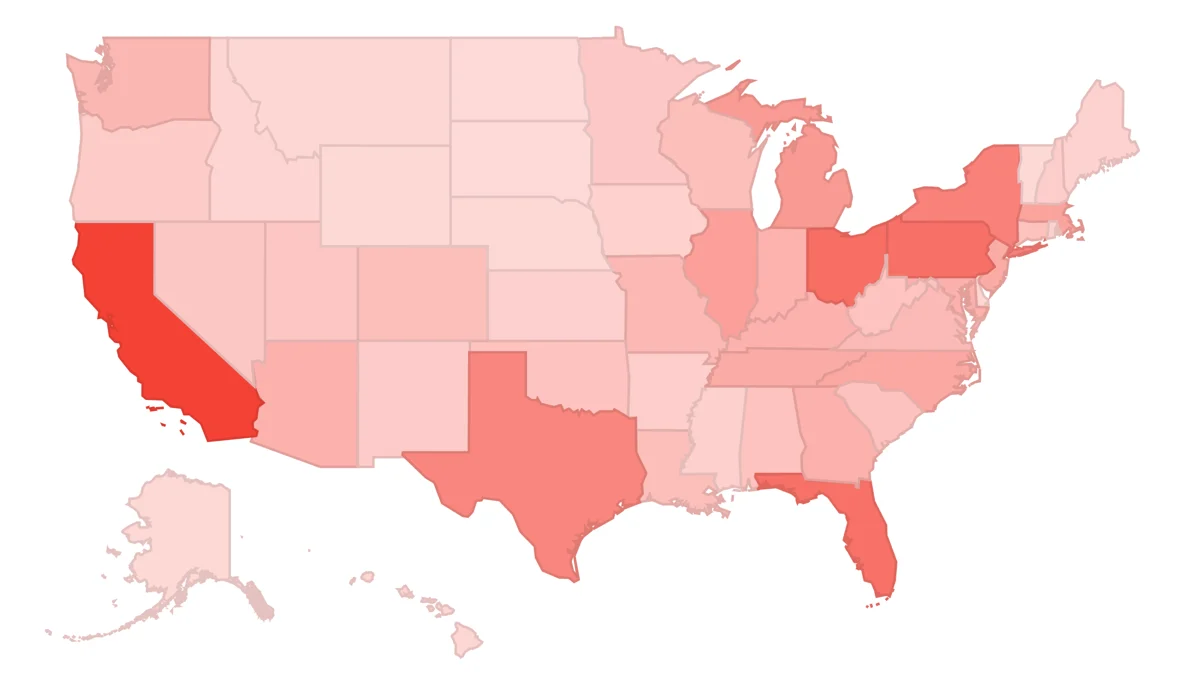
Within the United States, the epidemic does not hit every region with equal force. CDC data reveals that the crisis has been particularly acute in the Appalachian region, the Rust Belt, and parts of New England. States like West Virginia, Ohio, and New Hampshire have consistently reported some of the highest overdose rates in the country.
However, the data also reveals "development trends" that show where the crisis is accelerating. In recent years, states that were previously less affected have seen sharp increases in synthetic opioid deaths. This shift indicates that the illicit fentanyl market is expanding westward, moving beyond its initial strongholds in the Eastern U.S.
Interestingly, some states have managed to stabilize or even slightly reduce their overdose rates through aggressive public health interventions. These include the widespread distribution of Naloxone (an overdose-reversal drug), the implementation of syringe exchange programs, and the expansion of Medication-Assisted Treatment (MAT). The variance between states provides a "natural experiment" for researchers to determine which policy interventions are most effective at saving lives.
Institutional Responses and the Path Forward
The magnitude of the crisis has prompted responses from every level of government and the private sector. The U.S. Department of Health and Human Services (HHS) has declared the opioid crisis a public health emergency, a move that has helped redirect federal funding toward prevention and treatment.
One of the most significant shifts in the response to the crisis has been the move toward holding pharmaceutical companies accountable. Multibillion-dollar settlements have been reached with major manufacturers and distributors, such as Purdue Pharma, Johnson & Johnson, and various pharmacy chains. The funds from these settlements are largely earmarked for addiction treatment and community recovery programs, representing a massive infusion of resources into the public health infrastructure.
On the medical front, the CDC issued updated guidelines for prescribing opioids for chronic pain, urging clinicians to consider non-opioid therapies first. Simultaneously, law enforcement agencies have shifted their focus toward disrupting the supply chains of synthetic opioids, targeting the chemical precursors often shipped from overseas to be processed in North America.
The Role of Data in Combating the Epidemic
The use of data visualization tools, such as Google Data Studio, has become essential for public health officials and the general public to grasp the "immensity of the problem." By converting abstract death tolls into visual trends and geographic maps, analysts can identify emerging hotspots before they reach a breaking point.
Data-driven analysis allows for several critical functions:
- Resource Allocation: Ensuring that life-saving medications like Naloxone are deployed to the neighborhoods with the highest overdose frequencies.
- Policy Evaluation: Tracking whether new laws—such as "Good Samaritan" laws that protect those who call 911 for an overdose—are actually resulting in lower mortality rates.
- Public Awareness: Communicating the reality of the crisis in a way that words alone cannot, helping to reduce the stigma associated with addiction and encouraging individuals to seek help.
Implications for the Future
The opioid epidemic has fundamentally changed how society views drug use, moving the needle from a "war on drugs" criminal justice framework toward a "harm reduction" and public health framework. However, the crisis remains dynamic. The rise of "polysubstance use"—where individuals use opioids in combination with methamphetamines or xylazine—presents new challenges for emergency responders and clinicians.
The economic and social toll will be felt for generations. Beyond the immediate loss of life, the "hidden" victims include the hundreds of thousands of children living in kinship care or the foster system due to parental substance use. The long-term recovery of the nation will require not just the cessation of overdose deaths, but the rebuilding of community support structures and the addressing of the "deaths of despair" underlying the addiction crisis, such as lack of economic opportunity and social isolation.
In conclusion, the U.S. opioid epidemic is a multi-faceted disaster that requires a sophisticated, data-informed response. While the statistics are sobering, they also provide the roadmap for intervention. By understanding where the drugs are most prevalent, who is most at risk, and which regions are seeing the fastest growth in mortality, society can better deploy its resources to stem the tide of this ongoing tragedy. The transition from data to action remains the most critical hurdle in ensuring that the planet becomes a safer place for those vulnerable to the cycle of addiction.