The rapid advancement of Large Language Models (LLMs) has fundamentally transformed the way enterprises interact with data, yet a significant hurdle remains: the "context window" limitation and the inability of traditional databases to handle unstructured, multimodal information efficiently. While modern AI models demonstrate a sophisticated understanding of human language, their performance often degrades when information is fragmented across disparate documents or hidden within non-textual media such as images and videos. To bridge this gap, the technology industry has turned toward vector databases—a specialized category of storage designed to manage the high-dimensional numerical representations of data known as embeddings. Among the emerging leaders in this space is LanceDB, an open-source vector database built specifically for AI workloads, offering native support for multimodal data and high-performance retrieval.
The Architectural Shift Toward Vector-Based Storage
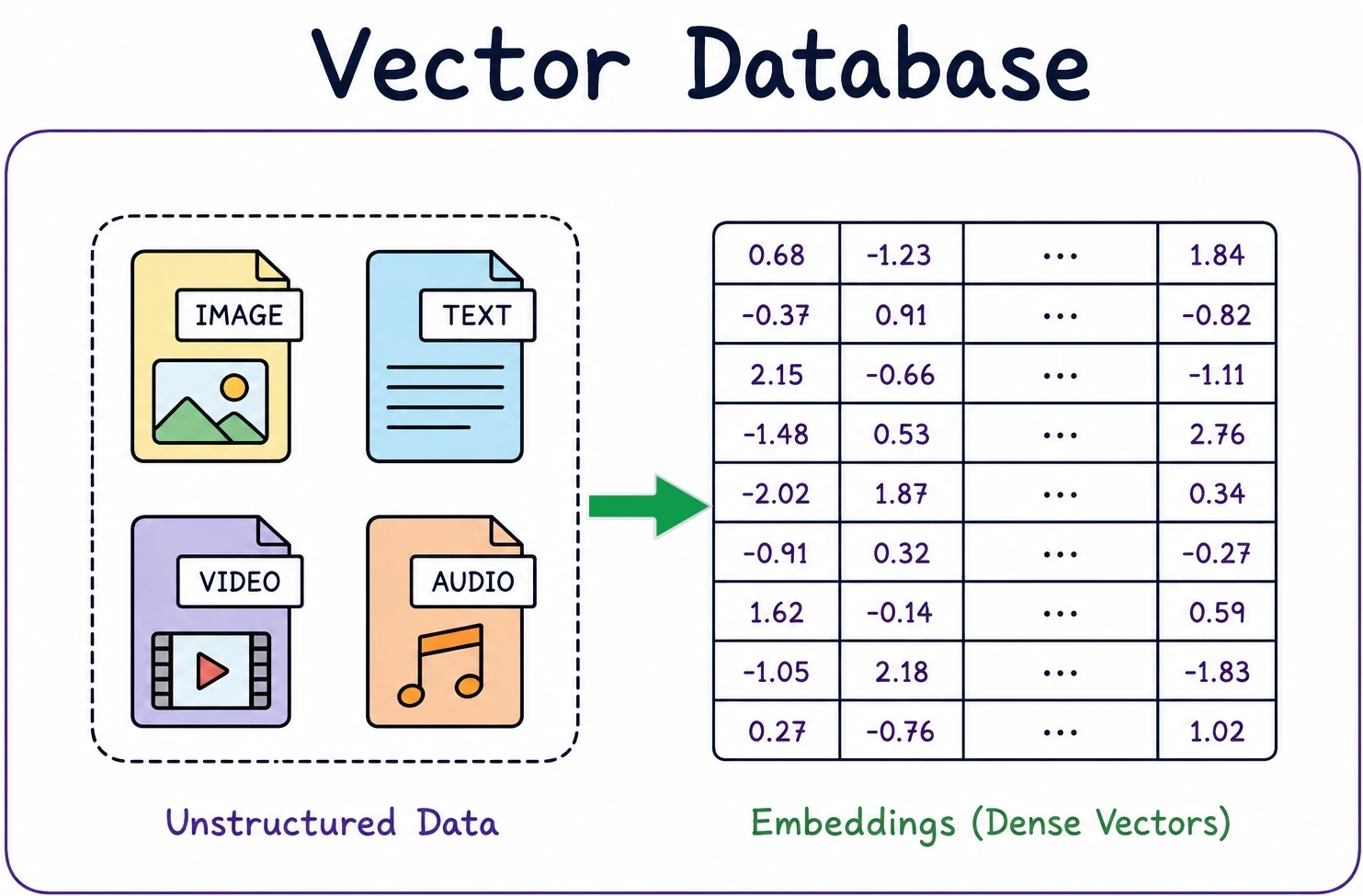
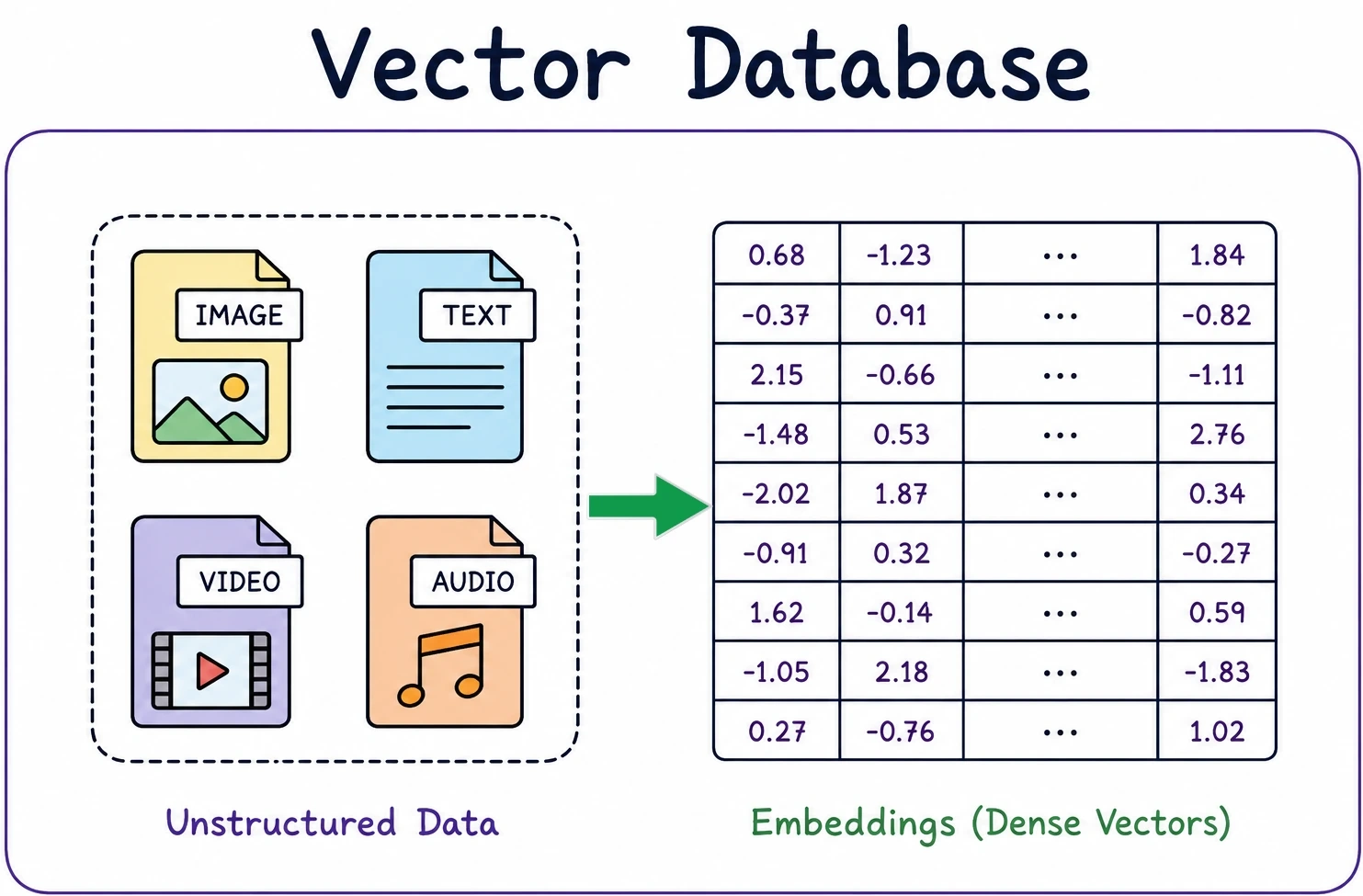
In the traditional relational database paradigm, data is organized in rows and columns, and retrieval is based on exact matches or keyword searches. However, AI applications require a more nuanced approach. At the core of every modern AI system is the concept of an embedding: a mathematical representation where semantic meaning is translated into a vector of numbers. When two pieces of data—be they sentences, paragraphs, or images—are semantically similar, their corresponding vectors are positioned close to one another in a high-dimensional space.
A vector database serves as the specialized infrastructure required to store, index, and query these embeddings. By organizing vectors in a way that prioritizes proximity, these systems enable "similarity search." This allows a system to find the most relevant information based on meaning rather than just syntax. This mechanism is the foundational pillar of Retrieval-Augmented Generation (RAG). In a RAG workflow, a user’s query is converted into a vector, the database retrieves the most relevant "chunks" of data from its index, and this context is then fed into an LLM to produce an accurate, grounded response. This process effectively provides the AI with a "long-term memory," allowing it to access vast libraries of private or specialized data that were not part of its original training set.
LanceDB: A New Paradigm in Embedded Databases
While early vector databases often required complex, standalone server clusters, LanceDB has introduced a streamlined "embedded" approach. Much like SQLite revolutionized the world of relational databases by allowing the database to run within the application itself, LanceDB operates as an embedded system. This architecture eliminates the overhead of managing a separate database server, making it particularly attractive for developers building edge applications or localized AI tools.
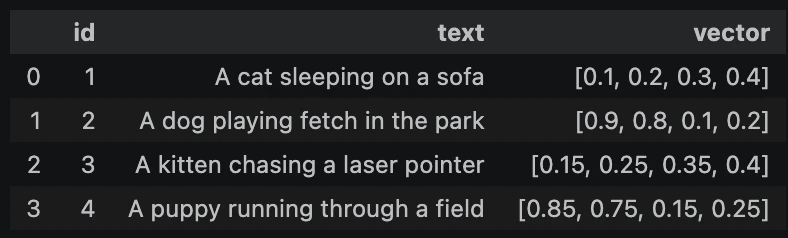
LanceDB is built upon the "Lance" file format, a modern columnar data format designed specifically for machine learning. Unlike older formats like Parquet, which are optimized for analytical scans, the Lance format is engineered for high-performance random access and vector search. This technical distinction allows LanceDB to handle massive datasets while maintaining sub-millisecond query latencies. Key features that distinguish LanceDB from its competitors include its serverless-ready design, support for ACID (Atomicity, Consistency, Isolation, Durability) properties, and its unique ability to store actual data—such as full text and images—alongside the vectors themselves. This "all-in-one" approach simplifies the data stack, as developers no longer need to sync a vector index with a separate metadata store.
The Chronology of Multimodal AI and Retrieval
The development of LanceDB and similar technologies follows a clear chronological progression in the AI field. In 2020 and 2021, the focus was primarily on text-to-text models. However, the release of OpenAI’s CLIP (Contrastive Language-Image Pre-training) marked a turning point. CLIP demonstrated that it was possible to map both images and text into the same vector space, allowing a system to "understand" that the word "cat" and a photograph of a feline were representations of the same concept.
As the industry moved into 2023 and 2024, the demand for "multimodal" RAG exploded. Developers began seeking ways to build systems that could search through architectural blueprints, medical scans, or product catalogs using natural language queries. LanceDB positioned itself as a solution to this demand by integrating embedding functions directly into the database API. By supporting frameworks like OpenCLIP and various OpenAI models, LanceDB allows users to ingest raw images or PDFs and automatically generate the necessary embeddings for search, a process that previously required manual, multi-step pipelines.

Data Ingestion and Technical Implementation
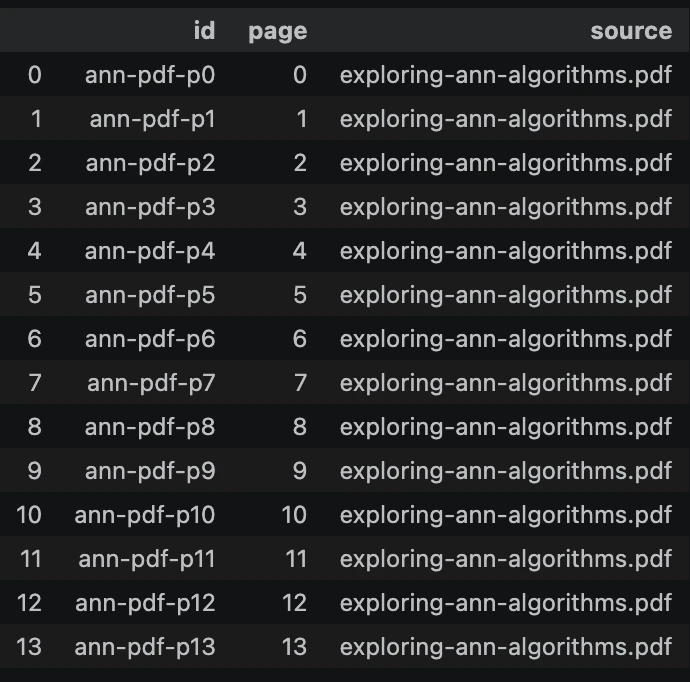
To understand the practical utility of LanceDB, one must look at the technical workflow of data ingestion. In a typical implementation, a developer begins by "chunking" documents. For instance, a 50-page PDF might be broken down by page or by paragraph. Each of these chunks is processed through an embedding model—such as OpenAI’s text-embedding-3-small—to generate a numerical vector.
In the case of multimodal data, the process is even more sophisticated. Using LanceDB’s integration with OpenCLIP, an image is converted into a vector that exists in the same coordinate system as text vectors. This enables a feature known as "cross-modal retrieval," where a user can type a text query like "a colorful bird with a fanned tail" and the database can instantly retrieve a high-resolution image of a peacock. The distance between the query vector and the stored image vector is calculated using metrics such as Cosine Similarity or L2 Distance (Euclidean distance). A smaller distance indicates a higher degree of similarity, ensuring that the most relevant results are returned to the user.

Market Context and Industry Responses
The rise of LanceDB occurs within a highly competitive market for AI infrastructure. Industry analysts estimate that the vector database market is poised for exponential growth, with a projected compound annual growth rate (CAGR) of over 20% through 2030. Competitors such as Pinecone, Weaviate, and Milvus have raised hundreds of millions of dollars in venture capital, highlighting the strategic importance of the "retrieval" layer in the AI stack.
Early adopters and industry experts have praised the "embedded" nature of LanceDB for its cost-efficiency. "The ability to run a vector database locally or in a serverless environment without the ‘tax’ of a managed cloud service is a game-changer for startups," noted one senior data architect during a recent industry summit. Furthermore, the open-source nature of the project has fostered a robust ecosystem of contributors who are expanding its capabilities to include hybrid search—the combination of traditional keyword matching and modern vector similarity.
Broader Implications for Enterprise AI
The implications of efficient, multimodal retrieval extend far beyond simple search bars. In the legal sector, firms are using these technologies to perform semantic discovery across millions of pages of case law and scanned evidence. In healthcare, researchers are utilizing vector databases to find patterns in genomic data and radiological imagery.
Perhaps the most significant impact lies in the democratization of AI development. By providing a tool that is easy to install (via simple commands like pip install lancedb) and requires minimal configuration, LanceDB lowers the barrier to entry for building sophisticated RAG applications. It enables "grounded" AI that is less prone to hallucinations, as the model’s responses are strictly tied to the verified data retrieved from the database.

Future Outlook and Conclusion
Looking ahead, the evolution of vector databases is expected to move toward even tighter integration with the "compute" layer of AI. We are likely to see "active" databases that don’t just store data, but also monitor for changes and automatically re-index information in real-time. Additionally, as multimodal models become the standard, the ability to search across video, audio, and sensor data will become a baseline requirement for any enterprise data platform.
LanceDB serves as a pivotal example of this technological maturation. By combining vectors, metadata, and raw media into a single, versioned, and embedded table, it addresses the core complexities of modern AI data management. While the field is still in its infancy, the shift from static, text-only databases to dynamic, multimodal retrieval systems marks a critical step toward the creation of truly intelligent and context-aware digital assistants. As developers continue to experiment with these tools, the boundary between "searching for data" and "reasoning with data" will continue to blur, ushering in a new era of information utility.