Anthropic, the artificial intelligence safety and research company, has officially announced the launch of its next-generation AI models, Claude Fable 5 and Claude Mythos 5. These releases represent the commercial evolution of the “Claude Mythos Preview,” a restricted experimental model that gained notoriety earlier this year for its unprecedented reasoning capabilities and potential safety risks. By bifurcating the technology into two distinct offerings, Anthropic aims to provide the broader market with advanced cognitive tools while maintaining strict controls over its most potent frontier capabilities.
The release marks a significant milestone in the competitive landscape of large language models (LLMs). While Claude Fable 5 is now being deployed for general enterprise and developer use, Claude Mythos 5 remains a high-security tier, accessible only to vetted partners in sensitive fields such as genomics and cybersecurity. This tiered strategy underscores a growing trend among AI labs to balance rapid innovation with the ethical mandates of “Responsible Scaling Policies.”
The Evolution of Mythos-Class Intelligence
The journey to the Claude 5 series began in early 2024 with the emergence of the Mythos Preview. Initially whispered about in developer circles and later confirmed through a series of limited-access trials, the Mythos architecture was designed to transcend the limitations of the Claude 3 and 3.5 series. Unlike its predecessors, which focused heavily on speed and conversational fluency, the Mythos-class models were engineered specifically for “sustained reasoning”—the ability of an AI to maintain coherence and logic over thousands of steps in a complex workflow.
In the months leading up to this release, the AI industry has seen a shift from simple chat interfaces toward “agentic” systems. These are models capable of performing multi-step tasks, such as migrating entire software codebases or conducting comprehensive financial audits, with minimal human intervention. Anthropic’s Claude Fable 5 is positioned as the primary driver for this shift in the commercial sector.
Claude Fable 5: A New Standard for Enterprise Performance
Claude Fable 5 is designed to be the “workhorse” of the new lineup, offering a balance of high-end intelligence and operational scalability. According to Anthropic, the model outperforms previous iterations across nearly every critical benchmark, including software engineering, visual data interpretation, and scientific research.
The defining characteristic of Fable 5 is its performance on “long-running tasks.” In standard LLMs, performance often degrades as the context window fills or as the number of instructions increases. Fable 5 addresses this by utilizing a refined attention mechanism that allows it to retain focus on core objectives even when processing massive amounts of data. This makes it particularly effective for:
- Codebase-Wide Migrations: Analyzing and refactoring thousands of lines of code across multiple files while maintaining architectural integrity.
- Complex Document Review: Synthesizing information from hundreds of pages of legal or financial documents to identify subtle inconsistencies.
- Scientific Research: Formulating hypotheses and suggesting experimental protocols based on vast datasets in molecular biology and physics.
- Screenshot-to-App Generation: Interpreting complex user interface (UI) designs and generating fully functional, responsive code.
Claude Mythos 5: The Restricted Frontier
While Fable 5 is the public-facing powerhouse, Claude Mythos 5 represents the “frontier” of Anthropic’s current research. This model is intentionally withheld from general availability due to its enhanced capabilities in domains that carry high dual-use risks. Anthropic has limited access to Mythos 5 to trusted researchers and organizations working in high-impact areas.
In the field of cybersecurity, Mythos 5 is being utilized to identify zero-day vulnerabilities and simulate sophisticated network defenses. In drug discovery, the model’s ability to predict molecular interactions and model genomic sequences has the potential to accelerate the development of life-saving treatments. However, because these same capabilities could be misused to design harmful biological agents or launch automated cyberattacks, Anthropic has implemented a “gatekeeper” model of access, requiring rigorous vetting and continuous monitoring of the model’s outputs.
Benchmark Analysis and Technical Performance
Anthropic has released comprehensive benchmark data comparing Fable 5 and Mythos 5 to both internal predecessors and external competitors. The results indicate a significant lead in “agentic” coding and tool use.
In the GPQA (Graduate-Level Google-Proof Q&A) benchmark, which tests for expert-level knowledge in science and mathematics, Fable 5 showed a 15% improvement over Claude 3.5 Sonnet. More impressively, in coding benchmarks such as HumanEval, the model demonstrated an ability to solve multi-step programming problems that previously required human intervention.
A key differentiator highlighted by Anthropic is the “Reasoning Delta.” This internal metric measures how much better a model performs as a task increases in complexity. Fable 5’s advantage over competitors reportedly grows as tasks become more difficult, suggesting that its architecture is better suited for high-stakes professional environments than for simple consumer queries.
Real-World Testing: UI Reconstruction and SaaS Development
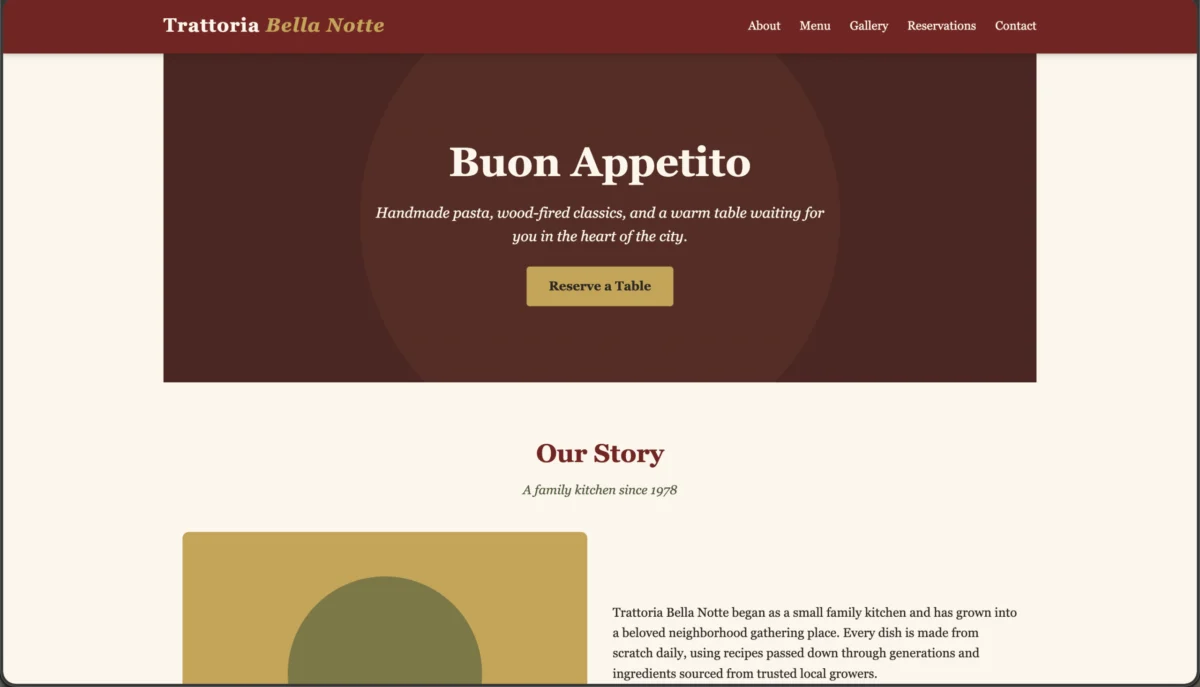
To demonstrate the practical utility of Fable 5, early testers have put the model through rigorous visual-to-code challenges. These tests highlight the model’s ability to interpret intent and design aesthetics rather than just performing literal translations of pixels.
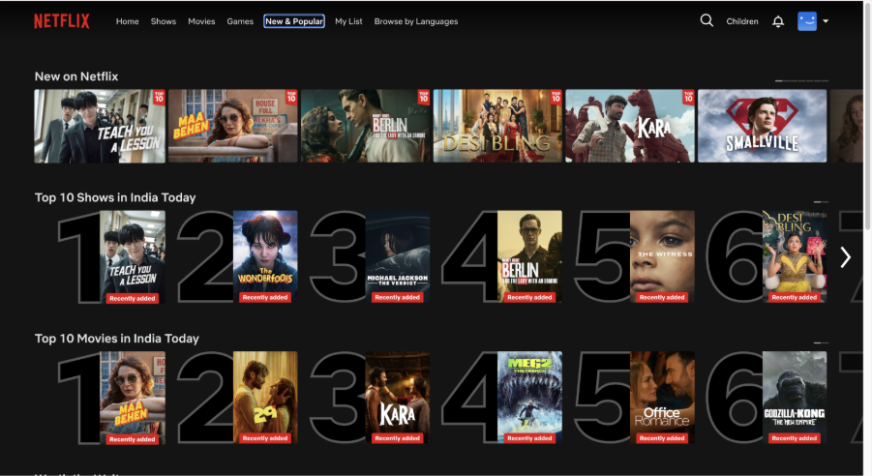
In one notable test, Fable 5 was tasked with recreating the Netflix “New & Popular” interface from a single screenshot. The model successfully identified the three-part structure of the page: the fixed navigation bar, the hero content section, and the horizontal scrolling cards. Beyond mere replication, the model utilized modern CSS constructs to ensure the page was responsive across desktop and mobile devices, demonstrating an understanding of modern web standards.
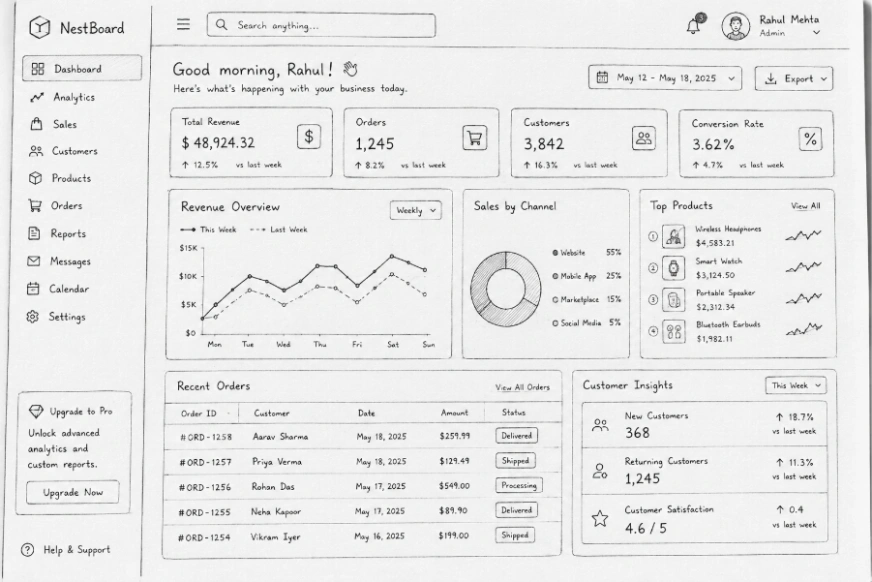
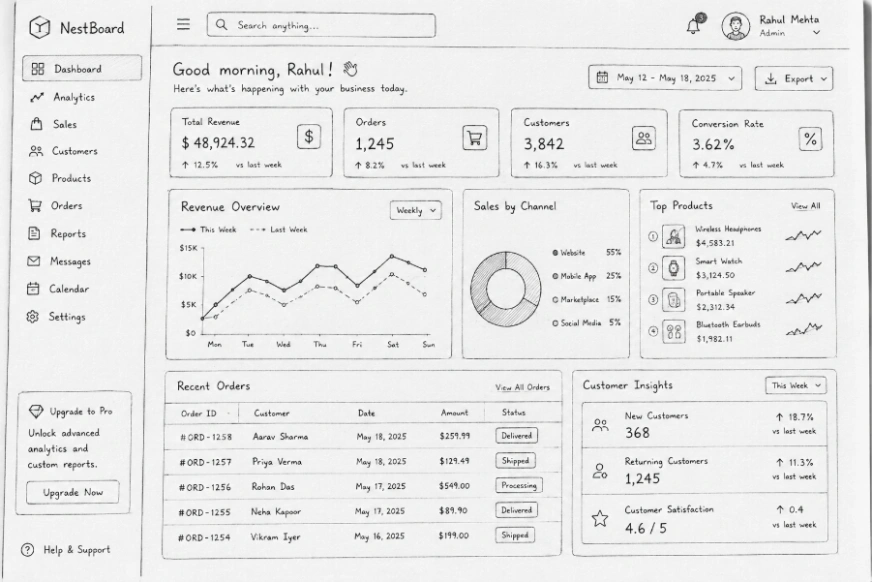
A second test involved converting a rough, hand-drawn dashboard sketch into a modern SaaS analytics application using React and Tailwind CSS. Fable 5 was able to “fill in the blanks,” choosing appropriate typography, spacing, and subtle animations that were not present in the original sketch. This suggests a level of “design intuition” that significantly reduces the time required for front-end developers to move from ideation to prototype.
Pricing, Availability, and the Routing Mechanism
Anthropic has structured the pricing for Claude Fable 5 to reflect its position as a premium model. The current rates are set at $10 per million input tokens and $50 per million output tokens. To assist with cost-efficiency for large-scale operations, Anthropic is offering “prompt caching,” which provides a 90% discount on input tokens for repetitive or large-context queries.
Access to Fable 5 is available through:
- The Claude API: Developers can integrate the model using the
claude-fable-5string. - Claude Subscription Plans: Fable 5 is now the default model for Claude Pro, Team, and Enterprise users.
- Cloud Partnerships: The model is being rolled out via Amazon Web Services (AWS) Bedrock, Google Cloud’s Vertex AI, and Microsoft Foundry.
A unique feature of this deployment is the “Safeguard Routing” system. When a user submits a query that triggers Anthropic’s safety filters—particularly those related to biology or cybersecurity—the system automatically routes the query to Claude Opus 4.8. This ensures that the user still receives a helpful response without accessing the potentially dangerous capabilities of the Fable or Mythos architectures. Crucially, users are not charged the higher Fable rates for these routed queries.
Industry Implications and Market Impact
The release of the Claude 5 series is expected to intensify the “AI arms race” between Anthropic, OpenAI, and Google. By focusing on sustained reasoning and complex workflows, Anthropic is positioning itself as the preferred partner for enterprise-level automation.
Industry analysts suggest that the “dual-model” approach—releasing a powerful version for the public while keeping a “frontier” version restricted—may become the standard for the industry. This allows companies to satisfy the demand for more capable AI while mitigating the risks associated with “Artificial General Intelligence” (AGI) levels of performance.
“Anthropic is signaling that the era of the ‘one-size-fits-all’ chatbot is over,” said one lead analyst at a major technology research firm. “We are entering an era of specialized, high-reasoning agents that are governed by strict safety protocols. The distinction between Fable and Mythos is a clear admission that at the highest levels of AI, capability and risk are inseparable.”
Future Outlook
As Claude Fable 5 begins to permeate the software development and scientific research sectors, the focus will likely shift to the long-term reliability of these agentic systems. While the initial benchmarks and UI tests are promising, the true test of Mythos-class intelligence will be its performance in “noisy,” real-world environments where instructions are ambiguous and data is imperfect.
Anthropic has indicated that it will continue to update Fable 5 based on user feedback and safety monitoring. Meanwhile, the data gathered from the restricted use of Mythos 5 will inform the next generation of AI safety protocols. For now, the launch of these models confirms that the ceiling for AI capability continues to rise, bringing both transformative potential and new challenges for global governance and security.