

The fundamental principle of effective marketing hinges on a singular, powerful concept: the target. Understanding precisely who you are addressing is paramount, and this involves a multi-faceted approach encompassing behavioral, psychographic, demographic, and geographic segmentation. However, in today’s rapidly evolving consumer landscape, a critical layer of analysis has emerged: intergenerational communication. As part of an ongoing series dedicated to dissecting digital marketing strategies across distinct generational cohorts, this article delves into the intricacies of reaching and engaging Millennials, a demographic that now constitutes the largest segment of the adult population. This exploration follows a prior examination of Gen Z and precedes future analyses of Gen X and Baby Boomers, aiming to equip marketers with the insights necessary to connect with these groups through the right channels and with resonant messaging.
Millennials, generally defined as individuals born between 1980 and 1994, have been the subject of extensive public discourse. They have ascended to become the largest generational cohort, surpassing the Baby Boomers in sheer numbers, and have cultivated a reputation for being digitally adept, health-conscious, and often burdened by significant debt. While these characterizations offer a starting point, they risk oversimplification, failing to capture the full spectrum of their experiences, motivations, and consumption patterns. A nuanced understanding is essential for any brand seeking to build meaningful connections with this influential demographic.
The Millennial Mindset: Digital Natives and Evolving Life Stages
Millennials stand apart as the generation that matured alongside the digital revolution. Unlike Gen Z, for whom the digital realm has always been a ubiquitous reality, Millennials witnessed its formative stages and played an integral role in its proliferation. The genesis of platforms like Facebook, a cornerstone of modern social interaction, can be directly attributed to this cohort. During their formative years and early adulthood, they observed the meteoric rise of transformative technologies and companies such as Google, Amazon, and Apple, ingraining a profound familiarity and comfort with digital tools and online engagement. This lifelong immersion has fostered a generation that is inherently tech-savvy, adept at navigating digital interfaces, and responsive to online communication.
Academically, Millennials demonstrate a higher level of educational attainment compared to previous generations. However, this achievement is often juxtaposed with the considerable financial challenges they face. The escalating costs of higher education and the persistent rise in housing prices have resulted in a generation grappling with substantial student loan debt and delayed entry into major life milestones. Consequently, many Millennials are postponing traditional markers of adulthood, such as marriage, homeownership, and starting families, until later in life. This financial reality has shaped their outlook and spending priorities.
Furthermore, a significant portion of the Millennial generation exhibits a strong sense of self-orientation, valuing individual freedom and personal fulfillment. This idealism often translates into a deep commitment to personal well-being. Their health consciousness has fueled a notable surge in dietary preferences such as vegetarianism, veganism, and pescetarianism, alongside a cultural embrace of trends like "avocado toast." Crucially, for many Millennials, experiences hold a greater intrinsic value than the accumulation of material possessions. This preference for experiential consumption has profound implications for how brands engage with them, shifting the focus from ownership to access and memorable moments.
Millennial Consumption Patterns: A Diverse Landscape
Research from McKinsey & Company, a leading global management consulting firm, has identified several distinct clusters within Millennial consumer behavior. While specific data points on these clusters were not provided in the original content, it is understood that these groupings highlight a spectrum of purchasing habits and priorities. For instance, some Millennials might be highly price-sensitive, actively seeking out deals and value for money, while others may prioritize sustainability and ethical sourcing, willing to pay a premium for products that align with their values. Another cluster might be driven by convenience and on-demand services, readily adopting subscription models and e-commerce solutions that simplify their lives.
Despite the prevalent narrative of financial strain, a critical observation emerges: Millennials are often willing to invest in premium or quality products. This willingness is not driven by a desire for ostentatious display, but rather by a discerning appreciation for longevity and tangible benefits, particularly concerning their health and well-being. This suggests a sophisticated consumer who, while budget-conscious, prioritizes long-term value and positive impact over fleeting trends.
Strategic Approaches to Marketing to Millennials
Understanding the multifaceted nature of the Millennial consumer is the first step; the subsequent challenge lies in effectively reaching them. This requires a strategic deployment of marketing efforts across platforms where they are most active and with messaging that resonates with their values and experiences.
Platforms for Reaching Millennials
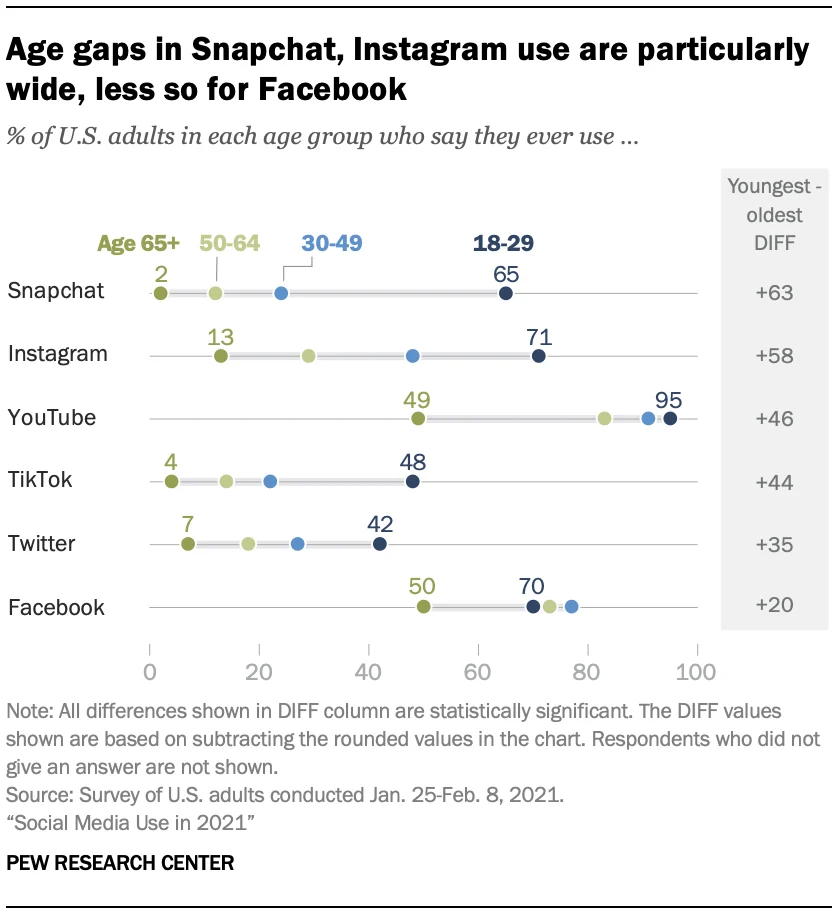
The digital ecosystem is the primary arena for engaging Millennials. Given their ingrained digital fluency, marketing efforts must be present on the platforms they frequent for information, entertainment, and social connection. While the provided content did not explicitly list these platforms, general industry knowledge and the accompanying visual aid (a chart illustrating age gaps across social media platforms, though the specific data points are not detailed here) suggest a focus on platforms that have seen sustained growth and user engagement from this demographic.
Based on market trends and the nature of Millennial online behavior, key platforms likely include:
- Social Media: While older platforms like Facebook remain relevant, Millennials also engage with visually driven platforms such as Instagram, which offers opportunities for both organic content and influencer marketing. TikTok, though often associated with younger generations, has also seen increasing Millennial adoption, particularly for its short-form video content and trend-driven engagement. LinkedIn serves as a crucial platform for professional networking and career-related content.
- Search Engines: Millennials, like most internet users, rely heavily on search engines such as Google for information, product research, and local business discovery. Search Engine Optimization (SEO) and Search Engine Marketing (SEM) remain critical for ensuring brand visibility when potential customers are actively seeking solutions.
- Video Streaming Services: Platforms like YouTube are not only sources of entertainment but also significant avenues for product reviews, tutorials, and brand storytelling. Partnerships with content creators and engaging video advertising can be highly effective.
- Podcasts: The rise of podcasting has provided Millennials with on-demand audio content covering a vast array of topics. Sponsorships or advertising within relevant podcasts can reach a highly engaged and targeted audience.
- Email Marketing: Despite the prevalence of social media, email remains a direct and effective communication channel for targeted promotions, personalized offers, and brand updates.
The accompanying graphic, depicting age demographics across various social media platforms, underscores the importance of a data-driven approach to platform selection. It likely illustrates that while certain platforms may have a higher concentration of Gen Z users, Millennials maintain significant engagement across a broader spectrum, necessitating a diversified digital strategy.
Messaging That Speaks to Millennials
Crafting compelling messaging for Millennials requires an understanding of their core values and a departure from outdated marketing tropes. The effectiveness of any communication hinges on knowing which of the identified consumer clusters your target audience falls into, enabling a more precise and impactful message.
Key messaging considerations for Millennials include:
- Authenticity and Transparency: Millennials are wary of overly polished or disingenuous marketing. Brands that demonstrate authenticity, admit mistakes, and communicate transparently about their products, services, and business practices tend to build stronger trust. This can manifest in behind-the-scenes content, honest product reviews, and clear explanations of sourcing and manufacturing processes.
- Value-Driven Communication: Beyond simply listing product features, messaging should highlight the tangible benefits and the inherent value proposition. For Millennials, this often translates to demonstrating how a product or service contributes to their well-being, facilitates experiences, or aligns with their personal values, such as sustainability or ethical production.
- Experiential Focus: Given their preference for experiences over possessions, marketing messages should evoke emotions and highlight the potential for memorable moments. This could involve showcasing how a product or service enhances travel, social gatherings, personal growth, or leisure activities. User-generated content and testimonials that highlight positive experiences are particularly powerful.
- Social Impact and Purpose: Many Millennials are driven by a desire to support brands that demonstrate a commitment to social responsibility and ethical practices. Messaging that articulates a brand’s purpose, its contributions to community initiatives, or its efforts to mitigate environmental impact can resonate deeply and foster brand loyalty.
- Empowerment and Personalization: Millennials appreciate feeling empowered and recognized as individuals. Personalized marketing, tailored offers, and communication that acknowledges their unique needs and preferences can significantly enhance engagement. This can be achieved through data-driven segmentation and dynamic content.
- Clear and Concise Information: While tech-savvy, Millennials often navigate busy digital lives. Messaging should be clear, concise, and easily digestible, providing essential information without overwhelming the audience. This is especially true for digital content, where attention spans can be short.
The original content alludes to three distinct consumer clusters identified by McKinsey. While not elaborated upon, these likely represent varying degrees of price sensitivity, brand loyalty, and product category preferences. For instance, one cluster might be the "Pragmatic Shopper" who prioritizes value and functionality, while another could be the "Conscious Consumer" who emphasizes ethical sourcing and sustainability, and a third might be the "Experience Seeker" who prioritizes brands that facilitate memorable activities. Tailoring messaging to the specific motivations and priorities of each cluster is paramount.
Broader Implications and Future Considerations
The insights gleaned from understanding Millennial marketing extend beyond this single demographic. The principles of authenticity, value, and purpose-driven communication are increasingly becoming universal expectations across consumer groups. As the economic and social landscape continues to shift, marketers must remain agile, continuously adapting their strategies to meet the evolving needs and preferences of their target audiences.
The significant debt burden carried by many Millennials, coupled with their delayed life milestones, suggests a continued emphasis on financial wellness and accessible solutions in future marketing endeavors. Brands that can offer flexible payment options, demonstrate long-term value, and contribute to financial empowerment are likely to find favor.
Ultimately, the success of any marketing campaign targeting Millennials, or any generation for that matter, lies in a deep, empathetic understanding of their lived experiences, aspirations, and motivations. Moving beyond superficial stereotypes and engaging with the genuine complexities of their lives is not just good marketing; it is essential for building lasting brand relationships in the modern era. For businesses seeking to refine their digital marketing strategies and effectively connect with the influential Millennial demographic, a commitment to ongoing research, data analysis, and adaptive communication is indispensable. Consulting with experienced digital marketing professionals can provide the tailored guidance necessary to navigate this dynamic landscape and achieve impactful results.









