Ammar Sabilarrohman

The global influencer marketing industry has undergone a radical transformation over the last decade, evolving from a niche experimental tactic into a cornerstone of the modern digital advertising mix. As total US spending on influencer marketing is projected to surpass $10 billion in 2025, according to eMarketer estimates, the software infrastructure supporting these investments has become increasingly specialized. For many years, CreatorIQ has served as the gold standard for enterprise-level influencer management, providing the rigorous compliance and multi-brand controls required by Fortune 500 companies. However, as the market matures, a growing segment of mid-market brands, high-growth ecommerce entities, and specialized agencies are seeking alternatives that offer greater agility, deeper commerce integration, and more transparent pricing models.
The shift toward specialized platforms reflects a broader trend in the MarTech (Marketing Technology) space: the move away from monolithic "all-in-one" enterprise solutions toward "best-of-breed" tools that solve specific operational pain points. While CreatorIQ earns its premium price point through complex approval workflows and audit trails—essential for companies managing dozens of global sub-brands—smaller, more focused teams often find themselves paying for administrative layers they never utilize. The decision to switch platforms is no longer just about cost; it is about aligning software capabilities with specific business outcomes, particularly direct-to-consumer (DTC) sales and performance-based attribution.
The Enterprise Standard: Why CreatorIQ Remains a Benchmark
To understand the landscape of alternatives, one must first analyze the specific problems CreatorIQ was designed to solve. In a large-scale corporate environment, influencer marketing is not just a creative endeavor; it is a compliance and risk management challenge. Large organizations require a centralized record of every decision, from initial creator vetting to final contract approval. CreatorIQ excels in providing these "enterprise controls," ensuring that a legal or compliance team can sign off on every campaign across multiple geographical regions and business units.
For a multinational conglomerate, the ability to track influencer relationships across five different beauty brands and three different continents is invaluable. It prevents "influencer fatigue" and ensures that the company is not inadvertently competing against itself for the same talent. However, for a single-brand online store or a lean agency, these same features can manifest as "software bloat." When the primary goal is to determine which creator drove the most sales on Shopify last month, a platform built for bureaucratic oversight may actually hinder speed and efficiency.
The Evolution of Selection Criteria: Commerce and Attribution
In the current economic climate, the "Awareness" phase of influencer marketing is increasingly being scrutinized in favor of "Performance." Consequently, the first and most critical check for any alternative platform is its level of commerce integration. As the digital storefront serves as the primary point of sale, a marketing platform that cannot communicate directly with systems like Shopify, Amazon, WooCommerce, Magento, or BigCommerce creates a data silo.

Industry analysts suggest that switching store platforms is a prohibitively slow and costly process for most businesses. Therefore, the influencer tool must adapt to the existing commerce infrastructure, not the other way around. This integration allows for real-time tracking of coupon codes, affiliate links, and "cart-level" data, providing a level of granularity that traditional social media metrics like "likes" or "shares" cannot match.
Furthermore, the methodology of attribution has become a focal point of debate. Reliable ROI (Return on Investment) calculations are dependent on the accuracy of the "return" figure. In professional demos, savvy marketers are now asking vendors to trace a single sale back to a specific creator in real-time. This level of transparency is essential because traditional metrics—specifically follower counts—are becoming less correlated with actual sales.
Data from Upfluence, based on an analysis of 10.9 million creator profiles across Instagram, TikTok, and YouTube, highlights a significant disparity in engagement. Nano-creators (those with under 10,000 followers) maintain a median Instagram engagement rate of 2.5%, whereas "mega-creators" (over 1 million followers) see that figure drop to a median of 0.8%. This data suggests that a report built solely on follower counts can provide a misleading picture of a campaign’s effectiveness, potentially overvaluing reach while undervaluing conversion potential.
Comprehensive Analysis of the Top 7 CreatorIQ Alternatives
As brands move away from the enterprise-heavy model, seven platforms have emerged as the primary contenders, each catering to a distinct organizational need or market segment.
1. Upfluence: The AI-Driven Commerce Specialist
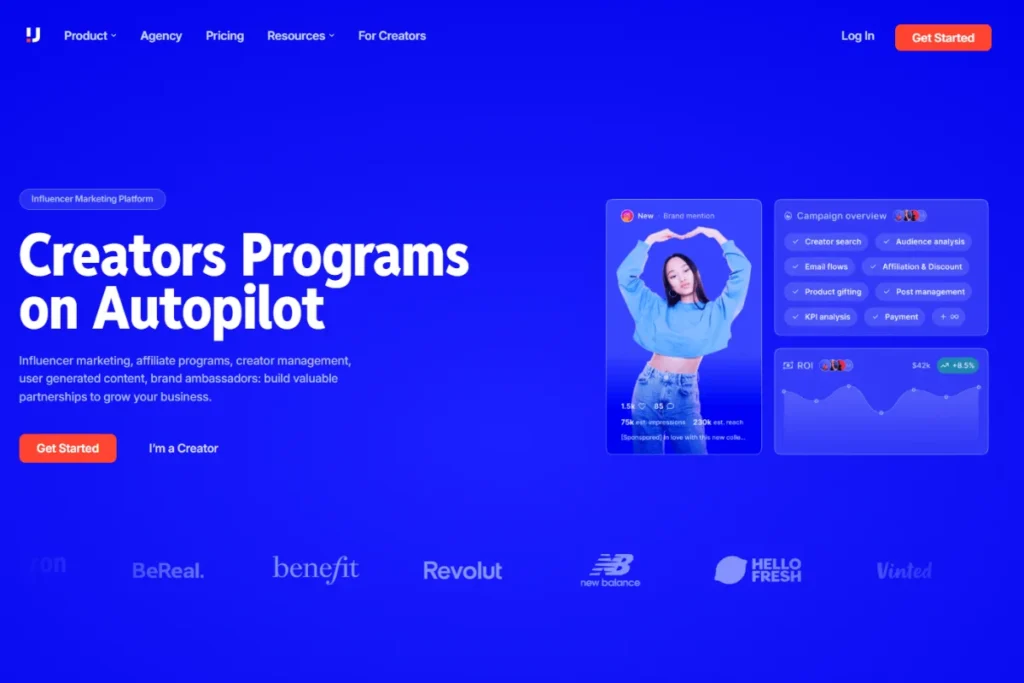
Upfluence has positioned itself as the primary alternative for ecommerce brands and agencies that are judged on tangible sales. Its most significant departure from the CreatorIQ model is the introduction of "agentic AI." The platform utilizes an AI agent, known as Jaice, to automate the repetitive administrative tasks that typically consume 60% to 70% of a campaign manager’s week.
Beyond simple automation, the AI analyzes historical campaign data to suggest creators, recommend budgets, and predict outcomes. Perhaps most importantly, the AI handles the outreach and follow-up process. Reports indicate that outreach emails generated by the platform’s AI earned a 22% higher reply rate than human-written counterparts in 2025. By connecting natively to Amazon, Shopify, and other major stores, Upfluence bridges the gap between influencer content and the final transaction, making it a "full-funnel" solution for performance marketers.

2. Traackr: The Direct Enterprise Peer
For organizations that require the same level of oversight as CreatorIQ but prefer a different interface or specific industry focus, Traackr is the closest match. It is particularly dominant in the beauty, fashion, and consumer electronics sectors. Traackr’s strength lies in its compliance workflows and reputation-risk screening, which are vital for brands sensitive to public perception. Unlike some competitors, Traackr also offers a robust "competitor tracking" feature, allowing brands to see how their rivals are utilizing talent on a global scale.
3. Kolsquare: The European Regulatory Leader
As data privacy laws like GDPR (General Data Protection Regulation) become more stringent, Kolsquare has carved out a niche as the leading European alternative. Based in Paris, the platform is built with a "privacy-first" architecture. Kolsquare is particularly useful for brands operating within the European Union and the United Kingdom, as it provides specific guidance on local influencer disclosure rules and market benchmarks that are often overlooked by US-centric platforms.
4. Later Influence: The Content Lifecycle Approach
Formerly known as Mavrck, Later Influence is unique because it integrates influencer management directly into a wider social media scheduling suite. This is an ideal solution for social media teams who handle both organic posting and creator partnerships. By housing post-scheduling, Link-in-Bio tools, and creator campaigns under one roof, it reduces the "tool fatigue" often felt by small marketing departments. However, because it relies on an opted-in index of creators, its database may be less comprehensive in highly specialized niches compared to open-web search tools.
5. Grin: The Shopify-First Powerhouse
Grin has become synonymous with the "DTC Revolution." It is built specifically to live inside the Shopify ecosystem. For a Shopify-based brand, creator gifting, affiliate payouts, and inventory management feel like a native extension of the store’s existing workflow. While it is highly efficient for Shopify users, brands that sell across multiple platforms (such as Amazon and physical retail) may find its Shopify-centricity a limitation.
6. Aspire: The Community and Ambassador Expert
Aspire (formerly AspireIQ) focuses on long-term relationship management rather than one-off transactions. It is designed for brands that want to build a "brand ambassador" community. Its marketplace-first model allows creators to apply directly to campaigns, which can be a significant time-saver for broad consumer categories like fitness or lifestyle. Additionally, Aspire offers managed agency services for brands that want to outsource the heavy lifting of campaign execution.
7. Modash: The High-Volume Search Engine
Modash is the "Google" of the influencer world. With a database of over 250 million profiles, it is designed for teams whose primary bottleneck is discovery. Unlike the enterprise-heavy platforms, Modash offers a self-serve model with transparent pricing and a free trial, making it the most accessible entry point for startups or small agencies that need to find niche creators at scale without a five-figure annual commitment.
The Regulatory Landscape and Brand Safety
A critical enrichment of the influencer marketing discussion involves the evolving legal landscape. In the United States, the Federal Trade Commission (FTC) has significantly ramped up enforcement of disclosure rules, requiring "clear and conspicuous" notification of any material connection between a creator and a brand. This includes not just cash payments, but free products, discounts, or even personal relationships.
Internationally, the regulatory environment is even more fragmented. The United Kingdom’s Advertising Standards Authority (ASA) and Competition and Markets Authority (CMA) have their own strict guidelines, as does Canada’s Competition Bureau. Any viable CreatorIQ alternative must provide automated tools to track and verify these disclosures across different jurisdictions. Failing to do so can result in significant fines and "de-platforming" for the brand, making vetting and compliance a non-negotiable feature for any serious marketing team.
Implications and Strategic Outlook
The decision to migrate from a legacy enterprise system like CreatorIQ to a more modern alternative reflects a strategic shift in how companies value social capital. The "Golden Age" of influencer marketing—characterized by vanity metrics and unvetted spending—is over. It has been replaced by an era of "Accountable Influence."
For CMOs and Marketing Directors, the implications are clear: software must provide more than just a database of names; it must provide a clear path to revenue. The rise of AI-driven "agentic" platforms suggests that the future of the industry lies in reducing manual labor so that human teams can focus on high-level strategy and creative storytelling. As the market continues to bifurcate between "Enterprise Compliance" (CreatorIQ, Traackr) and "Performance Commerce" (Upfluence, Grin), brands must choose the tool that matches their primary KPI (Key Performance Indicator).
Ultimately, the best alternative is the one that minimizes the distance between a creator’s post and a customer’s purchase. Whether through deep Shopify integration, AI-automated outreach, or rigorous European data compliance, the next generation of influencer platforms is focused on one thing: making influencer marketing a predictable, scalable, and profitable sales channel.


 Sagoh

 Laily UPN