rifanmuazin
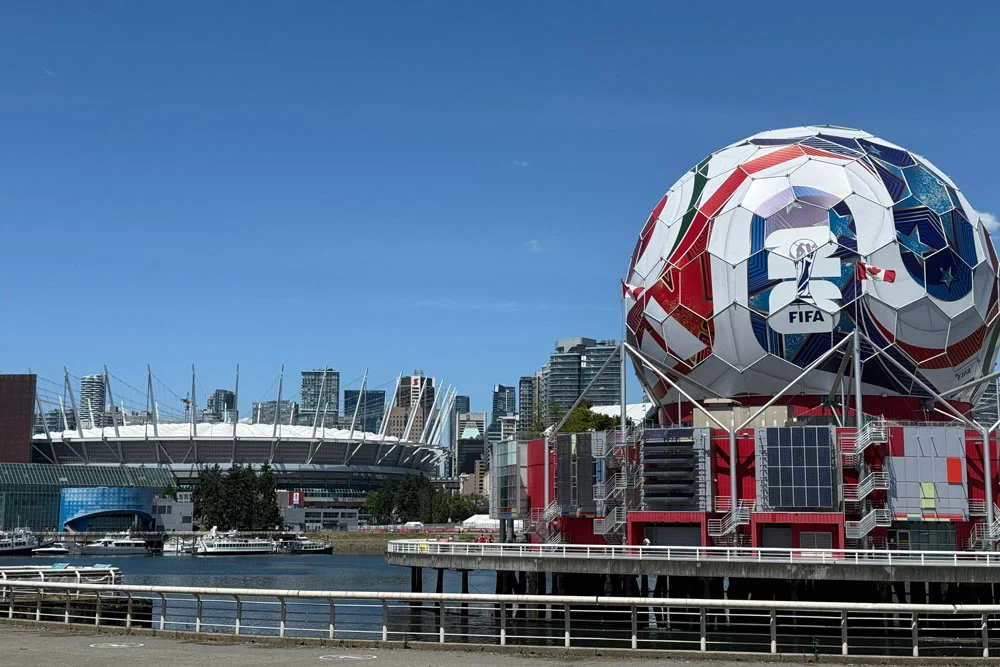
The 2026 FIFA World Cup, hosted across the United States, Canada, and Mexico, has transcended its status as a mere sporting event to become a masterclass in modern strategy, resilience, and organizational management. As the tournament unfolds, capturing the attention of billions globally, the parallels between elite international football and the high-stakes world of affiliate marketing have become increasingly evident. From the logistics of a 48-team expansion to the tactical upsets on the pitch, the tournament provides a rich dataset for performance marketers looking to refine their approach in an increasingly competitive digital economy.
The 2026 Expansion: A New Era of Global Competition
The 2026 iteration of the FIFA World Cup is historic, marking the first time the tournament has featured 48 teams, up from the traditional 32. This expansion has not only increased the volume of matches but has also diversified the pool of participants, bringing in nations that were previously sidelined from the world stage. In the realm of affiliate marketing, this mirrors the explosive growth of the creator economy and the diversification of marketing channels. Just as FIFA expanded its reach to include more diverse footballing cultures, successful affiliate programs are moving away from a reliance on a few "super-affiliates" to embrace a wider array of content creators, niche influencers, and technological partners.
The tournament’s structure, spread across 16 host cities in three nations, reflects the decentralized nature of modern commerce. Marketing managers are no longer looking at a singular, monolithic market but are instead navigating a fragmented landscape where localized strategies must align with a global brand vision. The lessons derived from this tournament are not merely anecdotal; they represent a fundamental shift in how collective efforts and individual brilliance are balanced to achieve sustainable success.
Synergy Over Individualism: The Necessity of Teamwork
A primary takeaway from the 2026 tournament has been the limitation of individual stardom in the face of cohesive team structures. Despite the presence of legendary figures such as Croatia’s Luka Modrić and Portugal’s Cristiano Ronaldo, their respective teams faced significant hurdles when individual brilliance was not met with collective tactical support. Croatia’s inability to bypass Portugal, and Portugal’s subsequent exit at the hands of a disciplined Spanish side in the Round of 16, underscores a critical reality: talent wins games, but teamwork wins championships.
In the affiliate marketing sector, this principle is reflected in the structure of high-performing agencies and programs. Industry veterans, including those at leading firms like AM Navigator, have long maintained that an agency’s efficacy is a direct reflection of its internal team dynamics. However, the concept of "teamwork" extends beyond the internal staff to the very composition of the affiliate base.
Diversification as a Risk Mitigation Strategy
Data from recent industry reports suggests that programs relying on a single marketing channel—such as coupon sites or basic search engine marketing (SEM)—for more than 50% of their revenue are at a significantly higher risk of volatility. To protect revenue and ensure the quality of referrals, modern affiliate programs must diversify across multiple marketing channels. This includes:
- Content Commerce: Leveraging high-authority publishers for top-of-funnel awareness.
- Social Media Influencers: Utilizing trust-based audiences for mid-funnel engagement.
- Loyalty and Reward Portals: Ensuring bottom-of-funnel conversion and customer retention.
- Technological Affiliates: Implementing toolbars, browser extensions, and AI-driven recommendation engines.
Just as a football manager must balance a defense, midfield, and attack, an affiliate manager must ensure that no single "player" or channel dominates the program to the point of creating a single point of failure.
The Underdog Phenomenon: Market Disruption and the Nectar Sleep Case Study
The 2026 World Cup has been defined by the "rise of the underdog," a theme that resonates deeply within the entrepreneurial world. The Group Stage saw Curaçao, making its debut, hold a formidable Ecuadorian team to a 0-0 draw. Even more striking was the Round of 16 clash between Egypt and the defending champions, Argentina. Egypt led 2-0 for the majority of the match, challenging the established hierarchy of international football through sheer tactical discipline and opportunistic execution.
This "underdog" narrative is not a fluke but a result of the democratization of information and training. In affiliate marketing, this is mirrored by the ability of new, agile brands to disrupt established market leaders. A prominent example is the trajectory of Nectar Sleep.
Analysis of the Nectar Sleep Disruption
When Nectar Sleep entered the "mattress-in-a-box" market in early 2017, the landscape was already dominated by well-funded giants like Casper, Saatva, and Purple. These brands had established significant brand equity and deep-seated affiliate relationships. However, by adopting an aggressive, data-driven affiliate strategy managed by AM Navigator, Nectar Sleep achieved a historic milestone.
Within one year and five days of its launch, Nectar’s affiliate program ascended to the number one spot on the ShareASale network, surpassing over 5,000 other programs, including household names such as Wayfair, Reebok, and the NFL. This achievement highlights a critical lesson for the industry: being an underdog is not a permanent state of mediocrity. Through strategic partnerships and superior incentive structures, a newcomer can effectively "outplay" established giants.
The Perils of Complacency: Why Legacy Success is Not a Shield
Perhaps the most sobering lesson of the 2026 World Cup is that past glory does not guarantee future results. Italy, a four-time world champion, failed to qualify for the tournament entirely—a shocking development for a nation with such a rich footballing heritage. Similarly, the Netherlands was eliminated by Morocco in the Round of 32, and Brazil, the perennial favorites, were knocked out by Norway in the Round of 16.
Norway’s success is particularly illustrative. After a nearly 30-year absence from the World Cup, the Norwegian team utilized a combination of scientific training methods and a "golden generation" of talent to reach the Quarterfinals. Their resurgence serves as a warning to established powers that resting on laurels is a precursor to obsolescence.
The Dynamic Nature of Digital Marketing
The affiliate marketing industry is characterized by its extreme dynamism. Strategies that were considered "best practice" five years ago—such as heavy reliance on third-party cookies or aggressive keyword stuffing—are now largely ineffective or prohibited due to privacy regulations like GDPR and CCPA, as well as shifts in search engine algorithms.
Industry analysts point to several factors that demand constant evolution from affiliate managers:
- Technological Shifts: The transition from cookie-based tracking to server-to-server (S2S) tracking and the integration of AI in attribution modeling.
- Regulatory Changes: Increased scrutiny from the FTC regarding disclosure and consumer privacy.
- Consumer Behavior: The shift toward mobile-first browsing and the rise of social commerce.
To remain competitive, professionals must treat education as a continuous journey rather than a destination. Participation in industry conferences, such as the Affiliate Summit in New York, is no longer optional for those wishing to stay ahead of the curve.
Broader Implications and the Future Outlook
The convergence of sports strategy and marketing highlights a broader trend in the global economy: the move toward "Performance-Based Excellence." In both arenas, the metrics for success are transparent and unforgiving. In football, it is the scoreline; in affiliate marketing, it is the Return on Ad Spend (ROAS) and the quality of the Customer Acquisition Cost (CAC).
The 2026 World Cup has demonstrated that the gap between the "elite" and the "rest" is narrowing. This narrowing is driven by better access to data, more sophisticated tactical analysis, and a globalized talent pool. For affiliate marketers, this means that the barrier to entry is lower, but the ceiling for excellence is higher.
Conclusion: A Strategic Framework for the Future
As the final whistles blow and the 2026 World Cup concludes, the marketing community must internalize these three pillars:
- Build Integrated Ecosystems: Treat your affiliate base as a team, not a collection of individuals. Ensure diversity in channel and type to create a resilient program.
- Respect the Disrupter: Never underestimate a new competitor. Agility and a fresh perspective can often overcome the inertia of a legacy brand.
- Commit to Perpetual Evolution: The digital landscape is in a state of constant flux. The moment a brand or agency stops learning is the moment it begins its decline.
The 2026 tournament will eventually become a part of history, but the tactical shifts it has highlighted will define the next decade of performance marketing. Whether on the grass of a North American stadium or the digital interface of an affiliate network, the principles of success remains the same: preparation, partnership, and the relentless pursuit of improvement.


 Ammar Sabilarrohman

 Sagoh