
 rifanmuazin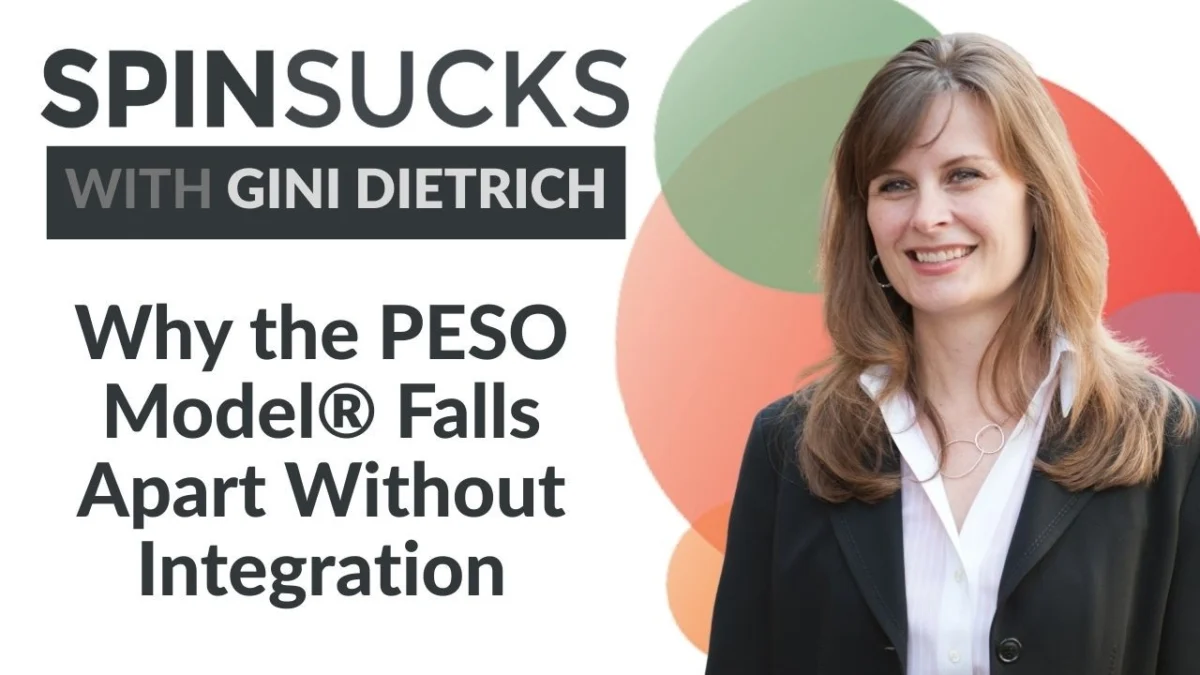
The contemporary landscape of public relations and digital marketing has undergone a radical transformation, moving away from fragmented tactical execution toward a unified structural framework known as the PESO Model® operating system. While many organizations claim to utilize the PESO Model—an acronym for Paid, Earned, Shared, and Owned media—the majority of communication teams continue to operate in silos, treating each category as a separate task rather than an integrated whole. This disconnect results in what industry experts call "activity without momentum," where teams remain perpetually busy but fail to achieve compounding results or long-term brand authority.
According to recent industry analysis, the primary failure in modern marketing is the tendency to execute a blog post here, a social media update there, and a boosted advertisement elsewhere without a central connective tissue. To rectify this, the PESO Model has been rebuilt into a functional operating system (OS) designed to align with how modern audiences discover, consume, and trust information in an era dominated by artificial intelligence and fragmented digital channels.
The Evolution of the PESO Model: From Tactics to Strategy
The PESO Model was first introduced to the public in 2014 by Gini Dietrich in her book Marketing in the Round. At its inception, the model served primarily as a list of tactics categorized under four media types. It provided a roadmap for PR professionals to expand their reach beyond traditional media relations (Earned) into content creation (Owned), social engagement (Shared), and advertising (Paid).
However, the digital environment of 2024 and beyond is vastly different from that of a decade ago. The rise of Large Language Models (LLMs), the decline of traditional search engine dominance, and the saturation of social media platforms have necessitated a shift. The "Visibility Engine," a core component of the updated PESO framework, emphasizes that visibility is no longer just about being present; it is about being findable and authoritative.
The chronology of this evolution highlights a shift from "outputs" to "outcomes." In the early years, success was measured by the number of placements or posts. Today, the focus has shifted toward the "operating rhythm"—a disciplined cadence of decision-making that ensures every piece of content serves multiple purposes across the four media quadrants.
The High Cost of Tactical Fragmentation
Operating the PESO Model as four separate silos is not merely an organizational inconvenience; it is a significant financial and strategic liability. Data from McKinsey & Company suggests that organizations with highly integrated marketing functions grow at twice the rate of their siloed peers. Conversely, the "invisible costs" of fragmentation can erode up to 20% of a communications budget through duplication of effort and message confusion.
When teams operate in silos, they often fall into the trap of "rebuilding the wheel." A team might develop a narrative for a blog post (Owned), while the social media team (Shared) creates a different angle for the same topic, and the media relations team (Earned) pitches a third variation to journalists. This lack of alignment creates several critical issues:
- Redundancy and Duplication: Teams spend hours creating new content briefs and messaging for every channel instead of repurposing a single, authoritative "Owned" asset.
- Message Confusion: Inconsistency in messaging confuses both human audiences and AI algorithms. LLMs crave consistency to establish a brand’s authority on a specific subject. When messaging varies across channels, trust is diminished.
- Wasted Paid Spend: In a siloed system, "Paid" media is often used as a "panic button" to boost underperforming content. Without integration, Paid media simply makes a disconnected system louder rather than more effective.
The Mechanics of an Integrated Operating System
To transition from a tactical list to an operating system, the PESO Model requires a mechanical connection where the output of one media type becomes the input for the next. This creates a compounding effect where the total impact is greater than the sum of its parts.
Owned Media as the Foundation
In the PESO OS, Owned media—such as a company blog, white paper, or proprietary research—serves as the "destination." It is the proof-backed authority that the organization controls. Every other media type must point back to this foundation. Owned media provides the context and the language that the organization wants to be repeated by third parties.
Earned Media as Validation
Earned media is no longer viewed as a standalone win. Instead, it is treated as external validation that corroborates the claims made in Owned media. When a reputable third-party publication covers a story, it provides a level of credibility that cannot be purchased. In an integrated system, this credibility is immediately captured and repurposed to strengthen Owned and Shared channels.
Shared Media as Distribution and Feedback
Shared media serves as the distribution arm. It takes the core narrative from the Owned media and breaks it down into smaller, portable formats for social consumption. Crucially, Shared media acts as a feedback loop. Questions, objections, and engagement levels on social platforms inform the team about what the Owned media needs to address next.
Paid Media as the Accelerant
In an integrated OS, Paid media is the final step, not the first. It is used to scale the distribution of proof that is already working. By boosting content that has already shown traction in Earned or Shared channels, organizations ensure a higher return on ad spend (ROAS).
Implementing the Operating Rhythm and the Integration Map
The failure of integration often occurs not at the strategic level, but at the operational level. When daily "emergencies" arise—such as a sudden request from leadership to "go viral"—teams often abandon their integrated plan and revert to reactive tactics.
To prevent this, the PESO Model OS introduces the "Operating Rhythm." This is a set of disciplined decisions made in a specific order every week. A functional rhythm asks:
- What is the core "Owned" asset we are focusing on this week?
- How does this asset reinforce our long-term authority?
- What "Earned" validation are we seeking for this specific narrative?
- What "Shared" formats will we use to distribute this proof?
- Which high-performing elements deserve "Paid" acceleration?
Supporting this rhythm is the "Integration Map," a one-page visual tool that replaces complex content calendars and multi-page channel plans. The map answers three essential questions: What are we saying? Where are we saying it? How does each channel reinforce the others? This transparency allows leadership to see the "connective tissue" of the work, moving the conversation away from vanity metrics (likes and shares) toward the building of long-term brand assets.
The "Stop List": The Power of Strategic Refusal
One of the most difficult aspects of adopting the PESO Model as an operating system is the implementation of a "Stop List." Integration is not an additive process; it is a subtractive one. To make room for a system that compounds, teams must stop doing work that does not connect to the broader strategy.
The Stop List includes one-off social posts that don’t lead back to Owned content, reactive assets created for internal stakeholders that lack a strategic goal, and random "boosts" of content that haven’t been validated by Earned or Shared media. While saying "no" to these requests can be culturally challenging within an organization, it is necessary to transition from "busywork" to "momentum."
Implications for the AI-Driven Future
The move toward an integrated PESO operating system is particularly critical given the rapid advancement of AI in the communications industry. Search Generative Experiences (SGE) and AI-driven answer engines rely on "triangulation" to determine which brands to recommend. If a brand’s Owned media is supported by Earned media validation and Shared media engagement, the AI perceives the brand as a high-authority source.
Conversely, a brand that exists only through disconnected tactics appears fragmented to an algorithm. By running PESO as a unified system, communications professionals are essentially "optimizing for authority" across the entire digital ecosystem.
Conclusion: Standardizing Communication Excellence
As the communications field continues to professionalize, the demand for standardized frameworks has led to the relaunch of the PESO Model Certification®. This program aims to move beyond theoretical knowledge, teaching practitioners how to build and maintain the operating systems necessary for modern business.
The shift from tactics to an operating system represents a maturation of the public relations industry. By focusing on integration, operating rhythms, and the strategic use of the "Stop List," organizations can move past the cycle of constant "activity" and begin building a compounding engine of visibility, authority, and trust. In a world where information is abundant but attention is scarce, the ability to run an integrated PESO system is no longer a luxury—it is a requirement for survival.










