
 rifanmuazin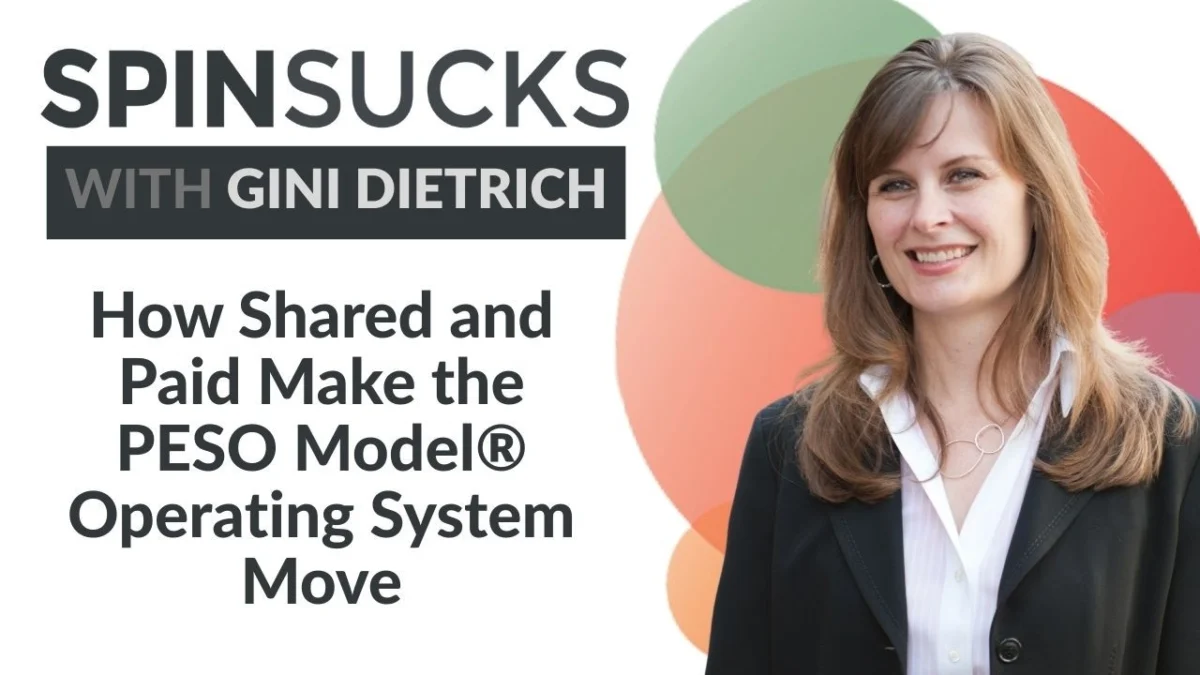
The communications landscape has undergone a radical transformation, moving from a centralized broadcast model to a highly fragmented, distributed ecosystem where information is mediated by algorithms, peer networks, and artificial intelligence. In response to these shifts, the PESO Model©—a strategic framework encompassing Paid, Earned, Shared, and Owned media—has been systematically rebuilt to address how modern audiences discover, validate, and act upon information. While Owned and Earned media serve as the foundation of authority and credibility, the integration of Shared and Paid media represents the critical layers of distribution and acceleration. According to industry analysis, organizations that fail to treat these elements as interconnected systems rather than isolated tactics often experience "activity without compounding results," a state where marketing efforts feel increasingly labor-intensive with diminishing returns.
The Evolution of the PESO Model in a Distributed Ecosystem
The PESO Model was originally introduced by Gini Dietrich in 2014 to provide a blueprint for integrated communications. However, the rise of "dark social," private communities, and generative AI search has necessitated a fundamental shift in how the model is applied. Modern information consumption is no longer linear; it is characterized by what researchers have identified as "distinct media realities." A 2024 report by Axios highlighted that the American media landscape has splintered into at least 12 different realities, ranging from traditional news consumers to those who receive information exclusively through niche social lurker communities or creator-led recaps.
In this environment, Shared media is defined not merely as "social media posting," but as the mechanism by which attention moves through a distributed network. It encompasses LinkedIn updates, but also private Slack channels, Discord servers, subreddit discussions, and peer-to-peer recommendations. Simultaneously, Paid media has evolved from broad-based advertising to a precision tool for accelerating proven signals. The modern PESO operating system posits that Shared and Paid should not be used to manufacture trust from a vacuum but to distribute and amplify the "proof" already established through Owned (content you control) and Earned (third-party validation) channels.
Shared Media: The Mechanism of Movement
The primary role of Shared media within the updated PESO framework is distribution. In the current digital climate, a significant portion of an organization’s target audience may never visit its primary website. Instead, they interact with "fragments" of the brand’s authority: a screenshot of a post, a blurb in a niche newsletter, or a summary provided by an AI assistant like Perplexity or ChatGPT.
From Volume to Movement
The traditional approach to Shared media often prioritizes volume—posting frequently to satisfy platform algorithms. However, the PESO Model Certification® emphasizes movement over volume. This involves identifying where "proof" travels and how it is repeated by human and AI systems. When an organization’s point of view is consistent across different platforms, it creates a "corroboration effect." This is vital for AI-driven search engines, which prioritize information that appears consistent and is corroborated by multiple reputable sources.
The Feedback Loop of Shared Media
Shared media serves a secondary function as a "signal detector." By observing which ideas are repeated, which proof points are cited in community discussions, and which objections are raised in comment threads, communications teams can gather real-time market intelligence. This "living R&D" allows for the refinement of messaging before significant capital is committed to Paid media campaigns.
Paid Media: Strategic Acceleration over Reactive Spending
Paid media is frequently the most misunderstood component of the PESO Model, often used as a "panic button" when lead generation targets are missed or when a competitor launches a new initiative. In a professionalized PESO operating system, Paid media is redefined as strategic acceleration.
The Four Pillars of Strategic Paid Media
- Consistent Reach: Ensuring that the most important "proof-backed" messages reach the target audience regardless of algorithmic fluctuations.
- Targeted Precision: Moving beyond broad demographics to reach specific decision-makers within niche communities.
- Frequency and Recall: Building the necessary touchpoints to move a prospect from awareness to trust.
- Conversion and Intent: Driving specific actions once a foundation of authority has been established through the other three PESO quadrants.
Industry data suggests that B2B buyer journeys now involve an average of 27 touchpoints. Paid media ensures those touchpoints are consistent and aligned with the brand’s core authority. When Paid media is used to "boost" content that lacks a foundation of proof or clarity, it merely "accelerates confusion," leading to high costs and low conversion rates.
Chronology of Framework Development
The refinement of the Shared and Paid layers within the PESO Model follows a decade of industry evolution:
- 2014: The PESO Model is introduced in the book Marketing in the Round, providing the first unified framework for PR and marketing integration.
- 2018-2020: The model is updated to reflect the growing importance of SEO and the "Owned" media foundation.
- 2022: The emergence of "dark social" and private communities forces a re-evaluation of Shared media, moving it away from public social feeds toward trusted peer networks.
- 2024-2025: The PESO Model is rebuilt for the AI era. The focus shifts to "signal strength" and "corroboration," ensuring that brand information is recognizable and trustworthy for both human users and Large Language Models (LLMs).
Supporting Data: The Cost of Disconnected Strategies
Recent marketing performance data underscores the necessity of an integrated approach. According to a study by the 6sense Revenue AI team, 70% of the B2B buyer’s journey is completed before a prospect ever reaches out to a sales representative. Furthermore, the "95/5 Rule" suggests that at any given time, 95% of a target market is not currently in a buying cycle.
These statistics highlight why a reactive Paid media strategy fails. If Paid media is only used for "bottom-of-the-funnel" conversion, it misses the opportunity to influence the 95% of the market that is currently building their "mental shortlist" of trusted providers. By using Shared and Paid to consistently distribute "proof" to this broader audience, organizations can ensure they are the top choice when the buyer eventually enters the market.
Industry Reactions and Professional Standards
The shift toward a systematized PESO approach has drawn significant attention from communications leaders seeking to move away from vanity metrics (such as likes and impressions) toward business-aligned outcomes. Professional bodies have noted that the "fragmentation of attention" is the single greatest challenge facing modern CMOs.
"The problem isn’t a lack of content; it’s a lack of repeatable distribution," says one industry analyst. "Most teams are trapped on a content hamster wheel. The PESO Model Certification® provides the decision rules needed to stop the chaos. It shifts the conversation from ‘What are we posting today?’ to ‘What proof are we moving this week, and through which networks?’"
This move toward "decision rules" and "operating systems" reflects a broader trend in professional services toward reproducibility. By establishing clear roles for Shared and Paid media, organizations can reduce their reliance on the "luck" of a viral post and instead build a reliable engine for growth.
Broader Impact and Implications for the AI Era
The implications of an integrated PESO Model extend beyond immediate marketing results; they are foundational to how brands will exist in an AI-mediated world. AI assistants aggregate data from across the web to provide answers to user queries. If a brand’s Shared media presence is inconsistent or disconnected from its Owned "proof," AI systems are likely to ignore it or, worse, provide inaccurate summaries.
By aligning Shared and Paid media to reinforce the same signals, organizations create a "moat" of credibility. This system ensures that:
- Humans see a consistent, trustworthy story across their preferred networks.
- Algorithms recognize high-quality, high-engagement distribution patterns.
- AI Models find corroborated, consistent data points that increase the brand’s "authority score" in generative search results.
In conclusion, the modern PESO Model operating system treats Shared and Paid media as the essential layers of movement and speed. Shared media ensures that proof travels through trusted networks, while Paid media ensures that those signals reach the right people with the necessary frequency to build lasting trust. Together, they transform static authority into dynamic momentum, allowing organizations to navigate a fragmented media landscape with precision and compounding success. The next phase of the PESO evolution will focus on the total integration of these four types, moving from a conceptual framework to a fully executable operating system for the digital age.










