
 rifanmuazin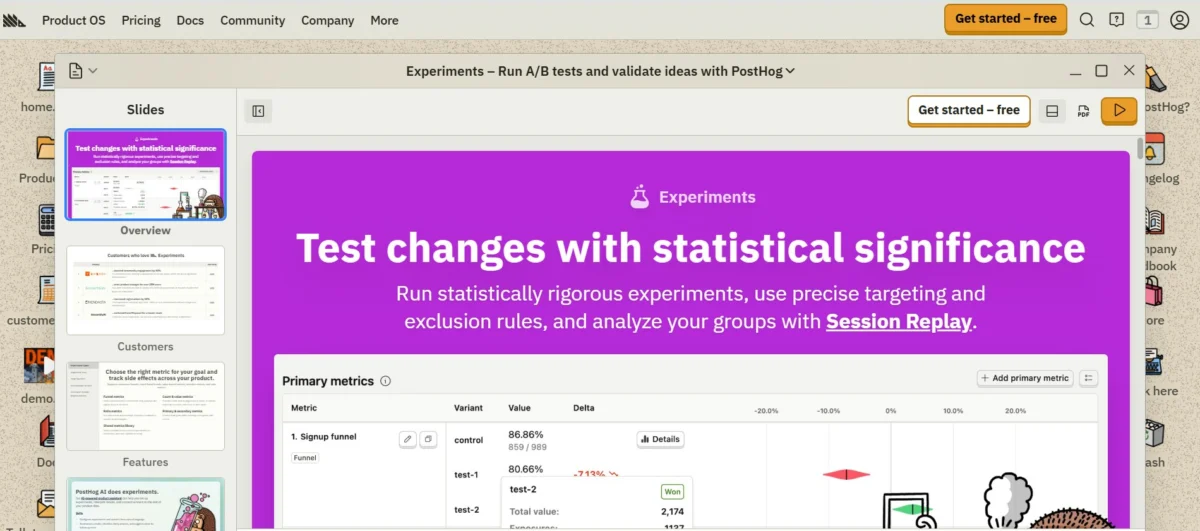
The digital landscape of 2026 has witnessed a fundamental shift in how organizations approach product optimization and user experience validation. As enterprise A/B testing platforms have evolved into high-cost, multi-layered SaaS ecosystems that often require thousands of dollars in monthly licensing fees before a single hypothesis is tested, a robust counter-movement has matured: the open-source experimentation stack. These tools have transitioned from niche developer utilities to sophisticated platforms that allow organizations to start testing early, maintain absolute control over sensitive user data, and build long-term experimentation maturity without the burden of prohibitive upfront costs.
The Economic and Technical Drivers of the Open-Source Shift
The move toward open-source A/B testing is not merely a cost-saving measure; it is a strategic response to the increasing complexity of modern data stacks. By 2026, the proliferation of global data privacy regulations—including expanded iterations of GDPR, CCPA, and new regional frameworks—has made the third-party handling of user data a significant compliance risk. Open-source tools address this by offering self-hosted architectures where experiment data never leaves the organization’s internal infrastructure.
Furthermore, the "warehouse-native" movement has redefined the technical requirements for experimentation. Rather than syncing data to external analytics silos, modern teams prefer to run experiments directly on top of their existing data models in platforms like Snowflake, BigQuery, or Redshift. Open-source tools have led this charge, providing the flexibility to integrate with custom architectures that proprietary "black-box" systems cannot easily accommodate.
A Chronology of Experimentation: From Proprietary Dominance to Open Standards
To understand the current state of the market, one must look at the evolution of the industry over the last decade.
- 2010–2018: The Era of Proprietary Dominance. Marketing-led experimentation was dominated by visual, drag-and-drop tools. While accessible, these platforms often introduced "flicker" effects and struggled with server-side testing.
- 2019–2022: The In-House Revolution. Tech giants like Netflix, Airbnb, and Uber published whitepapers on their internal experimentation platforms. This inspired mid-market companies to seek similar control, leading to the birth of the first major open-source alternatives.
- 2023–2025: The Integration Phase. Feature flagging and A/B testing merged into unified "feature management" workflows. Open-source projects began adopting the OpenFeature standard, reducing vendor lock-in.
- 2026: The Maturity Phase. Open-source tools now offer statistical rigor (Bayesian and Frequentist engines) that rivals enterprise counterparts, supported by active global communities and professional support tiers.
Leading Open-Source A/B Testing Platforms in 2026
The current market offers several distinct paths for organizations, depending on their technical debt and data infrastructure.
1. GrowthBook: The Warehouse-Native Leader
GrowthBook has emerged as the standard-bearer for teams that prioritize data integrity. By connecting directly to the data warehouse, it eliminates the "dual tracking" problem where analytics and testing tools report different numbers. In 2026, GrowthBook’s visual editor has bridged the gap between engineering and marketing, though it remains a developer-first platform at its core.
2. PostHog: The All-in-One Product Suite
PostHog represents the "Product OS" approach. It integrates A/B testing with session recordings, heatmaps, and funnel analysis. This contextual data allows teams to not only see if a variation won but why users behaved that way. Industry analysts note that PostHog’s growth is largely driven by startups that want a single, self-hosted replacement for the traditional Google Analytics and Optimizely stack.

3. Unleash and Flagsmith: The DevOps Bridge
While both began as feature flag managers, Unleash and Flagsmith have expanded their experimentation capabilities significantly. These tools are often preferred by high-compliance industries, such as fintech and healthcare, due to their robust governance features and ability to handle complex multi-platform rollouts across web, mobile, and server-side environments.
4. Mojito: The Lightweight Specialist
For engineering teams that demand minimal performance overhead, Mojito remains a top choice. Its modular design allows it to be completely source-controlled, meaning experiments are versioned in Git just like production code. This "Experimentation-as-Code" model is a favorite among high-performance e-commerce platforms where millisecond latency impacts conversion.
Comparative Analysis of Open-Source Tools (2026 Data)
| Tool | Primary Focus | Statistical Engine | Data Ownership | Best For |
|---|---|---|---|---|
| GrowthBook | Data Warehouse | Bayesian/Freq | Full | Data-mature teams |
| PostHog | Full Product Analytics | Bayesian | High | Growth-stage startups |
| Unleash | Feature Governance | Custom/Integrated | Full | Enterprise DevOps |
| Flagsmith | Multi-platform Flags | External | Full | Cross-platform apps |
| Mojito | Git-based Testing | Custom | Full | High-perf Engineering |
| FeatBit | Real-time Rollouts | Basic/Advanced | Full | Agile Product Teams |
Strategic Implementation: Choosing the Right Framework
Selecting an open-source tool in 2026 requires an evaluation across four critical layers of the organization.
1. The Data Infrastructure Layer
Organizations with a centralized data warehouse (the "Modern Data Stack") should prioritize tools like GrowthBook that treat the warehouse as the single source of truth. This prevents the fragmentation of metrics and ensures that experiment results align with executive dashboards.
2. The Team Structure Layer
The "human" cost of open source is a vital consideration. While the software is free, the maintenance requires engineering bandwidth. If a team lacks dedicated DevOps support, a managed cloud version of an open-source tool (often called "Open Core") may provide the best balance of control and convenience.
3. The Compliance and Security Layer
In 2026, data residency is a non-negotiable requirement for many global firms. Open-source tools that support air-gapped environments or local hosting provide a level of security that SaaS-only vendors struggle to match.
4. The Scale and Maintenance Layer
Hidden costs—such as server hosting, database scaling for event logs, and the manual cleanup of expired feature flags—must be factored into the Total Cost of Ownership (TCO). Expert analysis suggests that while open source saves 70-90% on licensing, it increases internal labor costs by 15-25%.
Common Challenges and Technical Debt
Despite the advantages, the adoption of open-source experimentation is not without friction. One of the primary hurdles is the "Technical Barrier to Entry." Unlike legacy SaaS platforms, many open-source tools lack a robust "What You See Is What You Get" (WYSIWYG) editor, forcing marketing teams to rely on developers for even minor UI changes.

Additionally, "Flag Debt" has become a significant issue in 2026. Without strict governance, codebases can become littered with old experiment logic, leading to performance degradation and "zombie" features that accidentally trigger for segments of the user base.
Best Practices for Sustainable Experimentation
To maximize the ROI of an open-source stack, industry leaders recommend the following protocols:
- Hypothesis Standardization: Define success metrics and sample sizes before the code is deployed.
- Automated Flag Cleanup: Integrate flag removal into the "Definition of Done" for every sprint.
- Unified Event Schema: Ensure that the events tracked in the A/B testing tool are identical to those used in business intelligence.
- Statistical Education: Ensure that product managers understand concepts like p-values or Bayesian credible intervals to avoid "peaking" at results too early.
The Transition to Enterprise: When Open Source is No Longer Enough
As experimentation programs scale to hundreds of simultaneous tests, some organizations find that the overhead of maintaining open-source infrastructure outweighs the benefits. This is where unified platforms like VWO provide a strategic alternative.
VWO bridges the gap by offering a Visual Editor that empowers non-technical teams to launch experiments independently, while simultaneously providing server-side SDKs for developers. Case studies from 2025-2026 highlight that companies like Vandebron achieved double-digit increases in sign-ups by using integrated insights to identify friction points before running tests. Furthermore, the integration of AI-powered assistants, such as VWO Copilot, has automated the identification of high-value audience segments, a task that remains largely manual in most open-source setups.
Future Outlook: The Hybrid Approach
The conclusion for 2026 is clear: the choice is no longer a binary one between "Expensive SaaS" and "Difficult Open Source." The market has shifted toward a hybrid reality. Many organizations start with open-source tools to prove the value of experimentation, building a culture of testing without financial risk. As they mature, they either scale their open-source stack with custom internal tooling or transition to enterprise platforms that offer advanced features like automated personalization and AI-driven hypothesis generation.
Ultimately, the rise of open-source A/B testing has democratized the ability to innovate. By removing the "entry fee" for experimentation, these tools have ensured that data-driven decision-making is a standard requirement for digital products, rather than a luxury for the few.








