rifanmuazin
The landscape of corporate communication has undergone a radical transformation as organizations navigate the complexities of the mid-2020s, marked by a decisive shift toward technological integration and a renewed focus on human-centric messaging. According to the 2026 Internal Comms Trends Report, a comprehensive study conducted by Workshop, the current year represents a pivotal moment where internal communicators are no longer merely distributing information but are acting as strategic architects of organizational culture. As the volume of digital noise reaches an all-time high, the report highlights a significant movement toward smarter systems, clearer delivery channels, and the institutionalization of artificial intelligence (AI) and automation. The data suggests that while the tools have become more sophisticated, the fundamental challenge remains the same: ensuring that the right message reaches the right person through a voice they actually trust.
The Managerial Gap and the Crisis of the Cascade
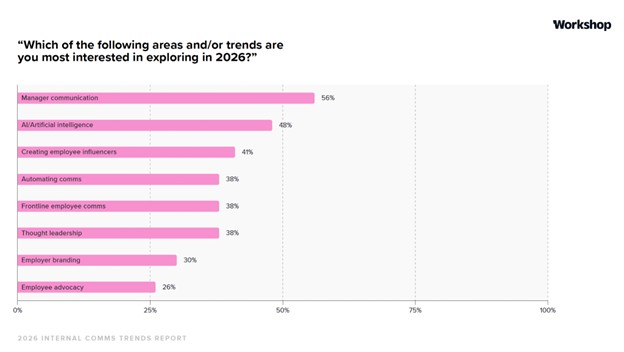
Perhaps the most striking finding in the 2026 report is the persistent disconnect between the importance of middle management and their actual performance as communicators. Data reveals that 56% of internal communications professionals identify manager communication as their primary focus for the year. This prioritization stems from a well-documented psychological reality in the workplace: employees consistently report higher levels of trust in their direct supervisors than in C-suite executives or formal corporate broadcasts. However, a significant "effectiveness gap" persists, with only 4% of respondents believing that managers are currently "very effective" at cascading messages to their teams.
This disparity has created a "wobble" in the communication cascade. When managers lack the context or the confidence to deliver corporate updates, they often soften key messages or omit crucial details, leading to fragmentation and rumors. In response, 2026 has seen a surge in the development of "Manager Toolkits." These are no longer just PDFs of talking points; they have evolved into dynamic, centralized hubs that provide leaders with digestible "leader digests," clearer expectations for delivery timelines, and feedback loops that allow managers to report team sentiment back to the communications department. Industry analysts suggest that supporting managers is no longer a peripheral task but is now the linchpin of successful internal strategy.

The Normalization of Artificial Intelligence in the Workflow
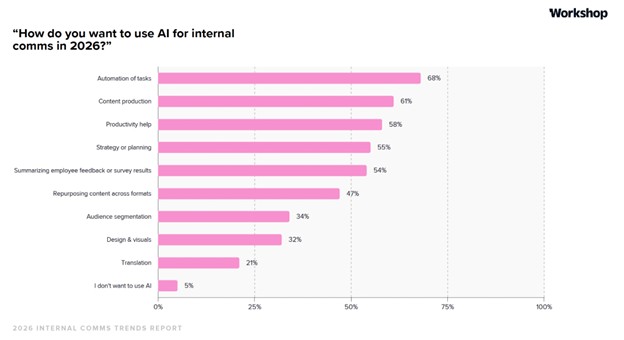
In 2026, the conversation around artificial intelligence has shifted from speculative anxiety to practical utility. The report indicates that AI has transitioned from an experimental novelty to a daily necessity, with 42% of communicators using AI tools every single day and an additional 31% utilizing them several times a week. This high adoption rate reflects a maturing understanding of how machine learning can augment human creativity rather than replace it.
While content creation—such as drafting initial newsletter copy or generating headlines—remains the most frequent use case, sophisticated teams are expanding their AI applications. Current trends show AI being leveraged for complex sentiment analysis of employee feedback, the summarization of lengthy town hall transcripts, and the automated adaptation of content across various channels to suit different audience demographics. By automating repetitive administrative tasks and data synthesis, communicators are reclaiming time to focus on high-level strategy, tone policing, and cross-departmental alignment. The "augmented communicator" of 2026 is defined by their ability to pilot these tools to ensure clarity and consistency across a global workforce.
The Surprising Resilience of Email as a Primary Channel
Despite a decade of predictions regarding the "death of email" in favor of instant messaging platforms like Slack or Microsoft Teams, 2026 has reaffirmed email’s status as the bedrock of internal communications. An overwhelming 81% of communicators named email as their most effective channel, a figure that dwarfs the perceived effectiveness of in-person events (35%) and traditional intranets (31%). The endurance of email is attributed to its universal reach; unlike specialized apps that may be ignored by non-desk or frontline workers, email remains a standard utility across all sectors of the economy.
The 2026 strategy for most organizations involves a "Push and Pull" ecosystem. Email and SMS serve as the primary "push" channels—delivering urgent and essential information directly to the employee. These are then paired with "pull" channels, such as intranets or resource hubs, where employees can go to find information at their own convenience. This dual approach addresses the problem of digital fatigue; by making email the predictable source of "what I need to know now," organizations build a sense of reliability and trust. Furthermore, the advanced analytics provided by modern email platforms—offering data on open rates, click-through patterns, and read times—provide communicators with the empirical evidence needed to refine their strategies in real-time.
Resource Scarcity and the Rejection of the Do-More-With-Less Mandate
For years, internal communications departments have been pressured to expand their output without a corresponding increase in headcount or budget. However, 2026 marks a period of significant pushback against this "do more with less" philosophy. The Workshop report finds that only 44% of communicators feel they have the adequate resources to execute their 2026 strategy. This resource gap has led to a strategic "maturation" of the function, where teams are becoming more protective of their time and more selective about their projects.
To manage the overflow of requests, communication teams are increasingly adopting formal intake processes, standardized templates, and rigid project timelines. There is a growing trend of communicators "saying no" to low-impact tasks that do not align with the broader corporate goals. This shift toward operational excellence is seen as a survival mechanism. By establishing boundaries and prioritizing high-quality, strategic work over high-volume, tactical output, internal comms teams are positioning themselves as business partners rather than just service providers. This evolution is crucial for maintaining the mental health of communication professionals and ensuring the long-term sustainability of the function.
Redefining the Intranet as a Knowledge Repository
The intranet remains one of the most polarizing tools in the communicator’s arsenal. While 29% of professionals cite it as the most difficult channel to manage due to content decay and poor user interfaces, more than half of organizations are prioritizing intranet improvements in 2026. The shift this year is not about making the intranet a social hub, but rather about refining its role as a "single source of truth" for evergreen information.
Successful organizations in 2026 are stripping away the "clutter" of the intranet—moving news and social interactions to other platforms—and focusing on searchability for policies, FAQs, and procedural guides. When an intranet functions as a reliable library rather than a failing social network, it reduces the administrative burden on HR and IT departments. The goal for 2026 is functional simplicity: an intranet that supports the employee journey by providing easy access to the "boring but essential" information that keeps an organization running smoothly.
The Rise of the Employee Influencer and Peer-to-Peer Trust
One of the most innovative trends identified in the 2026 report is the formal investment in "employee influencers." Currently, 41% of communicators are actively seeking to identify and empower individuals within the workforce who possess natural social capital. These influencers are not necessarily high-ranking executives; often, they are long-tenured employees or highly engaged team members who have built organic trust with their peers.
The logic behind this trend is rooted in the "credibility crisis" of top-down communication. Employees are increasingly skeptical of polished corporate messaging but remain highly receptive to the opinions of their colleagues. By supporting these internal voices with early access to information and platform visibility, comms teams can facilitate more authentic conversations. This approach requires a lighter touch; rather than scripting what influencers say, organizations are providing them with the tools and the "why" behind decisions, allowing them to translate corporate goals into the language of their specific teams.
Analysis and Implications for the Future of Work
The trends of 2026 suggest a broader shift toward a "decentralized" communication model. As organizations become more complex and the workforce becomes more distributed, the "command and control" style of communication is proving ineffective. The reliance on AI for data and email for delivery, combined with the empowerment of managers and peer influencers, points toward an ecosystem where communication is everyone’s responsibility, guided by the strategic hand of the internal comms professional.
Looking forward to the latter half of the decade, the success of an organization will likely depend on its "narrative agility"—its ability to pivot and align its workforce quickly in response to market changes. The 2026 data indicates that this agility is built on a foundation of trust and technological efficiency. For those attending upcoming industry events, such as Ragan’s Employee Communications & Culture Conference in Boston, the focus will undoubtedly remain on these practical applications. Sessions like Jamie Bell’s guide to "cringe-free" employee influencers highlight the industry’s desire to move away from artificial corporate personas and toward genuine human connection. As we move further into 2026, the organizations that thrive will be those that balance the efficiency of AI with the irreplaceable value of trusted human voices.