

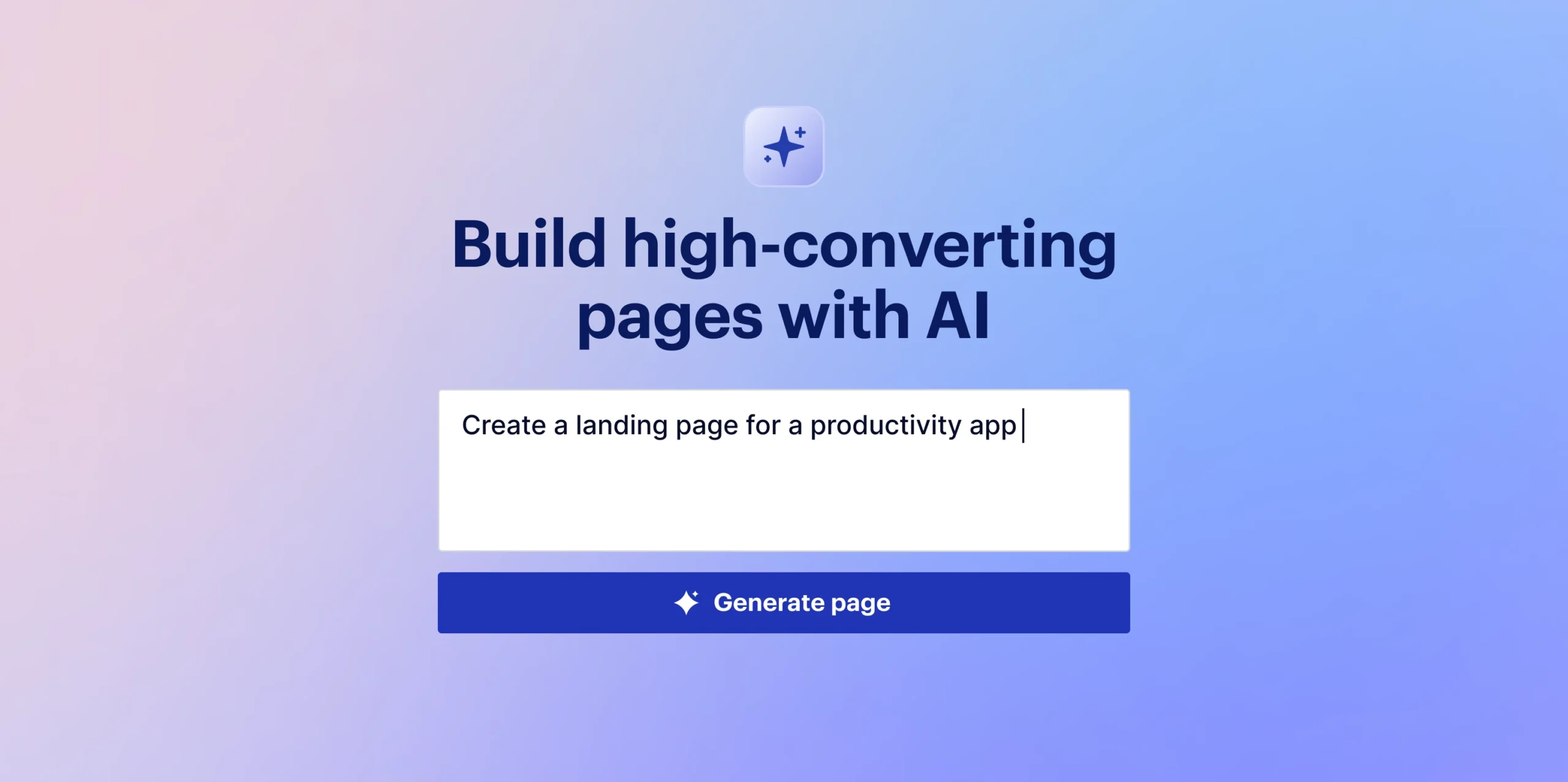
Instapage, a long-standing leader in the post-click automation and landing page software industry, has officially announced its transition into a comprehensive, end-to-end AI-powered marketing platform. This strategic evolution, marked by a series of high-level artificial intelligence integrations, aims to solve the persistent fragmentation within the marketing technology (MarTech) stack. By consolidating landing page generation, email automation, and conversion rate optimization (CRO) into a single, AI-driven ecosystem, Instapage seeks to empower leaner marketing teams to achieve higher performance metrics without the traditional overhead of manual tool integration.
The announcement represents a significant milestone for the Silicon Valley-based company, which has been operational since 2012. The new suite of features includes AI Page Generation, AI Email Generation, and AI Collections, all designed to automate the most labor-intensive aspects of digital marketing while maintaining the high level of creative control that professional designers and marketers demand.
A Decade of Evolution: From Builder to Ecosystem
To understand the magnitude of this shift, one must look at the historical trajectory of Instapage within the broader context of web development and digital advertising. When Instapage launched in 2012, the primary challenge for marketers was the "developer bottleneck." Building a high-converting landing page required significant coding knowledge or a lengthy turnaround time from an IT department. Instapage disrupted this model by introducing a pixel-perfect, drag-and-drop builder that allowed non-technical users to create sophisticated layouts.
By 2018, the company had expanded its focus to include personalization and experimentation, recognizing that a "one-size-fits-all" landing page was no longer sufficient in an era of hyper-targeted advertising. This led to the development of their Personalization and AdMap features, which allowed users to match specific ads to unique landing page experiences.
The 2023-2025 period saw the gradual infusion of machine learning and early-stage AI tools into the platform, primarily focused on copy generation and basic A/B testing suggestions. However, the 2026 release cycle marks a definitive pivot. Instapage is no longer just a tool for building pages; it is an intelligent engine that manages the entire lifecycle of a lead—from the first click on a generated page to the final conversion via automated, AI-written follow-up emails.
Addressing the "Blank Page" Syndrome with Generative Design
One of the primary hurdles in digital marketing is the creative friction associated with starting a new campaign. Industry data suggests that the average marketing team spends between 15 to 40 hours on the initial design and copy phase of a single high-fidelity landing page. Instapage’s new AI Page Generation tool aims to reduce this time to seconds.
Unlike basic AI generators that produce static or rigid templates, Instapage’s engine utilizes a "Description-to-Layout" model. A user provides a brief description of the campaign goal, target audience, and desired tone. The AI then selects an optimized layout based on historical conversion data, generates persuasive copy, and places visual elements in a manner consistent with UI/UX best practices.
Crucially, the platform addresses a major pain point in the generative AI space: the difficulty of refinement. In many standalone AI design tools, making a change to a generated layout requires a new prompt, which can often lead to the entire design being overhauled in an unpredictable way. Instapage bypasses this by integrating the AI output directly into its legacy drag-and-drop builder. This allows marketers to use AI for the "heavy lifting" of the first draft while retaining the ability to manually tweak individual elements—such as moving a button, changing a hex code, or swapping an image—without needing to re-prompt the system.
The Integration of AI-Powered Lead Nurturing
Beyond the landing page, Instapage is expanding its reach into the inbox. The introduction of AI Email Generation is a direct response to the "context-switching" tax that plagues modern marketing teams. Statistics from the MarTech Alliance indicate that the average enterprise uses upwards of 90 different marketing tools, leading to significant data silos and manual labor when moving leads from a capture tool to a nurturing tool.
Instapage’s new system keeps the lead data and the communication tools under one roof. When a lead is captured on an Instapage-hosted site, the AI Email Generator can immediately draft a personalized follow-up. Users can select specific goals—such as "book a demo," "download a whitepaper," or "register for a webinar"—and the AI adjusts the messaging based on the content of the landing page the lead originally visited.

This "closed-loop" system ensures that the messaging remains consistent across all touchpoints. By eliminating the need to export CSV files or set up complex Zapier integrations between disparate page builders and email service providers (ESPs), Instapage claims it can significantly reduce the lead-response time, which is a critical factor in conversion rates. Research from the Harvard Business Review has shown that companies that contact prospects within an hour of receiving a query are nearly seven times as likely to have a meaningful conversation with a key decision-maker.
Supporting Data and Market Implications
The shift toward AI-integrated platforms comes at a time when the digital advertising landscape is facing unprecedented pressure. In 2026, rising Customer Acquisition Costs (CAC) and the deprecation of third-party cookies have forced brands to focus more heavily on first-party data and conversion efficiency.
According to recent industry reports:
- Productivity Gains: AI-driven content creation tools have been shown to increase marketing team productivity by up to 33%.
- Conversion Impact: Personalized landing pages, which Instapage’s AI Collections facilitate at scale, can lead to a 202% increase in conversion rates compared to generic pages.
- Economic Necessity: With many firms operating with leaner "skeleton" crews in the current economic climate, the ability to scale output without increasing headcount is becoming a primary driver for software procurement.
Instapage’s "AI Collections" feature specifically targets the scaling problem. For global brands managing hundreds or thousands of localized pages, AI can now automate the translation, cultural adaptation, and layout adjustments necessary for different markets, a task that previously required a massive team of regional managers and designers.
Official Responses and Industry Analysis
While Instapage has not released a formal list of external partner statements, internal communications emphasize a commitment to "human-in-the-loop" AI. A company spokesperson noted that the goal is not to replace the marketer but to "remove the technical and creative friction that prevents good ideas from reaching the market."
Industry analysts view this move as a necessary response to the "commoditization" of landing page builders. "The era of the simple ‘drag-and-drop’ builder is over," says Marcus Thorne, a senior analyst at a leading digital marketing consultancy. "Every platform now has a builder. The new battleground is intelligence—how the platform helps you decide what to build, how it optimizes that content in real-time, and how it connects the dots between different stages of the funnel. Instapage is making a play to be the central nervous system of the conversion process."
However, the transition is not without its challenges. The company has noted that several of these features are currently in beta and are being rolled out gradually. This cautious approach is likely intended to ensure the accuracy of the AI-generated copy and to prevent the "hallucinations" that sometimes plague large language models (LLMs).
Broader Impact on the MarTech Landscape
The evolution of Instapage into an end-to-end platform reflects a broader trend of consolidation in the software industry. As businesses grow weary of managing dozens of subscriptions, they are increasingly looking for "all-in-one" solutions that offer deep functionality.
By integrating AI across the entire workflow—from page generation to email follow-ups and performance scaling—Instapage is positioning itself against both specialized landing page tools like Unbounce and broader marketing automation suites like HubSpot. The competitive advantage Instapage is banking on is the "pixel-perfect" precision of its design tools combined with the speed of modern AI.
For the end-user, the implications are clear: the barrier to entry for sophisticated, multi-channel marketing campaigns is lower than ever. Small businesses can now deploy the kind of personalized, high-converting funnels that were previously the exclusive domain of enterprise-level companies with large creative agencies on retainer.
As the marketing world moves further into 2026, the success of Instapage’s pivot will likely be measured by how well its AI can translate complex human intent into high-performing digital assets. For now, the company’s message to the market is one of empowerment through automation, promising a future where the only limit to a marketing campaign is the quality of the idea, not the size of the team or the complexity of the tools.







