

San Francisco-based MarTech leader Instapage has announced the transition of its core service from a specialized landing page builder into a fully integrated, end-to-end AI-powered marketing platform. This strategic evolution, marked by the release of advanced generative AI tools for page construction and email automation, aims to address the growing fragmentation in the digital marketing stack. By embedding artificial intelligence across the entire conversion funnel—from initial design to lead nurturing—the company seeks to eliminate the technical "friction" that often prevents businesses from scaling their digital presence. Since its inception in 2012, Instapage has focused on Conversion Rate Optimization (CRO), and this latest update represents a significant leap toward autonomous marketing workflows.
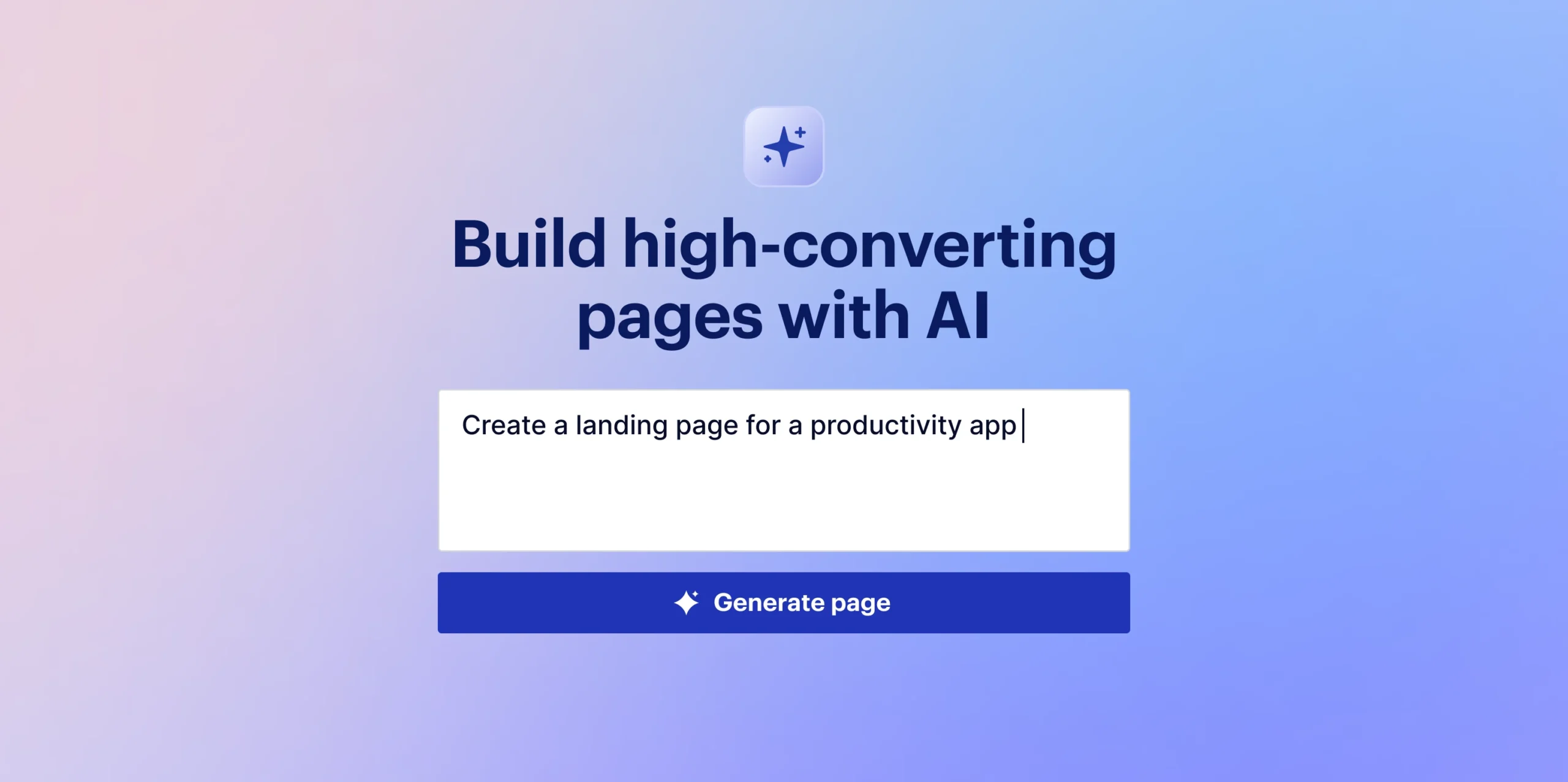
The centerpiece of the announcement is the introduction of AI Page Generation, a tool designed to solve the "blank page" syndrome that frequently stalls marketing campaigns. Unlike traditional builders that require manual layout selection and copywriting, the new system allows users to describe their campaign goals in natural language. The AI then generates a complete, conversion-ready page featuring tailored messaging and an optimized layout in a matter of seconds. This development comes at a time when marketing teams are under increasing pressure to produce high volumes of personalized content with limited personnel.
A Decade of Evolution: From Builder to Ecosystem
The journey of Instapage reflects the broader trends within the software-as-a-service (SaaS) industry. When the company launched in 2012, the primary challenge for marketers was the "developer bottleneck"—the need to rely on IT departments to push simple web changes. Instapage’s original drag-and-drop builder democratized this process. However, as the digital landscape grew more complex, the challenge shifted from mere creation to optimization and integration.
Over the last decade, Instapage expanded its features to include heatmaps, A/B testing, and dynamic text replacement for personalization. The current pivot to AI is the logical conclusion of this trajectory. Industry analysts note that the modern marketer typically manages between 10 and 20 different software tools to handle social media, email, analytics, and web hosting. The "stitching together" of these tools often leads to data silos and operational inefficiencies. By integrating AI-driven page generation with automated email follow-ups, Instapage is positioning itself as a unified solution that reduces the need for third-party "glue" software.
Technical Analysis of AI Page Generation and Refinement
A critical differentiator in Instapage’s new offering is the marriage of generative AI with its legacy "pixel-perfect" drag-and-drop editor. While standalone AI web generators have existed for several years, they often suffer from a lack of flexibility. In many competing systems, if a user wishes to change a layout after the AI has generated it, they must often re-prompt the system and regenerate the entire page, consuming additional tokens and time.
Instapage’s approach allows for immediate manual intervention. Once the AI generates the initial structure and copy, the user retains full creative control to move elements, adjust branding, or swap images without needing further AI prompts. This hybrid model addresses a major pain point for professional designers who require the speed of AI but the precision of manual editing. The company claims this workflow significantly reduces the "inefficient back-and-forth" that characterizes many AI-assisted design processes.
Bridging the Gap with AI-Powered Email Automation
The update also introduces an AI email generator, designed to synchronize lead capture with lead nurturing. Statistics from the Harvard Business Review suggest that businesses that attempt to reach leads within an hour of receiving an inquiry are nearly seven times as likely to have meaningful conversations with key decision-makers than those who wait even an hour longer. Despite this, many teams struggle with "speed to lead" because of the manual effort required to export leads from a landing page into an email service provider (ESP).
The new Instapage features allow users to set up automated triggers directly within the platform. The AI writes tailored follow-up sequences based on the specific audience, tone, and goals defined by the user. By housing pages, leads, and emails in a single environment, the platform aims to prevent leads from "falling through the cracks" during the handoff between different software tools.

Supporting Data and Market Context
The shift toward AI-integrated marketing is backed by significant shifts in the global economy and labor market. According to recent data from Gartner, by 2025, 60% of CMOs will prioritize "efficiency-driven" AI investments to combat rising customer acquisition costs (CAC). Furthermore, a McKinsey report on the economic potential of generative AI estimates that the technology could add the equivalent of $2.6 trillion to $4.4 trillion annually across various industries, with marketing and sales seeing the most significant impact.
Instapage’s focus on lean operations aligns with these findings. As the company noted in its announcement, the business environment of 2026 is expected to be characterized by tighter budgets and higher performance expectations. In such a climate, the ability to scale marketing output without increasing headcount becomes a competitive necessity. The use of "AI Collections" and automated experimentation tools within the platform is designed to allow small teams to perform at the level of large-scale agencies.
Chronology of the AI Rollout
The integration of AI into the Instapage ecosystem has been a multi-stage process:
- Phase 1 (2022-2023): Introduction of AI copywriting assistants and basic content suggestions.
- Phase 2 (Late 2023): Implementation of AI experimentation features, allowing for automated A/B test variations.
- Phase 3 (Current): Launch of full-scale AI Page Generation, AI Email Generation, and AI Collections.
The company has confirmed that these features are currently in a beta phase, with a gradual rollout to its global user base. This phased approach allows the company to gather user feedback and refine the machine learning models that power the generation engine before a full public release.
Industry Implications and Expert Perspectives
The move by Instapage is seen by industry experts as a challenge to both specialized landing page builders like Unbounce and broader CRM platforms like HubSpot. By offering a "middle ground"—more sophisticated than a simple builder but more agile than a massive CRM—Instapage is targeting the mid-market and agency sectors that require high-performance conversion tools without the overhead of enterprise-grade software.
"The challenge for MarTech providers today is no longer just providing a tool; it’s providing an outcome," says digital marketing analyst Marcus Thorne. "Instapage’s move into AI-driven email and page generation suggests they are no longer selling a ‘page builder’ but are instead selling ‘conversions.’ This shift in value proposition is essential as AI lowers the barrier to entry for content creation."
However, the transition also raises questions about the future of creative roles in marketing. While Instapage emphasizes that its tools are designed to "empower" teams rather than replace them, the automation of layout design and copywriting suggests a shift in the skills required by digital marketers. The role is moving away from execution and toward "prompt engineering" and strategic oversight.
Conclusion and Future Outlook
Instapage’s transformation into an end-to-end, AI-powered marketing platform marks a pivotal moment in the evolution of CRO technology. By addressing the inefficiencies of fragmented toolsets and the creative hurdles of manual design, the company is positioning itself as a central hub for digital growth. The integration of AI across the entire workflow—from the first click on a landing page to the final follow-up email—represents a new standard for operational efficiency in the digital age.
As the beta testing continues, the marketing industry will be watching closely to see if these AI tools can deliver on the promise of "conversion-ready" content that maintains the high aesthetic and functional standards required by modern brands. For now, Instapage is offering a 14-day free trial to allow businesses to experience the new workflow firsthand, signaling confidence in the platform’s ability to drive immediate value in a high-pressure economic environment. The company encourages users who do not yet see the beta features in their dashboard to contact their support team for early access, ensuring that the rollout remains controlled yet accessible to its core advocates.







