rifanmuazin
The landscape of Search Engine Optimization (SEO) is undergoing a profound transformation, characterized by expansion rather than fundamental change. While traditional search engines like Google and Bing continue to hold sway, the domain of SEO now critically encompasses AI-driven discovery, pervasive social media platforms, and the burgeoning influence of chatbots. The foundational principles — clarity, structure, authority, and relevance — remain immutable, yet the channels through which these principles must be applied are rapidly multiplying. This significant shift has been illuminated by a recent survey conducted by Yoast, which gathered insights from 59 SEO professionals, ranging from industry veterans with over a decade of experience to newcomers with less than a year in the field. Their collective responses paint a vivid picture of an industry actively recalibrating its strategies, with a minority of practitioners leading the charge while the majority strive to adapt to the accelerating pace of innovation.
The Evolving Digital Landscape: A New Era for Information Discovery
The past few years have witnessed an unprecedented convergence of technological advancements that are reshaping how users interact with information. At the forefront of this revolution is Artificial Intelligence (AI), particularly Large Language Models (LLMs), which have moved beyond experimental phases to become integral components of search and content delivery. The introduction of AI Overviews in traditional search results, the rise of conversational chatbots as primary information interfaces, and the increasing sophistication of voice search have collectively fragmented the traditional “ten blue links” experience. This evolution demands a broader understanding of “search” itself, moving beyond keyword rankings on a single platform to encompass visibility across an intricate web of digital touchpoints.
Historically, SEO has always been a dynamic field, constantly adjusting to algorithm updates, new technologies, and user behavior shifts. From the early days of keyword stuffing and link farming to the emphasis on mobile-first indexing and E-A-T (Expertise, Authoritativeness, Trustworthiness), SEO professionals have consistently demonstrated resilience and adaptability. The current wave of AI integration, however, presents a challenge of a different magnitude, requiring not just tactical adjustments but a strategic re-evaluation of what constitutes effective optimization in an increasingly automated and personalized information ecosystem. The Yoast survey serves as a crucial barometer, gauging the industry’s readiness and strategic direction in this pivotal period.
SEO’s Resilient Evolution: Thriving Amidst Change
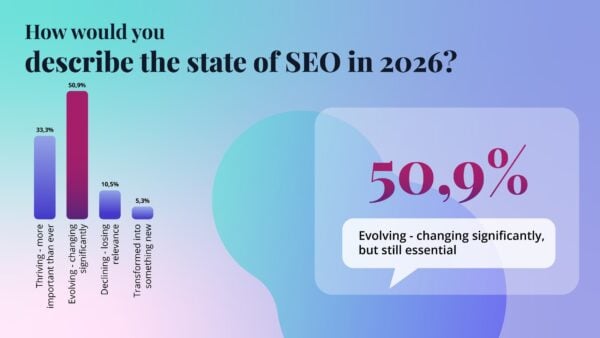
A central finding from the Yoast survey underscores the enduring strength of SEO: 51% of respondents characterize the discipline as “evolving,” while a robust 33% believe it is “thriving.” Only a small fraction, 10%, perceive SEO as “declining.” This nuanced perspective reveals a clear consensus that SEO is not facing an existential crisis but rather a significant metamorphosis. Interestingly, a demographic split emerged in these responses: seasoned professionals with over 10 years of experience were more inclined to view SEO as thriving, suggesting that their extensive background in navigating past industry shifts has fostered a greater sense of confidence in SEO’s capacity for adaptation. Newer entrants, perhaps overwhelmed by the rapid changes, showed less optimism.
Yoast Principal SEO Alex Moss articulates this sentiment: “SEO has always adapted to changes in the SERP, and now it’s adapting again. The traditional SERP is gone, but SEO isn’t.” Carolyn Shelby, another Principal SEO at Yoast, echoes this, emphasizing that “SEO is evolving, but not because its fundamentals are breaking. The interfaces between users and information are changing. Search is no longer confined to ten blue links, but the need for structured, relevant, trustworthy content hasn’t diminished.” These expert opinions reinforce the idea that the core tenets of SEO remain vital, even as their application becomes more diffuse across various platforms. The Yoast perspective aligns with broader industry forecasts, which project continued growth in the global SEO market, estimated to reach over $100 billion by 2026, driven by increased digital adoption and the escalating complexity of online visibility. This robust market outlook further validates the notion that SEO is not merely surviving but actively expanding its influence.
The Name Game: ‘SEO’ Retains Its Legacy
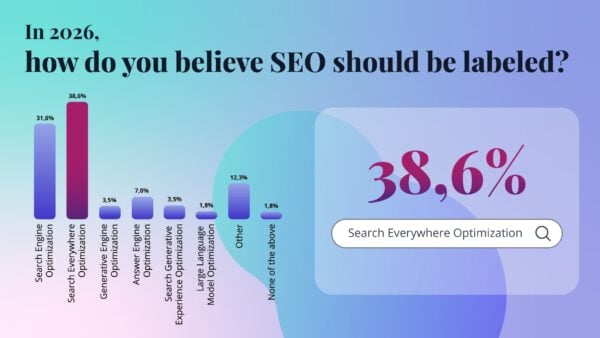
Despite the dramatic broadening of its scope, the debate around rebranding SEO appears to lean towards preserving its established name. The survey revealed that 39% of SEOs believe the discipline should be relabeled “Search Everywhere Optimization,” reflecting the multi-platform reality. However, a significant 32% advocate for retaining “Search Engine Optimization.” Even among veterans, a notable 41% favored the “Search Everywhere Optimization” moniker, highlighting the widespread acknowledgment of SEO’s expanded reach.
Yoast, however, firmly contends that the term “SEO” remains functional and widely recognized. Alex Moss states, “The term ‘SEO’ will stay. The role will widen to include AI and other disciplines, but the name doesn’t need to change.” Carolyn Shelby adds a critical point about market recognition: “The term ‘SEO’ still holds shared meaning, credibility, and market recognition. There’s no strong evidence that rebranding the discipline itself is necessary or beneficial. Responses favoring ‘Search Everywhere Optimization’ reflect where SEO outcomes now surface, not a fundamentally different practice.” The practical implications of renaming an industry-standard term could be considerable, potentially leading to confusion among clients, a dilution of brand equity for established agencies, and a disruption in educational pathways. The consensus from Yoast is that while the scope of SEO has broadened to encompass AI and social platforms, the underlying discipline remains consistent, requiring a focus on technical foundations, content quality, and brand authority. The explanation of what SEO entails in the current environment is more important than changing what it’s called.
AI Optimization: A Natural Extension of Core SEO
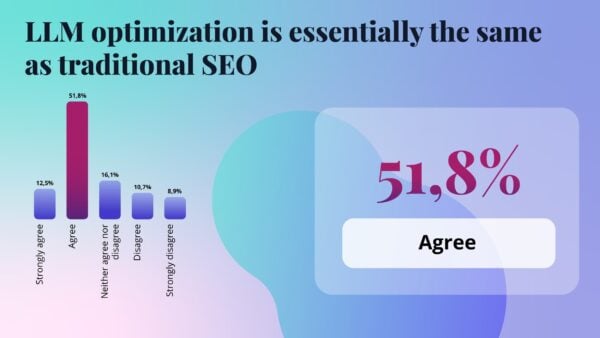
Perhaps one of the most reassuring findings for many SEOs is the strong belief that optimizing for Large Language Models (LLMs) is fundamentally aligned with traditional SEO practices. A compelling 64% of respondents agree that “LLM optimization is essentially the same as traditional SEO.” This viewpoint suggests that rather than requiring an entirely new set of tactics, AI systems reward the meticulous application of existing, proven SEO principles. Interestingly, 59% of SEOs reported that they are not actively optimizing for LLMs as a separate discipline, which can be interpreted not as complacency, but as a recognition of this inherent overlap.
The 9% who strongly disagreed with this statement often cited that LLMs prioritize synthesis and factual accuracy over traditional rankings, making structured data and strong brand mentions more critical. However, as Yoast experts point out, these are not contradictory but rather reinforced aspects of good SEO. Alex Moss clarifies, “If you’re undertaking good SEO, you’re already optimizing well for LLMs. The tactics don’t change—just the audience.” Carolyn Shelby further elaborates: “The same practices that make content discoverable and trustworthy for search engines also make it usable for LLMs. The confusion arises when people treat LLMs as a completely separate system. In reality, LLM visibility rewards clarity, relevance, and authority—all long-standing SEO principles.”
For instance, robust technical SEO ensures that content is easily crawlable and indexable by AI systems. High-quality, well-structured content with clear headings, semantic markup, and accurate information directly feeds into an LLM’s ability to synthesize and present reliable answers. The emphasis on E-E-A-T (Experience, Expertise, Authoritativeness, Trustworthiness) becomes even more paramount, as LLMs are designed to prioritize credible sources to prevent the propagation of misinformation. Therefore, rather than inventing new strategies, the call to action for SEOs is to double down on existing best practices, elevating the bar for quality and precision.
Redefining Success: Beyond the #1 Ranking
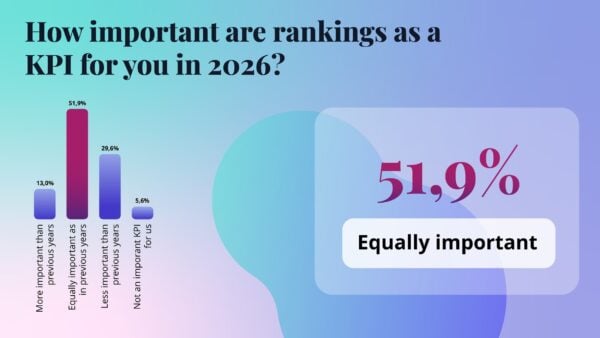
The traditional obsession with achieving the top spot in search results is gradually giving way to a more holistic understanding of online visibility. The Yoast survey reveals a sensible shift in how SEOs perceive the importance of rankings: 52% consider them “equally important” as before, while a substantial 30% now deem them “less important.” This evolution is driven by the rise of AI overviews, featured snippets, and other zero-click results that provide answers directly on the search results page, often reducing the need for users to click through to a website.
For AI systems, however, traditional rankings still serve as a critical signal of authority and relevance. As Alex Moss explains, “Traditional rankings are still important because agents still search the web to ingest information. If you aren’t visible there, it’s less likely an agent will identify and select you into their responses.” Carolyn Shelby adds a crucial distinction: “Rankings still matter, but they are no longer the end goal. They are a proxy for visibility, not a guarantee of impact.”
This redefinition necessitates a broader set of Key Performance Indicators (KPIs) for SEO professionals. Instead of solely fixating on ranking positions, the focus must expand to tracking visibility and presence across diverse channels. This includes monitoring whether content is cited in AI-driven answers, appearing in knowledge panels, or being mentioned in industry discussions. “AI visibility and citations are the new rankings,” according to Yoast. This shift encourages SEOs to prioritize brand authority and comprehensive content strategies that ensure a strong presence across the entire digital ecosystem, irrespective of direct click-through rates from traditional SERPs.
The Organic Traffic Paradox and Content Saturation
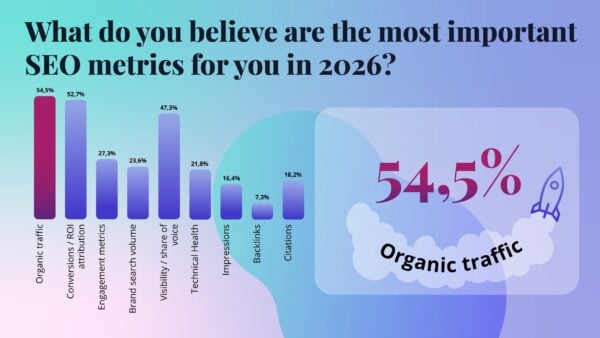
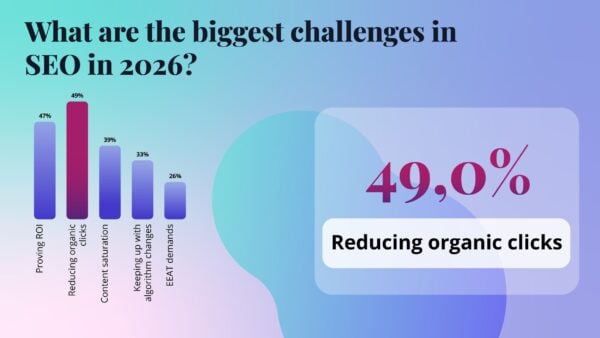
A significant paradox emerges from the survey regarding organic traffic: 55% of respondents still identify “organic traffic” as their top metric, yet 49% cite “reducing organic clicks” as their biggest challenge. This highlights a fundamental tension in the current SEO landscape. While organic traffic remains highly valued for its quality and intent, the mechanisms for acquiring it are changing. AI overviews and instant answers mean fewer clicks, but the clicks that do occur often represent users with a higher intent, having already received preliminary information.
Carolyn Shelby aptly describes this: “As AI reduces the need for some visits, success looks like being represented correctly rather than merely visited. Visibility in AI overviews doesn’t always drive clicks, but it builds legitimacy. Being included signals that you’re a credible source, even when users don’t click.” This implies a shift from volume-based metrics to engagement and conversion-focused KPIs for organic traffic.
Compounding this challenge is the rising tide of content saturation, exacerbated by the proliferation of AI-generated content. A notable 39% of SEOs reported that “competing with AI-generated content” is their primary challenge, dwarfing the mere 4% who cited a “talent gap.” While poorly written AI content is easily dismissed, the real threat comes from “good enough” AI content generated at scale, which can flood the web with noise, making it increasingly difficult for authentic, high-quality human-created content to cut through. Alex Moss underscores the human element: “AI-generated content is artificial. Humans connect with stories, not regurgitated lists.” Carolyn Shelby reinforces this by stating, “AI doesn’t change what good content is, but just raises the bar. Mediocrity doesn’t just rank lower; it disappears.” To navigate this, SEOs must champion unique perspectives, deep insights, strong brand voices, and multimedia integration, focusing on creating truly exceptional content that AI struggles to replicate.
The Overlooked Frontier: Social Search and TikTok’s Ascendance
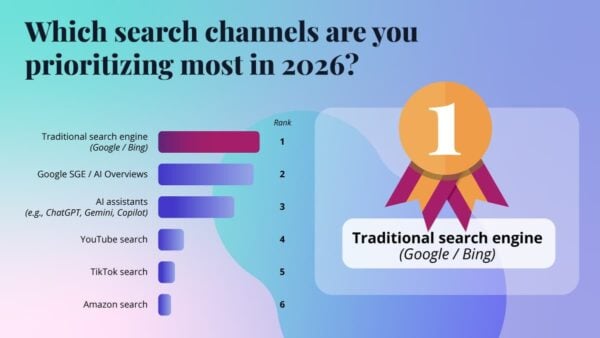
While traditional search engines (Google/Bing) continue to be the top priority for SEOs, the survey reveals a significant blind spot regarding emerging search channels. TikTok search, for instance, ranks #5 among prioritized channels, falling below Amazon. This statistic points to a missed opportunity for many, particularly given the platform’s explosive growth and its popularity among younger demographics for discovery, recommendations, and even educational content.
Younger generations increasingly turn to video-first platforms like TikTok for a wide array of information, from product reviews to B2B advice and tutorials. Ignoring these channels means overlooking critical signals that AI systems now value. Alex Moss notes, “Social platforms influence how LLMs perceive freshness and authority. Ignoring them means missing out on signals that AI systems value.” Carolyn Shelby adds a pragmatic perspective: “You don’t need to rank on TikTok, but you do need to be discoverable there. LLMs scrape social platforms for real-world signals.”
The Yoast perspective emphasizes that SEO now inherently includes social platforms. While direct ranking on TikTok might not be the goal, discoverability is paramount. A strong presence and a vibrant video channel can significantly boost an entity’s authority in AI responses, as LLMs frequently crawl these platforms for fresh, authoritative content and real-world sentiment. Incorporating a multi-platform strategy that includes social search optimization is no longer optional but a strategic imperative for comprehensive digital visibility.
The Evolving Role of the SEO Professional: A Blended Mindset
The collective insights from the Yoast survey and the expert commentary from Carolyn Shelby and Alex Moss paint a clear picture of the evolving role of the SEO professional in 2026. No longer confined to technical optimizations or keyword research, the modern SEO is a multi-faceted specialist. Alex Moss believes SEOs are “100% all three: marketers, brand builders, and SEO specialists. Brand and marketing have become intertwined with SEO as our role expands.” Carolyn Shelby concurs, asserting that “A blended mindset is essential. SEO can’t operate in isolation from brand, product, or communications.”
This means SEOs must possess a deep understanding of content strategy, brand storytelling, user experience, and broader marketing objectives. They are increasingly tasked with influencing product development, shaping communication strategies, and acting as integral advisors in overall digital strategy. The emphasis on E-E-A-T, unique content, and multi-platform visibility demands a more strategic, less purely technical, approach.
Conclusion: Navigating the Future of Digital Visibility
The year 2026 marks a pivotal point for SEO, characterized by expansion and profound evolution. The core principles of clarity, structure, authority, and relevance remain the bedrock, but their application now spans traditional search engines, AI-driven assistants, diverse social media platforms, and emerging conversational interfaces. The Yoast survey of 59 SEOs clearly illustrates an industry in transition, with practitioners adapting to new metrics beyond traditional rankings, confronting content saturation, and recognizing the critical importance of a holistic, multi-channel approach.
Businesses and SEO professionals must embrace this change by prioritizing truly high-quality, authoritative content, focusing on broad digital visibility and presence rather than just top rankings, and strategically integrating social search into their optimization efforts. The future of SEO is not about choosing sides between traditional and AI-driven approaches, but mastering both directions to achieve comprehensive information discoverability. These insights are but a glimpse into the complexities and opportunities that lie ahead.
For a deeper dive into these critical trends, including detailed survey responses, expanded expert analyses, and actionable strategies, readers are encouraged to download the full Yoast Perspective PDF report. Sign up now to gain access to comprehensive insights from Yoast’s principal SEOs, Carolyn Shelby and Alex Moss, and navigate the future of digital visibility with confidence.