rifanmuazin
The digital marketing landscape is currently undergoing a fundamental shift as the demand for hyper-personalized consumer experiences collides with the operational limitations of traditional content creation. While the marketing industry has long reached a consensus that personalization is the primary driver of conversion and customer retention, the practical execution of this strategy has remained a significant bottleneck for growth-stage companies and enterprise organizations alike. To address this “personalization gap,” Instapage has announced the launch of AI Collections, a sophisticated automation suite designed to streamline the creation, management, and deployment of personalized landing pages at scale.
For years, the workflow for creating personalized experiences required a linear and labor-intensive process: marketing teams had to manually duplicate existing pages, painstakingly edit individual copy elements, and manage version control through disparate spreadsheets. This manual approach often led to “initiative fatigue,” where complex personalization campaigns were either deprioritized or abandoned in favor of generic, lower-performing assets. Instapage’s new AI Collections aims to disrupt this cycle, claiming to facilitate the production of personalized pages up to three times faster than traditional manual methods.
The Mechanics of AI-Driven Personalization at Scale
At the core of AI Collections is a structural shift in how landing pages are conceptualized. Rather than viewing a landing page as a static, isolated file, the platform treats it as a dynamic template powered by a centralized data architecture. This architecture utilizes a built-in content table where each row represents a unique page within a collection and each column corresponds to specific dynamic content elements.
The process is initiated through the use of AI Placeholders. These are intelligent markers that automatically identify optimal locations for dynamic content within a page layout. By analyzing the existing design and hierarchy of a template, the AI eliminates the need for designers or marketers to manually map out dynamic fields. Once the AI analyzes the layout, it generates text placeholders that serve as the foundation for the entire collection.
Following the establishment of the template, the system moves into the content generation phase. Marketers can leverage integrated generative AI to populate the content table. By providing specific prompts—detailing target audiences, regional nuances, or specific campaign goals—the AI generates publish-ready copy for dozens or hundreds of pages simultaneously. This is further enhanced by Instapage’s “fluid grid blocks,” a technology that allows the page layout to automatically adjust its dimensions and spacing based on the length of the AI-generated text, ensuring visual consistency across every iteration without manual intervention.
Quantifying the Personalization Gap: Industry Data and Context
The launch of AI Collections comes at a time when the “efficiency gap” in marketing is becoming more pronounced. According to recent industry reports from McKinsey & Company, companies that excel at personalization generate 40% more revenue from those activities than average players. Furthermore, nearly 71% of consumers now expect companies to deliver personalized interactions, and 76% get frustrated when this doesn’t happen.
Despite these clear incentives, the “State of Marketing” reports often highlight that only a fraction of marketers feel they are utilizing personalization to its full potential. The primary barrier cited is almost always “resource constraints.” Before the advent of AI-integrated builders like AI Collections, a campaign targeting 50 different keywords or 20 different audience segments would require 50 to 20 separate manual edits. In a high-velocity marketing environment, this overhead often results in a negative ROI on the time invested. By reducing the time-to-market by 300%, Instapage is positioning AI Collections as a tool to move personalization from a “luxury tactic” to a standard operational procedure.
Chronology of Landing Page Evolution
The development of AI Collections represents the latest stage in the evolution of post-click automation. Understanding this trajectory provides context for why this specific technological leap is significant for the industry.
- The Static Era (Pre-2010): Landing pages were primarily hand-coded by developers. Any change to a headline or an image required a ticket to the IT department, making rapid experimentation impossible.
- The Drag-and-Drop Revolution (2010–2015): Platforms like Instapage pioneered visual editors, empowering marketers to build pages without code. This decentralized the creation process but still relied on a “one-page-at-a-time” workflow.
- The Dynamic Text Replacement Phase (2016–2021): Basic personalization entered the mainstream, allowing marketers to swap out specific words (like a city name or a keyword) based on URL parameters. However, the overall layout and messaging remained largely rigid.
- The AI-Integrated Era (2022–Present): With the integration of Large Language Models (LLMs) and automated layout engines, platforms have moved toward “Generative Personalization.” AI Collections represents the maturation of this era, where the AI is not just a writing assistant but a structural architect for entire campaigns.
Strategic Implications for Marketing Teams
The deployment of AI Collections has immediate implications for several key areas of digital strategy, most notably Search Engine Marketing (SEM) and Account-Based Marketing (ABM).
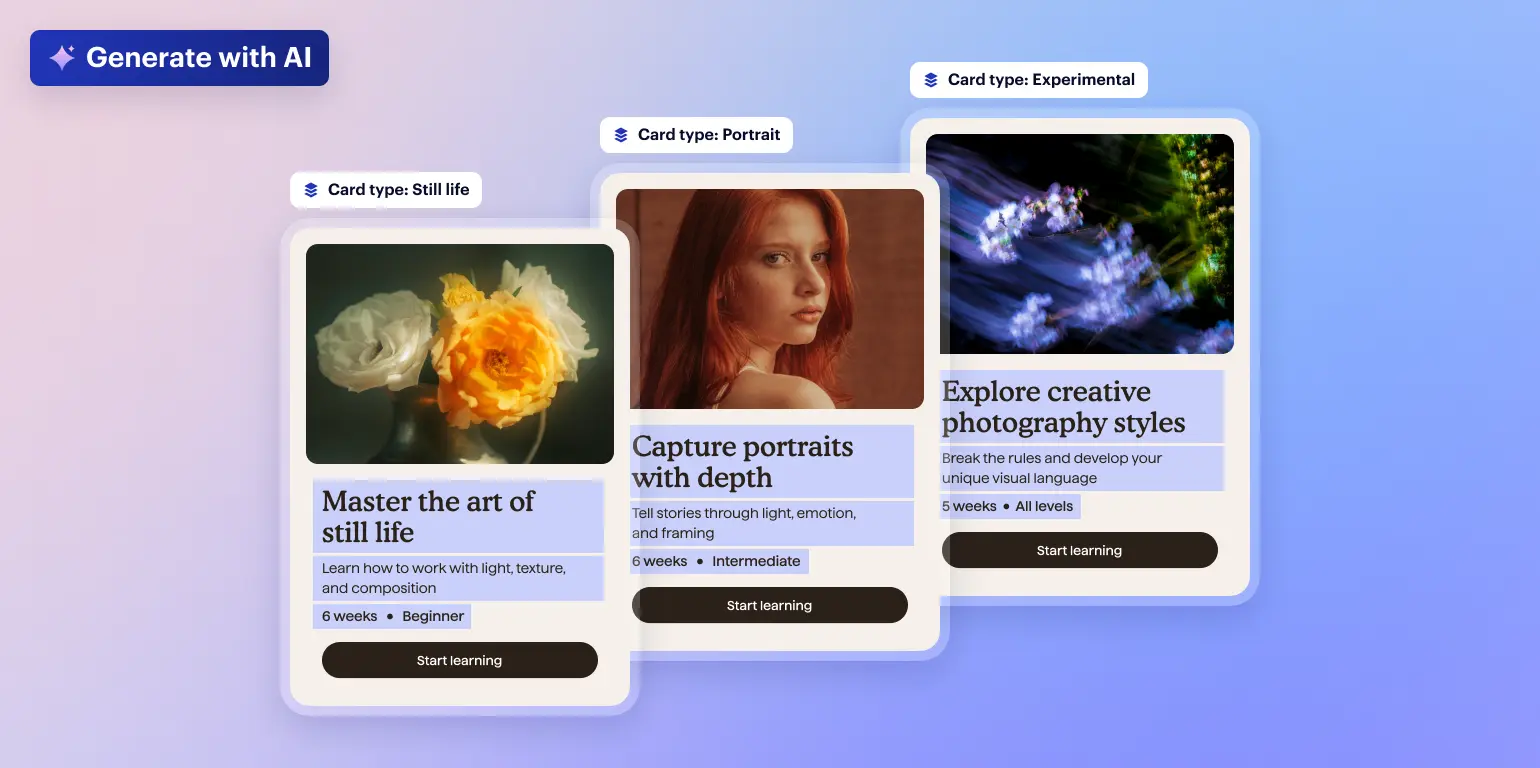
In the realm of SEM, the “Quality Score” assigned by platforms like Google Ads is heavily influenced by landing page relevance. Historically, it was difficult for advertisers to create unique landing pages for every single keyword in a high-volume ad group. With AI Collections, an advertiser can take a single successful template and generate 100 variations that perfectly mirror the intent of 100 different long-tail keywords. This increased relevance is expected to lead to higher Quality Scores, lower Costs-Per-Click (CPC), and improved conversion rates.
For ABM teams, the ability to create bespoke pages for hundreds of target accounts has previously been a logistical nightmare. AI Collections allows account managers to input firmographic data—such as company name, industry, and pain points—directly into the content table, enabling the AI to craft highly specific value propositions for each prospect. This level of “white-glove” service can now be achieved with the same effort previously required for a generic broad-reach campaign.
Industry Response and Market Analysis
While official statements from competing platforms have been reserved, market analysts suggest that the move toward “collection-based” editing is becoming the new standard for MarTech. The consensus among digital strategy consultants is that the value of a landing page builder is no longer measured by its design capabilities alone, but by its “velocity of scale.”
“The bottleneck in modern marketing is no longer creative ideation; it is the physical act of production,” says one industry analyst. “Tools that can bridge the gap between a single campaign concept and a thousand unique executions are going to be the winners in the next phase of the AI gold rush.”
Early adopters of AI-driven workflows have reported that the ability to “review and approve” rather than “create from scratch” has fundamentally altered their team structures. Instead of hiring junior marketers for manual data entry and page duplication, firms are shifting toward “AI Operators” who focus on prompt engineering and strategic data management within these automated systems.
Challenges and Considerations
Despite the technological advancements, the transition to AI-generated personalization is not without challenges. Critics and cautious observers note that “automation at scale” also carries the risk of “error at scale.” If a content table is incorrectly configured or an AI prompt is poorly phrased, a marketer could theoretically launch hundreds of flawed pages in the time it used to take to launch one.
Furthermore, the “Fluid Grid” technology, while solving the problem of text-overflow, requires a new level of trust in automated design. Marketers must ensure that their brand guidelines are robust enough to withstand the dynamic adjustments made by the AI. Instapage has addressed this by maintaining a “review and edit” layer, emphasizing that the AI is meant to augment, not replace, human oversight.
The Future of the Post-Click Experience
The launch of AI Collections is a clear indicator that the future of the web is moving away from static, “one-size-fits-all” destinations. As AI continues to lower the cost of content production, the expectation of the consumer will continue to rise. A generic landing page will soon be viewed with the same skepticism as a generic, “Dear Customer” email.
By providing a platform that treats personalization as a scalable data problem rather than a manual design problem, Instapage is enabling a future where every click leads to a unique, contextually relevant experience. This not only benefits the marketer through higher ROI but also benefits the consumer by reducing the friction between a search query and a relevant solution.
As organizations begin to integrate AI Collections into their 2024 and 2025 marketing roadmaps, the focus will likely shift from “how do we build this?” to “how do we optimize this?” The era of manual page management is effectively ending, replaced by a new paradigm of intelligent, automated, and hyper-relevant digital commerce. Instapage is currently offering a 14-day trial of the system, inviting the industry to test the limits of this new high-velocity personalization framework.


 Asro
Asro
 Dwi Wanna