A significant divergence has emerged between the prevailing narrative surrounding Artificial Intelligence (AI) and the practical realities experienced by businesses seeking to implement it. While media outlets, venture capitalists, leading AI laboratories, and industry influencers frequently propagate visions of AI replacing human labor, disrupting established software systems, and prioritizing "token-maxxing" as inherent goals, a different set of priorities is increasingly articulated by leaders overseeing operational businesses. These leaders are posing critical questions: How can AI enhance the capabilities of my workforce? Which AI systems can be reliably trusted? And most crucially, how can the return on investment (ROI) of AI expenditure be accurately measured? This pragmatic line of inquiry, frequently encountered by companies like HubSpot, underscores a growing demand for tangible value over speculative promise.
Background and Context: The AI Hype Cycle and Evolving Business Needs
The past few years have witnessed an unprecedented acceleration in AI development, particularly with the advent of large language models (LLMs) and generative AI. This technological leap has ignited a fervent hype cycle, characterized by bold predictions of AI’s transformative power across all sectors. Media coverage has often focused on the disruptive potential of AI, frequently highlighting scenarios of widespread job displacement and the possibility of artificial general intelligence (AGI). Venture capital firms have poured billions into AI startups, fueling a race to develop ever more sophisticated models and applications, often prioritizing raw computational power and model complexity. Frontier AI labs, in turn, have pushed the boundaries of what AI can achieve, sometimes emphasizing theoretical advancements and long-term potential over immediate, practical business applications. This ecosystem has largely shaped public perception, contributing to both excitement and apprehension about AI’s future role.
However, the enthusiasm emanating from these spheres often clashes with the day-to-day challenges faced by small and mid-sized businesses (SMBs) and even larger enterprises. While the promise of AI is compelling, the path to integrating it meaningfully into existing operations and demonstrating clear value remains complex. Businesses are not merely looking for tools that can generate text or automate simple tasks; they are seeking strategic solutions that address specific pain points, improve efficiency, and drive measurable growth. This shift from theoretical potential to practical application forms the bedrock of HubSpot’s evolving perspective on AI. After three and a half years dedicated to developing, deploying, and observing numerous growing customers effectively leverage AI, HubSpot has crystallized a set of AI perspectives that, while deeply held internally, are rarely voiced in the broader industry discourse. These six principles collectively advocate for a more grounded, human-centric, and outcome-oriented approach to AI implementation.
HubSpot’s Foundational Principles: A Three-and-a-Half-Year Journey
HubSpot, a leading customer relationship management (CRM) platform provider, has been at the forefront of integrating AI into its offerings for several years. Their journey, spanning over three years of intensive development and customer interaction, has provided unique insights into the actual impact and requirements of AI in a business context. This extensive experience has led them to articulate six critical perspectives that challenge the prevailing industry consensus, advocating instead for a more pragmatic and value-driven approach to AI adoption.
1. From Activity to Outcomes: Measuring Real Value
One of the most significant disconnects HubSpot identifies is the industry’s conflation of AI "activity" with genuine "outcomes." The market frequently celebrates AI’s ability to simplify tasks such as drafting emails, generating concise summaries, or conducting rapid research. While these capabilities are undoubtedly useful and are indeed features HubSpot integrates into its own products, they represent inputs, not results. Engaging in AI-powered activities without a clear line to measurable business outcomes, HubSpot contends, amounts to mere "theater" – motion without progress.
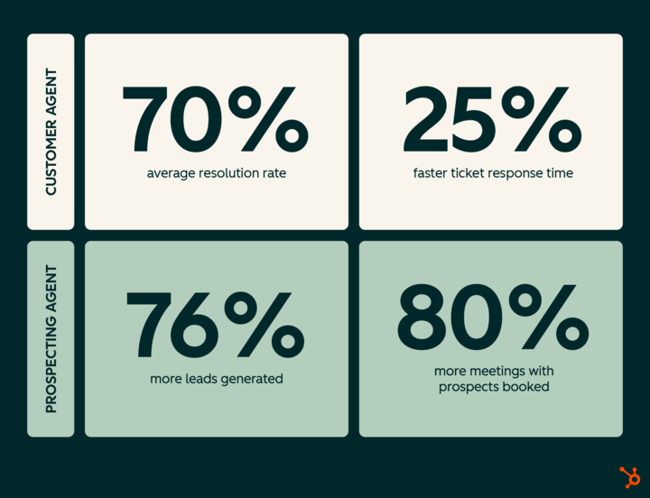
The companies that are truly succeeding with AI are those that adopt a "work backward" approach. Instead of being captivated by a model demonstration and attempting to find a use for it, they identify a specific business problem and then strategically apply AI to solve it. This outcome-first mentality is demonstrated by HubSpot’s own AI-powered tools. For instance, customers utilizing HubSpot’s Customer Agent have reported a 25% faster response time to tickets, while those deploying the Prospecting Agent have experienced a 76% increase in lead generation. These figures represent concrete, quantifiable improvements directly impacting business performance. Recognizing this crucial distinction, HubSpot moved to outcome-based pricing for its Customer Agent and Prospecting Agent in April, aligning its financial model directly with the delivery of tangible results. This strategic move reinforces their conviction that what truly matters is the outcome, not merely the utilization of AI features. This approach contrasts sharply with many industry players whose pricing models often incentivize high usage or "activity," regardless of the actual value generated for the customer.
2. Beyond the Model: The Indispensable Need for Integrated Systems
While AI has dramatically lowered the barrier to entry for generating code or creating prototypes, enabling individuals to build rudimentary applications quickly, this ease of creation does not automatically translate into scalable, reliable business value. As HubSpot argues, "AI is necessary. It is not sufficient." The fundamental requirements for running a growing business – such as maintaining clean and accurate data, ensuring seamless integration across dozens of disparate applications, and establishing a holistic, context-rich view of the customer across marketing, sales, and service functions – have paradoxically become more complex, not simpler, in the age of AI.
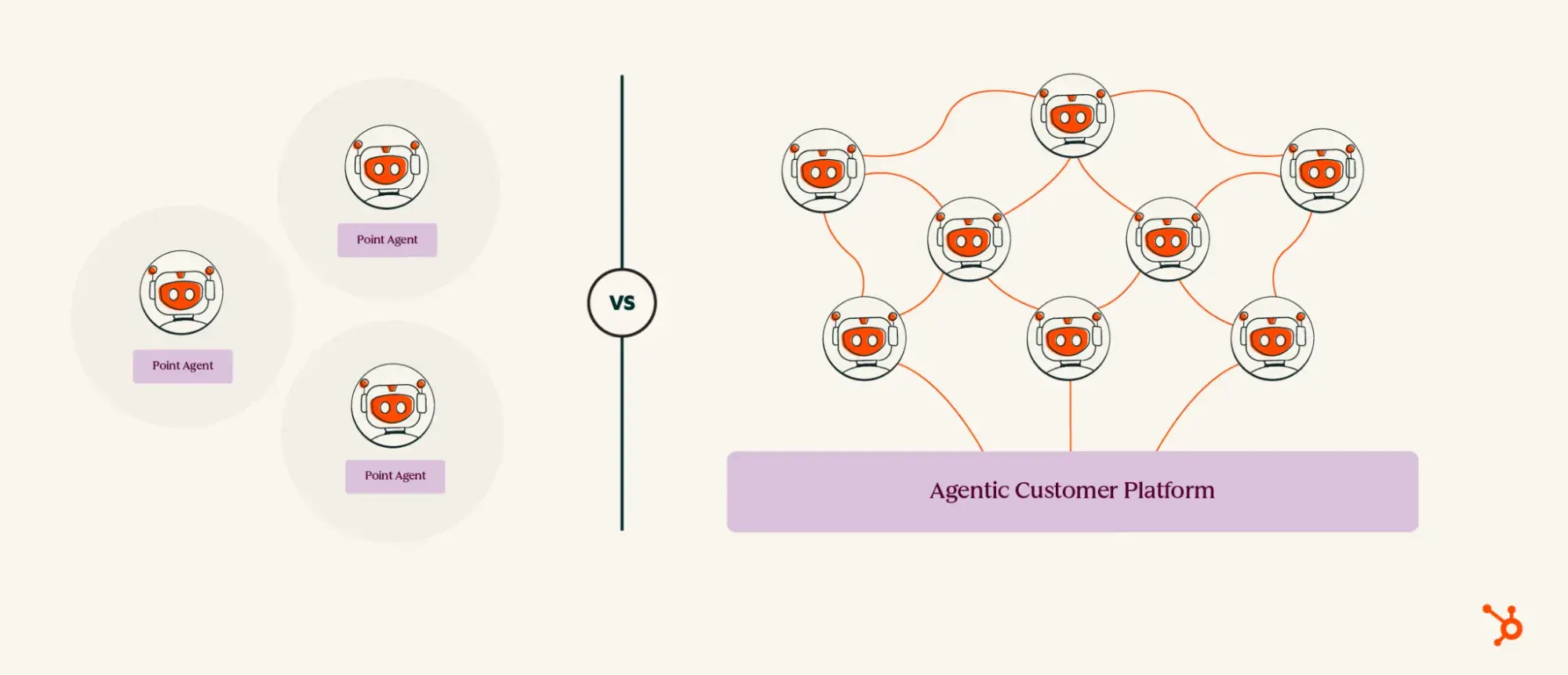
The prevailing industry trend often involves vendors selling standalone AI models or single-purpose agents. However, these offerings frequently neglect the crucial "system in between" – the foundational elements like data hygiene, workflow design, and comprehensive change management – leaving these critical responsibilities to the customer. As businesses accumulate an increasing number of disconnected point agents, the complexity of managing and integrating these solutions only escalates. Research consistently highlights that poor data quality is a leading cause of AI project failures, with studies from organizations like IBM estimating that bad data costs the U.S. economy billions annually. Similarly, the challenge of integrating new AI tools into existing enterprise resource planning (ERP) and CRM systems often becomes a significant bottleneck, demanding considerable engineering resources and expertise. HubSpot’s vision addresses this by building AI into a coherent, integrated system where data, workflows, agents, and human personnel share a unified context. They view AI not as a replacement for this essential foundation but as an intelligent new layer built upon it, enhancing its capabilities without introducing further fragmentation.
3. Democratizing AI: Building for the "Future 5000," Not Just the Fortune 500
A critical observation from HubSpot is that the current AI development roadmap is predominantly crafted for large enterprises possessing the financial and human capital to implement complex solutions. Frontier AI labs, by their own admission, invest billions of dollars, often deploying vast teams of engineers directly into large corporations to tailor and integrate AI systems. This "forward-deployed engineer" model is viable for Fortune 500 companies with substantial IT budgets and in-house development teams.
However, this approach is fundamentally unsuited for the millions of growing businesses – the "Future 5000" – that are expected to be the primary drivers of economic growth in the coming decade. A typical small or mid-sized company simply lacks the resources to engage forward-deployed engineers, undertake a complete overhaul of its data pipelines, or construct a bespoke context platform necessary for integrating complex AI solutions. Therefore, while the consensus might loudly declare "AI is for everyone," the practical reality reveals that current high-end AI solutions primarily benefit customers who can already afford the extensive infrastructure and talent required to make them work. This selective accessibility, HubSpot argues, falls far short of true AI democratization. Their commitment is to develop AI solutions that are inherently accessible, manageable, and beneficial for businesses of all sizes, ensuring that the transformative power of AI is not confined to an elite few.
4. Rethinking AI Economics: Optimizing for Outcomes Per Token, Not Tokens Per Task
HubSpot identifies a fundamental business-model conflict within the AI industry that many customers have yet to fully recognize. Vendors whose revenue models are directly tied to AI usage are inherently incentivized to maximize that usage, not to make AI operations more cost-effective or efficient for the customer. In this paradigm, customers are often billed for "activity" – the sheer volume of tokens processed or tasks executed – under the guise of purchasing "transformation."
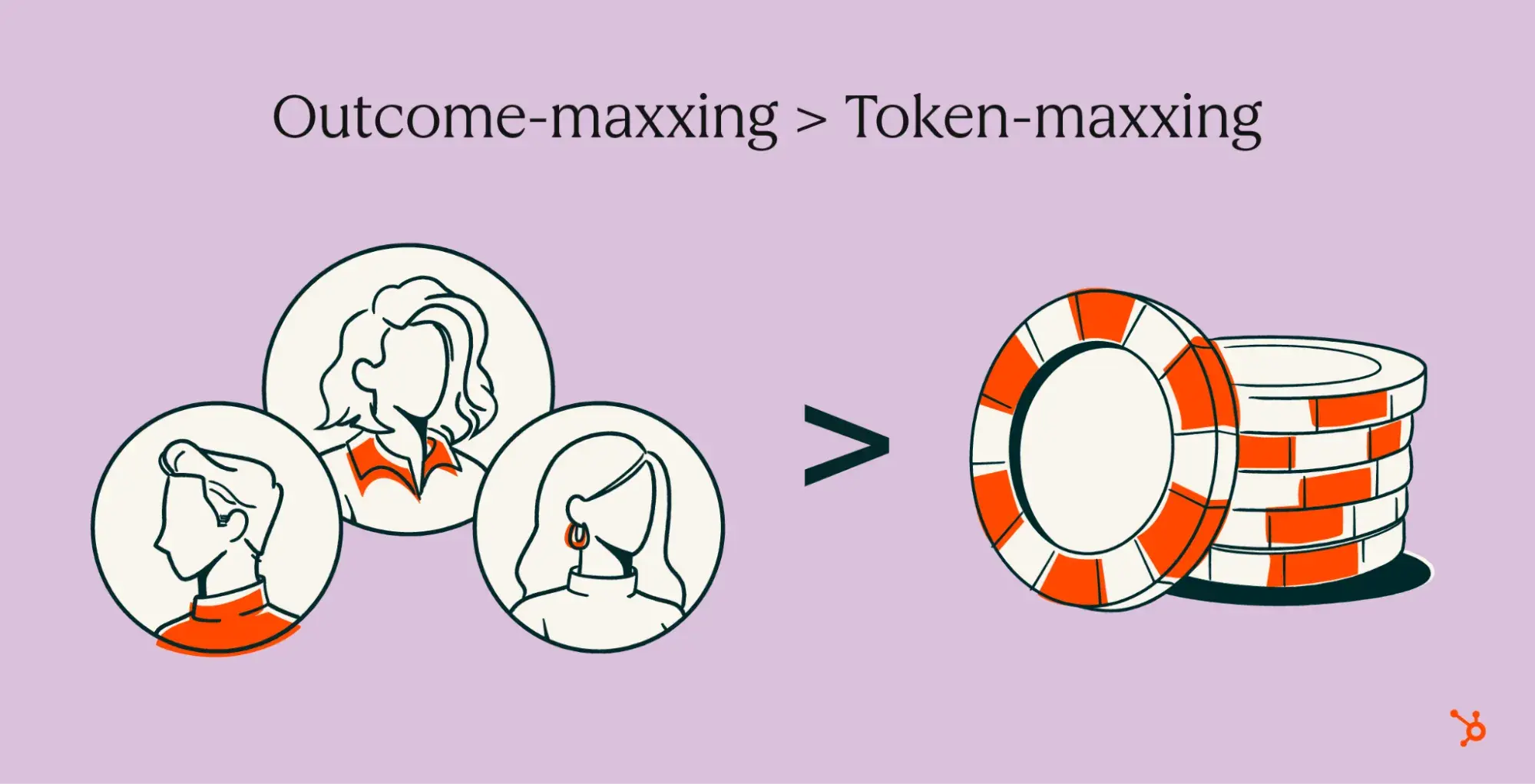
The honest economics of AI, according to HubSpot, should operate in the inverse. The starting point must be a clear understanding of the specific outcome the customer aims to achieve. From there, the vendor’s responsibility should be to identify and deliver the most efficient, lowest-cost pathway to realize that outcome. This customer-centric approach to cost optimization is rarely seen in an industry where "token-maxxing" – maximizing the computational resources consumed – often serves the vendor’s financial interests. HubSpot firmly believes that while token-maxxing might benefit the vendor, "outcome-maxxing" is what truly serves the customer. Vendors who align their business models with the customer’s desire for measurable, cost-effective outcomes are the ones poised for long-term success, distinguishing themselves from those whose profitability relies on merely keeping the meter running. This perspective challenges the industry to shift from a consumption-based mindset to a value-based one.
5. Empowering Humans: AI as an Augmentation Tool, Not a Replacement
Perhaps the most pervasive and often alarming AI narrative centers on autonomy: the idea that AI agents will entirely replace human workers, leading to significant headcount reductions and a future with a diminished human workforce. This narrative, HubSpot contends, is primarily crafted for Wall Street, focusing on cost-cutting and efficiency gains at the expense of human employment, rather than for "Main Street" businesses and their employees. HubSpot explicitly rejects this framing.
Their philosophy is to build AI tools that empower the individual performing the work, rather than viewing them as a potential subtraction from the budget. This means designing AI to help a sales representative close more deals, enable a marketer to launch more impactful campaigns, assist a service professional in resolving more complex customer issues, or allow a business owner to manage more aspects of their operations independently. The core purpose of AI, in this view, is to amplify human capabilities, making people more powerful and productive, not to render them obsolete. While HubSpot does develop autonomous agents, they emphasize that autonomy is a capability, not an imperative. Customers retain the ultimate decision-making power regarding where to delegate tasks to AI, where to maintain human oversight within workflows, and where AI serves as a suggestion engine. HubSpot’s default settings are designed to serve the operator, enhancing their role rather than redrawing the organizational chart to eliminate positions.
This human-centric approach aligns with growing public sentiment. A 2022 NBC News poll, referenced by HubSpot, indicated that a significant majority – 57% of voters – believe the risks associated with AI outweigh its potential benefits. This concern often stems from fears of job displacement, ethical dilemmas, and a loss of human agency. HubSpot champions the unique value of human authenticity and AI efficiency. They argue that qualities AI cannot replicate – such as trust, nuanced judgment, creative taste, and genuine human relationships – will only become more valuable as AI-driven efficiencies become ubiquitous. Companies that bet against the human element, by prioritizing full automation over augmentation, risk alienating their customers, losing valuable employees, and ultimately eroding public trust.
6. Building Foundational Trust: Beyond Mere Privacy Policies
In the competitive AI landscape, virtually every vendor asserts that their solutions are "trustworthy." However, HubSpot points out that most define trust primarily in terms of security posture: assurances that customer data will not be used for model training, adherence to SOC 2 compliance standards, and offerings like enterprise Single Sign-On (SSO). While these measures are undeniably important and represent essential "table stakes" for any reputable technology provider, they do not constitute a differentiated claim. They are foundational promises that any responsible vendor should fulfill.
True trust, HubSpot argues, encompasses a much broader "complete business posture." It involves transparently addressing how models are selected, how costs are managed, ensuring the reliability of AI agents, and establishing robust governance frameworks. Customers are increasingly asking deeper questions: Can I trust the choices made regarding the underlying AI models? Can I trust the cost structure and its long-term implications? Can I rely on the consistent performance and accuracy of these AI tools? And can I trust the governance mechanisms in place to ensure ethical and responsible AI deployment? While privacy policies answer the crucial question of "what we won’t do" with customer data, the broader concept of trust addresses "what we will do" across the entire lifecycle of AI implementation and operation. Most of the industry is still primarily focused on answering the first question, whereas customers urgently need answers to the second, more comprehensive inquiry. This holistic view of trust is essential for building lasting partnerships in the AI era.
Broader Implications: Reshaping the AI Landscape for Business
The prevailing AI consensus, characterized by calls to cut headcount, rip out legacy systems, keep usage meters running, and simply "trust us," has largely persisted unchallenged in environments where accountability for practical outcomes was absent. However, growing businesses operate under different imperatives. They cannot afford to spend precious time dissecting hype from reality, nor do they possess the luxury of forward-deployed engineers to manage complex implementations. They are ill-equipped to absorb pricing models that bill for activity while promising transformation, and they cannot build their future on technology stacks that relegate human involvement to an exception.
HubSpot’s articulation of these six principles signals a significant push for a more mature, responsible, and business-centric approach to AI. Their vision is for AI to be built upon a robust, integrated foundation that genuinely works for growing businesses, empowering their people rather than seeking to eliminate them. Crucially, they advocate for AI solutions delivered by vendors whose business models are inherently aligned with the customer’s success, rather than being pitted against it. This paradigm shift, from unbridled speculation to practical application, from mere activity to measurable outcomes, and from human replacement to human augmentation, promises to reshape the AI landscape. It encourages a more critical evaluation of AI solutions, prioritizing demonstrable value, ethical deployment, and genuine partnership in an increasingly AI-driven world. This grounded perspective seeks to ensure that the transformative power of AI is harnessed responsibly, driving real progress for businesses of all sizes.