AI search optimization (AEO) is the strategic discipline of enhancing a brand’s likelihood of being cited and mentioned by advanced answer engines such as ChatGPT, Gemini, and Google’s AI Overviews. While the direct referral traffic from these platforms may currently appear modest compared to traditional search, its impact on conversion rates is remarkably significant. A comprehensive study by Microsoft Clarity, encompassing over 1,200 publisher and news sites, revealed that visitors referred by AI tools convert at approximately 11 times the rate of those arriving via conventional search. This underscores the burgeoning importance of AEO as a critical component of contemporary digital marketing strategies.
The Genesis of Answer Engines: A Paradigm Shift in Search
The digital landscape has undergone a profound transformation with the rapid ascent of generative artificial intelligence. Historically, search engine optimization (SEO) focused on optimizing content for keyword-matching algorithms that primarily presented lists of links. Users would then click through these links to find their answers. However, the introduction of sophisticated large language models (LLMs) like OpenAI’s ChatGPT in late 2022, followed by Google’s Gemini and the integration of AI Overviews into its flagship search engine, marked a pivotal shift. These "answer engines" are designed not merely to list sources, but to directly synthesize and present concise, human-like answers to complex queries.
This evolution has created a new challenge and opportunity for brands. Instead of driving clicks to a website, the primary goal often becomes ensuring a brand’s authoritative presence within the AI-generated answer itself. This means optimizing for citation, mention, and favorable representation, even if it doesn’t always result in an immediate click-through. The high-intent nature of AI-referred traffic stems from the fact that users interacting with answer engines are often deeper into their research or decision-making process, seeking direct solutions rather than initial information gathering.
Understanding AI Search Optimization: Mechanics and Modalities
At its core, AEO aims to make a brand and its content more discoverable and trustworthy in the eyes of AI. It operates under various monikers, including generative engine optimization (GEO), AI SEO, and LLM optimization (LLMO), but the underlying principle remains consistent: influence the narrative that AI answer engines present to users.
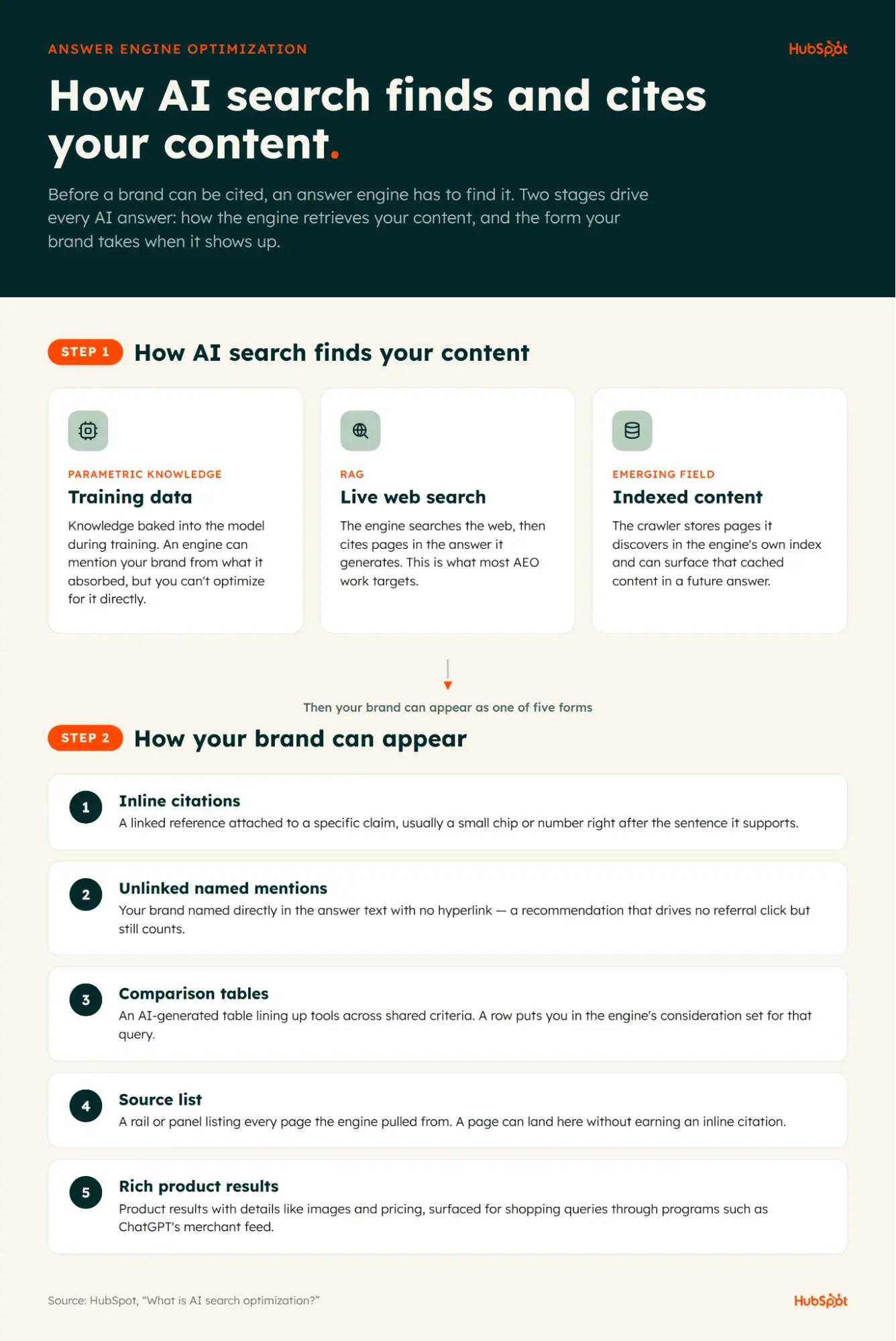
AI search engines, powered by LLMs, process vast amounts of data to understand and respond to prompts in natural language. Their ability to surface content relies on three primary mechanisms:

- Parametric Knowledge: This refers to the vast dataset an LLM is trained on, which forms its foundational understanding of facts, entities, and relationships.
- Retrieval Augmented Generation (RAG): When an LLM needs real-time or highly specific information not deeply embedded in its training data, it can perform a retrieval step, pulling relevant documents from an index (similar to traditional search) and then using that retrieved information to generate its answer.
- Indexed Content: This directly relates to the traditional web crawling and indexing performed by search engines, ensuring current and publicly available information is accessible to the AI.
Brands can appear within AI answers in several distinct forms, each carrying different implications for visibility and engagement:
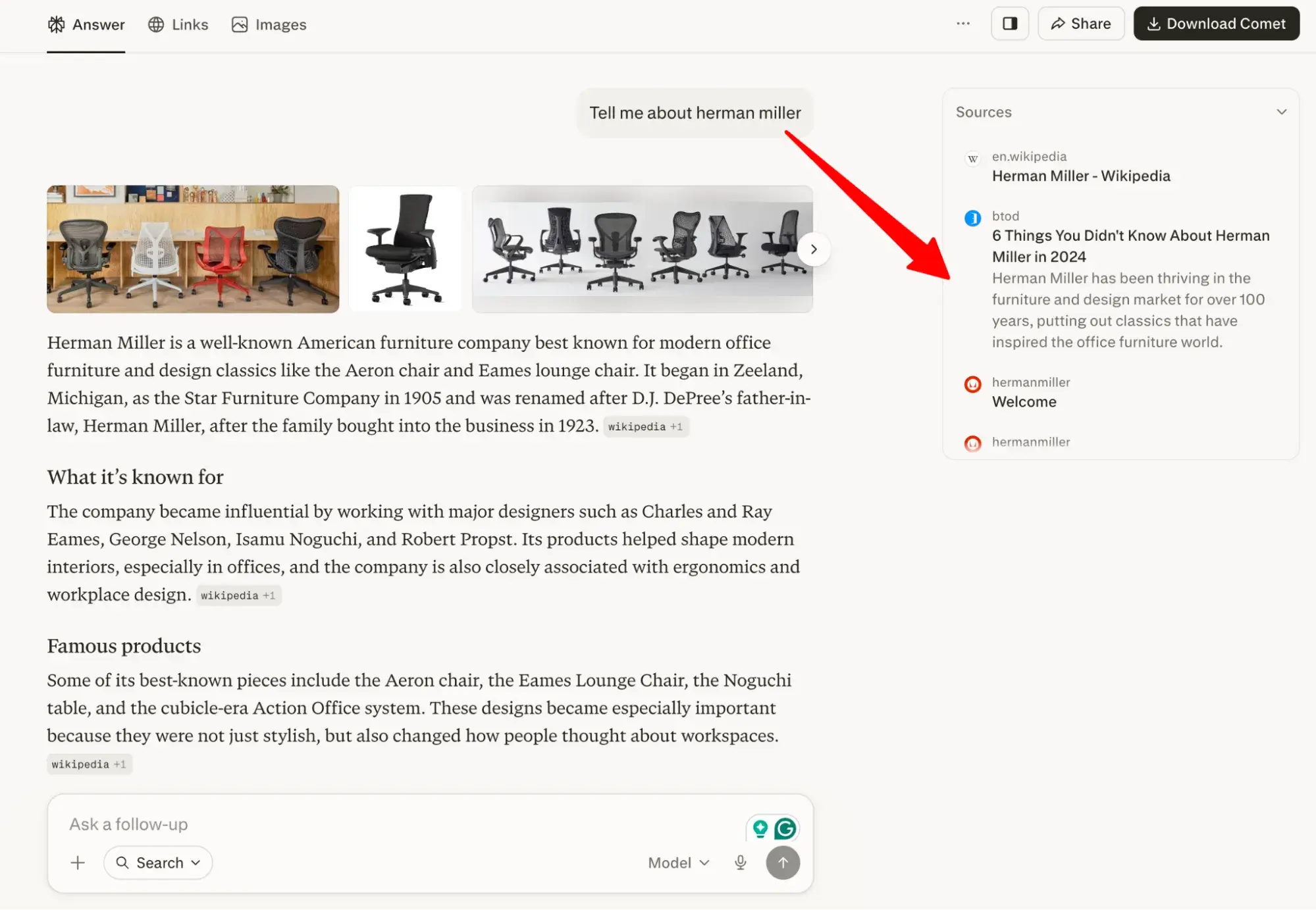
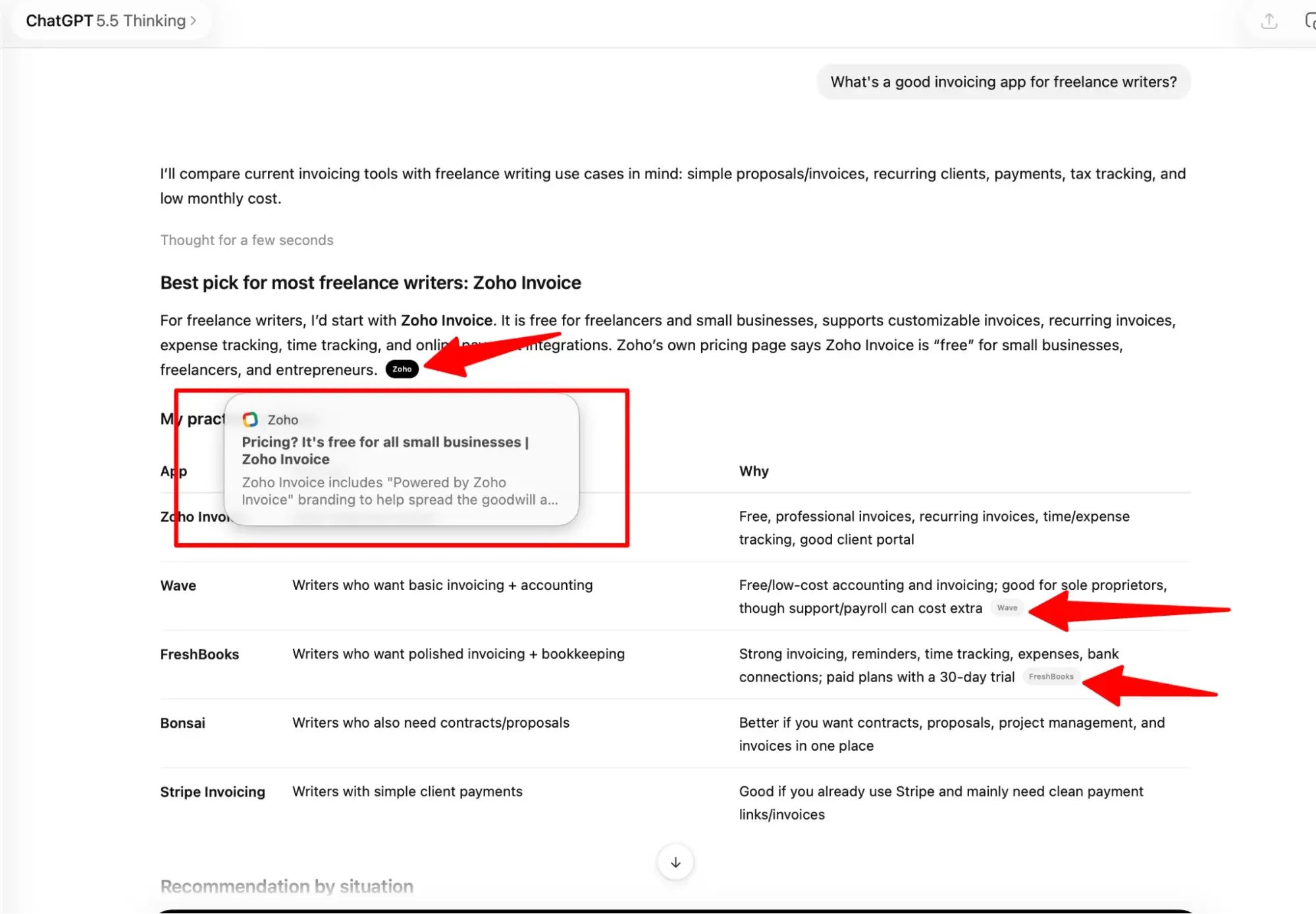
- Inline Citations: These are direct, linked references embedded within the AI’s answer, typically appearing as a small chip or number immediately following the statement it supports. Clicking these citations directs the user to the original source page, providing direct referral traffic and validating the information.
- Unlinked Named Mentions: In this scenario, a brand is explicitly named within the AI’s response, often as a recommendation or example, but without an accompanying hyperlink. While these don’t generate direct clicks, they are crucial for brand awareness and influence, as the AI’s endorsement can shape user perception and future search behavior.
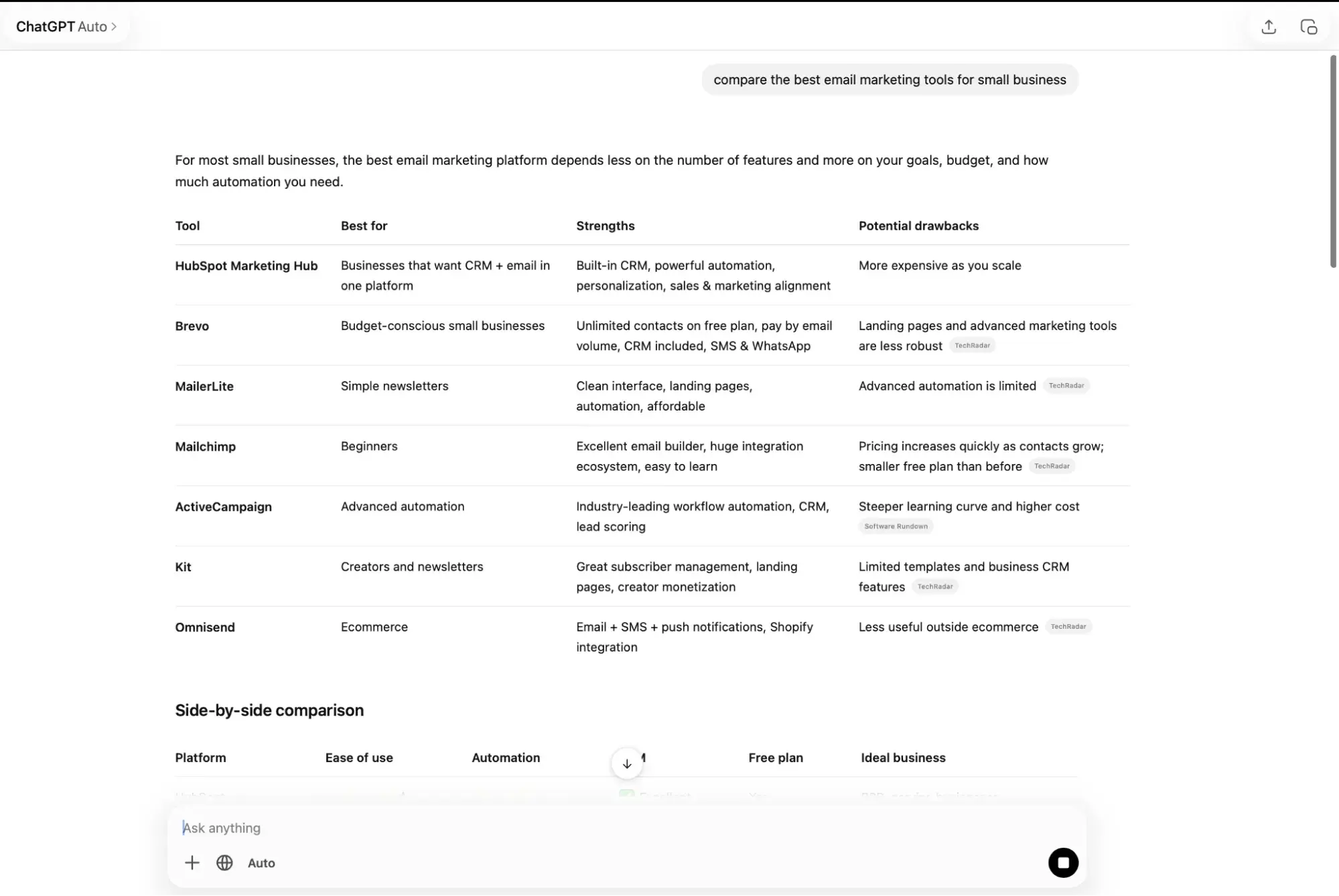
- Comparison Tables: Answer engines frequently generate tables comparing multiple tools, products, or brands based on user-defined criteria (e.g., features, strengths, drawbacks). Inclusion in such a table positions a brand within the engine’s consideration set for a given query, and the summarized information directly influences user comparison.
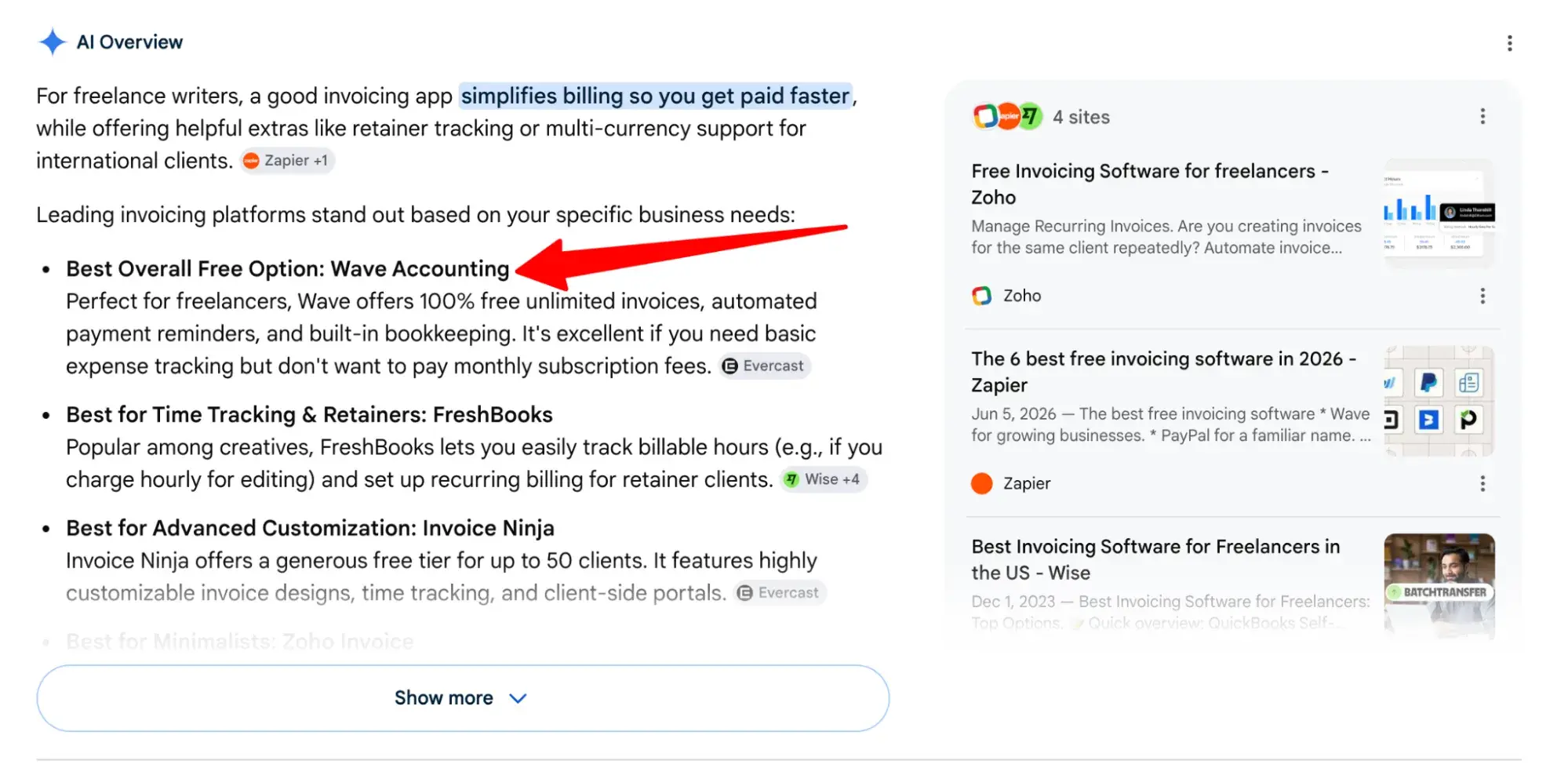
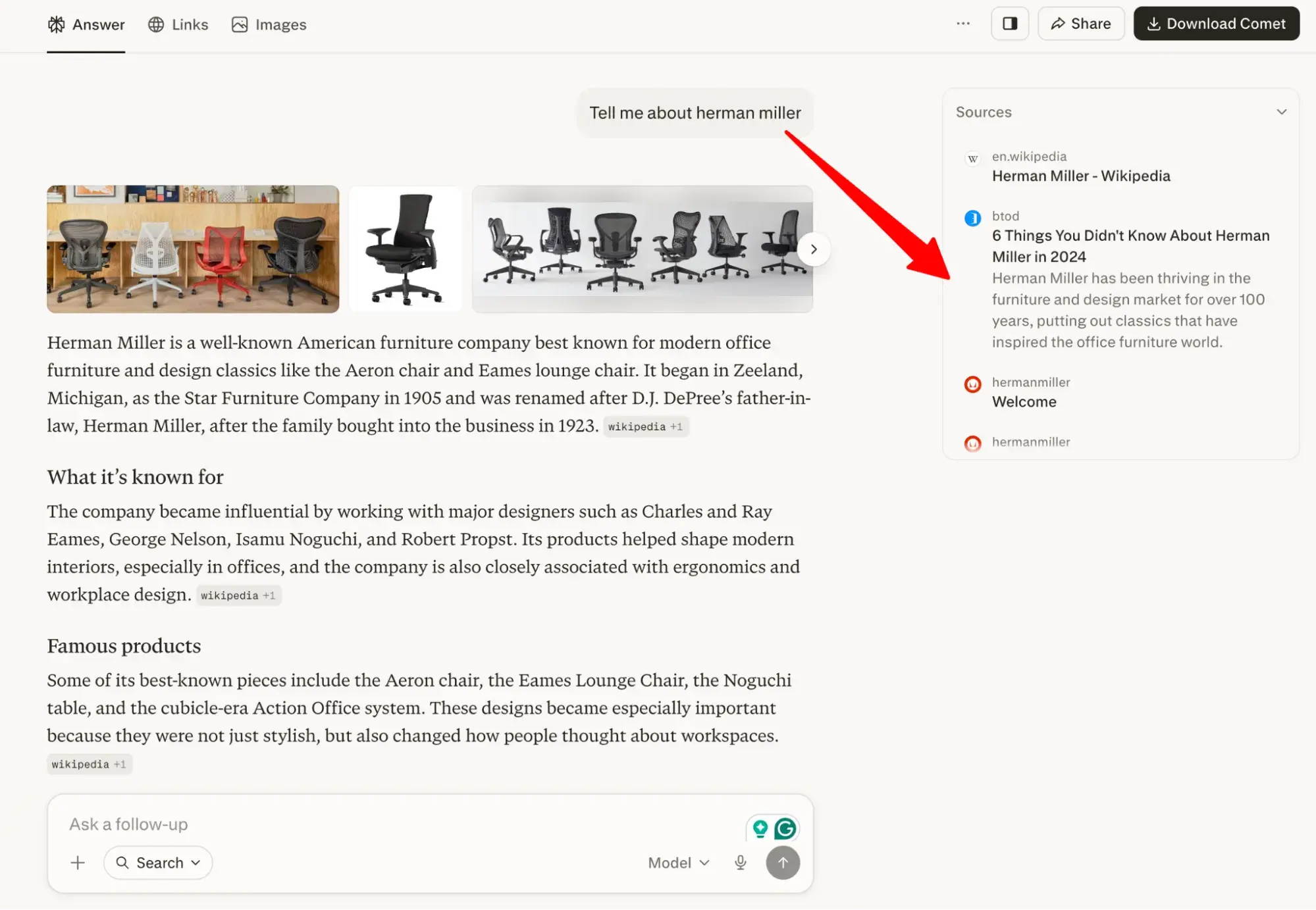
- Source Lists: Many AI answers include a panel or rail listing all the web pages from which the engine drew information to construct its response. A brand’s page can appear here even without an inline citation, indicating its contribution to the AI’s knowledge base.
- Rich Product Results: For shopping-oriented queries, AI engines can display detailed product information, including images, pricing, and ratings. Platforms like ChatGPT, through initiatives such as its merchant program, can directly surface these enhanced product listings.
AEO vs. SEO: Complementary Strategies in a Evolving Landscape
The relationship between AEO and traditional SEO is one of evolution and complementarity, not replacement. While distinct, they are deeply intertwined. SEO primarily focuses on optimizing content and technical aspects for keyword-driven search engines, aiming to rank high in organic search results and drive click-throughs to websites. AEO, on the other hand, prioritizes optimizing for direct answers and citations within conversational AI interfaces, often influencing user decisions even without a click.
Key differentiators include:
- Goal: SEO aims for high rankings and clicks; AEO aims for accurate, favorable citations and mentions within AI answers.
- User Intent: SEO often targets broader intent; AEO targets highly specific, often decision-stage queries where users expect direct answers.
- Metrics: SEO measures organic traffic, keyword rankings, bounce rate; AEO measures citation frequency, sentiment of mentions, and influence on conversion rates (even without direct clicks).
- Content Formatting: SEO values comprehensive, well-structured content; AEO specifically values concise, answer-first formatting that AI can easily extract.
- Technical Focus: SEO emphasizes crawlability, indexing, and core web vitals; AEO adds emphasis on clear semantic structures and authoritativeness signals for AI understanding.
Despite these differences, a strong SEO foundation is inherently beneficial for AEO. Content that ranks well, is technically sound, and demonstrates expertise, experience, authoritativeness, and trustworthiness (E-E-A-T) for traditional search engines is also more likely to be trusted and cited by AI models. AEO builds upon these foundational principles, refining content and technical signals to specifically cater to the unique parsing and synthesis capabilities of generative AI.
Strategic Pillars of AI Search Optimization
Optimizing content for AI citations involves a two-pronged approach: formatting content for easy AI extraction and attaching credible signals that foster trust.
1. Content Optimization for AI Extraction:
- Answer First, Detail Later: This is a fundamental shift from traditional content writing. Instead of building up to an answer, begin by directly addressing the implied question, ideally using a subject-predicate-object structure (semantic triple). Subsequent paragraphs can then provide supporting details and context. For example, instead of "According to Omnisend, a series of three shopping cart abandonment emails results in 69% more orders. So you can see why reminding buyers of what they left behind in their carts is powerful, right?", an AEO-optimized version would be: "Buyers who receive cart abandonment emails are more likely to complete their purchase. A series of three shopping cart abandonment emails leads to 69% more orders, according to Omnisend." This directness makes it easier for AI to extract definitive statements.
- Conduct Prompt Research: Analogous to keyword research in SEO, prompt research identifies the specific questions and follow-up queries users pose to answer engines. By structuring content around these anticipated prompts, brands can directly address user needs and increase their chances of citation. This can involve analyzing existing AI conversations or brainstorming potential user queries.
- Show Credibility with On-Page Author Bios: The trustworthiness of an author significantly influences AI citation. An on-page author bio, detailing years of experience, areas of expertise, and relevant credentials, carries more weight than a simple byline. This is particularly true for engines like Google AI Overviews, Gemini, and Perplexity, which heavily factor E-E-A-T into their citation decisions. Consistency of author identity across various online platforms (website, LinkedIn, industry profiles) further strengthens this signal.
- Back Up Claims with Original Data or External Research: Answer engines prioritize content that substantiates its assertions. Including statistics, data, and original research strongly correlates with higher citations, especially in AI Overviews and ChatGPT. Publishing first-party data (surveys, proprietary benchmarks) positions a brand as a unique source of truth. When citing external information, clear attribution to credible sources with working outbound links enhances verifiability and trust.
2. Technical Foundations for AI Readability:
- Structured Data (Schema Markup): While Google states no special schema is explicitly required for its AI features, schema markup (specialized code that labels content types) can still provide structural cues that help answer engines interpret page content and entity relationships. FAQ schema, for instance, has shown correlation with higher citations in Gemini, Google AI Mode, and Perplexity. It’s best used as a supporting signal that accurately maps relationships, rather than a standalone ranking hack. Tools like Schema.org validator and Google’s Rich Results Test are essential for proper implementation.
- Semantic HTML: Using semantic HTML elements (e.g.,
<header>,<nav>,<article>,<section>,<footer>) helps AI crawlers and screen readers understand the structure and meaning of a page. This improves accessibility and provides clear boundaries for content extraction. - Server-Side Rendering (SSR) or Static Site Generation (SSG): Many AI crawlers struggle to execute JavaScript, meaning content loaded client-side after the initial page response can remain invisible to them. SSR and SSG deliver fully populated HTML in the first response, ensuring all content is immediately accessible to AI crawlers, particularly those beyond Google.
3. Leveraging Off-Page Authority:
- Focus on Off-Site Signals: Answer engines verify credibility through third-party sites. Research by Fan Out indicates that Google AI Overviews derive 51% of its citations from off-site sources, with Reddit and YouTube collectively contributing more AI citations than all other off-site platforms combined. This highlights the immense value of user-generated content and community platforms.
- PR and Bylines for Authority: ChatGPT heavily cites publisher-controlled sources (78% of citations, per Fan Out). Digital PR, securing expert quotes, and bylines on high-authority publications directly contribute to a brand’s authority. Mentions in respected publications, even without direct links, reinforce entity recognition and build trust signals that AI models consider.
- Optimizing Local and Ecommerce Details: For shopping and local queries, while Google AI Overviews may have limited penetration (3.2% for shopping, 7.9% for local, Ahrefs), conversational engines present significant opportunities. Product listings and landing pages are frequently cited in ChatGPT (86%) and Perplexity (84%) for shopping queries.
- Ecommerce Optimization: This includes submitting product feeds to Google Merchant Center, ensuring comprehensive product pages with rich details (images, pricing, reviews), and implementing Product schema markup. The conversion payoff is substantial, with ChatGPT-referred ecommerce visits converting at 11.4% versus 5.3% for organic search, according to Similarweb.
- Local Optimization: Complete and consistent Google Business Profiles are crucial. Ensuring identical name, address, and phone number (NAP) across all online directories, coupled with
LocalBusinessschema markup on location pages, helps AI accurately parse business details like hours and service areas. Despite challenges in AI visibility for multi-location brands, these foundational steps are essential.
Navigating Pitfalls: What Not to Do in AI Search Optimization
Just as important as knowing what to do is understanding what tactics are ineffective or even harmful.
- Avoid Creating Special Files Just for AI: There’s no need for
llms.txtfiles, separate Markdown versions, or other machine-readable formats specifically for AI. Google explicitly states its AI features do not use these files, and maintaining them offers no visibility benefit. Furthermore, serving different content to crawlers and users (cloaking) violates Google’s spam policies. - Don’t Over-Chunk Content as a Gimmick: While clear, logical structure aids AI extraction, artificially fragmenting content into single-sentence paragraphs or excessive FAQ-style snippets purely to "game" AI is counterproductive. Google’s Danny Sullivan has advised against this. Well-structured content with clear headings and focused paragraphs naturally provides retrieval boundaries without sacrificing readability.
- Refrain from Publishing Commodity or Mass-Produced Content: AI engines prioritize unique, valuable information. Recycling existing content or using AI to generate high volumes of unoriginal pages designed solely to manipulate rankings is classified as "scaled content abuse" and violates Google’s spam policies. True AEO success comes from people-first content offering first-hand perspectives, original data, or expert insights unavailable elsewhere. The guiding principle remains: if a tactic requires creating content only a bot will see, it’s likely a red flag.
Measuring Success and Preparing for AI Agents
Measuring AI visibility requires moving beyond traditional click-based metrics. It involves tracking how often a brand is mentioned by answer engines, the accuracy and sentiment of those mentions, and ultimately, how this visibility correlates with business outcomes.
Tools like HubSpot’s AEO Grader offer a diagnostic baseline, scoring how AI models describe a brand across sentiment, presence quality, brand recognition, share of voice, and market competition. This provides a snapshot for comparison against competitors. However, ongoing monitoring is essential to track trends over time.
Connecting AI visibility to the pipeline is paramount. The early data strongly suggests AI-referred visitors convert at significantly higher rates. Microsoft Clarity data shows AI-referred visitors converting at roughly three times the rate of other traffic sources. HubSpot’s own AEO efforts led to an 1,850% growth in qualified leads from AI, converting at three times the rate of leads from other sources. Integrating AI visibility data with demand generation metrics, such as through platforms like HubSpot’s Marketing Hub, allows businesses to directly link citations to form fills and revenue.
The Future: Preparing for AI Agents
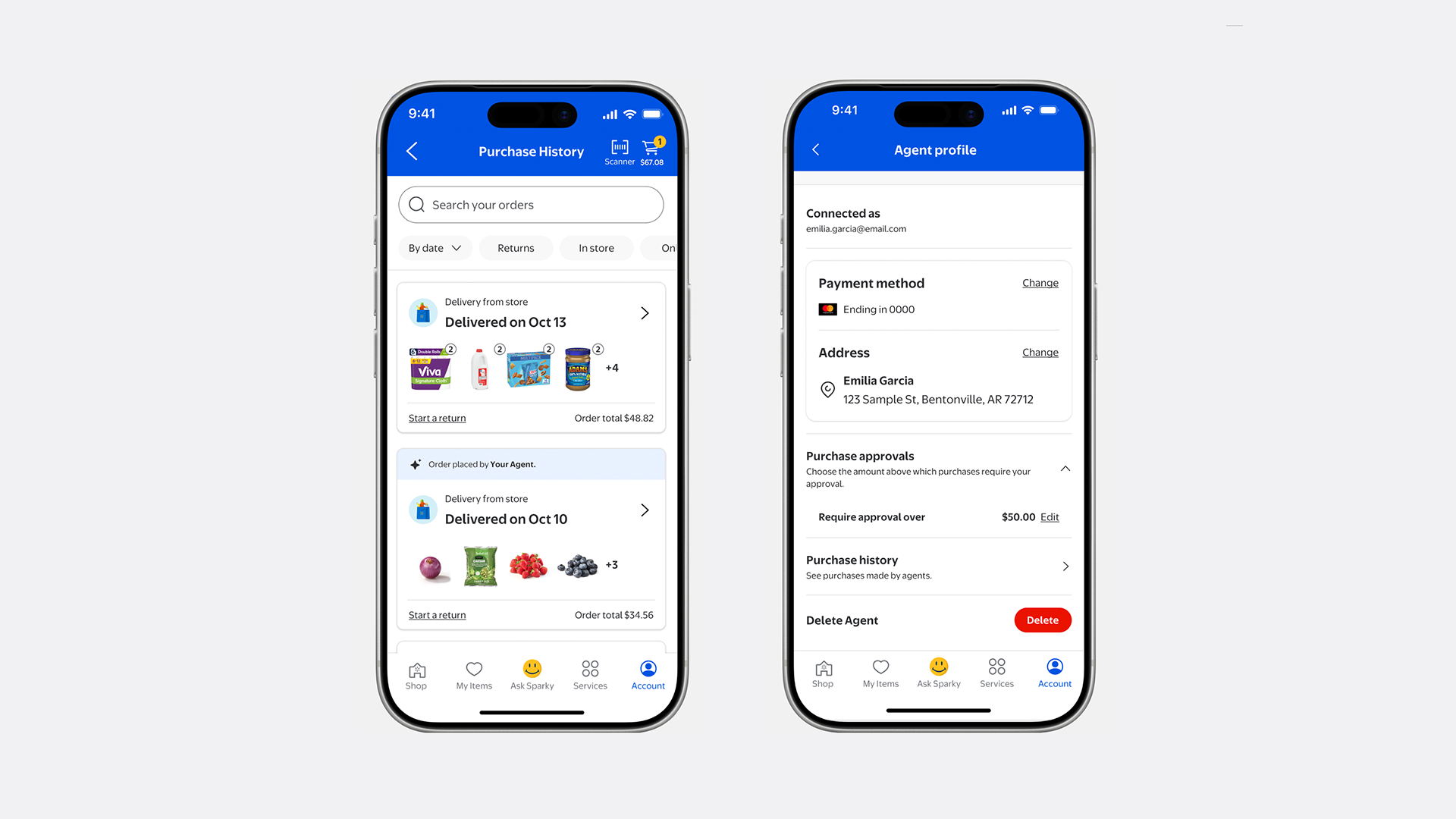
The evolution of AI is rapidly progressing from answering questions to completing tasks. AI agents, such as OpenAI’s ChatGPT agent and Perplexity’s Comet, are emerging with the capability to navigate websites, fill forms, and execute actions on a user’s behalf within logged-in sessions. Commerce agents, in particular, can surface products and, via protocols like Agentic Commerce Protocol, facilitate purchases directly through merchant systems.
Preparation for AI agents largely extends existing AEO best practices. Agents rely on well-rendered, structured, and machine-readable pages. This means focusing on:
- Enhanced Accessibility: Ensuring website elements (forms, buttons, navigation) are exposed in an accessible, machine-interpretable way.
- Robust Structured Data: Accurately describing products, services, and business information using schema markup.
- Optimized Product Feeds: Providing comprehensive and up-to-date product information for commerce agents.
- Clear Calls to Action: Making it easy for agents to identify and execute purchase, booking, or submission actions.
Most organizations will not require a complete stack overhaul. Improving rendering, structured data, accessibility, and product feeds on existing platforms is often sufficient. Agents act upon pages they can already effectively read, reinforcing the foundational principles of AEO outlined in this guide.
In conclusion, AI search optimization represents a critical and rapidly evolving facet of digital marketing. While distinct from traditional SEO, it is built upon many of the same core principles of authority, relevance, and technical soundness. Brands that strategically embrace AEO, focusing on producing high-quality, answer-first content, bolstering their E-E-A-T signals, optimizing technical structures, and leveraging off-page authority, will be best positioned to thrive in an increasingly AI-driven discovery landscape, capturing high-intent audiences and driving significant conversions. The shift is not just about being found, but about being accurately and favorably represented in the very answers that shape consumer decisions.


 Nana
Nana
 Laily UPN