Anthropic, the artificial intelligence safety and research company, has implemented a sophisticated multi-layered system to mark content generated by its Claude models, aiming to provide transparency in an era of increasingly indistinguishable synthetic media. While these measures are designed to help platforms and users identify AI-generated material, the technical implementation varies significantly across different media types. Anthropic currently utilizes a combination of embedded statistical watermarks for text and signed C2PA (Coalition for Content Provenance and Authenticity) metadata for supported image and file types. For developers and researchers, understanding how these marks are applied—and how they can be altered or removed—is essential for evaluating the robustness of current AI safety standards.
The watermarking of AI content has become a focal point of regulatory discussion, particularly following the White House Executive Order on Safe, Secure, and Trustworthy Artificial Intelligence. This directive urged leading AI labs to develop robust provenance mechanisms. Anthropic’s approach reflects this industry shift, moving away from easily detectable "hidden characters" toward deeper, more integrated methods that are harder to bypass through simple copy-pasting. However, as technical analysis reveals, these watermarks are not indelible, and their removal ranges from trivial for images to moderately complex for long-form prose.
The Architecture of Claude Text Watermarking
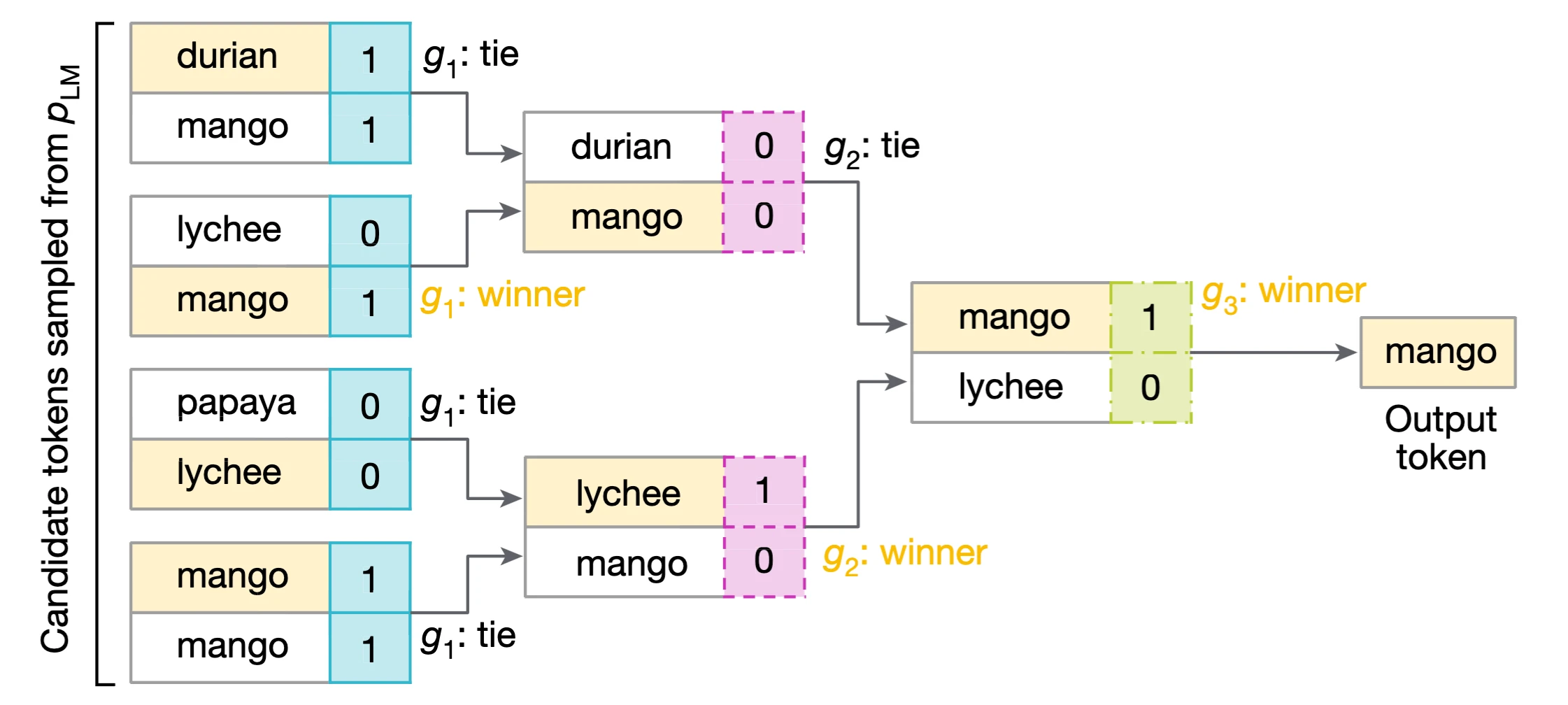
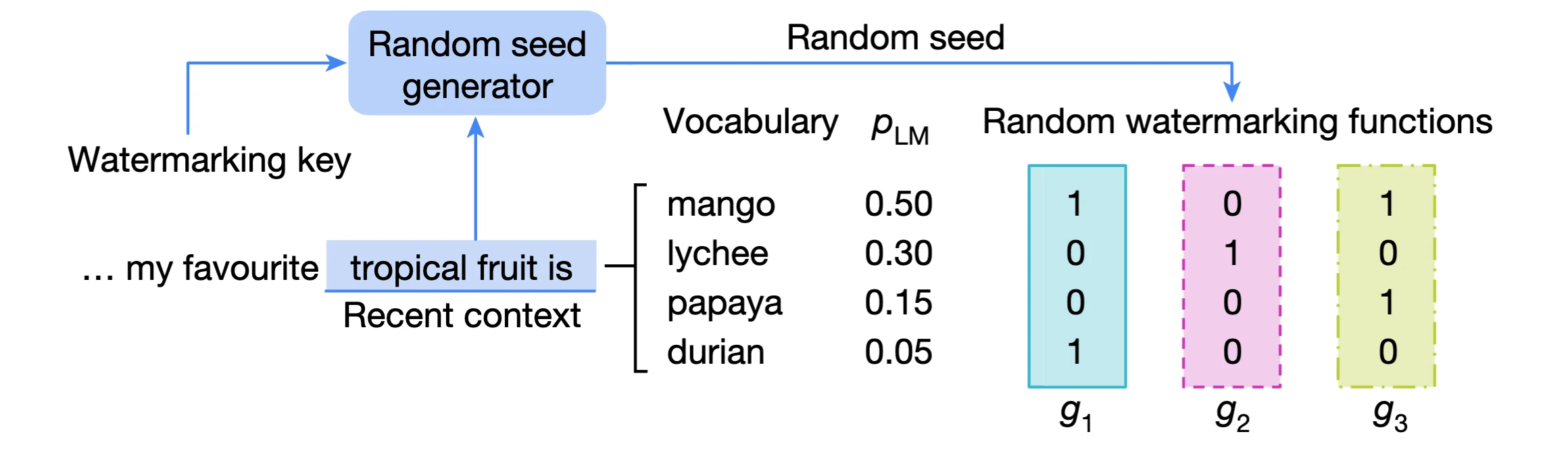
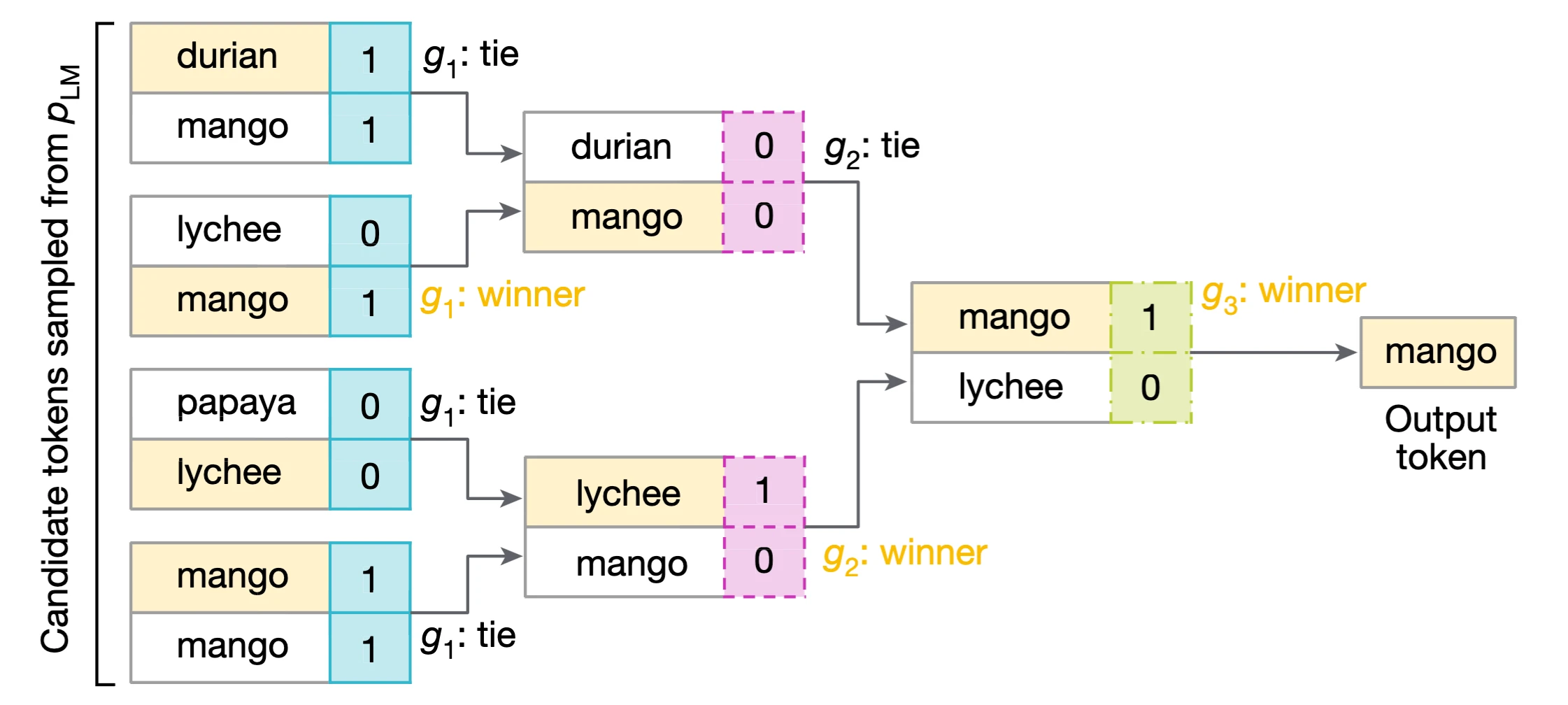
Unlike earlier, primitive attempts at AI identification that relied on invisible Unicode characters or specific recurring phrases, Claude’s text watermarking is built upon SynthID-Text. This technology, originally developed by Google DeepMind and subsequently open-sourced, operates at the level of token prediction. When an LLM generates text, it selects the next word (or "token") based on a probability distribution. SynthID-Text subtly adjusts these probabilities, biasing the model toward certain word choices that, over a long enough sequence, form a predictable statistical pattern.

This pattern is invisible to the human eye because the model is still choosing words that make sense in context. For instance, if the model has to choose between "fast," "quick," and "rapid," the watermarking function might slightly increase the probability of "quick." In a single sentence, this choice looks natural. Across a 500-word essay, the cumulative frequency of these biased choices creates a "signature" that a specialized detector can identify with high confidence.
The Challenge of Text Removal
Because the watermark is embedded in the very structure of the language, there is no "metadata" to strip from a text file. Anthropic’s documentation and independent testing confirm that the watermark survives basic operations like:
- Copying and pasting into different editors.
- Changing file formats (e.g., from .txt to .docx).
- Minor grammatical edits or synonym swaps.
To effectively remove a statistical watermark, one must break the specific sequence of word choices that form the pattern. This requires a substantial rewrite or paraphrase of the content. Technical experts suggest that for a watermark to be successfully "cleansed," the linguistic structure must be altered enough to reset the statistical distribution.
Technical Approach: LLM-Based Rewriting
One of the most effective methods for removing a Claude text watermark is to use a different language model—one that does not utilize the same SynthID-Text biasing—to paraphrase the output. By feeding Claude’s output into a model like GPT-4o or a local Llama 3 instance with specific instructions to "rebuild" the text, the original statistical signature is discarded.
A typical programmatic approach involves an OpenAI-compatible script that takes the Claude output and subjects it to a "destructive rewrite." The goal is to preserve facts and technical accuracy while ensuring the sentence structure and vocabulary are entirely fresh. While this does not "decode" the watermark, it effectively replaces the watermarked text with a new version that lacks the original signature.
Watermarking in Source Code: A Weaker Implementation
Source code presents a unique challenge for AI watermarking. Unlike creative prose, where there are thousands of ways to express a single idea, programming languages have strict syntactical requirements. A developer has limited "arbitrary choices" when writing a functional Python script or a React component.
Anthropic applies the same text watermarking logic to code, but the constraints of the medium make the watermark inherently weaker. If a model is forced to use a specific keyword like async or def, it cannot bias that choice for watermarking purposes. The only areas where the watermark can truly live in code are:
- Variable and function naming.
- The choice between equivalent loop structures (e.g.,
forvs.while). - Comments and documentation strings (docstrings).
Bypassing Code Watermarks via AST Transformation
For those looking to ensure code is free of AI-generated signatures, a simple rewrite is often insufficient. Instead, a source-to-source transformation using an Abstract Syntax Tree (AST) is the most robust method. By parsing the code into an AST, a script can systematically rename identifiers (variables, functions, classes) and strip comments without changing the functional logic of the program.
Using Python’s built-in ast module, researchers can create a "Transformer" that visits every node in the code tree. By replacing Claude-generated variable names with randomized or generic alternatives, the primary surface area for the statistical watermark is eliminated. Furthermore, removing docstrings is critical, as these blocks of natural language are the most likely candidates for holding the high-entropy patterns required for SynthID-Text to function.
File and Image Provenance via C2PA Metadata
While text and code rely on statistical "fingerprints," Claude’s handling of files—specifically images like .png, .jpg, and .svg—utilizes a different standard: C2PA. The Coalition for Content Provenance and Authenticity is an industry-wide standard backed by Adobe, Microsoft, and Intel. It works by attaching a cryptographically signed "manifest" to the file’s metadata.
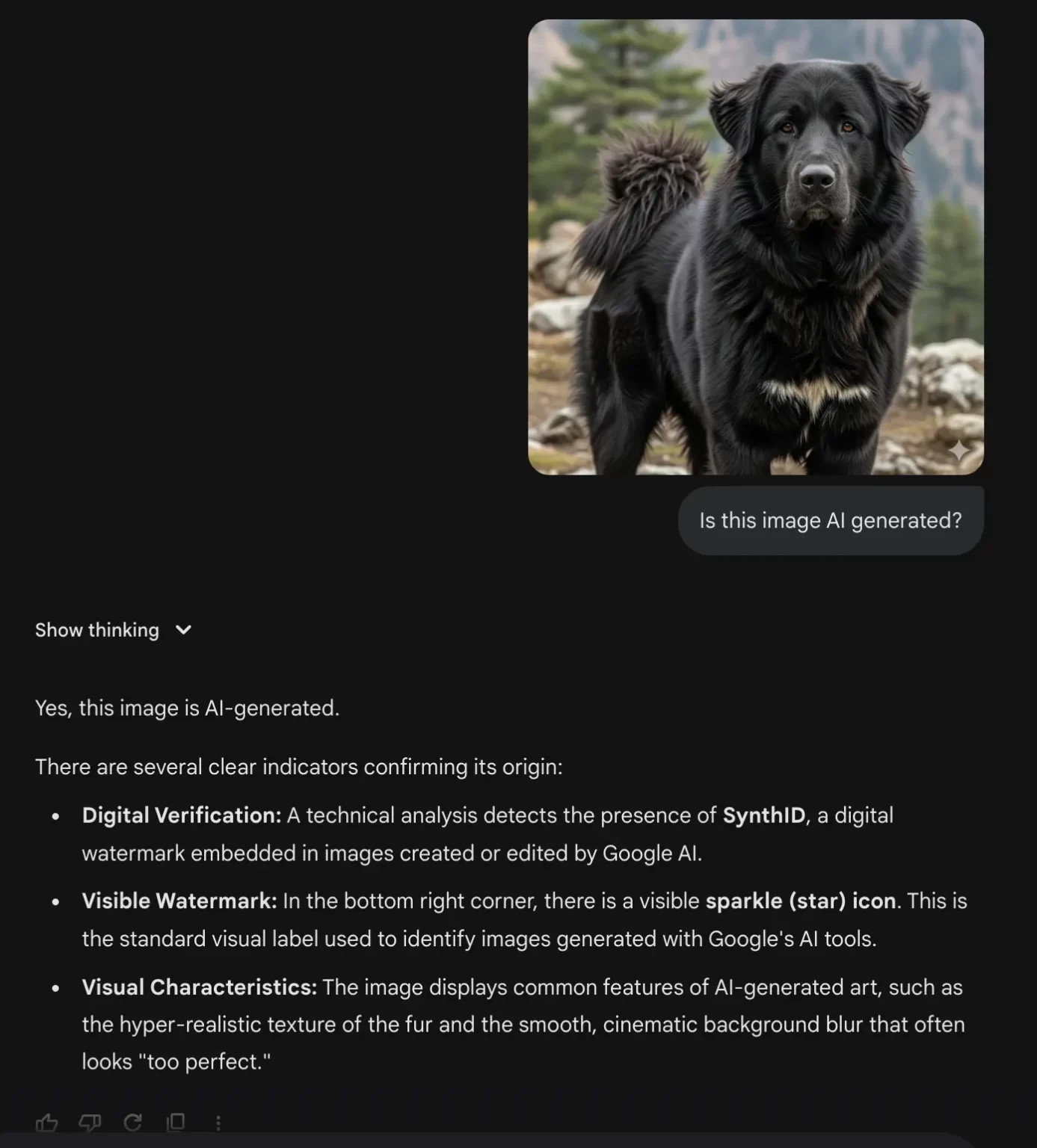
This manifest acts as a digital paper trail, recording that the file was generated or processed by an AI. It is important to note that, unlike some image watermarking technologies (such as SynthID-Image), Claude does not currently alter the actual pixels of the image to hide a watermark. The information lives entirely in the file header.
The Fragility of Metadata
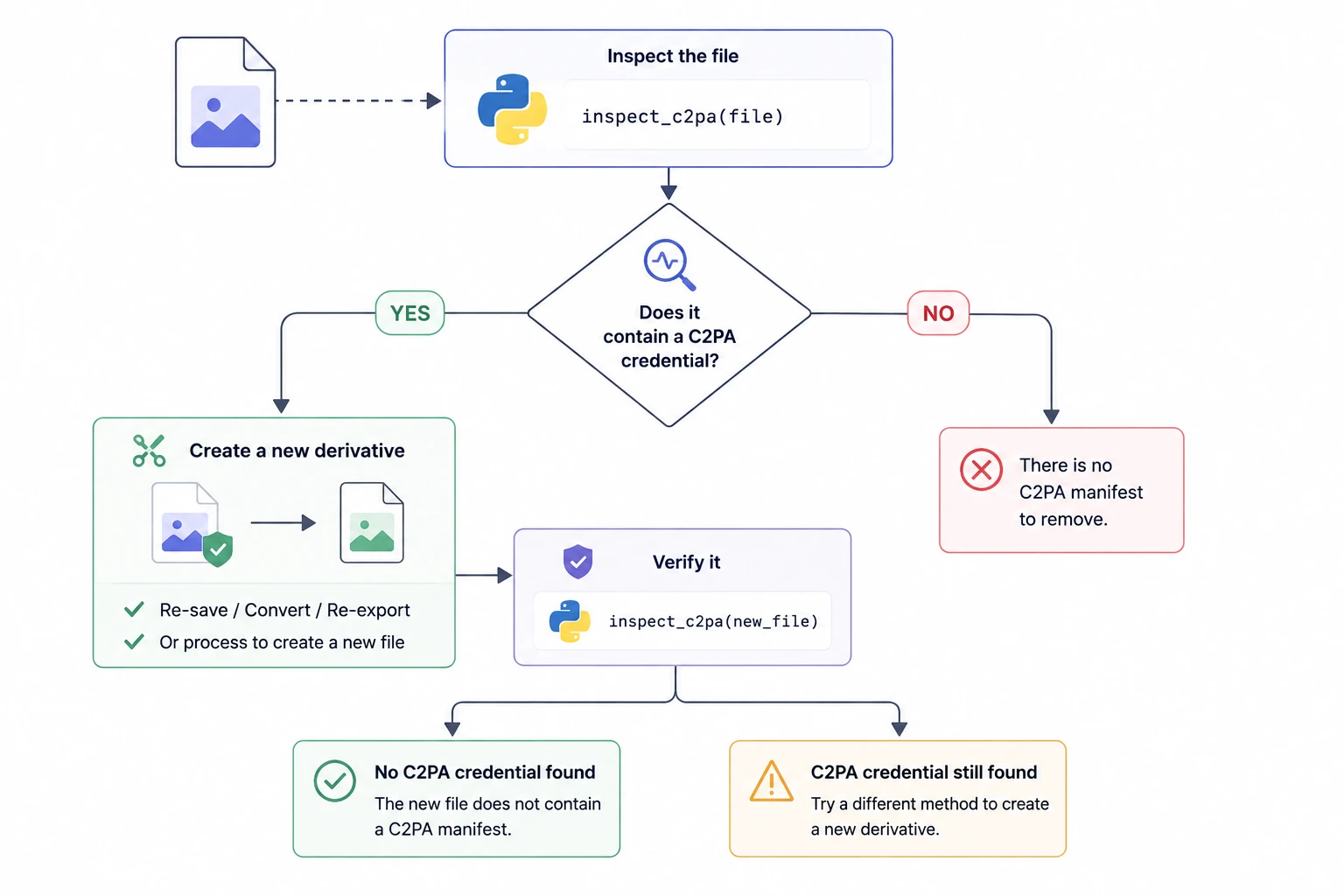
The primary characteristic of C2PA metadata is its fragility. Because it is a "sidecar" to the actual visual data, any operation that creates a "new" version of the file typically strips the manifest. Anthropic explicitly acknowledges this in its transparency documentation, noting that the following actions often remove the provenance data:
- Format Conversion: Changing a .png to a .webp or .jpg.
- Re-saving: Opening the image in an editor like Photoshop or GIMP and saving a new copy.
- Screenshots: Taking a screen capture of the image effectively creates a brand-new file with no history.
- Social Media Uploads: Many social media platforms (like X or Facebook) automatically strip metadata from images to protect user privacy or reduce file size, inadvertently removing the AI watermark.
For users who wish to verify if a file contains this metadata before attempting removal, the c2pa-python library provides a straightforward way to inspect the JSON manifest. If a manifest is present, it will clearly list "Anthropic" or "Claude" as the actor in the content’s history.
Chronology and Industry Context
The implementation of these watermarks is part of a broader timeline of AI safety milestones.
- July 2023: Anthropic, along with six other leading AI companies, signs voluntary commitments at the White House to develop watermarking systems.
- May 2024: Google DeepMind open-sources SynthID-Text, providing the industry with a standardized way to watermark LLM outputs.
- Late 2024: Anthropic integrates SynthID-Text into the Claude 3.5 Sonnet and Haiku models.
- Early 2025: C2PA support is expanded across the Claude interface to include generated SVG code and processed image files.
This movement has not been without controversy. Academic researchers at ETH Zurich and other institutions have published papers suggesting that "perfect" watermarking is mathematically impossible. They argue that as long as there is a way to "perturb" the output (through paraphrasing or noise), the watermark can be degraded.
Broader Impact and Implications
The "cat-and-mouse" game between AI developers and those seeking to remove watermarks has significant implications for several sectors. In academia, the ease with which Claude’s text watermarks can be removed via paraphrasing tools like Quillbot or other LLMs suggests that AI detection remains an unreliable tool for enforcing integrity. Educators are increasingly being advised to move toward "AI-resilient" assessment rather than relying on technical detection.
In the realm of cybersecurity, the ability to strip provenance from AI-generated code is a double-edged sword. While it allows developers to maintain clean, proprietary-looking codebases, it also enables bad actors to generate and obfuscate malicious scripts more effectively.
For the general public, the distinction between "embedded" and "metadata" watermarks is crucial. As C2PA becomes more common, users may develop a false sense of security, assuming that if an image lacks a manifest, it must be human-made. However, as demonstrated, the ease of stripping this metadata means that the absence of a watermark is not proof of human origin.
Summary of Removal Difficulty
The practical reality of Claude’s watermarking system can be summarized by the varying levels of effort required to bypass it:
| Content Type | Watermark Method | Removal Difficulty | Primary Method |
|---|---|---|---|
| Text | Statistical (SynthID-Text) | Moderate | Substantial Paraphrasing / LLM Rewrite |
| Code | Statistical (Weak) | Hard (to automate) | AST Transformation / Identifier Renaming |
| Files/Images | C2PA Metadata | Easy | Re-saving / Format Conversion / Screenshot |
As Anthropic and its peers continue to iterate on these technologies, it is likely that watermarks will become more deeply integrated into the "noise" of generated content. For now, however, the boundary between AI-generated and human-modified content remains porous, defined more by the user’s technical effort than by any indelible digital ink.