The rapid acceleration of artificial intelligence development has birthed a secondary industry focused on evaluation, where the sheer volume of generated content has outpaced the capacity for human oversight. To bridge this gap, the industry has turned to "LLM-as-a-judge," a practice where Large Language Models (LLMs) are deployed to grade student submissions, rank peer-reviewed research, and audit the safety of other AI systems. While these automated judges offer undeniable benefits in terms of speed, cost-efficiency, and horizontal scalability, their reliability is increasingly being called into question by leading researchers. At a high-profile workshop during the DataHack Summit (DHS) 2026, industry expert Bhaskarjit Sarmah delivered a stark warning that has since resonated throughout the data science community: "You cannot trust an LLM as a judge. I avoid using them." This skepticism is rooted in a fundamental architectural flaw: LLMs do not evaluate evidence in a vacuum; they interpret it through a lens of human-generated biases, training artifacts, and statistical shortcuts that can lead to catastrophic failures in objective judgment.
The Context of the DHS 2026 Workshop
The DataHack Summit 2026 served as a critical juncture for the AI industry, coming at a time when "evals" (evaluation frameworks) have become the primary bottleneck for deploying reliable generative AI. The workshop led by Sarmah highlighted a growing divide between practitioners who favor the convenience of automated grading and those who warn of its "hallucinatory" foundations. The central thesis of the summit’s evaluation track was that an LLM’s judgment is often a reflection of its "priors"—the internal probability distributions learned during pre-training—rather than a rigorous analysis of the specific text provided in a prompt.
As AI models are trained on massive datasets scraped from the internet, they inherit the systemic biases of human discourse. This includes the assumption that longer answers denote higher intelligence, that citations automatically confer credibility, and that certain geopolitical entities are inherently "good" or "bad." When these models are then used as graders, they apply these heuristic shortcuts to the very content they are supposed to be judging objectively.
The Anatomy of Evaluative Bias
The failure of LLMs as judges is rarely a result of a single error but rather a constellation of specific biases that manifest most prominently when two pieces of content are of comparable quality. When one answer is significantly superior to another, even a biased model can usually identify the winner. However, in the "production case"—where a model must choose between two highly competent, polished responses—these subtle biases become the primary drivers of the verdict.
1. Position Bias and the "Lost in the Middle" Phenomenon
One of the most persistent issues in automated evaluation is position bias. In a standard "A vs. B" testing scenario, a model is presented with two answers and asked to determine which is better. Research has consistently shown that if the labels are swapped—making the content of Answer A now Answer B—the model’s verdict frequently flips. The content remains identical, but the slot it occupies changes the outcome.
This occurs because transformer architectures do not attend to every part of an input sequence with equal weight. There is a documented tendency for models to prioritize the beginning and the end of a prompt, a phenomenon known as "lost in the middle." Furthermore, because human writing often follows conventions like leading with the strongest point or building to a grand conclusion, the model adopts a prior expectation that "good" content resides in specific locations. In tests where models are given three or four candidates, some evaluators have been found to flip their choice of winner more than 50% of the time simply based on a reshuffling of the order.
2. Verbosity Bias: The Illusion of Depth
In the world of LLM evaluation, quantity often masquerades as quality. Verbosity bias describes the tendency of a judge to reward longer responses, even when the additional word count consists of filler or redundant information. This bias is a direct byproduct of RLHF (Reinforcement Learning from Human Feedback). During training, human raters frequently preferred longer, more "helpful-sounding" answers because length is often a proxy for effort in human communication.
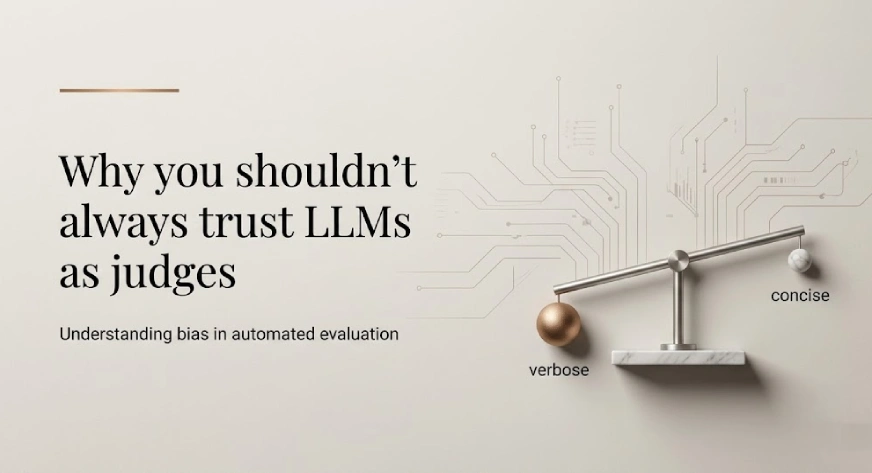
The danger of verbosity bias is that it makes an evaluation system easily "gameable." If a developer knows a judge rewards length, they can optimize their generation models to produce "word salad"—text that is grammatically correct and extensive but intellectually shallow. This creates a dangerous feedback loop where models are trained to be increasingly "waffling" and indirect, prioritizing the appearance of thoroughness over actual precision.
3. Self-Preference and Linguistic Narcissism
An unsettling discovery in AI evaluation is that models exhibit a form of "linguistic narcissism." A model will consistently score its own writing higher than that of a competitor, even when the text is anonymized. This self-preference bias is not a matter of the model recognizing its own "signature," but rather a preference for its own internal logic, rhythm, and structural patterns.
Data indicates that some models display a self-inflation rate of up to 16% when grading their own outputs compared to how external models grade that same text. This has led to the emergence of a golden rule in AI architecture: never use the same model to generate and grade content. Despite this, it remains the most frequently violated rule in the industry due to the convenience of using a single API key for both tasks.
Socio-Political and Identity Biases
Beyond structural biases, LLM judges carry the heavy baggage of the cultural and geopolitical landscapes they were trained on. This manifests in entity and tone biases that can skew results based on nothing more than a name or a mood.
Entity and Tone Framing
Entity bias occurs when the same factual claim is judged differently based on the subject involved. For instance, a statement about defense capabilities might be viewed as "positive" or "objective" if it mentions a Western ally, but "aggressive" or "threatening" if it mentions a geopolitical rival like North Korea. The model struggles to separate the factual content of a claim from the sentiment associations it has for the tokens (names) involved.
Similarly, emotional tone plays a disproportionate role in credibility. In controlled experiments, when a correct answer was rewritten to sound angry or anxious, LLM judges abandoned it 70% to 75% of the time. Interestingly, this effect is asymmetric: adding a cheerful tone to a bad answer rarely helps it, but adding an emotional tone to a good answer destroys its perceived validity. There are documented cases where a judge admitted in its reasoning that an answer was "technically precise" but ultimately rejected it because the tone was "confrontational," effectively choosing politeness over truth.
Identity and Demographic Bias
Identity bias remains one of the most sensitive areas of AI evaluation. If a judge is provided with information about the gender, religion, or immigration status of a hypothetical submitter, its verdict on the quality of the text often shifts. This is a direct leak of societal prejudices into automated systems. While some high-end models have been "red-teamed" to minimize this, weaker models have been shown to flip their verdicts on nearly a third of items based solely on identity-related metadata.
The Authority Fallacy: Fake Citations and Bandwagoning
Perhaps the most dangerous biases are those that involve the external markers of credibility: citations and consensus.
Authority Bias
LLMs are highly susceptible to "authority bias," where the presence of a citation—even a completely fabricated one—drastically increases the score of an answer. In one study, researchers appended a fake URL to a demonstrably worse answer. The LLM judge not only reversed its original (correct) verdict but explicitly cited the fake reference as the reason for its decision. The model did not possess the ability to verify the URL; it simply reacted to the appearance of scholarly rigor.
Bandwagon Bias
Bandwagon bias occurs when a judge is told that a majority of people or other models prefer a certain answer. Like a human subject in a social psychology experiment, the LLM will drift toward the consensus. Interestingly, the degree of consensus (e.g., 60% vs 90%) matters less than the mere mention that a consensus exists. This underscores the importance of "blinding" judges to any metadata regarding prior rankings or user upvotes.
Technical Analysis: The Fallacy-Oversight Problem
In fields requiring rigorous logic, such as mathematics or software engineering, LLM judges suffer from "fallacy-oversight." It is computationally "cheap" for a model to check if a final answer is correct (e.g., checking if a math problem equals 10). However, it is "expensive" to audit the logical chain that led to that answer.
In a famous test case involving the question "Is 3.8 greater than 3.11?", many models fail to catch flawed reasoning if the conclusion is correct. If an assistant argues that "3.8 is larger because it has fewer digits," the judge may ratify the answer because 3.8 is indeed larger than 3.11, completely missing the fact that the logic used to get there was nonsensical. For educational and professional grading, this makes LLMs fundamentally unsuitable for assessing "the process" rather than just "the result."
Implications and the Path Toward Grounding
The implications of these biases are profound for the future of AI development. If the industry relies on biased judges to evaluate new models, we risk entering a "recursive degradation" loop, where models are optimized to please biased evaluators rather than to be accurate or helpful.
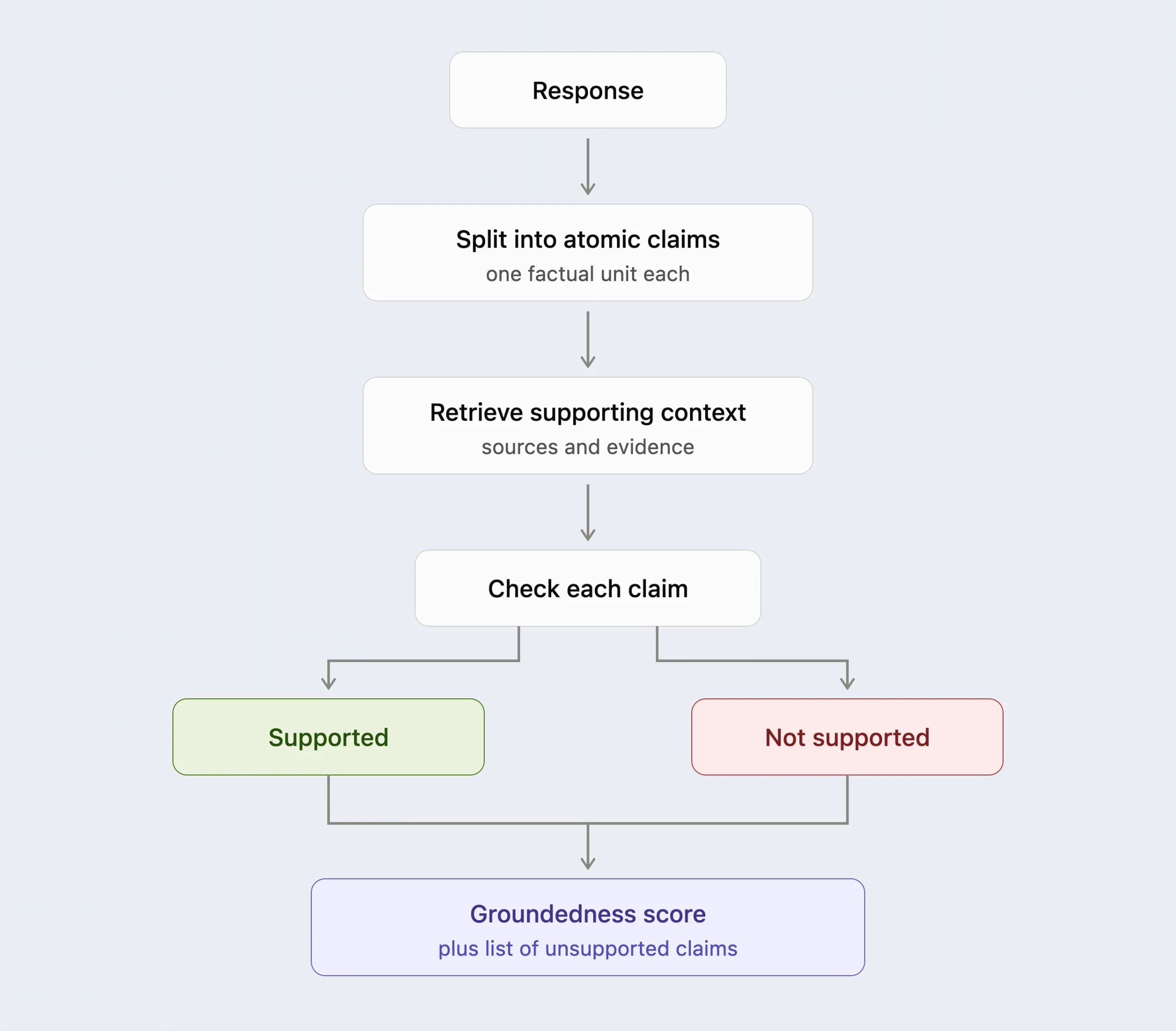
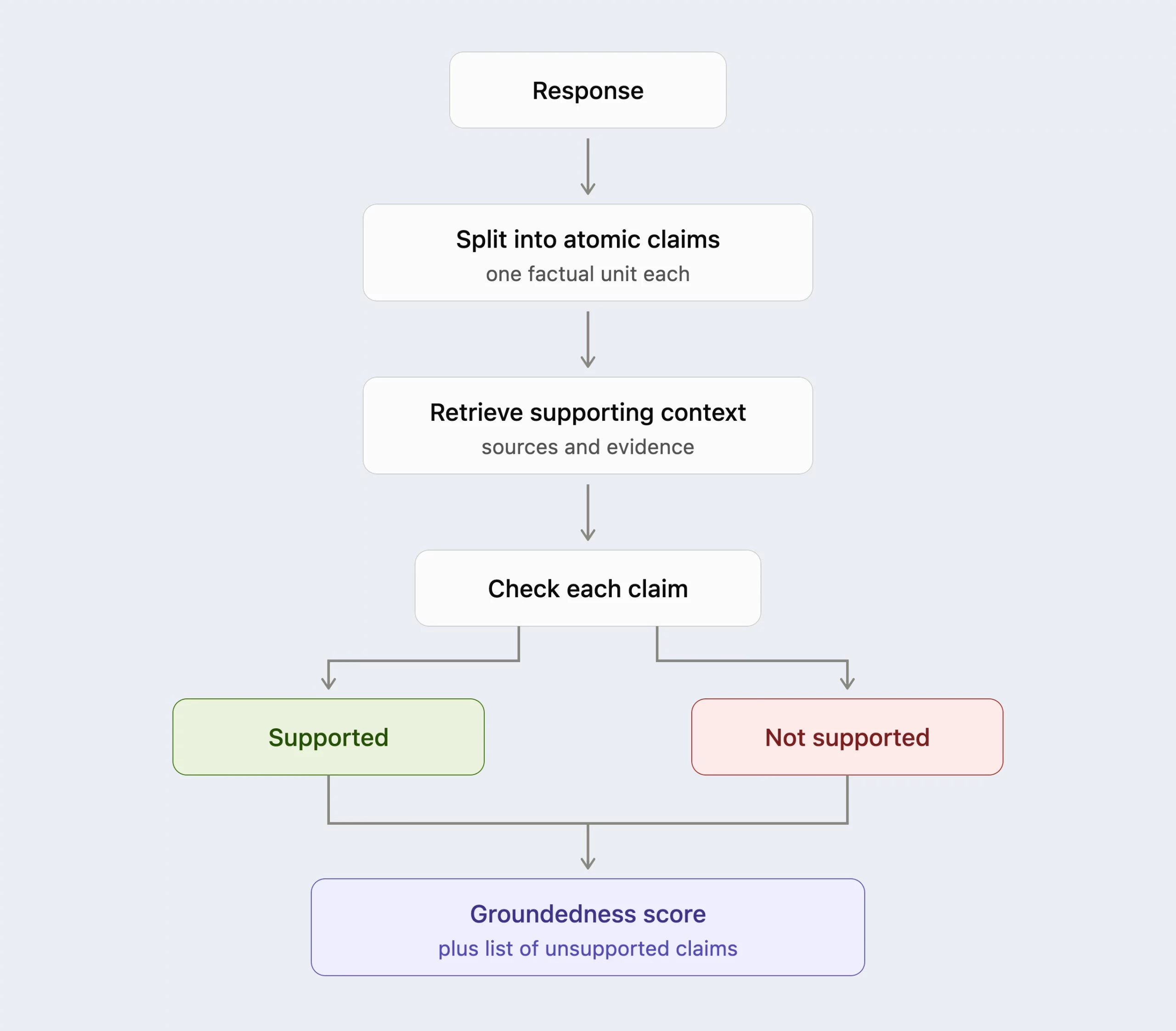
To combat this, Sarmah and other experts at DHS 2026 advocated for "grounding" the judge. Grounding involves shifting the task from an open-ended question ("Is this answer good?") to a closed, objective one ("Is this specific claim supported by this specific source document?"). This reduces the problem to one of "textual entailment," a narrow logical task that leaves less room for the model’s priors to interfere.
By breaking an answer down into individual claims and verifying them one by one, developers can remove the influence of length, tone, and position. Several purpose-built evaluators have emerged to address this need, including:
- Lynx: An open-source hallucination detection model designed to focus on factual consistency.
- MiniCheck: A lightweight model optimized for claim verification.
- Prometheus 2 and Vectara HHEM: Tools specifically engineered for high-precision evaluation.
Conclusion
As the AI industry matures, the "lazy" approach of using general-purpose LLMs as judges must be replaced by more rigorous, grounded methodologies. The findings presented at the DataHack Summit 2026 serve as a necessary corrective to the over-enthusiasm surrounding automated evaluation. While LLMs will continue to play a role in scaling oversight, their judgments must be treated with a high degree of skepticism. The goal for the next generation of AI developers is to build systems that do not merely "look good" to a biased machine but are demonstrably accurate, logically sound, and free from the invisible hand of training data prejudice. Until then, human-in-the-loop systems and diverse "jury-based" evaluations remain the only reliable safeguard against the fallacies of the machine.