The realm of Search Engine Optimization (SEO) in 2026 stands at a pivotal juncture, characterized by profound expansion rather than fundamental change. While the bedrock principles of clarity, structure, authority, and relevance remain paramount, their application has broadened dramatically to encompass not only traditional search engines but also AI-driven discovery, diverse social platforms, and conversational chatbots. This transformative period is illuminated by a recent survey conducted by Yoast, polling 59 SEO professionals to gauge their perspectives and adaptation strategies amidst this dynamic environment. The findings reveal an industry in flux, with seasoned experts and newcomers alike navigating a complex digital ecosystem, some leading the charge while others strive to keep pace.
The survey, encompassing SEOs with experience ranging from less than a year to over a decade, paints a picture of an industry collectively “figuring things out.” A key takeaway is that the most adept SEO practitioners are not merely reacting to the pervasive influence of Artificial Intelligence (AI); instead, they are strategically leveraging AI to reinforce established best practices: robust technical foundations, the creation of high-quality, authoritative content, and the cultivation of genuine brand credibility. This proactive stance contrasts sharply with a segment of the industry still mired in debates about the very nomenclature of SEO. Yoast, a prominent voice in the SEO community, positions itself firmly within this discourse, offering a definitive perspective on what SEO truly signifies in the current and near-future landscape. For a deeper dive into these insights, including extensive commentary from Yoast’s principal SEOs, Carolyn Shelby and Alex Moss, a comprehensive PDF report is available for download.
The Enduring Evolution of SEO: A Professional Consensus
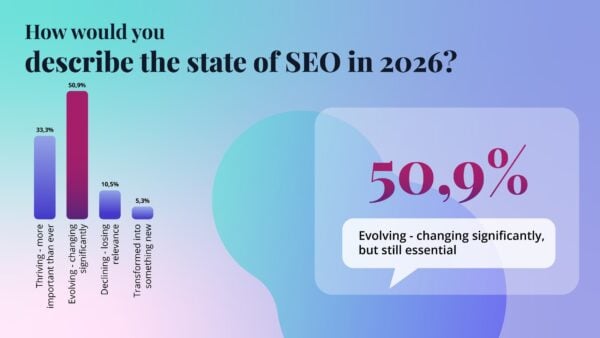
One of the most striking revelations from the Yoast survey is the overwhelming sentiment regarding the health and trajectory of SEO. A significant 51% of respondents view SEO as “evolving,” while a robust 33% believe it is “thriving.” In stark contrast, only a mere 10% consider SEO to be “declining.” This clear majority signals a collective confidence in the discipline’s resilience and adaptability. Interestingly, this perception is not uniform across experience levels. Veterans, those with over a decade in the field, are more inclined to describe SEO as thriving, suggesting a deeper understanding of its historical adaptability and enduring value. Newer practitioners, perhaps overwhelmed by the rapid changes, lean towards “evolving.”
This divergence underscores a fundamental truth: SEO has always been a discipline of constant adaptation. Alex Moss, Principal SEO at Yoast, articulates this succinctly: “SEO has always adapted to changes in the SERP, and now it’s adapting again. The traditional SERP is gone, but SEO isn’t.” Echoing this sentiment, Carolyn Shelby, also a Principal SEO at Yoast, emphasizes that “SEO is evolving, but not because its fundamentals are breaking. The interfaces between users and information are changing. Search is no longer confined to ten blue links, but the need for structured, relevant, trustworthy content hasn’t diminished.”
Yoast’s own perspective reinforces this: SEO is not diminishing, but expanding its operational domain. While traditional search engines like Google and Bing continue to be primary drivers of traffic, the emergence of AI-driven discovery, powered by Large Language Models (LLMs), increasingly influences perception and initial information access. The optimal strategy for SEO professionals in 2026, therefore, is not to choose between these paradigms but to master both, ensuring visibility and authority across all relevant touchpoints. This dual mastery is becoming the hallmark of effective modern SEO.
The Name Debate: “Search Engine Optimization” Retains Its Authority
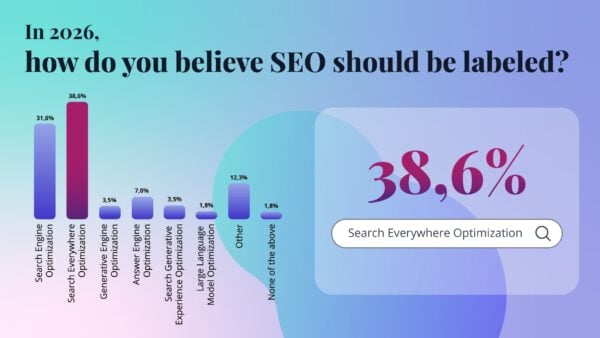
Despite the broadening scope of the discipline, the debate around renaming “Search Engine Optimization” persists. The survey revealed a notable inclination among respondents, with 39% advocating for a relabeling to “Search Everywhere Optimization.” This figure even slightly surpasses the 32% who prefer to retain the traditional “Search Engine Optimization.” Even among veteran SEOs, 41% favored the “Search Everywhere” moniker, highlighting a widespread recognition of the expanded playing field.
However, the consensus among Yoast’s experts is clear: the established term “SEO” should remain. Alex Moss firmly states, “The term ‘SEO’ will stay. The role will widen to include AI and other disciplines, but the name doesn’t need to change.” Carolyn Shelby elaborates on this, pointing out that “The term ‘SEO’ still holds shared meaning, credibility, and market recognition. There’s no strong evidence that rebranding the discipline itself is necessary or beneficial. Responses favoring ‘Search Everywhere Optimization’ reflect where SEO outcomes now surface, not a fundamentally different practice.”
The underlying argument is that while the channels of search have multiplied—now including AI overviews, chatbots, social media platforms, and voice assistants—the core work of SEO remains consistent. This core involves foundational technical optimization, meticulous content quality, strategic brand building, and the cultivation of authority. “Search Everywhere Optimization” aptly describes the reach of SEO outcomes, but it doesn’t redefine the inherent practice. The continuity of the “SEO” label offers a crucial anchor in a rapidly shifting digital landscape, requiring only a clearer articulation of how its principles apply to new AI and social discovery platforms.
LLM Optimization: An Extension, Not a Revolution, of Traditional SEO
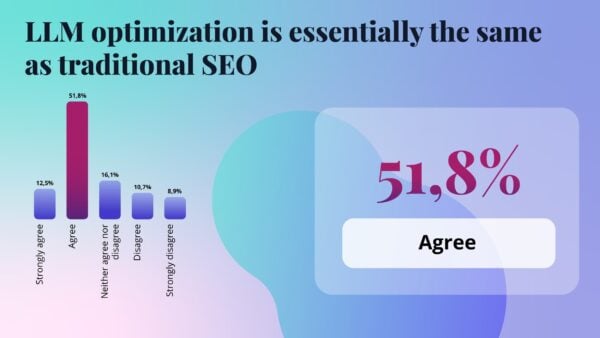
A significant majority of SEOs understand that optimizing for Large Language Models (LLMs) is not a separate discipline but rather a natural extension of existing SEO practices. The survey found that 64% of respondents agree that LLM optimization is “essentially the same” as traditional SEO. Furthermore, 59% are not actively optimizing for LLMs as a distinct strategy, suggesting an inherent belief that their current SEO efforts are already beneficial for AI systems.
This perspective, which some might mistakenly label as complacency, is better understood as efficiency born from experience. The 9% who strongly disagree with this statement often highlight that LLMs prioritize synthesis over traditional rankings, thereby emphasizing structured data and brand mentions. While technically correct, this does not contradict the broader consensus. Rather, it reinforces the idea that LLMs do not necessitate entirely new tactics; instead, they simply apply a more stringent reward system to established SEO principles.
As Alex Moss observes, “If you’re undertaking good SEO, you’re already optimizing well for LLMs. The tactics don’t change—just the audience.” Carolyn Shelby further clarifies, “The same practices that make content discoverable and trustworthy for search engines also make it usable for LLMs. The confusion arises when people treat LLMs as a completely separate system. In reality, LLM visibility rewards clarity, relevance, and authority—all long-standing SEO principles.”
The essence of LLM optimization, therefore, is simply SEO tailored for AI. The foundational tenets of clarity, robust structure, and demonstrable authority are magnified in importance. AI systems, with their capacity for sophisticated content analysis, are far less forgiving of ambiguity, disorganization, or mediocrity. This elevates the bar for content quality, demanding precision and factual accuracy to a degree perhaps unprecedented in the age of traditional keyword stuffing.
The Evolving Significance of Rankings: From Goal to Signal
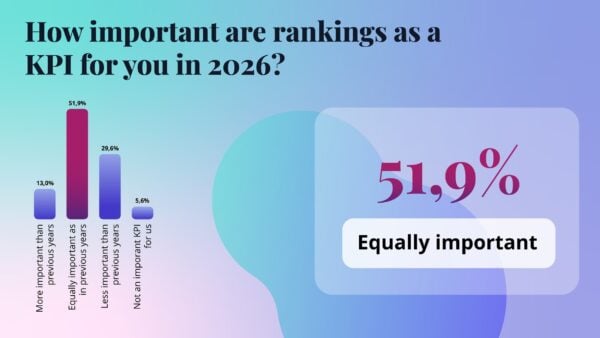
The long-held obsession with achieving “number one” rankings in search results is undergoing a fundamental re-evaluation in 2026. While 52% of respondents still consider rankings “equally important” as before, a substantial 30% now view them as “less important.” This nuanced shift reflects the changing nature of search results, particularly with the proliferation of Google’s AI Overviews and other zero-click results, where visibility no longer automatically equates to direct website traffic.
For AI systems, however, traditional rankings continue to serve a critical function: they act as a potent signal of authority and relevance. Content that ranks highly in traditional search is more likely to be ingested, synthesized, and cited by AI models. Alex Moss highlights this: “Traditional rankings are still important because agents still search the web to ingest information. If you aren’t visible there, it’s less likely an agent will identify and select you into their responses.” Carolyn Shelby aptly summarizes the new reality: “Rankings still matter, but they are no longer the end goal. They are a proxy for visibility, not a guarantee of impact.”
The Yoast perspective strongly advocates for a shift in focus from mere rank tracking to a broader assessment of “visibility and presence.” This involves actively monitoring whether content is cited in AI-driven answers, mentioned in industry discussions, and integrated into knowledge panels. “AI visibility and citations are the new rankings,” Yoast asserts, urging SEOs to expand their Key Performance Indicators (KPIs) beyond the traditional SERP positions to include a holistic measure of brand and content prevalence across the diverse digital landscape.
The Organic Traffic Paradox: Quality Over Quantity
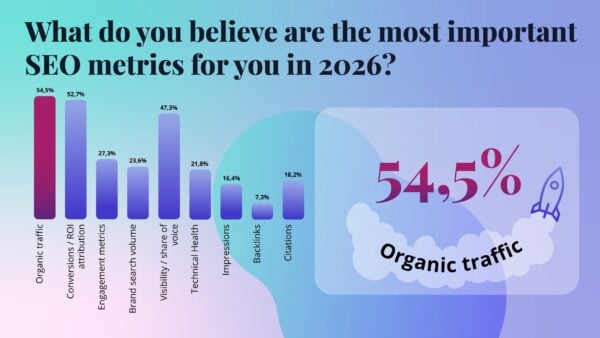
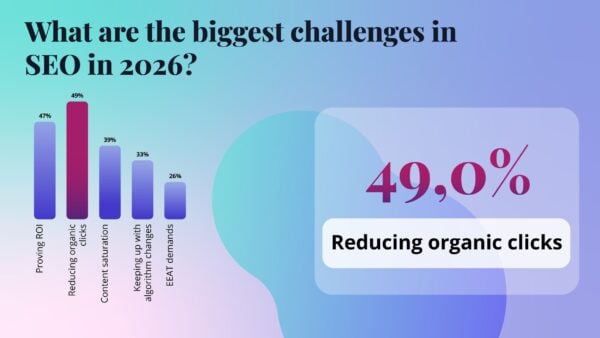
One of the most paradoxical findings of the survey concerns organic traffic. A significant 55% of SEOs still identify “organic traffic” as their top metric, yet nearly half (49%) simultaneously cite “reducing organic clicks” as their biggest challenge. This apparent contradiction encapsulates the complex state of digital marketing in 2026.
The paradox suggests a fundamental re-evaluation of traffic’s value. While raw organic traffic numbers might be declining due to zero-click results and AI summaries, the quality and intent of the remaining clicks could be significantly higher. Users who actively choose to click through from an AI overview or a traditional search result, despite having access to immediate answers, are likely seeking deeper engagement, specific details, or transactional opportunities.
Carolyn Shelby explains this shift: “As AI reduces the need for some visits, success looks like being represented correctly rather than merely visited. Visibility in AI overviews doesn’t always drive clicks, but it builds legitimacy. Being included signals that you’re a credible source, even when users don’t click.”
The implications are clear: SEO strategies must evolve beyond simply maximizing click-through rates. Businesses should focus on ensuring their content is comprehensive, trustworthy, and positioned to be accurately represented in AI summaries. This builds brand legitimacy and authority, which can lead to higher-quality, albeit potentially fewer, conversions. The goal is to cultivate a strong brand presence that AI models recognize as authoritative, even if direct traffic metrics show a decline. The advice for SEOs here is to refine their understanding of conversion paths, measuring not just direct clicks but also indirect impacts such as brand mentions, sentiment analysis, and the authoritative inclusion of their content in AI-generated responses.
Content Saturation: The AI-Driven Challenge
The rise of AI-generated content presents a formidable challenge to content marketers and SEOs, with 39% of respondents identifying “competing with AI-generated content” as their top concern. This overshadows other challenges, including a minimal 4% citing a “talent gap.” The core issue is not merely poorly written AI content, which is easily dismissed, but rather AI’s capability to produce “good enough” content at an unprecedented scale. This threatens to flood the web with a deluge of information, making it increasingly difficult for original, human-created content to cut through the noise and achieve visibility.
Alex Moss stresses the human element: “AI-generated content is artificial. Humans connect with stories, not regurgitated lists.” Carolyn Shelby reinforces this, stating, “AI doesn’t change what good content is, but just raises the bar. Mediocrity doesn’t just rank lower; it disappears.”
The advice for navigating this content saturation is to double down on human-centric content creation. This involves developing unique perspectives, leveraging authentic experiences, and injecting genuine creativity and emotion into narratives. SEOs must focus on creating content that is not only factually accurate and well-structured but also deeply engaging, insightful, and demonstrably human. This means prioritizing expert authorship, original research, and storytelling that resonates on an emotional level, areas where AI still struggles to replicate genuine human connection and nuance.
The Overlooked Channel: Social Search and its AI Nexus
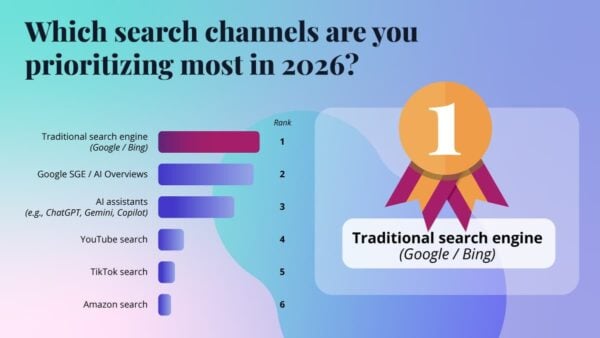
While traditional search engines (Google/Bing) predictably remain the top priority for SEOs, a significant blind spot exists concerning emerging search channels. The survey reveals that TikTok search, despite its explosive growth, ranks only #5 in prioritization, falling even below Amazon. This oversight represents a missed opportunity for many SEOs, particularly given the evolving digital habits of younger generations.
Younger demographics increasingly utilize platforms like TikTok, YouTube, and other video-centric channels not just for entertainment but also for recommendations, tutorials, news, and even B2B advice. These platforms are becoming primary discovery engines, influencing purchasing decisions and shaping brand perceptions. More critically, they also serve as rich data sources for LLMs.
Alex Moss emphasizes this connection: “Social platforms influence how LLMs perceive freshness and authority. Ignoring them means missing out on signals that AI systems value.” Carolyn Shelby adds a crucial distinction: “You don’t need to rank on TikTok, but you do need to be discoverable there. LLMs scrape social platforms for real-world signals.”
The Yoast perspective is clear: SEO in 2026 must integrate social platforms like TikTok into its strategy. While direct ranking may not be the primary goal, discoverability is paramount. A strong presence on these platforms—through engaging video content, active community participation, and thought leadership—can significantly boost a brand’s authority and freshness signals, which LLMs then scrape and incorporate into their responses. A well-curated video channel, for instance, can become a powerful asset for enhancing authority in AI-driven answers, extending the reach and impact of SEO efforts far beyond traditional web pages.
Yoast’s Strategic Imperatives for the Modern SEO
The insights gleaned from Yoast’s principal SEOs, Carolyn Shelby and Alex Moss, offer a strategic roadmap for navigating the complexities of 2026. Their perspectives underscore a blended, holistic approach to digital visibility.
On the “Search Everywhere Optimization” debate, both experts agree on the retention of the “SEO” term. Alex emphasizes the widening role without necessitating a name change, while Carolyn highlights the risks of fragmenting understanding and diluting an already well-established industry term.
Regarding the future of SEO metrics, Alex Moss advocates for a shift “from being seen to being selected,” suggesting that traditional visits no longer hold the same singular value. He argues that “the business goal should be the most important metric.” Carolyn Shelby complements this by stressing that “Visibility in AI overviews doesn’t always drive clicks, but it builds legitimacy. Being included signals that you’re a credible source.” This collective view pushes for a more sophisticated measurement framework that aligns directly with business objectives and acknowledges the intangible value of AI-driven legitimacy.
When discussing rankings versus influence, Alex Moss reiterates that “Rankings still matter because agents search the web to ingest information.” Carolyn Shelby refines this, asserting that “Rankings are a proxy for visibility, not a guarantee of impact. Focus on presence.” The implication is that while ranking highly remains important for AI ingestion, the ultimate goal is broader influence and pervasive brand presence across all digital touchpoints.
Finally, on the evolving role of SEOs in 2026, Alex Moss firmly believes SEOs must embody “100% all three: marketers, brand builders, and SEO specialists. Brand and marketing have become intertwined with SEO as our role expands.” Carolyn Shelby echoes this, stating, “A blended mindset is essential. SEO can’t operate in isolation from brand, product, or communications.” This reinforces the need for SEO professionals to possess a diverse skill set and a holistic understanding of the entire marketing and communication ecosystem.
The Broader Implications for Digital Marketing
The Yoast survey and expert analysis collectively paint a picture of a digital marketing landscape where traditional silos are crumbling. The lines between SEO, content marketing, social media, and brand strategy are increasingly blurred. For businesses, this means a more integrated approach to digital presence is not merely beneficial but essential for survival and growth. Investing in high-quality, authoritative content that can serve both traditional search engines and AI models is paramount. Furthermore, cultivating a strong brand identity and ensuring discoverability across diverse platforms, including social media, will be critical for maintaining relevance and influence.
For SEO professionals, the demand is for an expanded skill set. Technical expertise remains fundamental, but it must be complemented by a deep understanding of content strategy, brand building, data analytics, and user experience. The role is shifting from a purely technical optimization specialist to a strategic digital consultant capable of navigating complex algorithmic landscapes and diverse user behaviors. Continuous learning and adaptation will be non-negotiable.
These insights represent merely a fraction of the comprehensive analysis contained within the full Yoast SEO report. The complete document delves deeper into specific questions and offers actionable strategies for professionals seeking to thrive in this evolving digital frontier.
Sign up and download the full Yoast Perspective PDF report right away to gain deeper insights into the future of SEO, including detailed discussions on the various debates, strategic advice for tackling content saturation, and expert recommendations for optimizing across all emerging search channels.