 Azzam Bilal Chamdy

The rapid evolution of Large Language Models (LLMs) has established a hierarchy dominated by "frontier" systems, such as Anthropic’s high-reasoning models, often referred to in industry circles for their immense scale and purported safety risks. However, a growing movement among AI researchers and experimentation consultants suggests that the perceived dominance of these massive, closed-source models may be more a product of standardized testing than practical utility. As concerns regarding "benchmark contamination"—the phenomenon where models are inadvertently trained on the very data used to evaluate them—gain traction, a shift toward custom, task-specific benchmarking is revealing that smaller, cheaper, and more power-efficient models can frequently outperform their larger counterparts in specialized professional workflows.
The Crisis of Credibility in AI Benchmarking
For years, the AI industry has relied on standardized benchmarks such as MMLU (Massive Multitask Language Understanding) and HumanEval to rank the capabilities of new releases. These metrics have consistently placed frontier models at the top of the leaderboard, creating a narrative that "bigger is better." Yet, recent research, including a notable paper published on ArXiv (2412.03597), highlights a systemic issue: benchmark contamination. Because the training datasets for LLMs consist of vast swaths of the public internet, they often include the questions and answers from these evaluation sets. This results in models that appear to have high reasoning capabilities but are actually exhibiting sophisticated memorization.
When the veneer of standardized testing is removed, the performance gap between a multi-billion-parameter frontier model and a significantly smaller "open-weights" model begins to close. This has led professionals in fields ranging from software engineering to Conversion Rate Optimization (CRO) to develop internal, non-deterministic benchmarks tailored to their specific use cases. By testing models on proprietary data or manufactured tasks that could not have been present in a training set, users are discovering that smaller models often provide more concise, relevant, and cost-effective outputs.

Methodology: The Shift Toward Custom Heuristic Audits
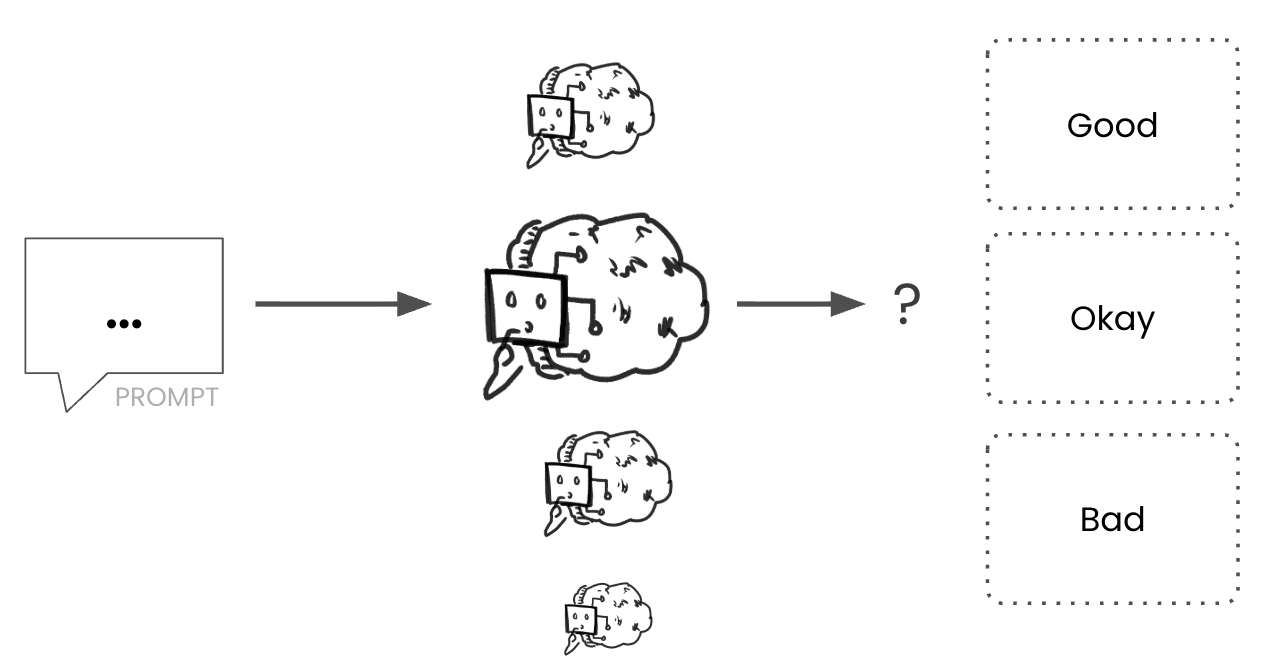
To evaluate the efficacy of small language models (SLMs) against frontier giants, researchers have begun employing a three-step custom benchmarking process. This methodology moves away from abstract logic puzzles and toward functional business tasks. In a recent study involving website experimentation audits, the process involved picking example prompts from actual workflows, defining the parameters of a "good" response, and running these prompts across a diverse range of model families.
The test case utilized a complex heuristic audit of an e-commerce landing page. To ensure the models were not simply reciting best practices, researchers engineered a dummy site with specific, layered flaws, including a weak value proposition and conflicting calls to action (CTAs). The models were tasked with identifying the top three improvements for a page described through a detailed technical breakdown of its structure, tech stack, and user flow.

The evaluation criteria for "success" were strictly defined: a successful model had to identify that the page’s primary issue was positioning—specifically that a "Welcome" message is not a value proposition—and highlight the confusion in the site’s free-shipping threshold relative to its target demographic. By setting these subjective but professional standards, the benchmark measured the model’s ability to act as a functional consultant rather than a generic text generator.
A Comparative Analysis of Model Families and Technical Specs
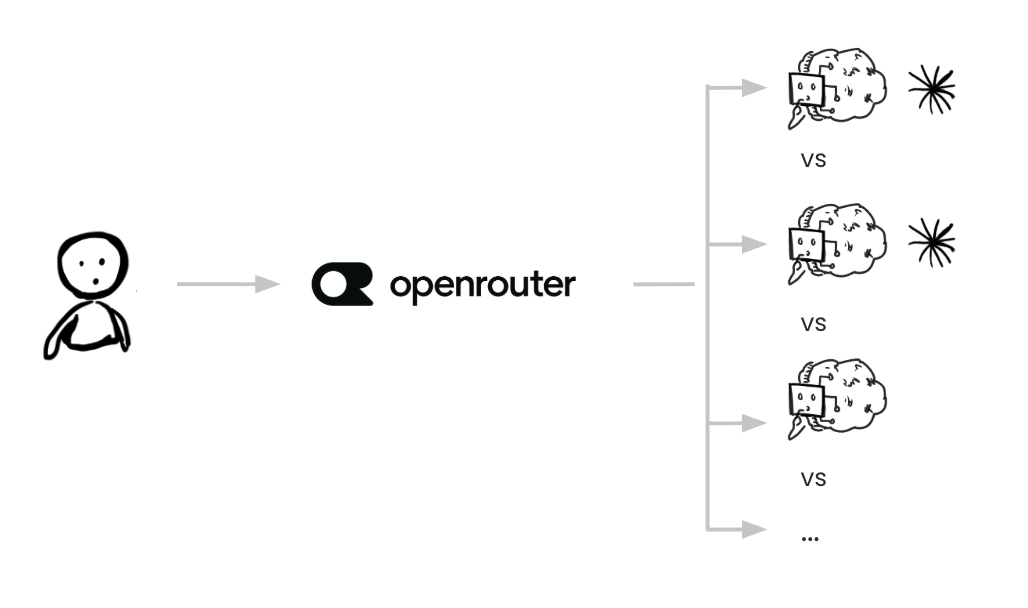
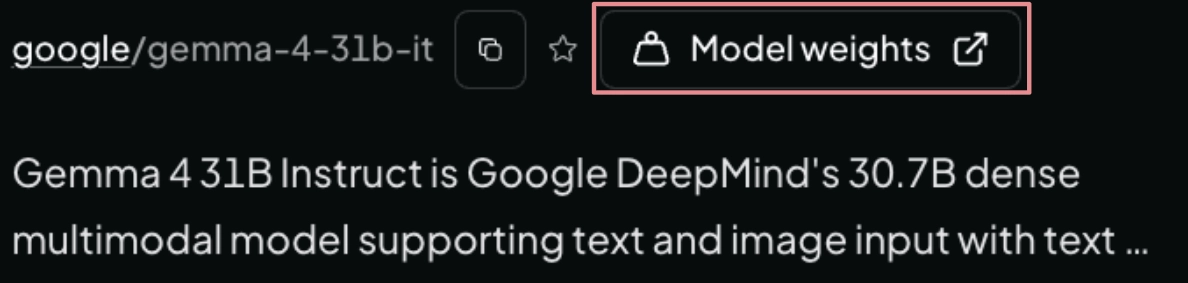
The benchmarking process included a cross-section of the current AI landscape, accessible through proxy services like OpenRouter. This included the latest iterations of Anthropic’s Sonnet, Zhipu AI’s GLM, Alibaba’s Qwen, Mistral, and Google’s Gemma families.

A critical component of this evaluation is understanding the "B" (billion) parameter count. Parameters represent the internal variables the model uses to process information. Frontier models are often measured in the trillions of parameters, requiring massive server farms and significant electrical power. In contrast, smaller models like Gemma 2 9B or Mistral 7B are designed to run on more modest hardware.
The data from these custom benchmarks suggests that as the specificity of a task increases, the requirement for massive parameter counts decreases. For instance, in the CRO audit task, Google’s Gemma 4 (a tiny-sized model) provided insights that were deemed more "to the point" and "concise" than the frontier models, which tended toward verbosity. This indicates that while larger models have a broader general knowledge base, they may suffer from "instruction drift" or unnecessary complexity when applied to narrow, professional tasks.
The Economic Case for Smaller Models
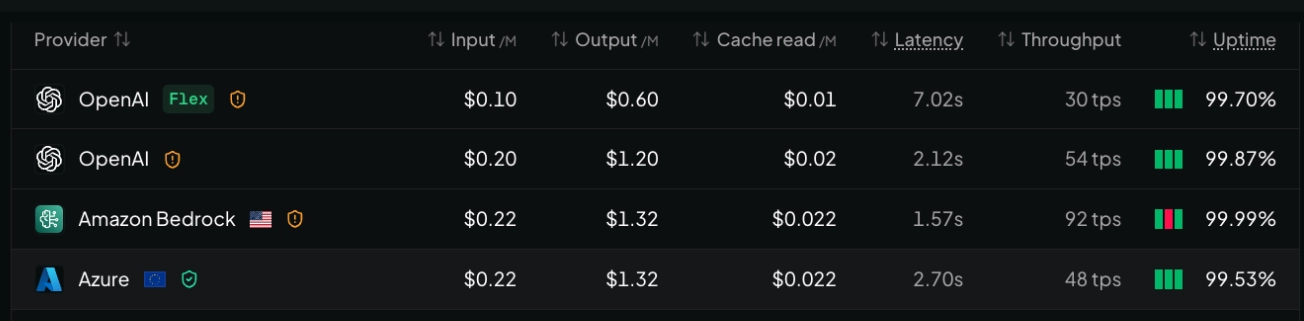
Beyond performance, the economic implications of switching to smaller models are profound. Frontier models are notoriously expensive to operate, with high costs per million tokens for both input and output. For an enterprise running thousands of automated audits or code reviews daily, these costs can become a significant barrier to scaling AI integration.
Data gathered from the OpenRouter proxy reveals a massive disparity in spend. Smaller models often cost a fraction of a cent per request, while frontier models can be orders of magnitude more expensive. Furthermore, the performance overhead—measured in latency (the time it takes for a model to start responding) and throughput (the speed of text generation)—is significantly lower for SLMs. In high-speed environments where AI agents must interact in real-time, the speed of a smaller model is often more valuable than the marginal reasoning edge of a larger one.

Privacy and the "Open-Weights" Advantage
The movement toward smaller models is also driven by a growing demand for data sovereignty and privacy. Most frontier models are "closed," meaning they can only be accessed via a cloud API controlled by the developer. This requires companies to send sensitive data to third-party servers, raising concerns about data retention and compliance with regulations like GDPR.
In contrast, many smaller models are "open-weights," allowing organizations to download the model and run it on their own infrastructure. This ensures that prompts and proprietary data never leave the company’s secure environment. OpenRouter and similar services provide security badges for different providers, with "green" badges indicating strict privacy policies. For many industries, the ability to run an open model like Llama or Mistral locally is a decisive factor that outweighs the raw power of a closed frontier model.
Industry Reactions and the Rise of the SLM
The AI community has reacted with cautious optimism to the rising utility of SLMs. Analysts suggest that the industry is entering a phase of "right-sizing," where the focus is no longer on creating the single most powerful model, but on finding the most efficient model for a specific job.
"What makes a language model ‘best’ is entirely subjective," says Iqbal Ali, an experimentation consultant who has championed the use of custom benchmarks. "A simple shift in workflow can dramatically reduce your model requirements. You might find that you actually prefer the output of smaller models because they are less verbose and more focused."

This sentiment is echoed in the "Editor’s notes" of several technical publications, which have begun providing guides on "self-healing" A/B test code and automated fact-checking using SLMs. The consensus is that while frontier models like Anthropic’s "Fable" are impressive, their primary "danger" to many businesses is not existential, but financial—threatening to saddle companies with unnecessary "technical debt" and operational costs when a smaller model would suffice.
Implications for the Future of AI Integration
The findings from custom benchmarking suggest a future where AI is not a monolithic entity but a decentralized ecosystem of specialized agents. As benchmark contamination continues to cloud the transparency of standardized rankings, the responsibility for evaluation will fall on the end-user.
Organizations that invest in building their own "prompt libraries" and "evaluation rubrics" will be best positioned to capitalize on the AI revolution. By identifying the specific tasks where a 7-billion-parameter model matches the performance of a trillion-parameter one, businesses can reduce costs by 90% or more while increasing the speed of their operations.
The broader implication is a democratization of AI. If high-quality reasoning can be achieved by smaller, more open models, the power to build and deploy advanced AI systems will no longer be restricted to the world’s wealthiest tech giants. The "open" model movement provides a pathway for smaller companies to innovate without being tethered to the pricing and policies of a few dominant players.
In conclusion, the era of assuming frontier models are the default choice for every task is ending. Through the lens of custom benchmarking, it is becoming clear that for many professional applications, the smaller, more efficient, and more open models are not just a viable alternative—they are the superior choice. The challenge now lies with the users to step away from the leaderboards and start testing for themselves.


 Iffa Jayyana

 Ammar Sabilarrohman