Tuesday, August 18th, 2026 – 10:56 am – A new Demand-Side Platform (DSP), Tuple, has officially launched, aiming to address what its founder describes as a pervasive "trust gap" within the programmatic advertising ecosystem. Founded by Doug Lauretano, a veteran of the digital advertising industry with prior experience at major publishers like Fortune, The Wall Street Journal, and CNN Money, as well as supply-side programmatic giants OpenX and Media.net, Tuple enters a market characterized by increasing complexity and inter-party friction.
Lauretano’s decision to launch Tuple stems from firsthand observations made during his tenure at CivicScience, a data and advertising company. While developing a deal ID and curation product, Lauretano gained an intimate understanding of the inner workings of existing DSPs. His candid assessment of what he witnessed was stark: "And what I saw was pretty ugly." This experience, he stated, was the direct catalyst for creating Tuple, a platform designed to offer a more transparent and trustworthy alternative in the programmatic buying process.
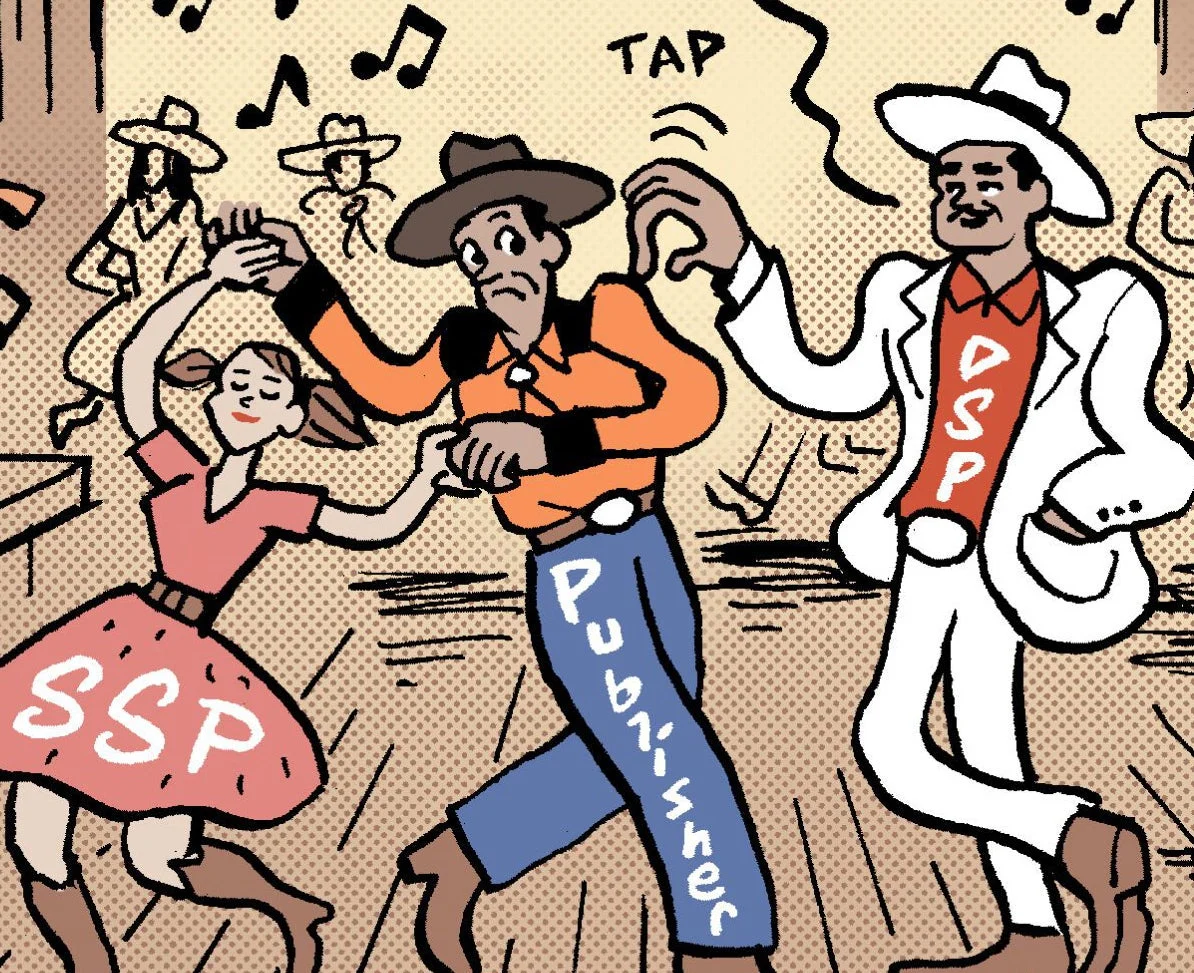
Tuple’s debut in March 2026 comes at a particularly "tense moment for third-party ad tech," according to industry observers. The programmatic landscape has been marked by increasing animosity between the buy and sell sides, a dynamic Lauretano has observed firsthand. This friction is exemplified by semantic shifts, such as The Trade Desk’s rebranding of Supply-Side Platforms (SSPs) as "resellers," and accusations leveled against SSPs of engaging in practices like illicitly inflating bids and circumventing frequency capping rules through ID bridging. Lauretano characterizes this dynamic as "almost like one is constantly trying to trick the other."
The Erosion of Trust in Programmatic Advertising
The programmatic advertising industry, which facilitates the automated buying and selling of digital ad space, has grown exponentially over the past decade, reaching an estimated global market size of over $200 billion in 2025. However, this rapid growth has been accompanied by persistent challenges related to transparency, efficiency, and accountability. Advertisers and agencies have frequently expressed concerns about the complexity of the supply chain, the opacity of pricing, and the lack of direct control over where their ads appear and how their budgets are utilized.
A significant contributor to this erosion of trust is the technical evolution of ad tech, including the rise of Artificial Intelligence (AI) and cloud-based infrastructure, often referred to as "containerization." This trend has led to an increasing number of DSPs, custom algorithm providers, and even media buyers embedding their algorithms directly within SSPs, bypassing traditional DSP account seats. While this can offer potential efficiencies and direct access to inventory, it also exacerbates the challenges of transparency and oversight.
Lauretano highlights that a key reason for the deep-seated distrust between DSPs and SSPs is the buy-side’s perceived vulnerability to opaque operational mechanisms like throttling and curation. In a typical scenario, an SSP might have access to a vast pool of ad impressions that an advertiser would be interested in, but the DSP only sees a fraction of this total. SSPs, for their own operational and cost-management reasons at global internet scale, often ration the impressions they present to individual DSPs. This inherent limitation, Lauretano suggests, creates a situation where buyers are not seeing the full picture of available inventory.
Containerized bidding models, however, offer a different paradigm. They can potentially allow buyers to gain visibility into every impression as it is processed by the SSP, circumventing the query-per-second (QPS) throttling models that typically govern the interaction between buy-side and sell-side platforms. For Lauretano, the ability to establish genuine trust between buyers and SSPs is "almost as important" as the technological advancements themselves.
Tuple’s Differentiated Approach to DSP Functionality
Tuple positions itself as a straightforward DSP, but with a fundamentally different operational model compared to established players. Historically, the integration between DSPs and SSPs has often been described as ad hoc, with advertisers utilizing major DSPs like The Trade Desk, Beeswax, or Viant to bid on inventory across hundreds of SSPs.
Tuple’s strategy is to deliberately limit its direct integrations. Currently, Tuple is integrated with only one SSP: Media.net. Lauretano expressed confidence in this partnership, citing his prior knowledge of the Media.net team and a high degree of trust in their deal ID setups. This focused approach allows Tuple to maintain a granular view of the inventory it accesses.
While Tuple may expand its SSP integrations in the short term to perhaps five, Lauretano envisions its "sweet spot" to be around three SSPs. This limited number, he argues, will provide Tuple with unparalleled visibility into nearly all programmatically available impressions. He contends that a select few SSPs can indeed cover the vast majority of the programmatic universe, stating, "There are so few with exclusive supply."
Furthermore, Tuple’s model aims to ensure that each impression is seen exactly once. Adding more SSPs beyond a certain point, Lauretano believes, would not necessarily contribute significant incremental supply and would instead lead to advertisers bidding on duplicated inventory across multiple seats, a scenario that offers little added value.
Rethinking AI and Optimization in Ad Tech
Beyond supply-side integration, Tuple also aims to challenge the prevailing approach to AI-driven optimization within DSPs. Lauretano critiques the common practice where DSPs boast of "walled-garden-esque AI features." He characterizes many of these as "black-box-style products" where advertisers input their desired outcomes and cost parameters, and the platform then operates autonomously.
This opaque approach, Lauretano argues, misses a key benefit of true walled gardens: simplifying complex decision-making for advertisers. Instead of requiring sophisticated systems to parse potentially dozens of duplicate impressions and optimize campaigns based on the intricate responses of a multitude of SSPs, a more streamlined and transparent system should offer superior performance. "A platform with as little noise as possible has the best chance of being the best performer," he stated.
The reliance on AI in many DSPs, Lauretano contends, often comes at the expense of transparency, even among third-party programmatic DSPs, and not just within the monolithic offerings of giants like Google’s Performance Max. He provided an illustrative example: an advertiser might be unaware that their AI-driven campaigns are predominantly generating conversions from California, even when their strategic goal is market expansion in other regions. Similarly, the DSP’s AI might prioritize lower-cost display ads when the advertiser expects higher-quality inventory.
"AI products will follow what they view as performance, even when the buyer can’t see that the system is disregarding their preferences," Lauretano explained. He believes that when a DSP removes this level of access and visibility from its buyers, it commits "the original sin" of legacy technology, thereby creating the very need for innovative startups like Tuple.
Early Traction and Future Outlook
Despite its recent launch and limited customer base of eight, Tuple has already secured an enterprise mobile brand as a client. This client, speaking to AdExchanger on condition of anonymity, cited Tuple’s novel approach to transparency and its promise of a more controlled and trustworthy programmatic environment as key factors in their decision to partner with a startup DSP over more established incumbents.
The programmatic advertising industry continues to grapple with the challenges of an increasingly fragmented and opaque ecosystem. The launch of Tuple signals a growing demand for solutions that prioritize clarity, direct control, and demonstrable value for advertisers. As the industry navigates the ongoing advancements in AI and cloud infrastructure, the success of platforms like Tuple will likely hinge on their ability to not only deliver on technical promises but also to rebuild and foster a fundamental level of trust between all parties involved in the digital advertising transaction. The coming months will be critical in observing whether Tuple’s differentiated model can gain significant traction and influence the broader trajectory of programmatic advertising.