Lina Hope
Bridging the Gap Between Analytics and Action
For over a decade, Crazy Egg has been synonymous with the visual representation of user intent through its signature heatmaps and scrollmaps. However, as the "Modern Data Stack" continues to evolve, the demand for interoperability has become a primary requirement for enterprise software. The launch of the Platform API addresses a critical pain point for high-volume users: the manual overhead associated with data extraction and reporting. Traditionally, digital marketers and UX researchers had to log into the Crazy Egg dashboard, generate snapshots, and manually export data to spreadsheets or slide decks for stakeholder review.
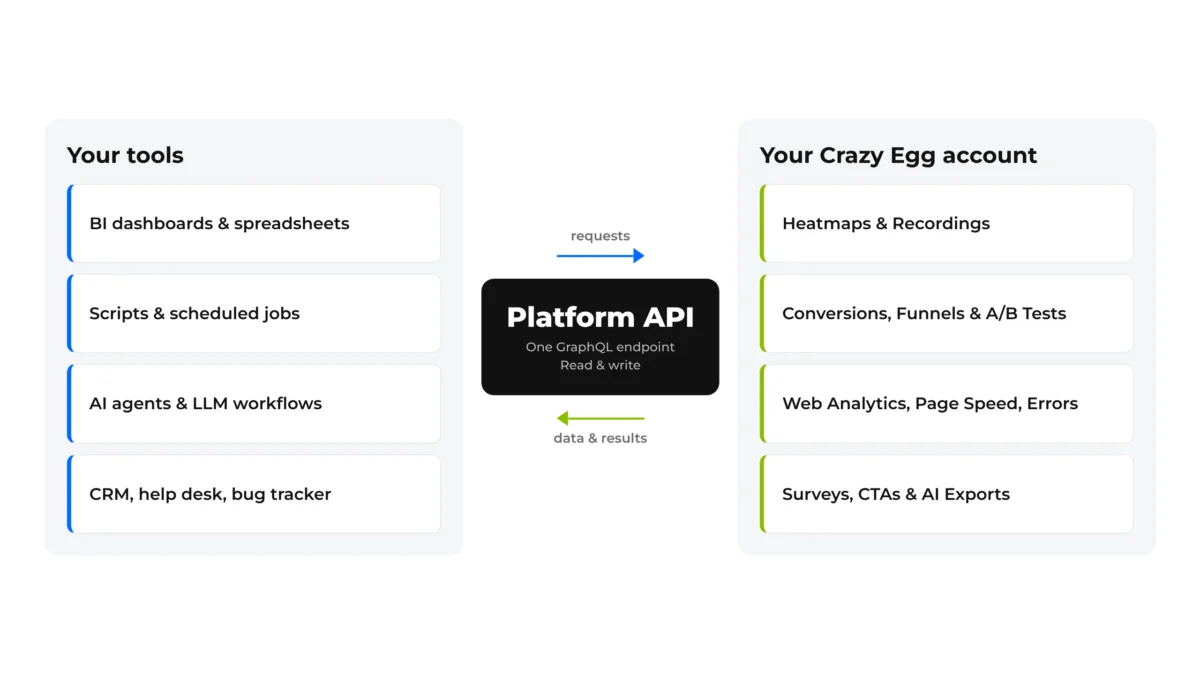
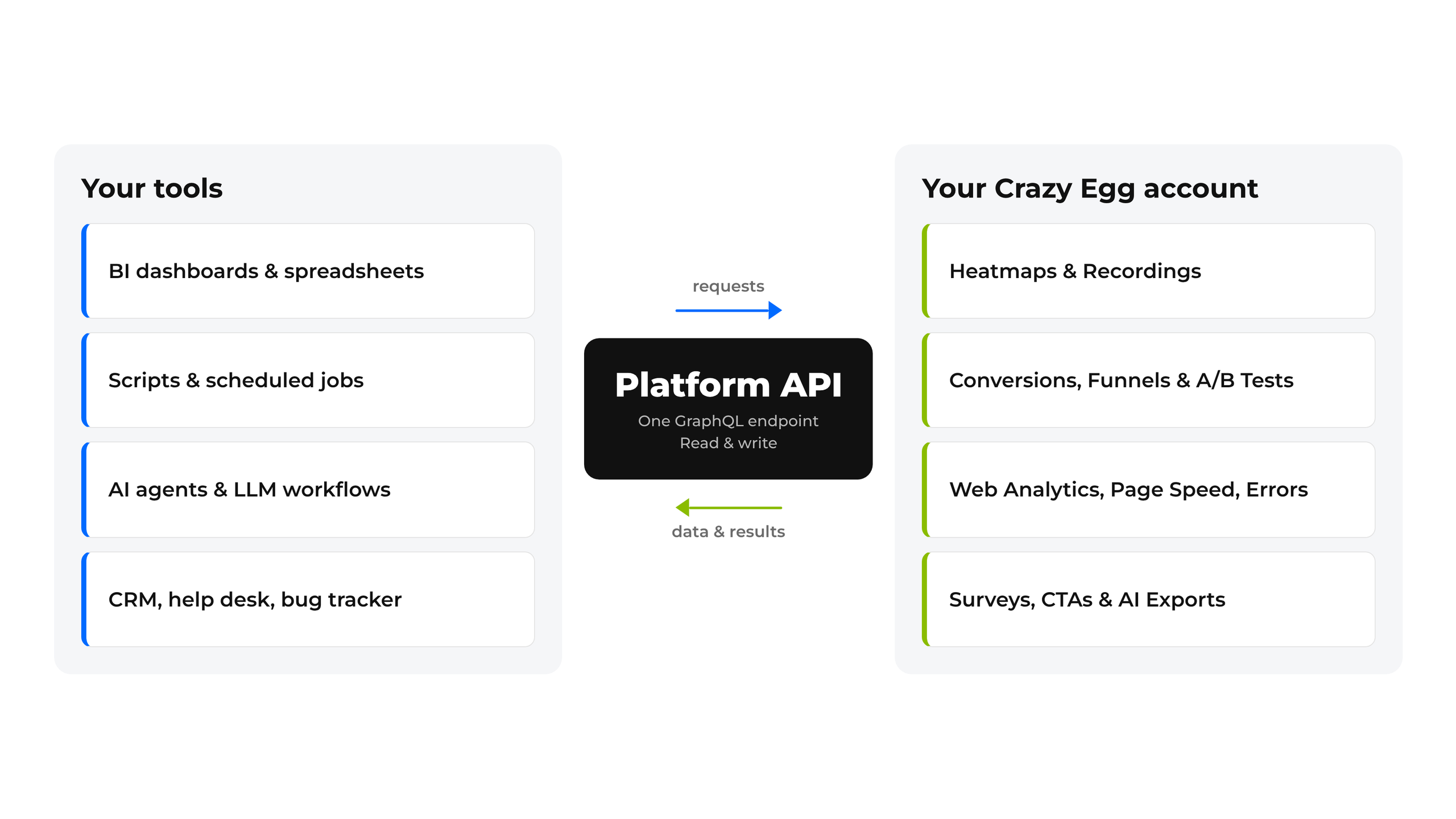
The new API architecture eliminates these friction points by providing a direct pipeline between Crazy Egg’s backend and a company’s internal infrastructure. This allows for the "democratization of data," where insights are no longer confined to those with administrative access to the platform but are instead broadcast across an organization’s entire software suite. Whether it is pulling performance metrics into a custom Tableau dashboard or triggering automated alerts in Slack based on user engagement fluctuations, the API serves as the connective tissue between raw behavioral data and actionable business strategy.
Technical Specifications and Functional Capabilities
The Crazy Egg Platform API is designed with flexibility in mind, catering to various technical proficiencies ranging from marketing operations specialists to full-stack engineers. The primary function of the API is to facilitate the automated transfer of data into third-party tools. According to the technical documentation now available to the public, the API supports a variety of calls that allow teams to manage their optimization efforts at scale.
Key capabilities of the Platform API include:
- Automated Data Retrieval: Users can programmatically pull data from heatmaps, confetti reports, and overlay reports. This is particularly useful for agencies managing dozens of clients who require unified reporting without manual data entry.
- Workflow Integration: The API allows for the synchronization of Crazy Egg data with project management tools. For instance, a drop in engagement on a specific landing page identified by a heatmap can automatically generate a ticket in Jira or Asana for the design team to investigate.
- Snapshot Management: Large-scale websites often struggle to manage hundreds of active snapshots. The API enables developers to automate the creation, pausing, and archiving of snapshots based on external triggers, such as the launch of a new marketing campaign or a website deployment.
- User and Account Administration: For enterprise-level organizations, the API can assist in managing user permissions and account configurations, ensuring that data security protocols are maintained across the board.
The documentation, hosted at platform-api-docs.crazyegg.com, provides a comprehensive guide for implementation, including authentication protocols, endpoint descriptions, and rate-limiting information. By providing these resources, Crazy Egg is signaling its commitment to a "developer-first" approach within its paid ecosystem.
The Evolution of Website Optimization: A Chronology
To understand the significance of this API launch, one must look at the trajectory of Crazy Egg since its inception. Founded in 2006 by Neil Patel and Hiten Shah, Crazy Egg was one of the first tools to offer an affordable way for small and medium-sized businesses to visualize user behavior.
- 2006–2012: The era of visualization. Crazy Egg introduces the Heatmap, Scrollmap, and Confetti reports, revolutionizing how marketers view "clicks" versus "intent."
- 2013–2018: Expansion into testing. Recognizing that visualization is only the first step, the platform integrates A/B testing and basic session recordings, allowing users to hypothesize and validate changes within the same interface.
- 2019–2023: Optimization of the suite. The company focuses on improving the speed of its tracking scripts and the accuracy of its data processing, ensuring that it remains competitive against newer entrants like Hotjar and FullStory.
- 2024–Present: The Platform API era. The focus shifts toward integration and automation. The company recognizes that in the current market, a tool’s value is measured not just by what it can show, but by how well it plays with others.
This chronological progression reflects a broader trend in the SaaS industry where "best-of-breed" tools must eventually offer robust integration capabilities to survive in an increasingly crowded marketplace.
Addressing the Modern Data Challenge: Silos and Fragmentation
In the current digital marketing environment, the average enterprise uses over 90 different marketing technology (MarTech) tools. This fragmentation leads to "data silos," where valuable insights about customer behavior are trapped within individual platforms. A study by the MarTech Alliance suggests that nearly 50% of marketers identify "integration between technologies" as their biggest challenge.
The Crazy Egg Platform API is a direct response to this challenge. By allowing data to flow freely into centralized repositories like Snowflake, BigQuery, or Amazon RedShift, Crazy Egg ensures that behavioral data can be correlated with other data sets, such as CRM data from Salesforce or transactional data from Shopify. This holistic view allows businesses to answer complex questions that a single tool cannot, such as: "Do users who interact with the ‘Pricing’ heatmap variant eventually have a higher lifetime value (LTV) according to our CRM?"
Stakeholder Perspectives and Industry Implications
Stephen Ngo, Director of Growth Marketing at Crazy Egg and an experienced leader in the B2B startup space, emphasized that the API is already being utilized by early adopters to streamline their operations. His background at firms like ProfitWell and Paddle highlights a trend toward data-driven growth strategies that rely heavily on automated systems.
Industry analysts suggest that the opening of the API will likely increase Crazy Egg’s "stickiness" within the enterprise sector. When a tool is integrated into a company’s daily automated reporting, the cost of switching to a competitor becomes significantly higher. Furthermore, by making the API available on all paid plans, Crazy Egg is positioning itself as a more accessible alternative to premium enterprise analytics suites that often gate their API access behind five-figure annual contracts.

From a UX and design perspective, the API launch is a boon for evidence-based design. Designers no longer have to wait for weekly reports; they can build internal dashboards that show real-time engagement levels, allowing for a more agile approach to website iterations.
Broader Impact on Digital Marketing Ecosystems
The implications of this launch extend beyond the immediate user base of Crazy Egg. It reflects a maturing of the CRO (Conversion Rate Optimization) industry. As businesses become more sophisticated, they are moving away from "gut-feeling" design toward a rigorous, data-backed methodology. The ability to programmatically access behavioral data is a prerequisite for this level of maturity.
Moreover, this move may force competitors to re-evaluate their own integration strategies. As Crazy Egg lowers the barrier to entry for API-driven optimization, other players in the heatmap and session recording space may be pressured to offer similar levels of transparency and accessibility.
The move toward an API-centric model also prepares Crazy Egg for the future of artificial intelligence in marketing. AI models require vast amounts of structured data to provide meaningful insights. By providing an API, Crazy Egg makes it easier for businesses to feed their own proprietary AI models with high-quality behavioral data, potentially leading to automated website adjustments and personalized user experiences driven by machine learning.
Conclusion and Future Outlook
The launch of the Crazy Egg Platform API is a significant milestone for the platform and its users. By prioritizing automation and integration, Crazy Egg is moving toward a future where website optimization is an invisible, continuous process rather than a series of manual audits. As the technical documentation reaches more developers and the first wave of custom integrations begins to take shape, the true impact of this move will become clear.
For existing paid subscribers, the message is clear: the data you have been collecting is now more portable and powerful than ever. For the broader industry, it is a reminder that in the age of the modern data stack, connectivity is the ultimate feature. As businesses continue to navigate the complexities of digital transformation, tools that offer open, programmatic access to their insights will likely lead the way in the next generation of marketing technology. Organizations looking to leverage these new capabilities are encouraged to review the technical documentation and begin planning their integration strategies to stay ahead in an increasingly data-dependent market.


 Azzam Bilal Chamdy

 Iffa Jayyana