

Crazy Egg, a pioneer in the field of user behavior analytics and conversion rate optimization (CRO), has announced a significant update to its platform’s Error Tracking suite. This new feature enables website owners, product managers, and developers to receive real-time notifications whenever a new or recurring error is detected on their site. By bridging the gap between data collection and actionable response, Crazy Egg aims to reduce the "Time to Resolution" (TTR) for technical issues that frequently compromise user experience and revenue.
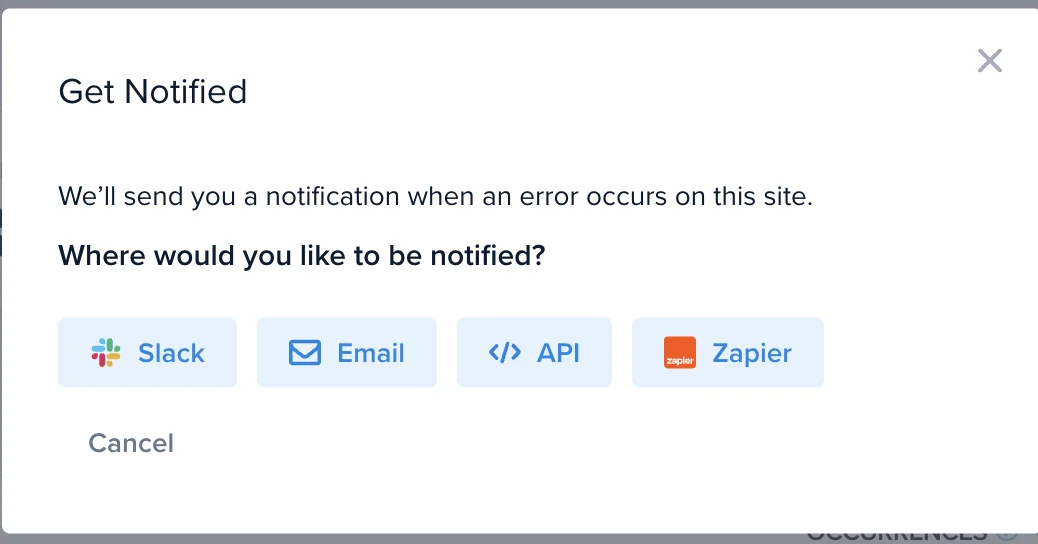
The update introduces a multi-channel notification system, allowing users to receive alerts via email, Slack, dedicated API endpoints, or Zapier triggers. This flexibility ensures that technical teams can integrate Crazy Egg’s error data directly into their existing workflows, whether they rely on traditional communication methods or automated DevOps pipelines.
Technical Overview of the Notification System
The core of this update lies in its ability to provide immediate visibility into the technical health of a website. Historically, Crazy Egg users had to manually check their Errors dashboard to identify site-breaking bugs or JavaScript failures. With the introduction of the "Get Notified" functionality, the platform shifts from a reactive tool to a proactive monitoring solution.
When a user navigates to the Errors dashboard within the Crazy Egg interface, they are now greeted with a prominent "Get Notified" button. Clicking this initiates a configuration wizard where users can define their preferred communication channels.
- Email Alerts: Ideal for smaller teams or individual site owners, email notifications provide a summary of the error, the affected URL, and a direct link to the session recording where the error occurred.
- Slack Integration: For modern agile teams, Slack notifications allow for "ChatOps" style management. Alerts can be directed to specific channels (e.g., #dev-ops or #bug-reports), enabling immediate team discussion and triage.
- API Endpoints: Enterprise-level users can leverage webhooks to send error data to their own internal servers or custom-built monitoring dashboards.
- Zapier Triggers: Through Zapier, Crazy Egg can connect to over 5,000 other applications, such as Jira, Trello, or Asana, automatically creating bug tickets the moment a new error is detected.
The Strategic Importance of Error Monitoring
In the current digital landscape, even minor technical glitches can have a profound impact on a business’s bottom line. According to industry data, approximately 88% of online consumers are less likely to return to a site after a bad experience. Furthermore, a one-second delay in page load time—often caused by silent JavaScript errors—can result in a 7% reduction in conversions.
By identifying "New Errors" and "Recurring Errors," Crazy Egg provides a safety net for high-traffic websites. A "New Error" notification alerts the team to issues introduced by recent code deployments, while "Recurring Errors" signify persistent problems that may have been overlooked or improperly patched.
A critical component of this new feature is the "Muted Errors" filter. Alert fatigue is a common problem in software development, where a high volume of non-critical notifications leads teams to ignore the monitoring system altogether. Crazy Egg addresses this by allowing users to "mute" specific, non-impactful errors. Once an error is muted, it is excluded from the notification cycle, ensuring that the alerts landing in a developer’s inbox or Slack channel are strictly high-priority issues that require immediate attention.
Historical Context and Evolution of Crazy Egg
Founded by Hiten Shah and Neil Patel, Crazy Egg revolutionized the web analytics industry with the introduction of heatmaps and scrollmaps. For over a decade, the platform focused primarily on visual representations of user behavior—showing where users clicked, how far they scrolled, and where they became confused.
However, as the web became more complex with the rise of Single Page Applications (SPAs) and heavy JavaScript frameworks like React and Vue, the need for technical diagnostics became apparent. Crazy Egg responded by expanding its toolkit to include session recordings and, more recently, comprehensive error tracking.
The addition of real-time notifications represents the latest stage in this evolution. It transforms Crazy Egg from a marketing-centric tool into a full-stack optimization platform that serves both the marketing department and the engineering team. This convergence is reflective of a broader industry trend toward "Product-Led Growth," where the technical performance of a product is viewed as a primary driver of customer retention.
Comparative Analysis: The Competitive Landscape
The market for error monitoring and session replay is highly competitive, with players like Hotjar, FullStory, and LogRocket offering various levels of integration. Crazy Egg’s decision to offer Slack and Zapier integrations at the Growth and Enterprise tiers positions it as a cost-effective yet powerful alternative for mid-to-large-scale businesses.
While some competitors focus exclusively on the "developer experience" (providing deep-level stack traces and network logs), Crazy Egg maintains its focus on the "user experience." The notification system is designed to lead the user directly to a session recording. This allows a developer to see exactly what the user was doing at the moment the error occurred—a "DVR for the web" approach that eliminates the need for developers to attempt to reproduce bugs based on vague user reports.
Impact on Digital Marketing and SEO
From an SEO perspective, site errors are a significant deterrent to ranking. Google’s Core Web Vitals update emphasized the importance of stability and performance. Frequent errors can lead to higher bounce rates and lower dwell times, signals that search engine algorithms interpret as a lack of site quality.
Digital marketers also stand to benefit significantly from this update. During high-stakes periods, such as Black Friday or a major product launch, a broken "Add to Cart" button can result in thousands of dollars in lost revenue per hour. Real-time notifications act as an early warning system, allowing marketing teams to alert the technical department the moment a conversion funnel begins to break.
Official Positioning and Availability
Crazy Egg has confirmed that the new Error Tracking notifications are not available on the basic or standard plans. To access these advanced monitoring capabilities, customers must be on the Growth or Enterprise subscription tiers. This move is seen as an effort to provide higher-value features to organizations with more complex site architectures and higher traffic volumes.
"Errors Tracking is available for all Crazy Egg customers on Growth or Enterprise plans," the company stated in its official documentation. The setup process is designed to be user-friendly, requiring no additional code installation beyond the standard Crazy Egg snippet already present on the user’s site.
Analysis of Implications for the Future of Web Analytics
The introduction of these notifications suggests a shift in how analytics companies view their role in the tech stack. No longer are these platforms merely repositories of historical data; they are becoming active participants in the day-to-day operations of a digital business.
As artificial intelligence and machine learning continue to permeate the SaaS industry, it is likely that the next iteration of Crazy Egg’s error tracking will involve predictive analytics—notifying users not just when an error has occurred, but when a pattern of behavior suggests an error is likely to occur. For now, the move to real-time, multi-channel notifications provides a robust foundation for any business looking to harden its digital infrastructure.
In summary, Crazy Egg’s latest update addresses a critical pain point for modern web teams. By automating the discovery and notification of site errors, the platform empowers businesses to maintain a seamless user experience, protect their conversion rates, and foster a more collaborative relationship between marketing and development teams. As digital competition intensifies, the ability to identify and fix errors in minutes rather than days may become a primary differentiator for successful online enterprises.







