The digital marketing landscape is undergoing a significant transformation as brands seek more efficient ways to bridge the gap between ad clicks and user conversions. In response to these evolving demands, Instapage, a prominent leader in the post-click automation space, has officially announced a series of platform enhancements designed to provide marketers with greater control over their campaign lifecycles. The latest update introduces sophisticated scheduling capabilities, a dedicated suite of website page templates, and the launch of the Instapage Early Access Program. These developments signal a strategic shift for the company as it moves beyond traditional landing page creation toward a more holistic approach to web presence and campaign management.
The Strategic Shift Toward Automated Campaign Lifecycle Management
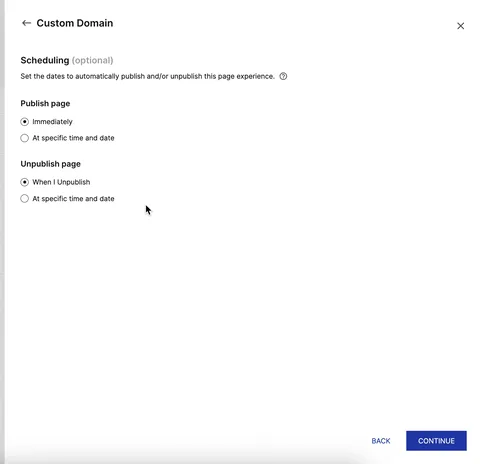
For years, digital marketers have faced the logistical burden of manually managing the “live” status of their promotional content. The introduction of the Instapage Scheduling feature aims to eliminate the friction associated with time-sensitive campaigns. This new functionality allows users to automate the publishing, unpublishing, and updating of landing pages based on specific dates and times.
In a fast-paced retail or SaaS environment, the ability to time a page launch to coincide precisely with a midnight product drop or a holiday promotion is critical. Previously, marketing teams often required staff to be available during off-hours to ensure that promotional content went live or was taken down to avoid misleading customers with expired offers. By integrating a native scheduling tool, Instapage provides a solution that minimizes human error and optimizes resource allocation.
Industry data suggests that the “window of opportunity” for seasonal promotions is narrowing, with consumers expecting real-time relevance. According to a 2023 marketing operations report, teams that utilize automation tools for campaign deployment see a 20% increase in productivity and a significant reduction in technical debt. The Scheduling feature is currently being rolled out to select plans, catering to enterprise-level needs where high-volume campaign management is a daily reality.
Bridging the Gap: From Landing Pages to Comprehensive Website Creation
While Instapage has historically focused on high-converting landing pages for paid search and social campaigns, internal user data revealed a growing trend: a significant portion of the user base was utilizing the platform’s no-code builder to construct entire websites. To support this organic shift in user behavior, the company has introduced a new category of “Website Page Templates.”
These templates are not merely expanded landing pages; they are architected to serve as foundational elements of a corporate or brand website. The initial rollout includes pre-customized designs tailored to nine distinct industries, including Real Estate, Beauty, and Consumer Products. Each template is built with a focus on user experience (UX) and conversion rate optimization (CRO), ensuring that the aesthetic appeal does not come at the expense of performance.
The move into website templates places Instapage in a more direct competitive stance against traditional Content Management Systems (CMS) and website builders. However, the company maintains its edge by emphasizing the “no-code” ease of use that has defined its landing page product. By providing industry-specific layouts, the platform reduces the “blank canvas” syndrome that often slows down the web development process for small to medium-sized businesses.
The Instapage Early Access Program: A New Era of Collaborative Development
In an effort to foster a more user-centric product roadmap, the company has also launched the Instapage Early Access Program (EAP). This initiative creates a formal pipeline for feedback between the platform’s most active users and its product development team. Members of the EAP gain the opportunity to test new features—such as the recently released Carousels, Popups, and the revamped Dashboard—before they reach the general market.
The launch of the EAP reflects a broader trend in the Software-as-a-Service (SaaS) industry where “community-led growth” is becoming a primary driver of innovation. By involving users in the beta testing phase, Instapage can refine its tools based on real-world edge cases and specific workflow requirements. This collaborative approach is intended to ensure that future features are not only technically sound but also highly relevant to the daily challenges faced by marketing professionals.
A Chronology of Recent Innovations and Platform Evolution
The announcement of Scheduling and Website Templates is the latest in a series of rapid-fire updates from Instapage over the last several quarters. To understand the current trajectory of the platform, it is necessary to look at the timeline of recent feature releases:
- Q3 2023: The New Dashboard Launch – Instapage overhauled its user interface to provide a more intuitive workspace, focusing on data visualization and ease of navigation between different campaign workspaces.
- Q4 2023: Integration of Advanced Popups – Recognizing the need for lead capture tools that don’t disrupt the user experience, the company introduced customizable popups that can be triggered by intent, such as time on page or exit intent.
- Q1 2024: Carousel Functionality – To enhance visual storytelling and save vertical space on mobile devices, Instapage added a native Carousel widget, allowing for interactive content displays.
- Q2 2024: Scheduling and Website Templates – The current release expands the platform’s utility from a creative tool to a management and structural tool.
This timeline demonstrates a clear focus on empowering the “full-stack marketer”—an individual or small team responsible for everything from creative design and copywriting to technical deployment and performance analysis.
Market Analysis: The Economic Impact of Conversion Optimization
The broader context of these updates is the rising cost of digital advertising. As Cost-Per-Click (CPC) rates continue to climb across platforms like Google Ads and Meta, the “post-click” experience has become the most significant lever for maintaining a healthy Return on Ad Spend (ROAS).
Data from various industry benchmarks indicates that while the average landing page conversion rate hovers around 2.35%, the top 10% of advertisers see conversion rates of 11.45% or higher. The difference between these two tiers often comes down to the speed of iteration and the relevance of the page to the specific ad. By providing tools that allow for faster website creation and automated scheduling, Instapage is positioning itself as a critical component in the “conversion gap” solution.
Furthermore, the shift toward no-code solutions is a response to the global shortage of web developers. By allowing marketers to build and manage sophisticated web properties without relying on a centralized IT or dev department, companies can decrease their time-to-market for new initiatives. This agility is a competitive advantage in industries where market trends change weekly.
Official Responses and Industry Implications
While Instapage executives have emphasized the “user-first” philosophy behind these updates, industry analysts view the move as a strategic play to increase user retention. By hosting more of a brand’s digital infrastructure—moving from a single landing page to a full website—Instapage becomes more deeply integrated into the client’s marketing ecosystem.
“Marketers are no longer looking for siloed tools; they are looking for integrated environments where they can execute a strategy from start to finish,” says a digital strategy analyst at a leading tech consultancy. “Instapage’s move into scheduling and broader website templates suggests they are listening to the demand for a ‘single pane of glass’ management style.”
The launch of the Early Access Program has also received positive initial reactions from the user community. Early participants have noted that the ability to influence the product roadmap makes them feel more like partners than just subscribers. This level of engagement is often a precursor to higher Net Promoter Scores (NPS) and lower churn rates in the SaaS sector.
Looking Ahead: The Future of the Post-Click Experience
As Instapage continues to roll out these features, the focus remains on the “14-day free trial” model to attract new users who are disillusioned with the complexity of traditional web builders. The company’s commitment to providing a “code-free” environment remains its primary value proposition, even as the features themselves become more technically advanced.
The implications for the wider marketing industry are clear: the expectation for high-quality, perfectly timed, and industry-specific digital experiences is now the standard. For brands, the choice is to either invest in large technical teams or leverage platforms that automate the heavy lifting. With the addition of Scheduling and Website Page Templates, Instapage is making a strong case for the latter.
In conclusion, these updates represent more than just incremental feature additions. They are a response to a fundamental shift in how digital marketing is practiced. As automation becomes the norm and the boundaries between landing pages and websites continue to blur, Instapage’s latest moves provide a roadmap for how platforms can evolve to meet the needs of a more demanding and data-driven marketing workforce. The success of these features will likely be measured not just by user adoption, but by the tangible conversion growth they enable for brands navigating an increasingly expensive and competitive digital marketplace.


 Asro
Asro
 Dwi Wanna