Nila Kartika Wati

The landscape of digital commerce has undergone a fundamental shift as businesses move away from the pursuit of raw traffic volume toward a more nuanced focus on visitor intent and conversion efficiency. In an era where customer acquisition costs (CAC) continue to rise across major advertising platforms, the discipline of conversion marketing has emerged as the primary lever for sustainable growth. By prioritizing the quality of engagement over the quantity of visitors, organizations are finding that they can double or triple their revenue outcomes without increasing their top-of-funnel marketing spend.
The Strategic Shift from Acquisition to Optimization
Historically, digital marketing success was measured by "hits" and "page views." However, as the digital marketplace matured, the disconnect between traffic and revenue became more pronounced. Modern conversion marketing is defined as the strategic practice of optimizing every touchpoint of the digital user journey to encourage a specific, measurable action. This approach bridges the gap between marketing and sales, ensuring that the interest generated by advertising campaigns is effectively funneled into tangible business results.
Industry data suggests that the average conversion rate across all industries sits between 2% and 5%. For many enterprises, this means that up to 98% of their advertising budget is spent on visitors who leave without taking action. Conversion marketing seeks to address this inefficiency by applying data-driven methodologies to landing pages, calls to action (CTAs), and user experience (UX) design. The shift is not merely tactical but financial; a company that increases its conversion rate from 2% to 4% effectively halves its customer acquisition cost, providing a significant competitive advantage in crowded markets.
A Chronology of Conversion Marketing Evolution
The evolution of conversion marketing can be traced through three distinct phases of the digital age:
- The Traffic Era (1995–2010): Early digital strategy focused almost exclusively on Search Engine Optimization (SEO) and the burgeoning field of Pay-Per-Click (PPC) advertising. The prevailing logic was that more traffic would inevitably lead to more sales.
- The Content and UX Era (2010–2020): Marketers began to realize that the quality of the destination mattered. This period saw the rise of Content Marketing and the formalization of User Experience design as a means to keep visitors engaged longer.
- The Optimization Era (2020–Present): With the advent of sophisticated A/B testing tools, heatmaps, and Artificial Intelligence (AI), marketing has entered a phase of hyper-optimization. Current strategies rely on "Smart Traffic" and real-time personalization to tailor the user experience to individual visitor behaviors and psychological profiles.
Key Metrics and the Mathematics of Conversion
To implement an effective conversion marketing strategy, organizations must first establish a rigorous framework for measurement. Success is defined by the relationship between two primary data points: conversion goals and conversion rates.
Defining Conversion Goals
Conversion goals are categorized into macro-conversions and micro-conversions. A macro-conversion is the ultimate objective, such as a completed e-commerce purchase or a signed contract. Micro-conversions are the smaller steps that lead toward that goal, such as signing up for a newsletter, downloading a whitepaper, or adding an item to a shopping cart. Marketing analysts argue that tracking micro-conversions is essential for identifying "leaks" in the sales funnel where potential customers are dropping off.
Calculating the Conversion Rate
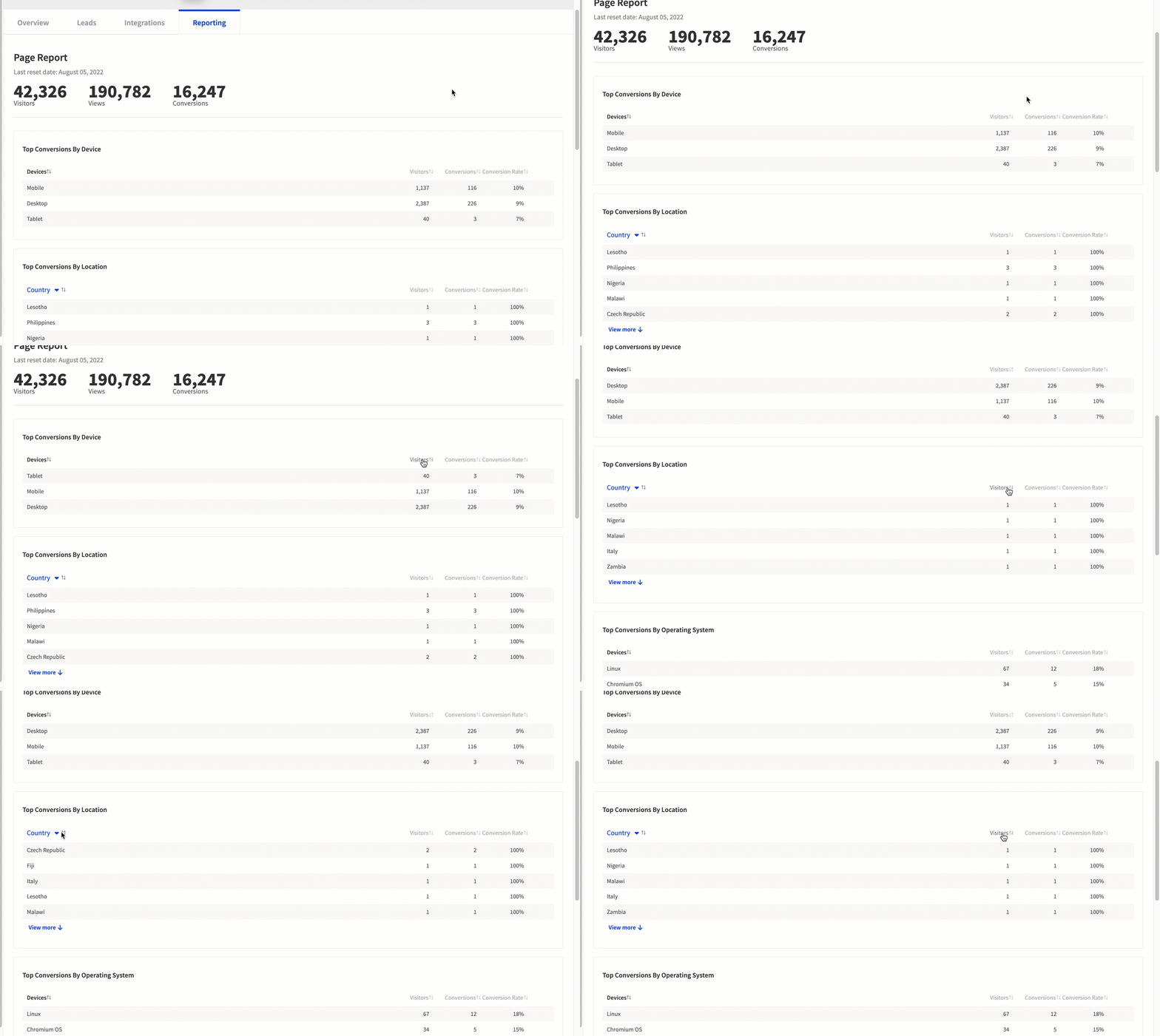
The standard formula for calculating success is the number of conversions divided by the total number of unique visitors, multiplied by 100. While a "good" conversion rate is highly dependent on the industry—with professional services often seeing higher rates than high-volume e-commerce—the consensus among growth hackers is that internal benchmarking is more valuable than industry averages. Continuous improvement against one’s own historical data is the hallmark of a successful optimization program.

The Psychology of User Action
At its core, conversion marketing is the application of behavioral psychology to digital interfaces. Several key psychological drivers determine whether a visitor will convert or bounce.
The Value Proposition
The value proposition is the primary reason a prospect should buy from a particular company. It must clearly articulate the benefits of the product, how it solves the customer’s problem, and why it is superior to competitors. Research into user behavior indicates that visitors form an opinion of a website within 50 milliseconds. Therefore, the value proposition must be instantly understandable and positioned "above the fold" to ensure maximum impact.
Trust Signals and Social Proof
In a digital environment characterized by skepticism, trust is the currency of conversion. Trust signals include professional certifications, secure payment badges, and—most importantly—social proof. According to consumer research, approximately 92% of users read online reviews before making a purchase. Detailed, specific testimonials that address common objections are significantly more effective than generic praise.
The Impact of Friction and Usability
Friction is any element of a website that prevents a user from completing an action. This can range from slow page load speeds to overly complex forms. Data from Google indicates that 53% of mobile users will abandon a site if it takes longer than three seconds to load. Furthermore, reducing the number of fields in a contact form from five to three has been shown to increase conversion rates by up to 25%.
Tactical Implementation and High-Impact Experimentation
Modern marketers utilize a suite of tactics to drive conversions, moving beyond static pages toward dynamic, experimental environments.
Landing Page Optimization
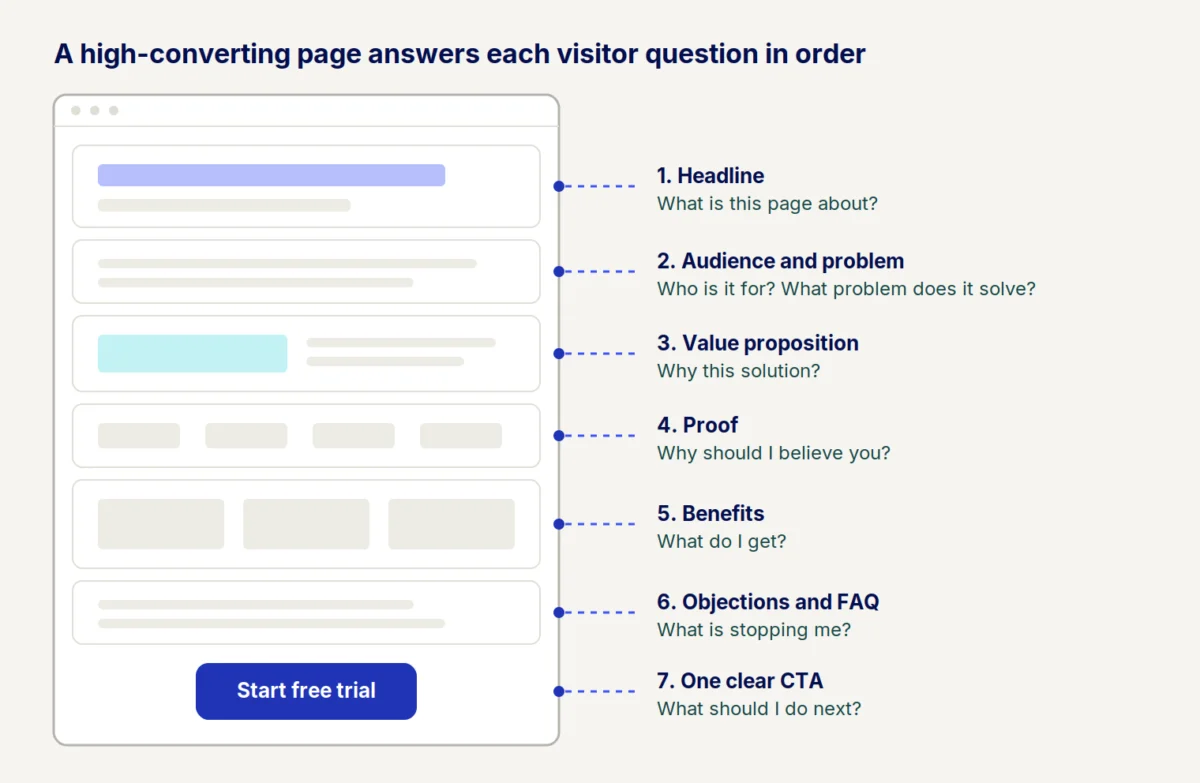
Unlike a general homepage, a landing page is designed for a single purpose. It removes navigation menus and other distractions to keep the user focused on a single CTA. High-converting landing pages utilize "message match," ensuring that the headline of the page exactly matches the text of the ad that brought the visitor there.
A/B Testing and Multivariate Analysis
The most successful conversion marketers operate on the principle that "everything is a hypothesis." A/B testing involves running two versions of a page simultaneously to see which performs better. Advanced teams utilize multivariate testing, which examines multiple variables (such as headlines, images, and button colors) in various combinations to find the optimal configuration.
The Role of Multimedia and Interactive Content
The integration of video has become a cornerstone of conversion strategy. Industry reports suggest that including a video on a landing page can increase conversions by more than 80%. Videos are particularly effective for complex SaaS products or high-ticket items where a visual demonstration can quickly overcome barriers to understanding.

Data-Driven Decision Making and Feedback Loops
The transition from insight to action requires a robust data infrastructure. While tools like Google Analytics 4 (GA4) provide high-level data on where visitors come from, conversion marketing requires "qualitative" data to understand why they act.
Heatmaps and Session Recordings
Tools that generate heatmaps allow marketers to see exactly where users click and how far they scroll. If a heatmap reveals that users are clicking on a non-clickable image, it indicates a design flaw that is causing frustration. Session recordings provide a "fly-on-the-wall" perspective, allowing researchers to watch real users navigate the site and identify moments of confusion.
The Sales-Marketing Feedback Loop
Some of the most valuable conversion insights come from the front lines of customer interaction. By analyzing support tickets and sales call transcripts, marketing teams can identify the specific questions and objections that prevent conversions. Addressing these concerns directly in the website copy can pre-emptively resolve doubts and smooth the path to purchase.
Broader Implications and Future Trends
The rise of conversion marketing reflects a broader trend toward "efficiency-first" business models. As the cost of digital real estate increases, the ability to convert traffic efficiently is becoming a primary determinant of business viability.
Looking forward, the industry is moving toward AI-driven "Smart Traffic" systems. These systems use machine learning to analyze a visitor’s attributes—such as their location, device, and browsing history—in real-time, automatically serving them the version of a page most likely to result in a conversion. This level of automated personalization represents the next frontier in digital growth.
Furthermore, the "no-code" revolution is democratizing conversion optimization. Marketing teams no longer need to wait for developer cycles to test new ideas; they can build, launch, and iterate on landing pages and popups using drag-and-drop builders. This agility is essential in a fast-moving digital economy where the window for capturing consumer attention is constantly shrinking.
In conclusion, conversion marketing is not a one-time project but a continuous process of refinement. By combining rigorous data analysis with an understanding of human psychology and agile technological tools, businesses can transform their digital presence from a passive brochure into a high-performance engine for growth. The organizations that master these disciplines will be the ones that thrive in an increasingly competitive and expensive digital marketplace.

 rifanmuazin
 Dwi Wanna