
 Dwi Wanna
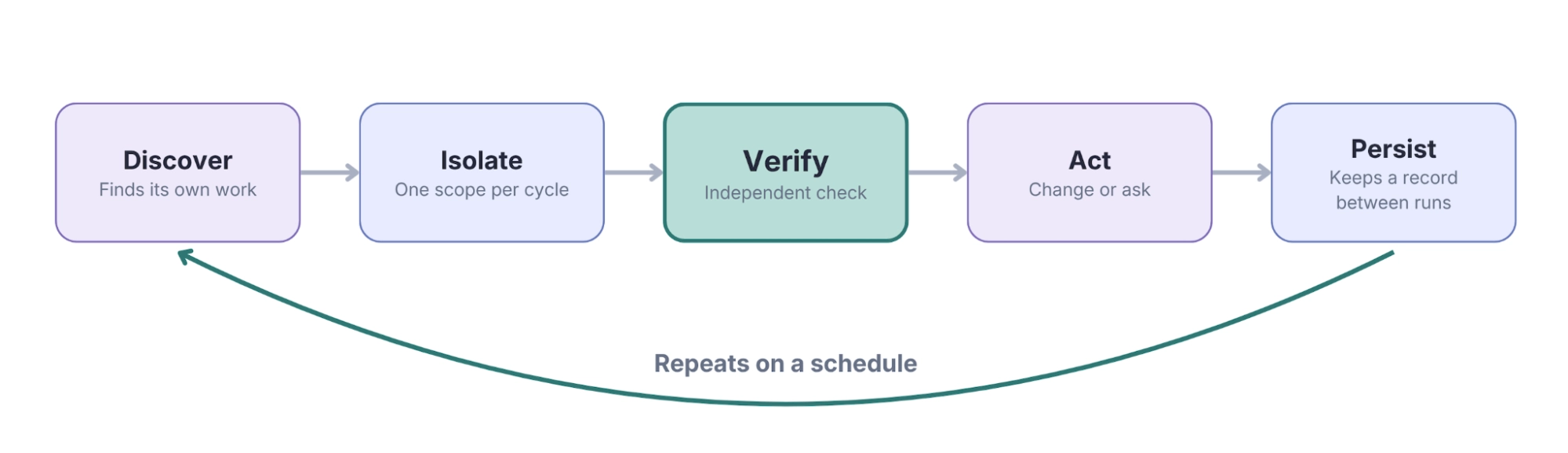
Building Autonomous Experimentation Loops for Enterprise Optimization Using AI Agents and Advanced Statistical Frameworks represents a significant shift in how modern software teams approach conversion rate optimization and feature deployment. The integration of autonomous experimentation loops allows organizations to move beyond manual intervention, enabling AI agents to monitor, analyze, and adjust live experiments in real-time. By reviewing every experiment within an account on each scheduled run, these loops identify critical issues that are frequently overlooked during manual oversight, such as flags stuck at partial allocation or conversion goals that cease firing due to backend technical regressions.

The emergence of "loop engineering" as a distinct discipline has been accelerated by recent developments in Large Language Model (LLM) orchestration. Peter Steinberger, the founder of OpenClaw, catalyzed this movement by suggesting that developers should transition from manually prompting coding agents to designing autonomous loops that prompt themselves. This framework was further refined by Addy Osmani, Director of AI at Google Cloud, who defined loop engineering as the process of "replacing yourself as the person who prompts the agent." Within the context of digital experimentation, this involves creating a system where an agent queries an account, determines which experiments require attention based on predefined criteria—such as runtime, statistical significance, or goal activity—and executes actions within strictly defined boundaries.
The Evolution and Technical Architecture of Autonomous Loops
The transition to autonomous experimentation is supported by the Model Context Protocol (MCP), which provides a standardized way for AI models like Anthropic’s Claude to interact with external tools and data sources. Convert Experiences has facilitated this by shipping a dedicated MCP server, allowing agents to read results and, when permitted, modify experiment configurations. This architecture relies on a robust backend stack, utilizing SDKs across various languages including JavaScript/TypeScript for server-rendered apps, Python for Django or FastAPI services, PHP for WordPress and Laravel stacks, and native SDKs for iOS and Android environments.

To maintain operational stability, the connection between the AI agent and the experimentation platform must be carefully managed. Organizations typically choose between a hosted connector, suitable for interactive chat and manual oversight, and a local MCP server. The latter is preferred for true background automation, as it utilizes Application IDs and Secret Keys for continuous authentication, avoiding the 30-day session expiration limits associated with browser-based logins.
The Five-Stage Framework of an Autonomous Loop
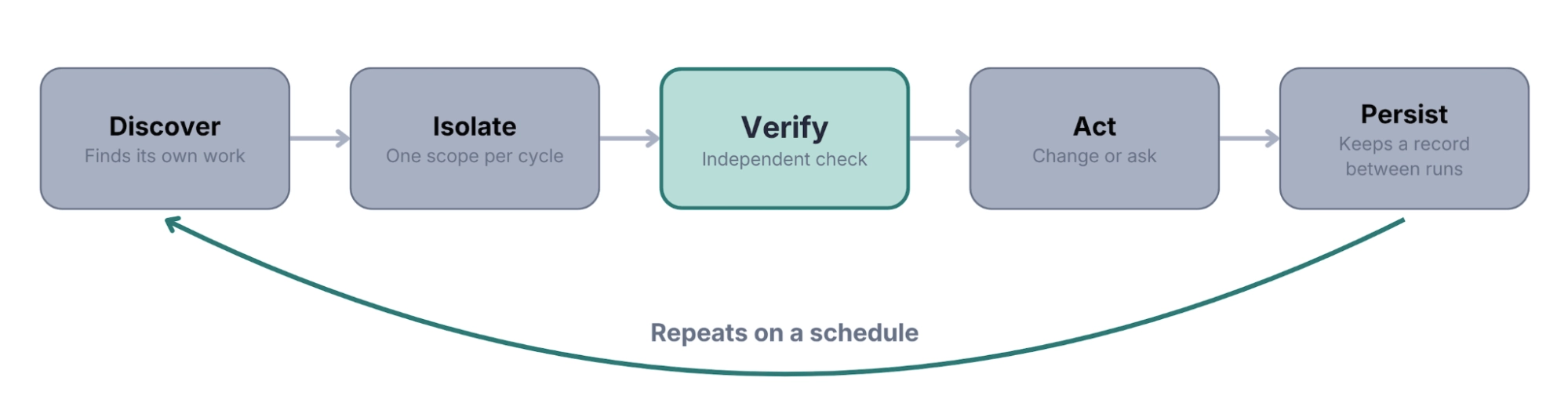
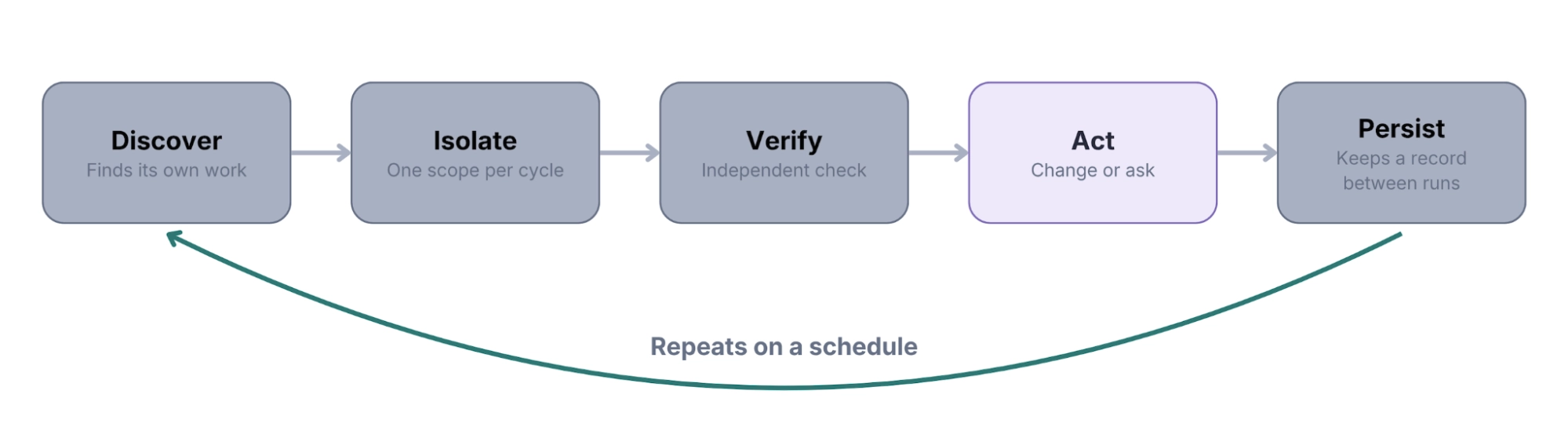
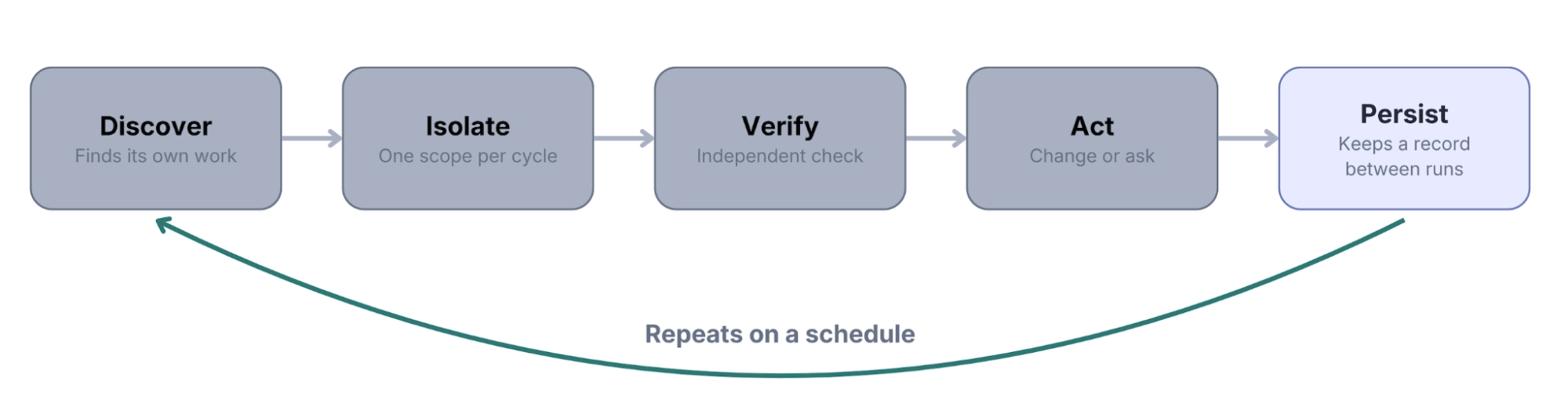
A high-functioning autonomous experimentation loop operates through five distinct stages, each mirroring a critical phase of the traditional experimentation lifecycle.
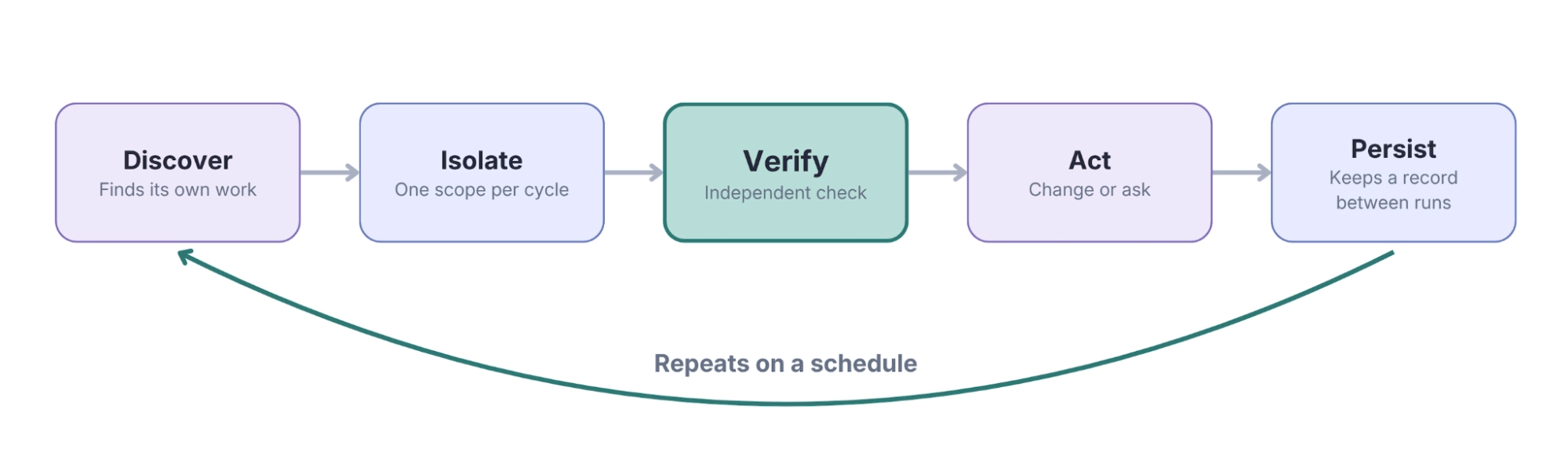
1. Discovery: Identifying Opportunities and Anomalies
The discovery phase is the agent’s first task in every cycle. Using the MCP server, the agent scans all active experiments to identify those that have reached statistical significance, those that have exceeded their planned duration, or those exhibiting technical failures. Key metrics for this stage include the presence of "zero visitors" in active tests or "zero conversions" in experiments where traffic is present—both of which indicate a failure in event tracking.
2. Isolation: Preventing Cross-Contamination
In a complex software environment, multiple experiments often run simultaneously. The isolation stage ensures that changes made by the agent do not contaminate the data of other ongoing tests. This involves managing "worktrees" or experiment scopes to prevent overlapping modifications. The loop must be engineered to respect rate limits and ensure that one change is fully propagated across the CDN or SDK before subsequent actions are taken.
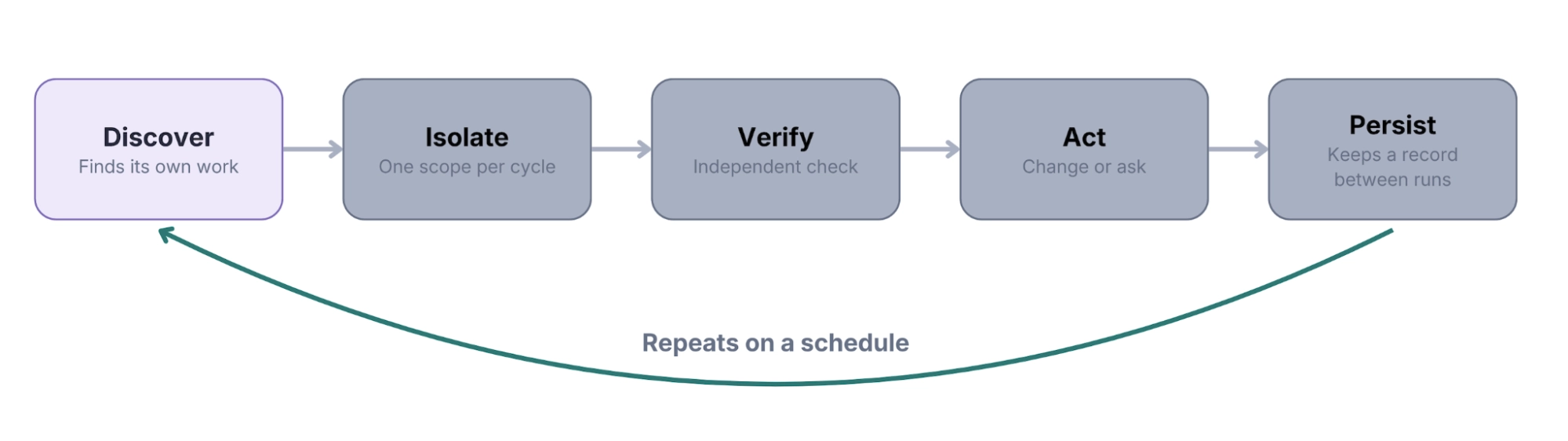
3. Verification: Maintaining Statistical Integrity
Verification is perhaps the most critical stage, as it addresses the risk of the AI "grading its own homework." Industry experts recommend using a separate, often smaller, model to verify the findings of the primary agent. This stage must account for the "peeking problem"—the statistical phenomenon where frequent interim checks of a test increase the likelihood of a false positive. To combat this, autonomous loops should be paired with sequential testing methods, such as Asymptotic Confidence Sequences, which control the false positive rate over continuous monitoring periods.
4. Action: Executing Within Guardrails
Once a result is verified, the agent enters the action phase. Depending on the permissions granted, the agent may pause an underperforming variation, ramp up traffic for a successful rollout, or complete an experiment and archive the results. It is essential that these actions are governed by a "permission dial." For instance, setting an agent to "reporting" allows it only to view results, while "all" grants it the authority to make live configuration changes.
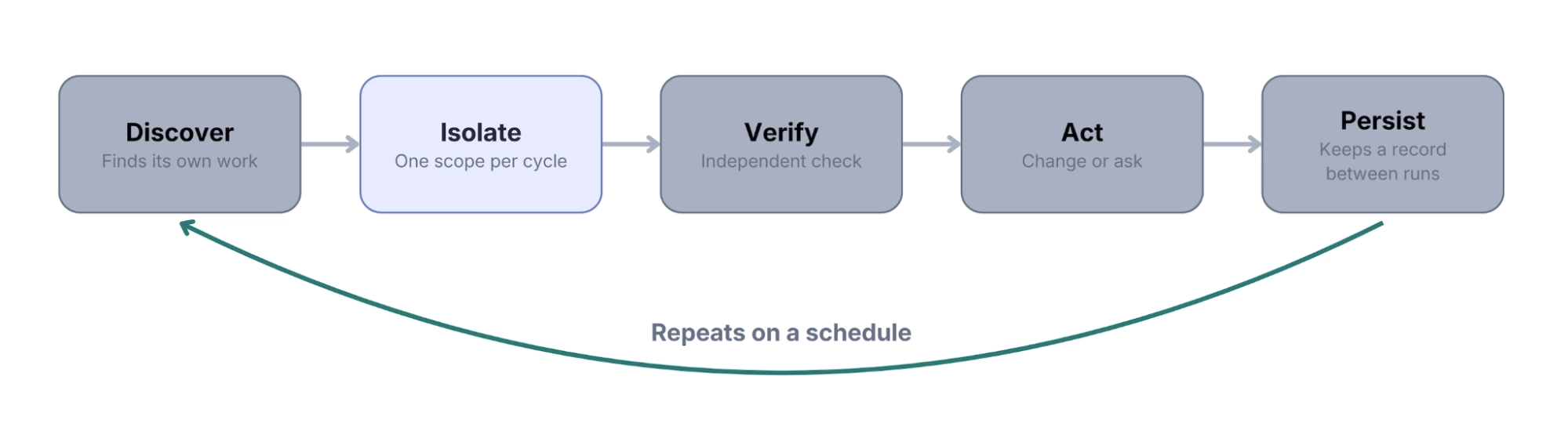
5. Persistence: External Memory and History
Since AI agents typically start each session with a "clean slate," the loop requires an external memory source. This persistence layer records what the agent looked at during the previous run, which changes were implemented, and which experiments were intentionally left alone. This record-keeping is vital for auditing and ensures the loop does not enter a cycle of conflicting or repetitive changes.
Statistical Rigor and Sequential Testing Requirements
The integration of AI into experimentation necessitates a higher standard of statistical rigor. Standard fixed-horizon testing assumes a single evaluation at the end of a pre-calculated sample size. However, an autonomous agent running daily checks provides multiple opportunities for random noise to be mistaken for a significant result.
Convert Experiences addresses this by implementing sequential testing based on the research of Waudby-Smith and Howard (2022/2023). This frequentist method allows for continuous monitoring while maintaining a stable false positive rate. However, sequential testing is not a panacea; it cannot correct for Sample Ratio Mismatch (SRM) or broken event tracking. Therefore, the loop must be programmed to recognize and report these issues rather than assuming the data is valid.
Furthermore, teams must manage the "Dynamic Power Mode" risk. In this mode, an early spike in data can artificially inflate the detected effect size, leading the system to believe it needs a smaller sample size than is actually required. To prevent premature test completion, experts recommend setting a "Minimum Running Time" that covers at least one full business cycle (typically 7 to 14 days) to account for weekly fluctuations in user behavior.
Security, Governance, and the Human-in-the-Loop
The implementation of autonomous loops introduces new security considerations. A primary safety concern is the level of authority granted to the API keys used by the agent. If an account owner generates a key, the agent may bypass standard approval workflows. To maintain governance, organizations should utilize a "Request Approval System."
Under this system, when an agent identifies a winning variation and suggests a traffic ramp-up, it does not execute the change immediately. Instead, it submits a request within the platform. A human reviewer then receives a notification to approve or reject the change. This "human-in-the-loop" model ensures that while the analysis is automated, the final decision-making authority remains with a qualified experimenter. This is particularly important for "feature rollouts," where a 0% to 100% traffic increase could have significant implications for server load and infrastructure stability.
Timeline of a Standard Autonomous Run
A typical autonomous cycle follows a structured chronology:
- T+0 Minutes: The scheduler (e.g., GitHub Actions or a Cron job) triggers the agent.
- T+5 Minutes: The agent queries the MCP server for a list of all active projects and experiments.
- T+15 Minutes: The agent performs a "health check," looking for SRM issues or tracking failures.
- T+30 Minutes: The agent evaluates experiments against "Stopping Rules" (e.g., has it reached 95% significance with at least 10,000 visitors?).
- T+45 Minutes: The agent submits approval requests for any proposed changes and logs its findings to an external persistence file (e.g., a Markdown log or a database).
- T+60 Minutes: The session terminates, and the human reviewers are notified of pending actions.
Broader Impact and Industry Implications
The adoption of autonomous experimentation loops is expected to redefine the role of the Conversion Rate Optimization (CRO) specialist. Rather than spending hours manually checking dashboards for statistical significance, specialists will transition into "loop architects." Their primary focus will shift toward defining the strategic guardrails, selecting the appropriate statistical models, and designing the qualitative hypotheses that the AI then tests at scale.

This automation also allows for "continuous optimization," where minor but cumulative improvements are made to a product without the bottleneck of manual review. For enterprise-level organizations managing hundreds of simultaneous tests, this scalability is a competitive necessity. However, the success of these systems depends entirely on the integrity of the underlying data and the strictness of the safety protocols. As loop engineering matures, the industry will likely see a move toward "self-healing" experimentation platforms that can automatically detect and correct tracking errors before they corrupt the decision-making process.
In conclusion, while the prospect of autonomous AI agents managing business-critical experiments carries inherent risks, the combination of MCP-based architectures, sequential testing, and human-in-the-loop approval systems provides a robust framework for safe implementation. By automating the "discover" and "verify" stages, teams can act on results sooner, reduce the window of exposure to underperforming variations, and ultimately accelerate the pace of innovation.


 Nila Kartika Wati
 rifanmuazin