

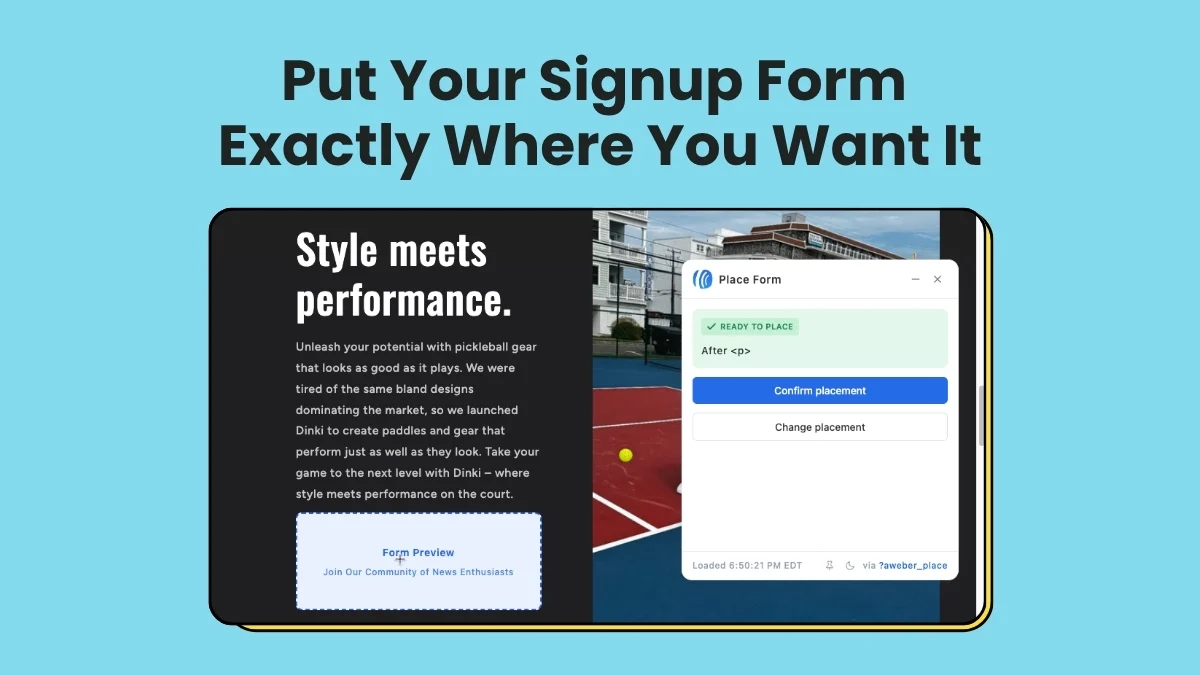
WEST POINT, PA – AWeber, a leading email marketing and automation platform, announced on June 24, 2026, a significant enhancement to its AI Signup Form Builder, introducing the capability to visually create and place inline forms directly onto live websites without requiring any coding expertise. This advancement marks a pivotal moment for digital marketers and website owners, streamlining the process of lead generation by enabling precise form integration within content, thereby capitalizing on reader engagement at its peak. The update allows users to bypass traditional technical hurdles, empowering them to strategically embed signup forms in the most impactful locations on their web pages with unprecedented ease and speed.
A New Era for Lead Capture: Seamless Integration Without Code
The core of this new feature lies in its intuitive visual interface. Previously, integrating signup forms often involved copying and pasting code snippets, a task that could be daunting for those without web development skills or time-consuming even for experienced users managing multiple campaigns. AWeber’s innovative approach fundamentally changes this paradigm. By allowing users to visually select the exact placement on their live web pages, the company addresses a critical pain point in digital marketing: optimizing conversion pathways. The strategic placement of a signup form can drastically alter its effectiveness. A form embedded directly within an article, for instance, engages readers who are already immersed in the content, capitalizing on their immediate interest and increasing the likelihood of subscription. Conversely, a form placed in a sidebar typically caters to scanners, capturing a different segment of the audience. AWeber’s new tool offers the flexibility to target both scenarios with precision.
This development arrives at a time when the digital marketing landscape is increasingly competitive, with businesses constantly seeking innovative ways to capture and nurture leads. Email marketing remains a cornerstone of digital strategy, consistently demonstrating high return on investment (ROI). According to various industry reports, email marketing continues to outperform many other digital channels in terms of conversion and customer retention. However, the effectiveness of an email campaign begins with the quality and quantity of its subscriber list, making efficient and effective signup forms paramount. AWeber’s latest offering is designed to bolster these foundational efforts by making the first step – subscriber acquisition – more accessible and potent.
The Evolution of Email Marketing and Signup Forms
Email marketing has a long and storied history, evolving from simple newsletters to sophisticated automated campaigns driven by advanced analytics and artificial intelligence. Since its inception, AWeber has been a consistent innovator in this space, providing tools that help businesses connect with their audiences. In the early days, signup forms were often rudimentary, requiring significant manual effort to integrate and customize. Marketers would typically rely on web developers to hard-code forms into their sites, leading to slower deployment cycles and limited flexibility for experimentation.
The advent of content management systems (CMS) like WordPress, Shopify, Wix, and Squarespace simplified some aspects of web design, but form integration often remained a semi-technical task, usually involving embed codes or plugins that offered limited visual control. This often meant a disconnect between the marketing vision for a form’s appearance and placement, and the technical realities of its implementation. The "pixel-perfect" placement often remained an elusive goal for non-developers.

The recent explosion of Artificial Intelligence (AI) across various industries has profoundly impacted marketing technology. AI is now being leveraged to automate content creation, personalize user experiences, and, as AWeber demonstrates, simplify complex web development tasks. By integrating AI into its signup form builder, AWeber is not just offering a new feature; it’s providing an intelligent assistant that understands user intent and translates it into functional, visually integrated web elements. This trend towards AI-driven automation and visual editors is democratizing web design and marketing, allowing businesses of all sizes to implement sophisticated strategies without needing specialized technical teams.
Crafting Forms with Intelligence: A Closer Look at AWeber’s AI Builder
The new AI Signup Form Builder provides three distinct entry points, catering to different user preferences and workflows, all designed to facilitate rapid form creation:
- Custom Prompt: For users with a clear vision, the custom prompt option allows them to describe their desired form in natural language. By simply stating, "I want an inline form for my blog post about sustainable living, asking for name and email, with a green theme," the AI can generate a starting point. This leverages large language models to interpret user intent, dramatically reducing the initial design time. The system then offers suggestions for copy, layout, and calls-to-action, which can be further refined.
- Fill-in-the-Blanks: This guided approach is ideal for users who prefer structured input. A series of prompts guides them through key decisions, such as the purpose of the form, target audience, desired fields (e.g., name, email, phone number), and most crucially, the form type. Selecting "embeds directly on my website" as the form type activates the inline placement capabilities. This method ensures that all necessary information is gathered efficiently, leading to a well-structured form.
- Template Gallery: For those seeking inspiration or a quick start, AWeber offers an expanded gallery of pre-designed inline templates. These templates are professionally crafted, optimized for various industries and use cases, and fully customizable. Users can browse, select a template that aligns with their brand and goals, and then quickly adjust content, colors, fonts, and fields within the editor. This option is particularly beneficial for users who want to maintain brand consistency without starting from scratch.
Regardless of the starting point, all paths converge into AWeber’s intuitive form editor. Here, users have complete control over every aspect of their form. They can fine-tune the headline and body copy, ensuring the messaging is compelling and aligns with their brand voice. Design elements like fonts, colors, button styles, and background images can be customized to match the website’s aesthetic. Furthermore, advanced settings allow for configuring success messages, integrating with other marketing tools, and managing subscriber lists, ensuring the form not only looks good but also functions seamlessly within the broader marketing ecosystem. This comprehensive editor empowers marketers to create highly effective and visually appealing forms tailored to their specific needs.
Precision Placement: Deploying Forms in Four Simple Clicks
Once a form is designed and refined in the editor, the true innovation of AWeber’s new feature comes into play with its "four-click" placement process, eliminating the need for manual code insertion:
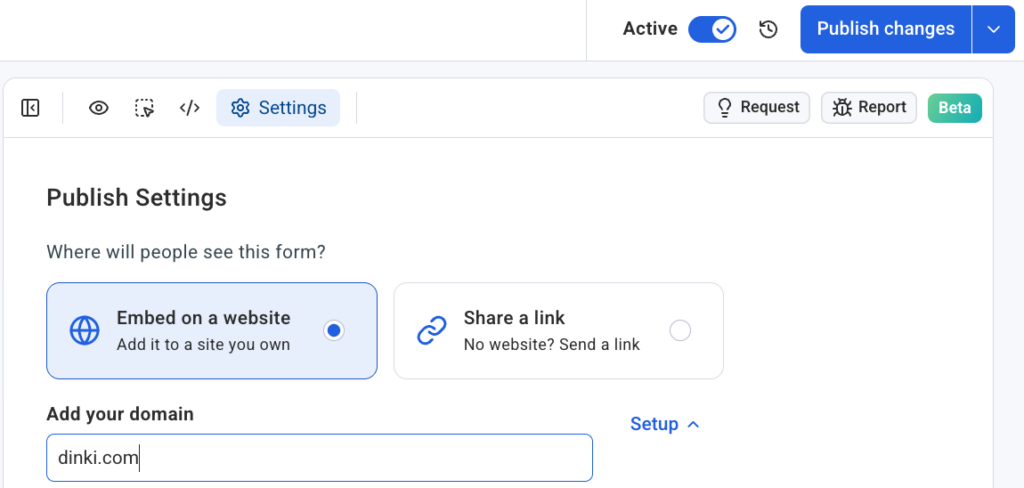
- Access Settings Tab: Within the form editor, users navigate to the ‘Settings’ tab, which houses deployment options. This centralized control panel ensures all publication-related configurations are easily accessible.
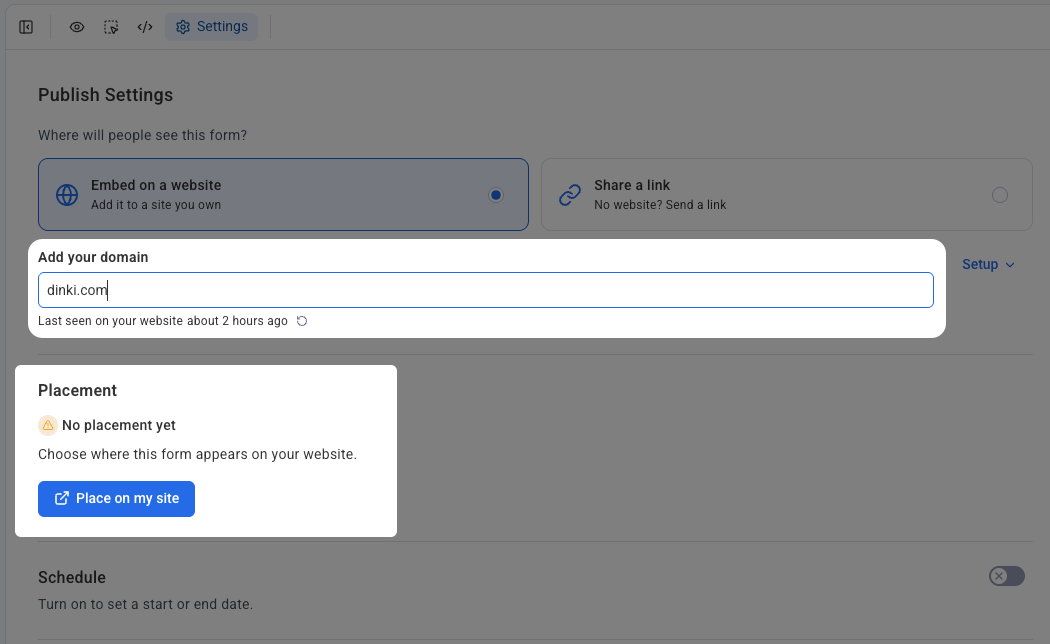
- Set Domain and Confirm Snippet Installation: Users specify the domain where the form is intended to appear. Crucially, this step also reminds them to confirm that the AWeber signup form snippet is already installed on their website. This universal JavaScript snippet, a single line of code, acts as the bridge between AWeber’s platform and the user’s website, enabling dynamic content injection and visual placement without requiring individual form codes for each instance. This snippet only needs to be installed once per domain, making subsequent form deployments incredibly efficient.
- Click "Place on my site": This button initiates the visual placement mode. AWeber’s system then securely connects to the specified domain, preparing the live page for interactive form placement.
- Visual Placement and Confirmation: The user’s live website opens in a new window or overlay, featuring an active placement widget. This is not a simulated preview or a wireframe; it is the actual, live web page. Users can scroll through their content, identify the precise section or paragraph where they wish to embed the form, and simply click on that location. A visual indicator confirms the selection. A final click on "Confirm placement" then instantly publishes the form to that exact spot on the live site. The immediacy and accuracy of this visual interaction are what set this feature apart, ensuring the form appears exactly where intended, without any guesswork or trial-and-error coding.
This four-step process redefines form deployment, transforming it from a technical chore into an intuitive design decision. The ability to interact directly with the live site ensures perfect alignment with existing content and design, enhancing the overall user experience and conversion potential.
Broad Compatibility: Reaching Across the Web Ecosystem
A significant advantage of AWeber’s new visual placement tool is its broad compatibility across a diverse range of self-hosted website platforms. This includes industry giants like WordPress, e-commerce powerhouses such as Shopify, user-friendly builders like Wix and Squarespace, and many other custom or proprietary content management systems. This universal applicability is achieved through the aforementioned single signup form snippet, which acts as a lightweight, persistent connection between AWeber and the website.
For individuals managing multiple websites, such as agencies, consultants, or entrepreneurs with diverse online presences, this feature offers immense value. Each domain can be independently connected and managed within AWeber’s settings, ensuring that forms and their placements remain organized and specific to their respective properties. This eliminates the confusion and potential errors associated with managing multiple code snippets across different sites, fostering a more streamlined and efficient workflow. The flexibility to deploy forms across various platforms without platform-specific integrations or plugins positions AWeber as a versatile solution for a wide array of digital marketing needs.
The Strategic Advantage: Maximizing Conversions and Engagement
The strategic placement of signup forms is a critical factor in optimizing conversion rates. Research consistently shows that contextually relevant forms, integrated seamlessly into content, significantly outperform intrusive pop-ups or static sidebar elements for certain types of engagement. An inline form, positioned strategically within an article where a reader is already absorbing valuable information, capitalizes on their heightened interest and engagement. For example, placing a form after a compelling section that solves a problem or offers an insight directly related to the email list’s value proposition can lead to much higher conversion rates than a form that appears out of context.
According to a study by OptinMonster, inline forms can convert at rates significantly higher than traditional sidebar forms, especially when placed strategically within highly engaging content. While exact figures vary, some reports suggest conversion rates for inline forms can range from 1% to 5%, with highly optimized forms reaching even higher. The key is relevance and timing. AWeber’s visual placement tool empowers marketers to experiment with these critical factors, testing different locations to discover what resonates most with their specific audience.
Moreover, the "no code required" aspect significantly reduces friction, not just for the marketer creating the form, but also for the website visitor. A well-integrated inline form feels less like an interruption and more like a natural extension of the content, enhancing the overall user experience. This reduction in cognitive load and perceived intrusion can lead to a more positive interaction, fostering trust and encouraging subscriptions. By eliminating the technical barriers to optimal placement, AWeber is directly contributing to marketers’ ability to leverage content effectively for subscriber growth.
Industry Reactions and Future Implications
The announcement from AWeber has been met with positive anticipation within the digital marketing community. Industry analysts are highlighting the feature as a significant step forward in marketing automation and user experience design. "AWeber’s new AI-powered visual form placement is a game-changer for marketers who’ve struggled with the technicalities of web development," stated Dr. Eleanor Vance, a prominent marketing technology consultant. "It democratizes advanced web design, allowing even small businesses to deploy sophisticated lead capture strategies that were once the exclusive domain of larger organizations with dedicated development teams. This is a clear indication of how AI is simplifying complex tasks and making powerful tools accessible to everyone."
Chris Vasquez, the author of the original announcement and likely a key figure in AWeber’s product development, would likely emphasize the company’s commitment to empowering its users. A hypothetical statement from Vasquez might read: "Our goal at AWeber has always been to make email marketing accessible and effective for everyone. With our new AI Signup Form Builder’s visual placement feature, we’re taking a giant leap forward in that mission. We believe that marketers should be focused on creating great content and engaging with their audience, not wrestling with code. This update empowers them to place their forms exactly where their readers are, turning engaged attention into valuable subscribers with unparalleled ease."
This development also has broader implications for the competitive landscape of email marketing platforms. As AI integration becomes more sophisticated, platforms that offer intuitive, no-code solutions for complex tasks will gain a significant competitive edge. AWeber’s move positions it at the forefront of this trend, potentially setting a new standard for how email signup forms are created and deployed across the web. It signals a future where marketing tools are not just automated, but intelligently guided, making sophisticated strategies achievable for a broader user base.
Empowering Marketers: The Democratization of Advanced Web Tools
In conclusion, AWeber’s introduction of AI-powered visual inline form placement represents a significant leap forward in the field of email marketing and web design. By combining the power of artificial intelligence with an intuitive visual editor, AWeber has effectively removed the technical barriers that once hindered marketers from optimizing their lead generation efforts. This innovation allows businesses of all sizes, from solo entrepreneurs to large enterprises, to strategically place highly effective signup forms directly within their most engaging content, without needing any coding knowledge.
The ability to create forms in seconds through custom prompts, fill-in-the-blanks, or a template gallery, and then deploy them with just four clicks directly onto a live site, fundamentally changes the workflow for marketers. It saves invaluable time, reduces reliance on developers, and ensures that forms are seamlessly integrated into the user experience across various platforms like WordPress, Shopify, Wix, and Squarespace. This strategic advantage, backed by data indicating higher conversion rates for contextually relevant inline forms, positions AWeber as a leader in providing accessible, cutting-edge solutions. As digital marketing continues to evolve, AWeber’s commitment to leveraging AI for user empowerment ensures that businesses can effectively turn website visitors into loyal subscribers, putting their forms exactly where their readers already are.








