

The modern recruitment landscape has shifted from a passive “post and pray” model to a highly competitive performance marketing environment where companies frequently pay upwards of $5.00 per click to drive traffic to job postings. Despite these significant investments in digital advertising, many organizations face a “leaky bucket” problem: prospective candidates click on high-quality ads only to land on generic, cluttered career pages, leading to immediate abandonment and wasted marketing budgets. The disconnect between the initial advertisement and the destination page has become a primary bottleneck in talent acquisition, necessitating the rise of specialized recruitment landing pages designed for a single objective—converting visitors into applicants.
The Evolution of Digital Recruitment and the UX Crisis
Historically, the online recruitment process was centralized on massive job boards and broad corporate career portals. In the early 2000s, simply having a digital presence was sufficient. However, as the digital economy matured, the “Candidate Experience” (CX) became a critical metric for HR departments. By 2024, data indicates that approximately 60% of job seekers quit an application midway through because of its length or complexity.
The transition from traditional career sites to recruitment landing pages represents a fundamental shift in strategy. While a career site serves as a general information hub about a company’s culture and various departments, a recruitment landing page is a standalone, focused environment. It removes the “paradox of choice” by eliminating navigation menus and unrelated job listings, keeping the candidate focused entirely on the specific role they expressed interest in via the advertisement.
Strategic Pillars of High-Performing Recruitment Landing Pages
To mitigate the high cost-per-applicant, talent acquisition leaders are adopting principles from the world of e-commerce and SaaS (Software as a Service) marketing. The following best practices have emerged as the standard for reducing friction and increasing completion rates.
The Message Match Imperative
The concept of “message match” is the foundation of trust in digital recruitment. If a candidate clicks a LinkedIn ad promising a “Remote Senior Developer” role with a specific salary range, the landing page must immediately reinforce that specific promise in the H1 headline. Discrepancies between the ad copy and the landing page copy create cognitive dissonance, leading candidates to believe the offer was misleading or that the link was broken. Journalistic analysis of high-performing campaigns shows that maintaining consistent branding, tone, and specific value propositions across the entire funnel can increase conversion rates by up to 25%.
Above-the-Fold Prioritization
In the attention economy, the first 600 pixels of a webpage—the area visible without scrolling—dictate the user’s next move. Effective recruitment pages place the job title, the primary benefit (e.g., “Start Earning Today,” “Full Health Coverage”), and a clear Call to Action (CTA) button in this space. Trust signals, such as “Top 100 Places to Work” badges or “4.5/5 Glassdoor Rating,” are also strategically placed here to provide immediate social proof.
Minimizing Form Friction
Data from recruitment analytics platforms suggests that every additional field in an application form can decrease the conversion rate by 5% to 10%. The industry standard for initial recruitment landing pages has shifted toward a “short-form” approach, typically requiring only three to five fields: name, email, phone number, and a resume upload. For high-volume roles, such as those in the gig economy, companies often utilize a multi-step process where the email is captured first, allowing the recruitment team to follow up with “abandoned cart” style emails if the candidate does not complete the full application.
Case Studies: Industry Leaders in Candidate Conversion
An examination of top-tier recruitment pages reveals a consistent focus on simplicity and mobile-first design. Companies operating in the gig and freelance sectors, where the volume of hiring is immense, have perfected this architecture.
Uber and the Efficiency of Onboarding
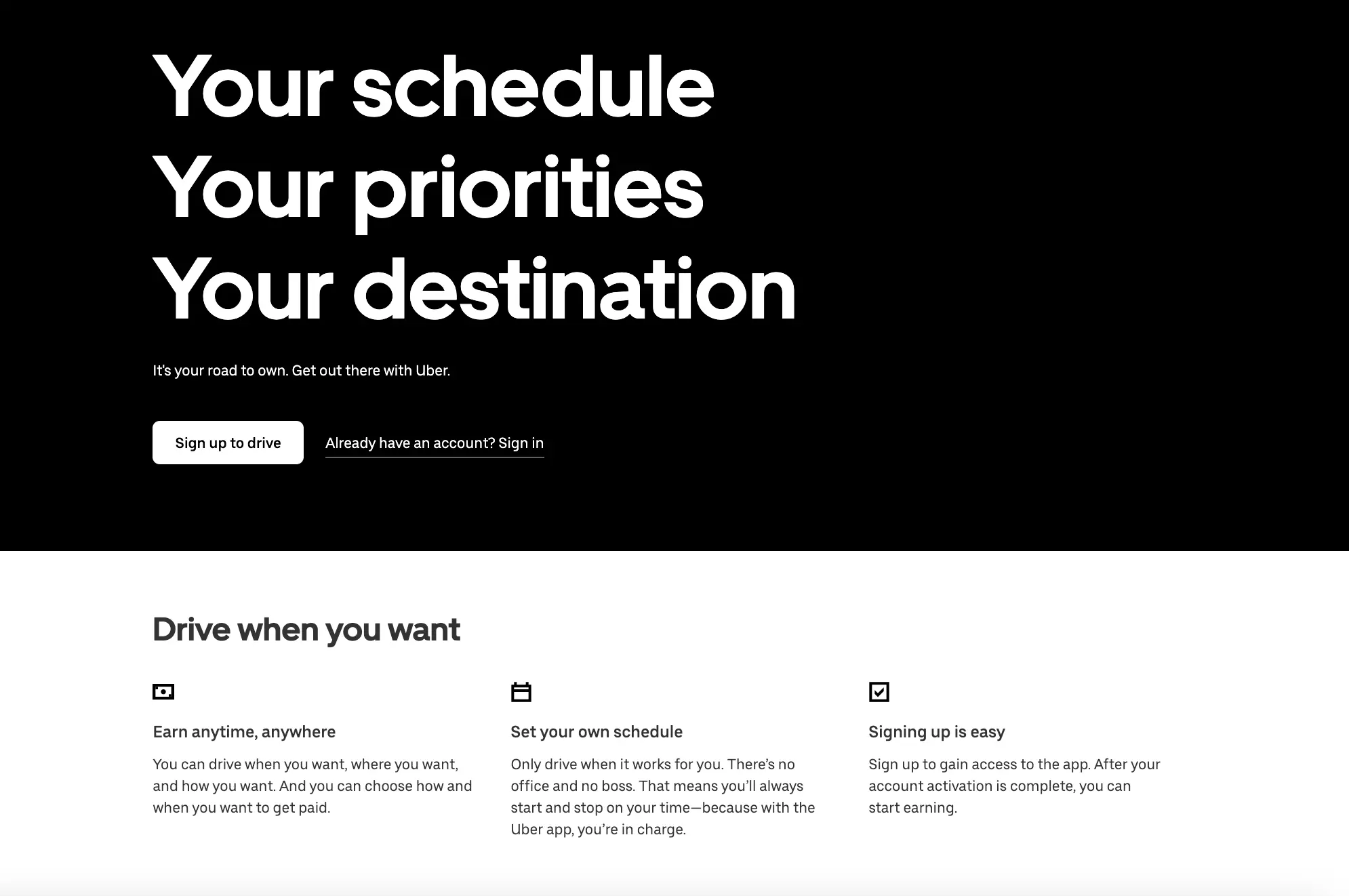
Uber’s driver recruitment page is often cited as a benchmark for the industry. It utilizes a “minimalist” aesthetic that emphasizes the primary benefit: flexibility. The page features a prominent sign-up box directly adjacent to a hero image that reflects the target demographic. By removing the standard corporate navigation menu, Uber ensures that the user has only two choices: sign up or leave. This binary environment is highly effective for mobile users who may be browsing during short breaks.
Lyft and the Power of Financial Incentives
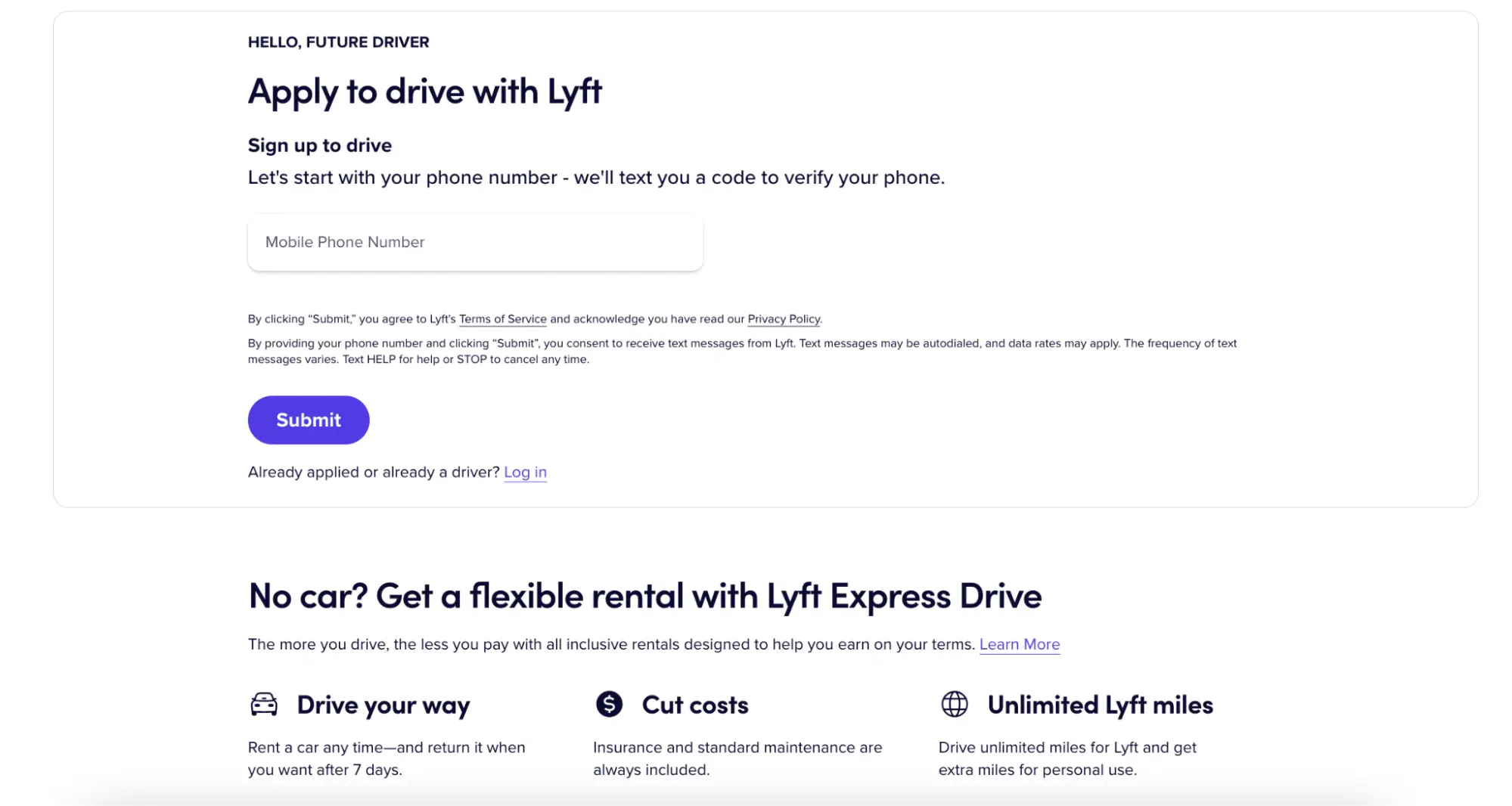
Lyft’s strategy differs slightly by leaning heavily into earnings transparency. Their landing pages often include earnings calculators or bold statements regarding sign-on bonuses. This direct address of the candidate’s primary motivation—compensation—reduces the time spent searching for information and accelerates the decision-making process.
DoorDash and Instacart: Visualizing the Workflow
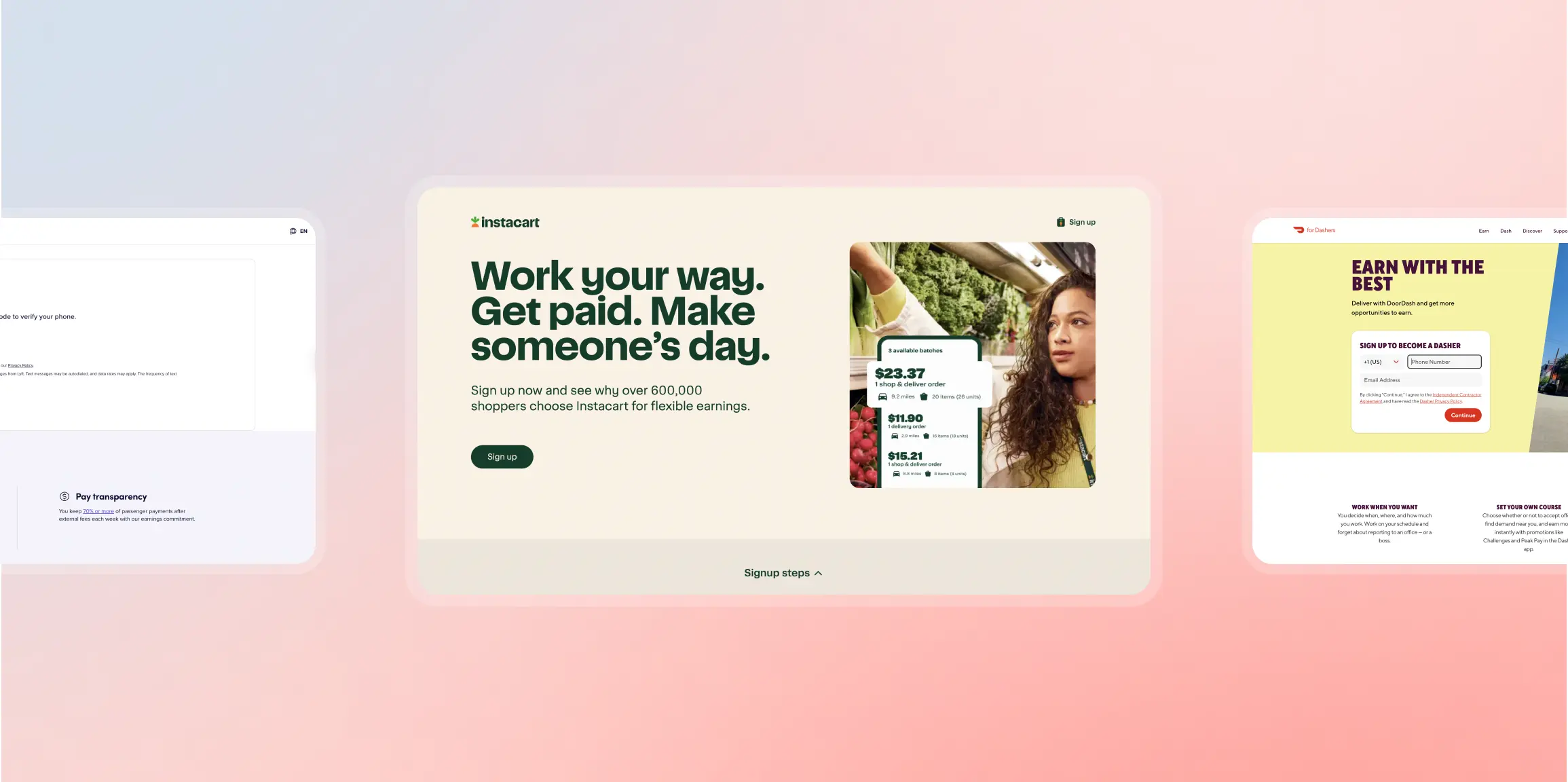
For these delivery platforms, the recruitment landing page serves as a brief “how-it-works” guide. By including three simple icons or steps (Sign Up, Get Verified, Start Delivering), they demystify the process for the candidate. This visual storytelling reduces the perceived effort required to apply, which is a major factor in mobile conversion rates.
The Technical Infrastructure: Mobile Speed and Performance
As of late 2023, over 70% of initial job searches and ad clicks originate from mobile devices. This shift has made page load speed a critical factor in recruitment success. Google’s research indicates that 53% of mobile visits are abandoned if a page takes longer than three seconds to load.
Recruitment landing pages must be optimized using Content Delivery Networks (CDNs) and compressed visual assets to ensure near-instantaneous loading. Furthermore, the removal of heavy scripts and complex navigation menus not only helps with candidate focus but also significantly boosts technical performance scores, which can lower the Cost Per Click (CPC) in platforms like Google Ads and Meta.
The Role of A/B Testing in Recruitment ROI
The most successful talent acquisition teams do not rely on intuition; they rely on experimentation. A/B testing (or split testing) involves running two versions of a landing page simultaneously to see which performs better.
Priority Variables for Testing
- Headlines: Testing a benefit-driven headline (e.g., “Earn More with Flexible Hours”) against a role-driven headline (e.g., “Now Hiring Delivery Drivers”).
- CTA Color and Copy: Comparing “Apply Now” vs. “Get Started” or “Join the Team.”
- Social Proof: Measuring the impact of adding video testimonials from current employees versus static text reviews.
- Form Length: Analyzing the trade-off between lead quality and lead quantity when adding or removing form fields.
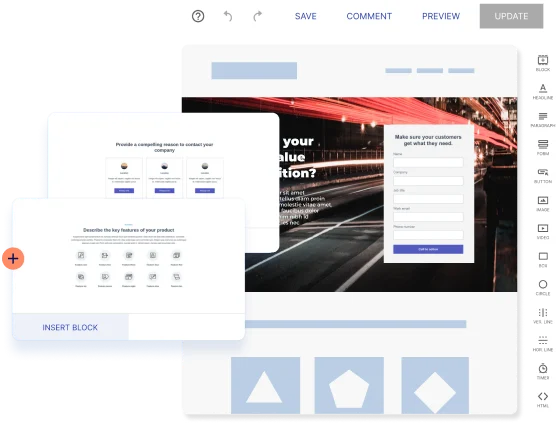
Using platforms like Instapage, recruitment marketers can deploy AI-driven experiments that automatically route more traffic to the winning variation, ensuring that the recruitment budget is always being utilized on the most effective version of the page.

Industry Implications and Future Outlook
The professionalization of recruitment landing pages signals a broader trend: the convergence of Human Resources and Digital Marketing. Organizations are increasingly hiring “Recruitment Marketers” whose primary KPIs are conversion rates and cost-per-hire rather than traditional HR metrics.
As artificial intelligence continues to integrate with recruitment technology, we can expect to see “Dynamic Page Replacement” and “Hyper-Personalization.” In this future state, a landing page might automatically adjust its imagery and testimonials based on the candidate’s geographic location or the specific keywords they used in their search query.
The move toward dedicated recruitment landing pages is no longer a luxury for large tech firms; it is a necessity for any organization looking to remain competitive in a tight labor market. By treating candidates like customers and the job application like a product purchase, companies can significantly reduce their acquisition costs and build a more robust talent pipeline.
Summary of Strategic Requirements
For organizations looking to implement or optimize their recruitment landing pages, the following checklist serves as a roadmap:

- Eliminate the “Exit”: Remove all links that do not lead to the application, including header and footer navigation.
- Mobile-First Design: Ensure the form is easy to type into on a smartphone screen and that the page loads in under three seconds.
- The Three-Second Rule: A candidate should understand the role, the location, and the primary benefit within three seconds of landing on the page.
- Verify Trust: Include at least one element of social proof or a third-party validation (e.g., Better Business Bureau, Glassdoor, or industry awards).
- Continuous Optimization: Never consider a page “finished.” Use ongoing A/B testing to combat ad fatigue and respond to changing market conditions.
By adhering to these journalistic and marketing standards, companies can transform their recruitment process from a significant financial drain into a streamlined, data-driven engine for organizational growth.







