The opioid epidemic represents one of the most significant public health challenges in modern American history, characterized by a staggering increase in drug overdose deaths and a fundamental shift in the landscape of substance abuse. What began in the late 1990s as a surge in prescription opioid misuse has evolved into a multifaceted crisis involving heroin and highly potent synthetic opioids like fentanyl. To understand the gravity of this situation, analysts and public health officials have increasingly turned to comprehensive datasets to map the trajectory of the epidemic, identify demographic vulnerabilities, and compare the domestic situation against global trends. A critical examination of data from the Centers for Disease Control and Prevention (CDC), the United Nations Office on Drugs and Crime (UNODC), and demographic studies reveals a crisis that is not only unique in its scale within the United States but also distinct in its lethality compared to other forms of substance abuse.
The Genesis of the Crisis and the Power of Investigative Journalism
The public consciousness regarding the opioid epidemic was significantly sharpened by investigative efforts, most notably the Pulitzer Prize-winning report "Seven Days of Heroin" by the Cincinnati Enquirer. This exhaustive piece of journalism documented a single week in the life of Greater Cincinnati, a region ravaged by the crisis, recording the sheer volume of overdoses, arrests, and the collateral damage to families and the healthcare system. Such reporting serves as a qualitative foundation for what the data confirms quantitatively: the opioid crisis is an omnipresent force affecting every level of society.
The transition from prescription medication to illicit substances followed a predictable yet tragic pattern. As regulations tightened around prescription painkillers like oxycodone and hydrocodone, individuals already suffering from opioid use disorder frequently turned to heroin as a cheaper and more accessible alternative. This shift marked the "second wave" of the epidemic, which has since been eclipsed by a "third wave" characterized by the introduction of illicitly manufactured fentanyl into the drug supply. Fentanyl, a synthetic opioid 50 to 100 times more potent than morphine, has dramatically increased the risk of fatal overdose, often being mixed into other drugs without the user’s knowledge.
Global Comparisons: The United States as a Statistical Outlier
When viewed through a global lens using UNODC data, the United States stands out as the primary epicenter of overdose deaths. While drug abuse is a universal issue, the mortality rate associated with drug use in the U.S. is disproportionately high compared to other developed nations. In terms of absolute numbers and per capita rates, the U.S. consistently leads the global pack.
Comparative analysis shows that while countries like Sweden, Australia, and El Salvador report high rates of drug-related deaths per million people, their figures remain significantly lower than those in the United States—often less than half the American rate. Iceland appears as a statistical outlier in many datasets; due to its very small population, a relatively low number of deaths (approximately 45 in certain reporting periods) results in a high per-million mortality rate. However, the systemic nature of the American crisis, which sees tens of thousands of deaths annually, suggests a deeper societal and systemic vulnerability.
The factors contributing to the U.S. lead in these statistics are complex. They include the historical over-prescription of opioids, a fragmented healthcare system that often prioritizes pharmacological intervention over holistic pain management, and a robust illicit market for synthetic substances. Unlike many European nations that utilize harm reduction strategies such as supervised injection sites and widespread drug testing, the U.S. response has historically focused more on law enforcement, though this has begun to shift toward public health interventions in recent years.
Demographic Vulnerabilities and the Lethality of Heroin
Data from FiveThirtyEight regarding drug use by age provides a startling insight into the specific nature of heroin compared to other illicit substances. While drugs like cocaine and crack show a broader distribution of use across older age groups, heroin use is most intensely concentrated among individuals aged 20 to 34. This concentration among younger adults is particularly concerning given the drug’s high lethality.
The data suggests a grim correlation: heroin has a relatively small number of active users compared to other drugs, yet it accounts for a disproportionately high percentage of total overdose deaths. This "lethality gap" distinguishes heroin from substances with higher adoption rates but lower immediate mortality risks. For instance, while marijuana or certain stimulants may have millions more users, the physiological impact of opioids on the respiratory system makes them uniquely dangerous. The data indicates that for many users, the window of "active use" is tragically short because the risk of a fatal encounter with the drug is so high, particularly in an era where the supply is frequently contaminated with fentanyl.
Geographic Trends and State-Level Developments
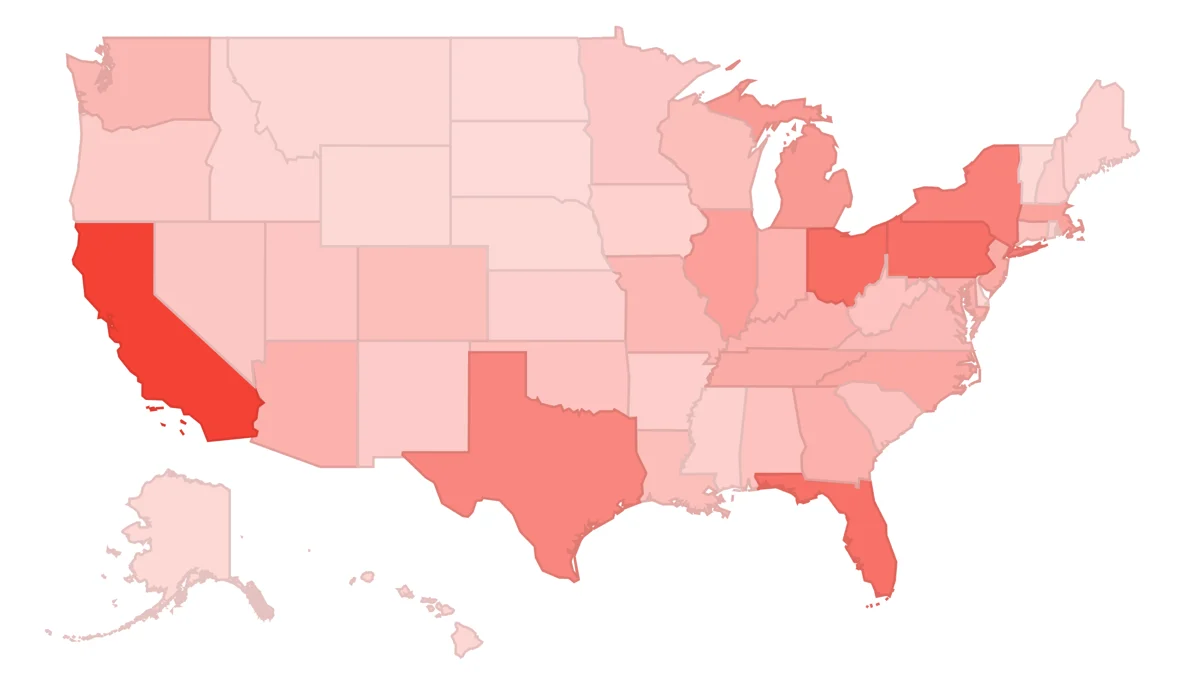
An analysis of CDC drug overdose death data highlights significant geographic disparities across the United States. The epidemic does not affect all states equally, and the trends of improvement or deterioration vary wildly based on local policy, economic conditions, and drug trafficking routes.
Historically, the "Rust Belt" and Appalachian regions—including states like West Virginia, Ohio, and Pennsylvania—have seen the highest concentrations of opioid-related fatalities. These areas were hit hard by the decline of manufacturing and mining industries, leading to economic "deaths of despair." However, recent data indicates that the crisis is migrating. While some Eastern states have seen a plateau or slight decrease in deaths due to aggressive Narcan (naloxone) distribution and expanded treatment access, Western states that were previously less affected are now seeing rapid increases in synthetic opioid deaths.
The development trends at the state level provide a roadmap for where resources are most urgently needed. States that have implemented comprehensive prescription drug monitoring programs (PDMPs) and expanded Medicaid have, in some instances, seen a slowing in the rate of increase, though the overall death toll remains at historic highs.
Chronology of the Opioid Epidemic
To understand the current state of the crisis, it is essential to view it as a chronological progression of three distinct phases:
- The First Wave (Late 1990s): Triggered by the over-prescription of legal opioid painkillers. Pharmaceutical companies assured the medical community that these medications were not addictive, leading to widespread use for chronic pain management.
- The Second Wave (2010): Characterized by a rapid increase in heroin-related deaths. As the medical community became aware of the addiction risks and tightened prescriptions, individuals shifted to the illicit market.
- The Third Wave (2013-Present): Defined by the surge in synthetic opioids. The introduction of illicitly manufactured fentanyl has caused the mortality rate to spike, as even small amounts can be fatal. This wave has seen the crisis expand into urban, suburban, and rural areas alike, affecting every demographic.
Broader Economic and Social Implications
The impact of the opioid crisis extends far beyond the loss of life. The economic burden is estimated to be in the hundreds of billions of dollars annually. This includes healthcare costs for treating overdoses and neonatal abstinence syndrome, the costs associated with the criminal justice system, and the massive loss of productivity in the workforce.
Socially, the crisis has strained the foster care system as thousands of children are removed from homes where parents are struggling with addiction or have succumbed to overdose. Furthermore, the epidemic has contributed to a decline in overall U.S. life expectancy, a rare phenomenon in developed nations during peacetime.
Official responses have become more coordinated in recent years. The Department of Health and Human Services (HHS) has declared the crisis a public health emergency, and the CDC has issued stricter guidelines for prescribing opioids for chronic pain. However, experts argue that the response still lags behind the evolving nature of the synthetic drug market.
Conclusion: The Role of Data in Shaping the Future
The use of data visualization tools and comprehensive datasets is more than an academic exercise; it is a vital component of the public health response. By mapping trends and patterns, analysts can identify which interventions are working and where new threats are emerging. The data confirms that the U.S. opioid crisis is a unique phenomenon in its scale and lethality, requiring a multifaceted approach that combines law enforcement, healthcare reform, and social support.
As the global community watches the American experience, the lessons learned from these datasets serve as a warning and a guide. The transition from words and videos to hard data allows for a clearer grasp of the "full picture," removing the fog of anecdote and revealing the cold reality of an ongoing epidemic. For policymakers and analysts alike, the goal remains the same: to use these insights to implement strategies that save lives and eventually reverse the tide of this devastating crisis.