
 rifanmuazin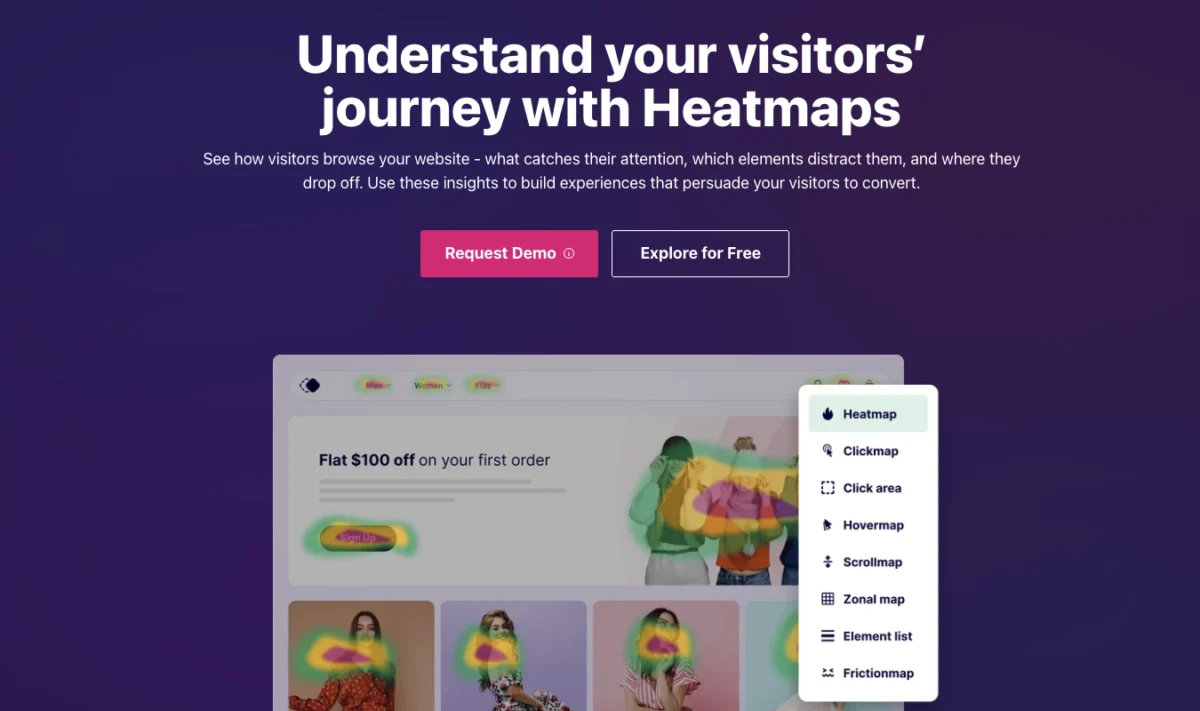
The landscape of digital experience optimization is undergoing a seismic shift as two of the industry’s most prominent players, AB Tasty and VWO, move toward a unified future. While the organizations have announced plans to combine their platforms, the current market reality presents two distinct ecosystems, each catering to different organizational needs and technical workflows. This consolidation marks a significant milestone in the evolution of the software-as-a-service (SaaS) experimentation market, which is increasingly focused on bridging the gap between marketing-led visual changes and engineering-led product development.
For years, the conversion rate optimization (CRO) industry was divided into two camps: those who prioritized behavioral insights and those who focused on feature management. AB Tasty has traditionally positioned itself as a powerhouse for product and marketing teams seeking a robust system for experimentation and feature rollouts. Conversely, VWO (Visual Website Optimizer) has built its reputation on a foundation of tightly integrated behavior analytics, offering tools like heatmaps and session recordings to explain the psychological "why" behind user actions. As these two entities merge, businesses are faced with a complex choice of which legacy workflow best suits their current digital maturity.
The Evolution of Experimentation: A Market Chronology
The journey toward the current state of experimentation tools began in the early 2010s when basic A/B testing was a novelty. At that time, tools were primarily "client-side," meaning they relied on JavaScript snippets to swap out headlines or button colors in a user’s browser. As the digital economy matured, the "Amazon effect"—the expectation of constant, data-driven improvement—forced companies to look deeper.
By 2018, the industry saw a shift toward "server-side" testing, allowing product teams to test core backend logic and new features without affecting site performance or risking "flicker" effects. AB Tasty leaned heavily into this transition, developing a sophisticated feature management suite. During the same period, VWO expanded its "Insights" capabilities, recognizing that data without context was insufficient for high-growth e-commerce and SaaS brands. The recent announcement of their merger represents a strategic response to the dominance of enterprise suites like Adobe Target and Optimizely, aiming to provide a more agile, yet comprehensive, alternative for the mid-market and enterprise segments.
Technical Architecture and Experimentation Engines
When dissecting the technical merits of AB Tasty and VWO, the primary differentiator lies in the separation of concerns. AB Tasty utilizes a highly structured two-layer system. The first layer is dedicated to client-side web experimentation, designed for marketers to execute rapid UI/UX tests without heavy engineering intervention. The second layer focuses on server-side feature experimentation, which is built for product and engineering teams. This allows organizations to test actual product functionality—such as a new search algorithm or a checkout logic change—rather than just cosmetic variations.
VWO approaches experimentation through a lens of total integration. While it supports A/B testing, split URL testing, and multivariate testing (MVT) similar to AB Tasty, its core strength is its SmartStats tool. Built on Bayesian statistics, VWO’s engine is designed to provide actionable results faster by calculating the probability of a variation beating the baseline. However, VWO’s most compelling technical advantage is the direct link between an experiment and its behavioral data. In the VWO ecosystem, an experiment is not just a data point in a spreadsheet; it is a direct link to a session recording of a user interacting with that specific variation.
Personalization and Audience Targeting Strategies
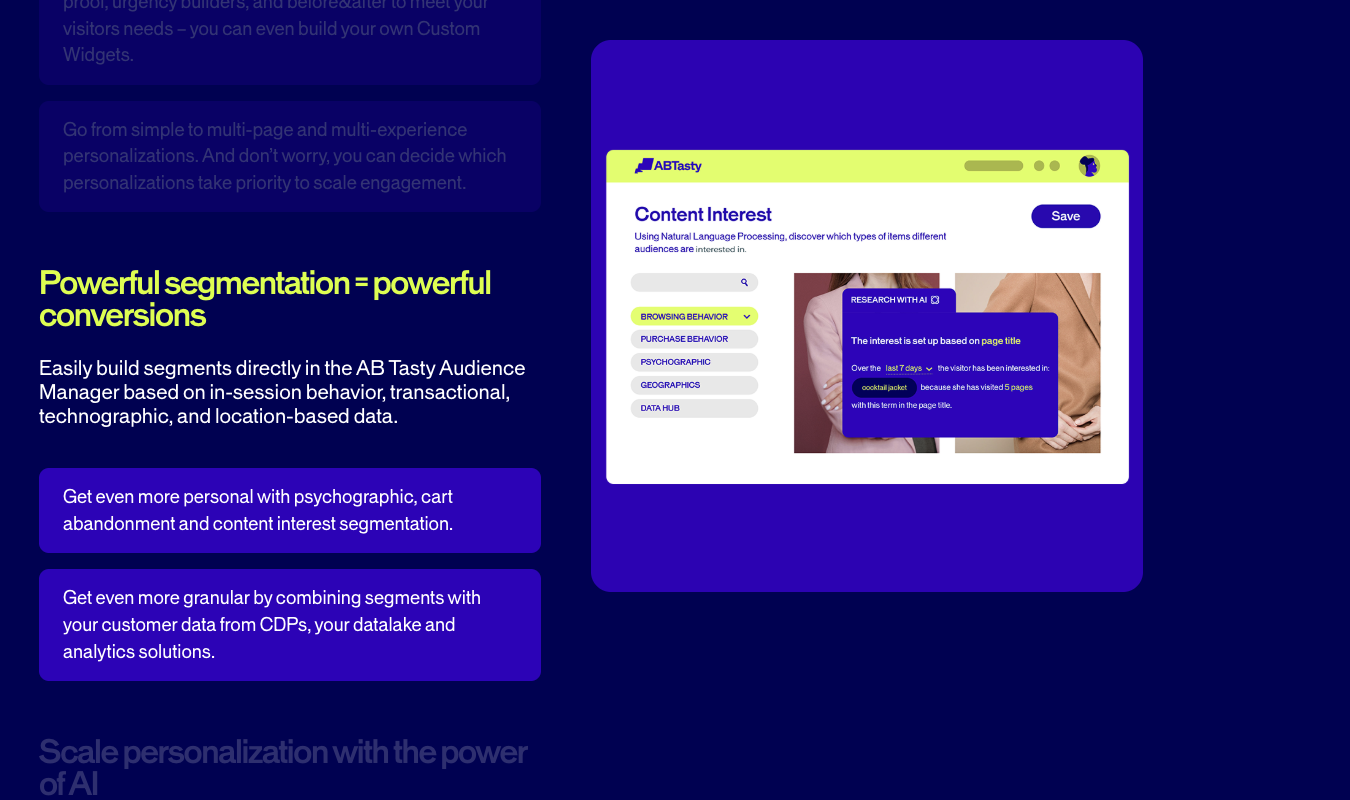
In the modern digital landscape, generic experiences often lead to high bounce rates. Both platforms have invested heavily in personalization, though their methodologies differ. AB Tasty treats personalization as a core pillar of its platform. It features a highly structured system that includes advanced segmentation, behavioral triggers, and dynamic widgets. One of its standout features is "campaign prioritization." In a complex environment where a single user might qualify for an A/B test, a feedback prompt, and a personalization campaign simultaneously, AB Tasty allows teams to set override rules. This ensures that the user experience remains coherent and that data from various experiments is not "polluted" by overlapping triggers.
VWO’s personalization capabilities are positioned as a component of its broader optimization suite. It offers robust targeting—allowing brands to show different content based on location, device, or past behavior—but it functions as one tool among many. For organizations that rely on a data-driven feedback loop, VWO’s personalization is often informed by its "Insights" module. For instance, if a heatmap shows that users in a specific region are ignoring a primary CTA, a personalization campaign can be launched specifically for that segment to test an alternative layout.
Feature Management and the DevOps Integration
The divide between AB Tasty and VWO is perhaps most visible in the realm of "Feature Flags" and "Rollouts." AB Tasty has developed a sophisticated "Feature Experimentation & Rollout" product that caters specifically to the DevOps and Product Management lifecycle. This system allows teams to perform "progressive releases," where a new feature is initially exposed to only 5% of the audience. If the system monitors a drop in performance or an increase in error rates, the "rollback" control can instantly disable the feature.
VWO’s foray into feature management is more recent and leans toward code-heavy implementations. While it supports server-side testing, it lacks the specialized "safety-net" infrastructure that AB Tasty provides for large-scale product deployments. Industry analysts suggest that this specific gap is likely one of the primary drivers behind the merger, as it allows VWO to absorb AB Tasty’s superior rollout technology while providing AB Tasty users with VWO’s market-leading analytics.
The Behavioral Analytics Gap
For many digital marketers, the lack of native behavioral analytics is a significant hurdle. AB Tasty does not offer built-in heatmaps, session recordings, or funnel analytics. Users of AB Tasty must integrate with third-party tools to understand why a variation failed. This can lead to data silos and fragmented workflows.
VWO, however, views behavioral analytics as the "North Star" of optimization. Its suite includes:
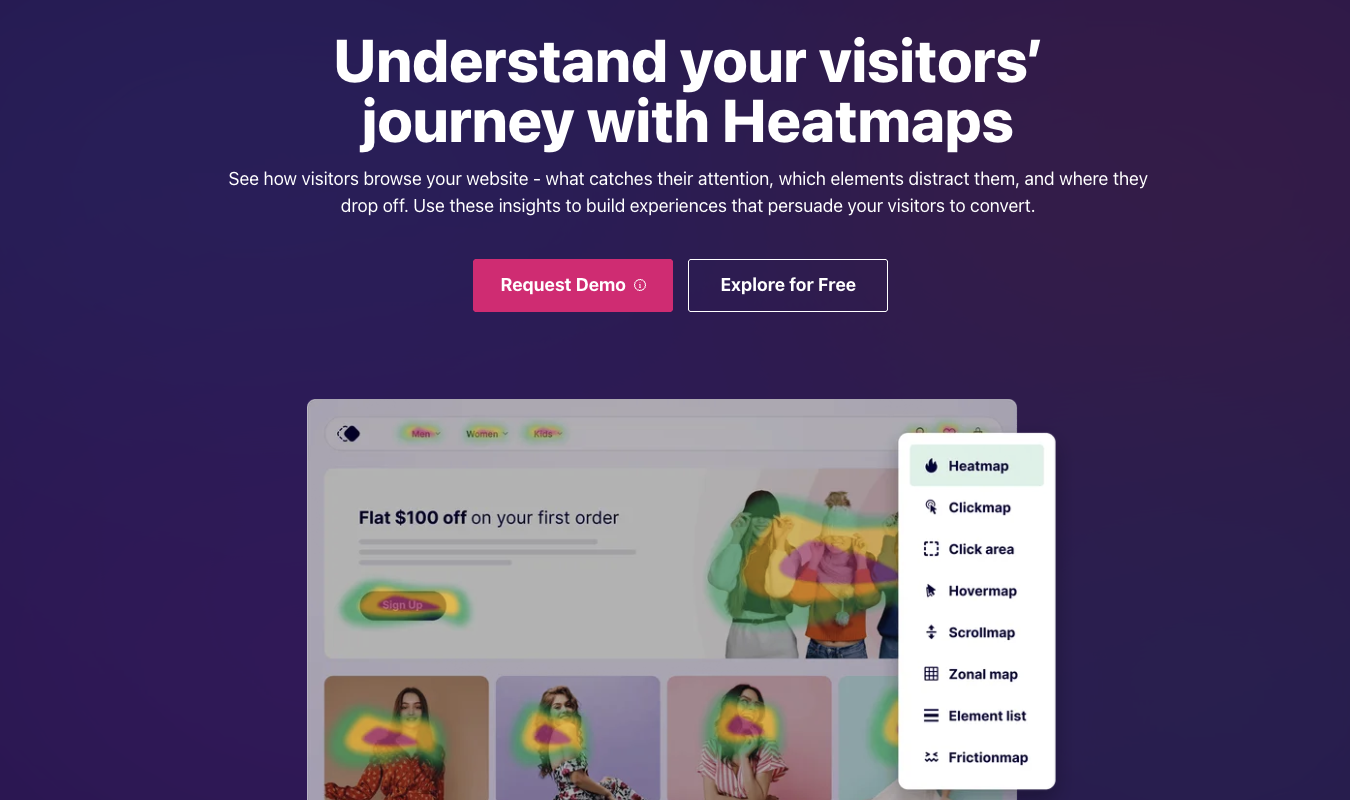
- Dynamic Heatmaps: Visual representations of where users click, scroll, and move their cursors.
- Session Recordings: Individual playbacks of user journeys to identify "friction points" and "rage clicks."
- Conversion Funnels: Detailed tracking of where users drop off in a multi-step process, such as a signup flow.
- Form Analytics: Insights into which specific fields in a form are causing users to abandon the process.
This integrated approach allows a team to spot a drop-off in a funnel, immediately watch recordings of users at that specific step, form a hypothesis, and launch an A/B test—all without leaving the VWO interface.
Pricing Models and Market Value
The pricing strategies of both companies reflect their enterprise-leaning nature. Neither AB Tasty nor VWO publishes a universal price list, opting instead for custom quotes based on traffic volume, feature requirements, and the level of support needed.
AB Tasty generally follows an enterprise sales model, bundling its experimentation, personalization, and rollout capabilities into a single platform fee. This model is often preferred by large organizations that want predictable costs for a comprehensive suite. VWO utilizes a more modular "pay-for-what-you-need" approach. A company might start with the VWO Insights package and later add VWO Testing or VWO Personalize as their needs evolve. VWO also offers a free trial for several of its products, making it more accessible for smaller teams or those looking to prove value before committing to a significant investment.
Broader Industry Implications and Final Analysis
The consolidation of AB Tasty and VWO is a clear signal that the market for "point solutions"—tools that do only one thing—is shrinking. Modern digital teams require a "Digital Experience Platform" (DXP) that can handle the entire lifecycle of an improvement, from initial observation to final feature rollout.
For organizations currently choosing between the two, the decision rests on the primary user of the tool. If the priority is empowering a product and engineering team to manage complex feature releases and risk-mitigated rollouts, AB Tasty remains the stronger candidate. If the goal is to build a culture of experimentation led by data-driven marketing insights and deep psychological understanding of the user, VWO’s integrated analytics suite offers a more cohesive workflow.
As the merger progresses, the industry expects a unified platform that combines VWO’s "Insights" with AB Tasty’s "Rollouts." Until that full integration is complete, businesses must weigh the immediate benefits of behavior-led testing against the long-term stability of feature-led experimentation. In a competitive digital economy where a 1% increase in conversion can represent millions in revenue, the choice of infrastructure has never been more critical. While alternatives like Crazy Egg offer a more streamlined, budget-friendly entry point for teams needing instant heatmaps and basic A/B testing, the AB Tasty-VWO powerhouse is clearly positioning itself to redefine the enterprise standard for digital excellence.








