rifanmuazin
In a move that has sent shockwaves through the global performance marketing industry, PayPal Honey, one of the world’s most prominent browser extensions and coupon aggregators, has been removed or suspended from two of the largest affiliate networks in the United States. The enforcement actions, taken by Rakuten Advertising and Impact.com, follow a series of high-profile investigations into the extension’s technical practices, specifically regarding “attribution manipulation” and violations of “stand-down” protocols. This development marks a significant turning point in the industry’s approach to compliance and the preservation of the “partnership economy.”
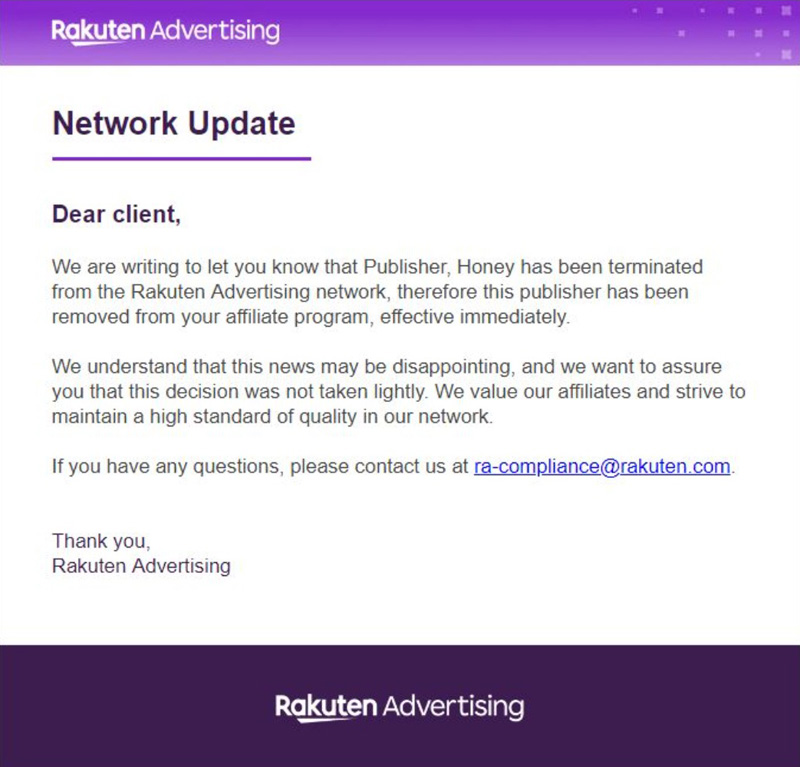
The timeline of these events coincides with the start of the 2026 calendar year, creating a heightened sense of urgency among industry professionals. On Monday, January 12, Rakuten Advertising officially announced that Honey had been “terminated from the network.” In its official communication, Rakuten characterized the move as a necessary step to “maintain a high standard of quality” within its ecosystem. Just four days later, on Friday, January 16, Impact.com followed suit, declaring that Honey was “out of compliance” with its platform policies and subsequently removing the publisher from its Discovery Marketplace. While Impact.com’s action was described as a suspension rather than a permanent termination, the message to the market was unequivocal: the industry’s tolerance for noncompliant behavior by major players has reached a breaking point.
The Catalyst: Investigative Reports and Technical Noncompliance
The regulatory actions against PayPal Honey were precipitated by a series of detailed technical investigations that gained significant traction on social media and within professional circles. Central to these findings were a video report by the creator known as MegaLag and an exhaustive investigation by Ben Edelman, a well-known researcher specializing in online transparency and affiliate fraud.
The investigations focused on a technical requirement known as the “stand-down” rule. In the affiliate marketing world, browser extensions are generally required to remain inactive—or “stand down”—if a consumer has already clicked on an affiliate link from another source, such as a content creator, blogger, or review site. This rule is designed to prevent “cookie overwriting,” a practice where a late-arriving affiliate (often an automated tool like a browser extension) replaces the tracking cookie of the original affiliate who actually drove the initial interest and traffic.
According to the findings, PayPal Honey allegedly engaged in intentional stand-down violations and concealment. The reports suggested that the extension would fire its own tracking links even when other affiliates were already present in the clickstream, effectively “hijacking” the attribution. By doing so, Honey would receive the commission for the sale, while the original content creator—who may have spent hours producing a product review or guide—would receive nothing. Impact.com’s CEO explicitly cited “attribution manipulation” as the primary driver behind the suspension, noting that such behavior undermines the fundamental trust required for a healthy partnership economy.
A Chronology of the Disruption
The timing of the initial removal by Rakuten Advertising added a layer of public relations complexity to the situation. The announcement occurred on the opening day of Affiliate Summit West, the largest affiliate marketing conference in the United States. As thousands of industry leaders gathered in Las Vegas, the news of Honey’s termination became the dominant topic of conversation both on the showroom floor and across social media platforms like LinkedIn and X (formerly Twitter).

- Early January 2026: Technical investigations by MegaLag and Ben Edelman circulate within the industry, detailing specific instances of stand-down violations by the PayPal Honey extension.
- January 12, 2026: Rakuten Advertising issues a formal notice of termination for PayPal Honey, citing the need to uphold network quality standards.
- January 13–15, 2026: The news dominates discussions at Affiliate Summit West. Brand managers and agency leaders begin auditing their own programs for similar vulnerabilities.
- January 16, 2026: Impact.com announces the suspension of Honey from its Discovery Marketplace, citing noncompliance with platform policies regarding attribution.
- Late January 2026: Industry associations, including the Performance Marketing Association (PMA) and the Affiliate & Partner Marketing Association (APMA), see a surge in interest regarding their attribution audits and DSP (Downloadable Software Publisher) policy comparisons.
Technical Analysis: The Mechanics of Attribution Hijacking
To understand the severity of the allegations, one must look at the “last-click” attribution model that dominates the industry. Under this model, the last affiliate to “touch” the customer before a purchase is made is awarded 100% of the commission. This creates a powerful incentive for publishers to be the final step in the user journey.
Browser extensions like Honey operate at the very end of the funnel. When a user is at the checkout page, the extension often pops up to offer a coupon code. If the extension fires an affiliate link at that moment, it becomes the “last click.” To protect top-of-funnel affiliates (like influencers and news sites), networks implement stand-down rules. These rules dictate that if a valid affiliate cookie is already present, the extension must not drop its own cookie.
The allegations against Honey suggest not just a failure to stand down, but an active effort to conceal these violations from network monitoring tools. This type of behavior is particularly damaging because it is often invisible to the merchant unless they are performing deep-packet inspection or using advanced third-party policing tools.
Industry Implications and the “Bad Apple” Effect
The removal of a publisher that was acquired by PayPal for $4 billion in 2020 highlights a growing tension between massive “super-affiliates” and the broader ecosystem of smaller content creators. Industry analysts suggest that the presence of a noncompliant “mega-publisher” can poison an entire affiliate program.
When high-quality, rule-abiding affiliates see that a brand allows a browser extension to “steal” their commissions through cookie overwriting, they often choose to leave the program or stop promoting the brand entirely. This results in a “race to the bottom” where a brand’s affiliate base becomes dominated by automated tools rather than genuine advocates and content creators.
Furthermore, the Honey case has prompted a re-evaluation of the role of affiliate networks in policing. While networks like Rakuten and Impact have taken a stand in this instance, many experts argue that brand managers cannot rely solely on network-level compliance departments. Networks often face a conflict of interest, as they earn overrides on the commissions generated by large publishers. Consequently, the burden of enforcement is shifting toward independent affiliate managers and specialized third-party auditing firms.
Lessons for Affiliate Program Management
The Honey controversy offers several critical lessons for brands looking to build sustainable affiliate programs in 2026 and beyond.
1. Independent Policing is Mandatory
Brands must realize that “Terms and Conditions” are only as effective as their enforcement. Relying on a network’s general compliance team is often insufficient. Successful programs now employ dedicated affiliate managers who use specialized tools to monitor for trademark bidding violations, stand-down failures, and unauthorized coupon usage.
2. Understanding Technical Nuance
The distinction between different types of Downloadable Software Publishers (DSPs) is vital. Not all browser extensions are “bad actors.” Some operate with strict “soft click” or “opt-in” requirements that respect the original affiliate’s contribution. Managers must take the time to understand the specific technology used by each partner rather than issuing blanket bans or, conversely, granting blanket approvals.
3. The Importance of Diversification
Perhaps the most significant takeaway is the danger of over-reliance on a single publisher or publisher type. Audits of many modern affiliate programs reveal a startling lack of diversity, with 80% or more of revenue often coming from a handful of coupon and loyalty sites.
To mitigate the risk of a major publisher being suspended or changing its terms, brands are encouraged to diversify across a wide array of affiliate types. A robust list of 28 affiliate categories currently identified by industry experts includes:
- Affinity groups and card-linked offers
- Charities and fundraisers
- Content producers and mass media
- Complementary brands and co-registration partners
- Connected TV (CTV) and video marketers
- Podcasters and social media influencers
- Email marketers and educators
- Loyalty platforms (both D2C and closed-user groups)
- Sub-affiliate networks and niche forums
Official Responses and Future Outlook
While PayPal Honey has not issued a comprehensive public rebuttal to the specific technical allegations at the time of reporting, the company has historically defended its practices as providing value to consumers by saving them money. However, the move by Rakuten and Impact suggests that “consumer value” cannot come at the expense of “ecosystem integrity.”
Industry bodies like the APMA in the UK have recently conducted independent audits of attribution rules, providing recommendations to help platforms and brands navigate these complexities. Their research suggests that while technology exists to prevent these issues, it requires consistent application and transparency across all parties.
As the industry moves forward, the “Honey Incident” will likely serve as a benchmark for compliance. It signals that even the largest, most well-funded publishers are not immune to the rules of the road. For affiliate managers, the focus for the remainder of 2026 will undoubtedly be on “cleaning house”—ensuring that every partner in their program adds incremental value and plays by the rules that sustain the industry as a whole.