
 rifanmuazin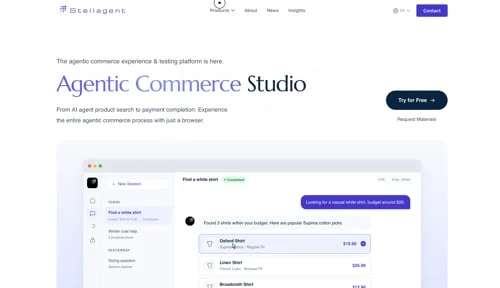
The e-commerce industry is in a constant state of flux, driven by rapid technological advancements and shifting consumer expectations. This week’s roundup of new services for merchants highlights a significant acceleration in the adoption of AI, quick commerce solutions, and sophisticated marketing and management tools designed to streamline operations, enhance customer engagement, and ultimately drive revenue growth. From automated SMS marketing and AI-powered SEO to agentic storefronts and flexible payment integrations, businesses are being equipped with a powerful arsenal to navigate the complexities of the modern digital marketplace.
Revolutionizing Customer Engagement and Sales
EZ Texting Expands to Shopify App Store, Automating SMS Marketing
EZ Texting, a prominent SMS marketing platform, has announced its integration into the Shopify App Store, marking a pivotal step in making advanced text message marketing accessible to a broader merchant base. This move allows Shopify store owners to seamlessly connect their e-commerce operations with EZ Texting’s robust suite of tools. The platform offers comprehensive contact management, the ability to send targeted text broadcasts, leverage AI for personalized messaging, and implement automated workflows designed to recover abandoned carts and foster customer loyalty.
The strategic importance of SMS marketing cannot be overstated. Industry reports indicate that SMS campaigns boast an impressive open rate of around 98%, significantly higher than email marketing. This high engagement rate translates directly into improved conversion rates and a more direct line of communication with customers. By automating these crucial interactions, merchants can significantly reduce manual effort, ensure timely follow-ups, and create a more personalized shopping experience, thereby driving revenue and strengthening brand relationships. The expansion into the Shopify ecosystem is particularly impactful, given Shopify’s massive global user base of over two million merchants.
Text Launches AI Selling Agents to Transform Customer Service into Revenue Drivers
Text, the company behind well-known customer service solutions like LiveChat, ChatBot, and HelpDesk, has unveiled Shopify-native AI selling agents. This innovative feature aims to shift customer service teams from a purely reactive support function to proactive revenue generators. By integrating AI into the live chat environment, businesses can empower their agents to actively engage customers in the sales process, combining the efficiency of automation with the nuanced understanding of human interaction.
These AI selling agents are designed to be highly customizable, trainable on a company’s specific product catalog, brand voice, and established business rules. This allows for a personalized and on-brand sales experience. The implications for e-commerce are substantial. AI-powered sales agents can handle a significant volume of inquiries, qualify leads, recommend products based on customer preferences, and even guide shoppers through the purchase process, all within a single chat interface. This not only enhances customer experience by providing instant assistance but also creates new avenues for sales conversion, effectively turning customer service touchpoints into profit-generating opportunities. Companies that adopt this technology can expect to see a reduction in sales cycle times and an increase in average order value.
Swap Debuts AI-Powered Storefront, Redefining Discovery to Checkout

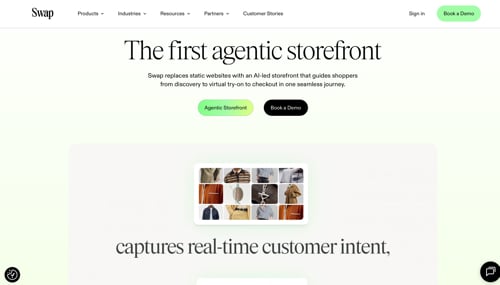
Swap, an e-commerce operating system for direct-to-consumer (DTC) brands, has introduced its groundbreaking AI-powered platform, Storefront. This innovative solution is engineered to guide shoppers through the entire customer journey, from initial product discovery to final checkout, through intuitive conversational interfaces. Swap is piloting Storefront with a unique “Brand in Residency” initiative at Air Mail’s retail newsstands in London and New York. This residency transforms these physical retail spaces into immersive Swap Storefront experiences, featuring branded installations, curated merchandise, and engaging events.
The core innovation of Swap Storefront lies in its ability to create a dynamic and personalized shopping experience driven by AI. Instead of traditional navigation, customers interact with an AI assistant that understands their needs and preferences, offering tailored recommendations and facilitating a seamless purchase. This approach is particularly relevant in an era where consumers are increasingly seeking personalized and frictionless shopping journeys. By mimicking the consultative nature of in-store shopping, Swap Storefront has the potential to significantly boost conversion rates and customer satisfaction, especially for brands looking to deepen their customer relationships and offer a more engaging online presence. The integration of physical retail elements further bridges the gap between online and offline commerce, creating a truly omnichannel experience.
Enhancing Online Visibility and Search Engine Performance
Studio 1119 and Moz Expand Partnership for AI-Powered SEO and Geo-Targeting
Studio 1119, an AI software publisher, and Moz, a leading SEO platform, have significantly deepened their strategic partnership. This collaboration focuses on advancing AI-powered search engine optimization (SEO) and geo-targeting capabilities specifically for e-commerce businesses worldwide. The integration between Moz’s comprehensive search intelligence platform and Studio 1119’s e-commerce optimization tool, CataSEO, is now more robust.
Customers utilizing Studio 1119’s services will benefit from enhanced monthly performance reports, powered by Moz’s data. These reports will provide in-depth analysis of critical SEO metrics, competitive positioning, search performance trends, domain authority indicators, and actionable insights for improving product discovery. In today’s competitive digital landscape, robust SEO is no longer optional; it’s a fundamental requirement for online success. The global e-commerce market is projected to reach over $8 trillion by 2026, making visibility paramount. By combining AI-driven optimization with Moz’s established expertise in search analytics, this partnership offers merchants a powerful advantage in capturing organic traffic and outranking competitors. The emphasis on geo-targeting also allows businesses to tailor their SEO strategies to specific geographic markets, a crucial factor for both local and international e-commerce players.
Streamlining Operations and Multichannel Management
SureDone Launches Mobile App for Unified Listing and Inventory Management
SureDone, a well-established platform for multichannel e-commerce listing, inventory, and order management, has introduced SureDone Mobile. This new application, available on both iOS and Android, aims to bring product management and multichannel listing workflows for major marketplaces like Amazon, eBay, and Shopify directly to mobile devices. The app extends SureDone’s existing comprehensive e-commerce platform, providing sellers with a convenient and agile way to manage their product listings and workflows on the go.
The proliferation of e-commerce channels means merchants often juggle multiple platforms and complex inventory systems. The ability to manage these operations from a smartphone significantly enhances efficiency and responsiveness. With SureDone Mobile, sellers can list new products, update existing listings, manage inventory levels across different channels, and monitor sales performance without being tethered to a desktop computer. This is particularly beneficial for small businesses and individual sellers who may not have dedicated office space or staff, allowing them to manage their operations effectively from anywhere. The demand for mobile-first business solutions continues to grow, and SureDone’s offering addresses this need directly within the critical area of multichannel management.
Cloudways Centralizes WordPress Management with New Site Manager

Cloudways, a managed cloud hosting provider and part of DigitalOcean, has launched Site Manager, a new solution designed to centralize the management of multiple WordPress websites. This tool is specifically aimed at agencies and businesses that manage a large portfolio of WordPress sites, helping them to operate and scale more efficiently. Site Manager consolidates key website management workflows into a single, unified native platform.
For agencies managing client websites, operational efficiency is key to profitability and client satisfaction. By centralizing tasks such as updates, security monitoring, backups, and performance optimization within a single interface, Cloudways Site Manager promises to streamline day-to-day operations, reduce overhead costs, and improve the speed of delivery across client portfolios. The WordPress ecosystem is vast, with millions of websites relying on its flexibility and extensive plugin library. However, managing numerous installations can become a significant administrative burden. Cloudways’ solution directly addresses this pain point, offering a scalable and efficient approach to WordPress site management, which can lead to substantial time and resource savings for businesses of all sizes.
Evolving Payment and Advertising Capabilities
Klarna’s Flexible Payments Extend to Google Search and Gemini App
Klarna, a global leader in flexible payment solutions, is expanding its reach by integrating its payment options into Google’s Gemini app and Search, including AI Mode, via Google Pay in the United States. This integration, powered by the Universal Commerce Protocol, will allow Google Pay users to access Klarna’s diverse payment options directly at checkout.
Consumers will see a Klarna button within Google Pay, offering choices such as four interest-free installments for everyday purchases and longer-term financing for larger acquisitions. This move is significant as it embeds flexible payment options directly into the search and discovery phases of online shopping. As consumer spending habits evolve, with a growing preference for buy-now-pay-later (BNPL) services, this integration provides a seamless way for users to manage their budgets while making purchases. The U.S. BNPL market is projected to grow substantially in the coming years, and Klarna’s partnership with Google positions it at the forefront of this trend, making it easier for consumers to access flexible financing and for merchants to increase conversion rates by offering these popular payment methods.
Instacart Expands Ads Manager to Retailers, Offering Self-Serve Advertising Tools
Instacart, a prominent grocery technology company, has opened up its Ads Manager platform to its retail partners, enabling them to activate advertising campaigns directly within the interface. This expansion extends Instacart’s scalable, self-serve advertising platform to retailers, introducing tools designed to drive growth across the marketplace. Initially, this includes self-serve promotions and off-platform advertising capabilities.
Retailers can now create and manage basket-level offers, target specific high-intent consumer segments, and reach consumers who browse within a category but have not yet made a purchase. The grocery retail sector is increasingly embracing retail media networks as a significant revenue stream. By empowering their retail partners with direct access to advertising tools, Instacart is facilitating a more dynamic and data-driven approach to customer acquisition and promotion. This allows retailers to gain greater control over their advertising spend and messaging, leading to more effective campaigns and a deeper understanding of consumer behavior on the platform. The ability to target specific shopper segments and influence purchase decisions directly within the grocery shopping journey is a powerful tool for driving sales and brand loyalty.
Clinch Enhances Creative for Snapchat Dynamic Product Ads

Clinch, an AI-powered platform for omnichannel content orchestration, has announced an AI-enabled automated workflow that significantly enhances creative capabilities for Snapchat Dynamic Product Ads. This new offering bridges the gap between product feed management and social commerce execution, supporting product feed management, creative customization, and catalog enrichment.
Advertisers can now upload their product feeds, schedule refresh cadences, and then apply custom templates, adjust layouts, add pricing and promotional overlays, and publish an enriched catalog directly to Snapchat without the need to rebuild assets or switch between multiple tools. Dynamic Product Ads are crucial for e-commerce businesses, as they automatically showcase relevant products to users based on their interests and browsing behavior. Clinch’s AI-driven approach streamlines this process, enabling brands to create more engaging and personalized ad experiences at scale. In a competitive social media landscape, the ability to quickly adapt and optimize ad creative is paramount. This advancement by Clinch empowers advertisers to leverage the power of personalized product advertising on Snapchat more effectively, driving higher click-through rates and conversions.
The Rise of AI in Commerce
The current wave of e-commerce innovations is heavily influenced by the rapid advancements and integration of Artificial Intelligence (AI). Several recent launches underscore this trend, with AI playing a pivotal role in transforming how businesses interact with customers and manage their operations.
Text Launches AI Selling Agents to Transform Customer Service into Revenue Drivers (as detailed above)
Swap Debuts AI-Powered Storefront, Redefining Discovery to Checkout (as detailed above)
Studio 1119 and Moz Expand Partnership for AI-Powered SEO and Geo-Targeting (as detailed above)
Amazon Introduces Alexa for Shopping, a Personalized AI Assistant
Amazon has rolled out Alexa for Shopping, a personalized AI assistant accessible through the Amazon Shopping app and website, as well as on Echo Show devices. This new feature integrates the product expertise of Rufus, Amazon’s existing AI, with a user’s Amazon shopping history to deliver a highly personal and helpful shopping experience. Consumers can now use voice commands, touch, or a combination of both to browse and shop the vast Amazon marketplace.
This development signifies Amazon’s commitment to leveraging AI to enhance the customer journey. By combining a user’s past purchasing behavior with sophisticated AI capabilities, Alexa for Shopping aims to provide more relevant product recommendations, streamline the search process, and offer a more intuitive way to discover and purchase items. The ability to shop using natural language is a significant step towards making e-commerce more accessible and user-friendly, particularly for individuals who may find traditional online browsing challenging. This personalized approach has the potential to increase customer engagement, drive repeat purchases, and solidify Amazon’s position as a leader in AI-driven retail.
Stellagent Launches Agentic Commerce Studio for AI Agent Shopping Readiness
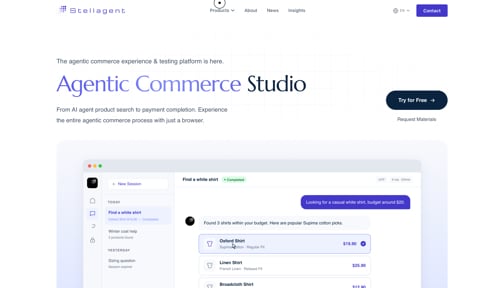
Stellagent, an AI commerce infrastructure company, has introduced Agentic Commerce Studio, a browser-based validation environment designed to prepare merchants, payment service providers, and commerce platforms for the advent of AI agent-led shopping experiences. This studio allows users to simulate AI shopping sessions, from natural-language search and product recommendations to cart creation, shipping calculations, and checkout preparation.
The emergence of AI shopping agents represents a paradigm shift in how consumers will interact with online retailers. These agents are capable of understanding complex queries, comparing products across multiple brands, and executing transactions on behalf of the consumer. Stellagent’s Studio provides a critical testing ground for businesses to ensure their systems are compatible with these future shopping modalities. By allowing teams to connect test environments and validate essential e-commerce workflows such as product feeds, inventory endpoints, shipping quote flows, and checkout sessions, Stellagent is helping to build the foundational infrastructure for this new era of commerce. This proactive approach is essential for businesses to remain competitive as AI agents become more prevalent.
Meta Launches Business AI on WhatsApp for Small Businesses in India
Meta has launched Business AI in India, providing small businesses with AI-powered customer support directly within the WhatsApp Business app. This feature enables eligible businesses to offer 24/7 responses to customer queries, capture leads, and book appointments. Crucially, the service is available in all native Indian languages and requires no coding or third-party tools.
The integration of AI into a platform as widely used as WhatsApp is a significant development for small businesses, particularly in emerging markets like India. With over 2 billion users globally, WhatsApp offers an unparalleled channel for direct customer engagement. By providing AI-powered support, Meta is empowering small businesses to compete with larger enterprises by offering efficient, round-the-clock customer service. This can lead to improved customer satisfaction, increased sales, and reduced operational costs. The availability in multiple Indian languages further enhances its accessibility and impact, ensuring that businesses of all sizes and linguistic backgrounds can benefit from this advanced technology.
Shoppable Launches the First Universal Checkout MCP Server
Shoppable, a unified commerce infrastructure platform, has launched its Model Context Protocol (MCP) server, designed as a universal checkout integration for AI assistants. This server enables brands, retailers, and publishers to directly connect their product catalogs into AI conversations, allowing consumers to discover items, build multi-brand carts, and complete purchases with a single click.
The MCP server is a critical piece of infrastructure for enabling seamless AI-driven commerce. As AI assistants become more sophisticated in understanding consumer needs and preferences, the ability to facilitate direct purchasing from within these conversational interfaces is paramount. Shoppable’s solution supports various integration scenarios, from showcasing a single brand’s offerings to presenting curated selections from multiple merchants or the entire Shoppable network. This innovation has the potential to revolutionize online shopping by making it more conversational, efficient, and integrated into users’ daily digital interactions. The concept of a “universal checkout” addresses a key friction point in online commerce, aiming to simplify the buying process across diverse platforms and brands.
Quick Commerce and Delivery Innovations
Amazon Rolls Out 30-Minute Delivery Service, Now
Amazon has launched “Now,” a rapid delivery service promising to deliver items in 30 minutes or less. Currently available in key U.S. cities including Atlanta, Dallas-Fort Worth, Philadelphia, and Seattle, the service is set to expand to dozens more cities. Amazon Now utilizes a network of strategically placed, smaller fulfillment locations to ensure efficient order processing and swift delivery to customers.
The rapid expansion of quick commerce is a defining trend in the retail landscape. Consumers increasingly expect speed and convenience, and services like Amazon Now cater directly to this demand. By establishing micro-fulfillment centers closer to urban populations, Amazon can significantly reduce last-mile delivery times. This move intensifies competition in the same-day and on-demand delivery market, pushing other retailers and delivery platforms to innovate and optimize their own logistics networks. The success of such services hinges on sophisticated inventory management, efficient routing, and a robust delivery workforce, all of which Amazon has been meticulously building.
Future-Forward Tools for Merchants
Clinch Enhances Creative for Snapchat Dynamic Product Ads (as detailed above)
Stellagent Launches Agentic Commerce Studio for AI Agent Shopping Readiness (as detailed above)
The continuous stream of new tools and services emerging in the e-commerce space underscores a sector that is rapidly evolving. With AI at the forefront, merchants are being provided with increasingly sophisticated capabilities to automate, personalize, and optimize every aspect of their online business. From enhancing customer interactions and streamlining operational workflows to driving visibility and offering flexible payment options, these innovations are collectively shaping the future of digital commerce, empowering businesses to adapt and thrive in an increasingly dynamic marketplace.









