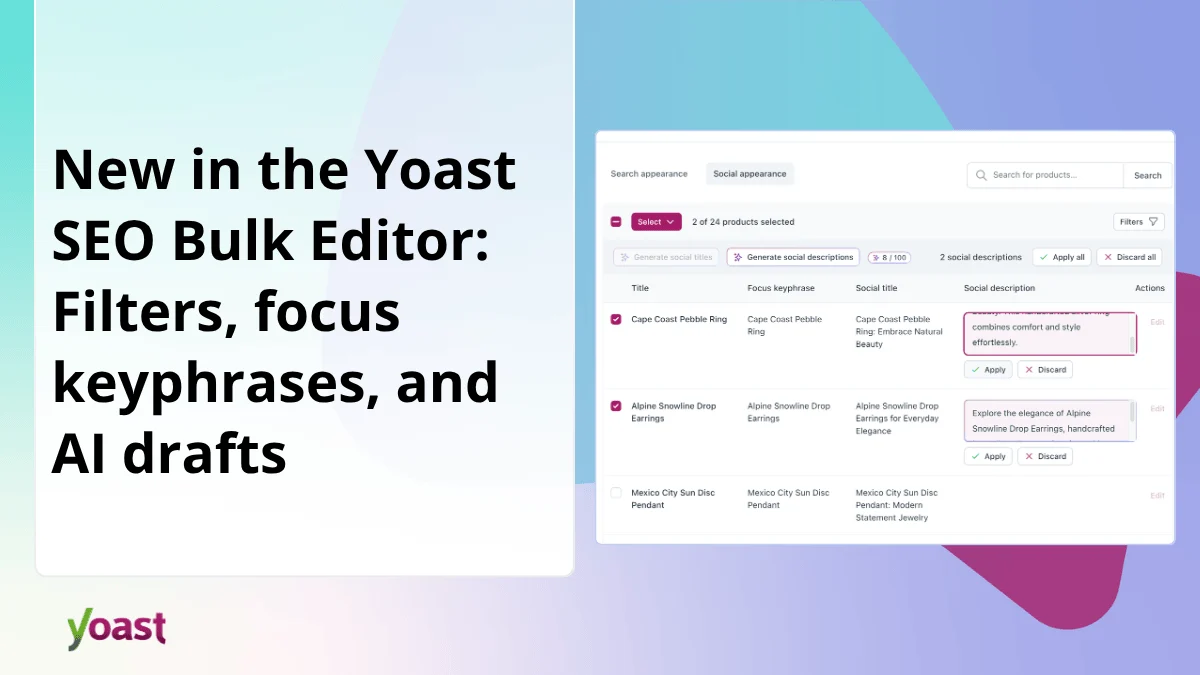
Yoast, a leading provider of SEO software for WordPress, has announced a significant overhaul of its popular Bulk Editor, introducing a suite of powerful features designed to streamline website optimization for administrators, content creators, and e-commerce managers alike. The updated Bulk Editor now integrates focus keyphrases, offers advanced search and status filters, provides dedicated views for various content types, and, crucially, introduces AI-drafted metadata capabilities for Yoast SEO Premium subscribers. This comprehensive update aims to transform the often-tedious task of managing website metadata at scale into a more efficient, precise, and less labor-intensive process, solidifying Yoast’s position as an innovator in the SEO landscape.
The core of this enhancement lies in empowering users to identify and rectify SEO shortcomings across their entire site with unprecedented speed and accuracy. Previously, the Bulk Editor allowed for mass updates of titles and meta descriptions; now, its expanded functionality ensures a more holistic approach to on-page SEO from a centralized interface.
A Focused Workspace for Comprehensive SEO Management
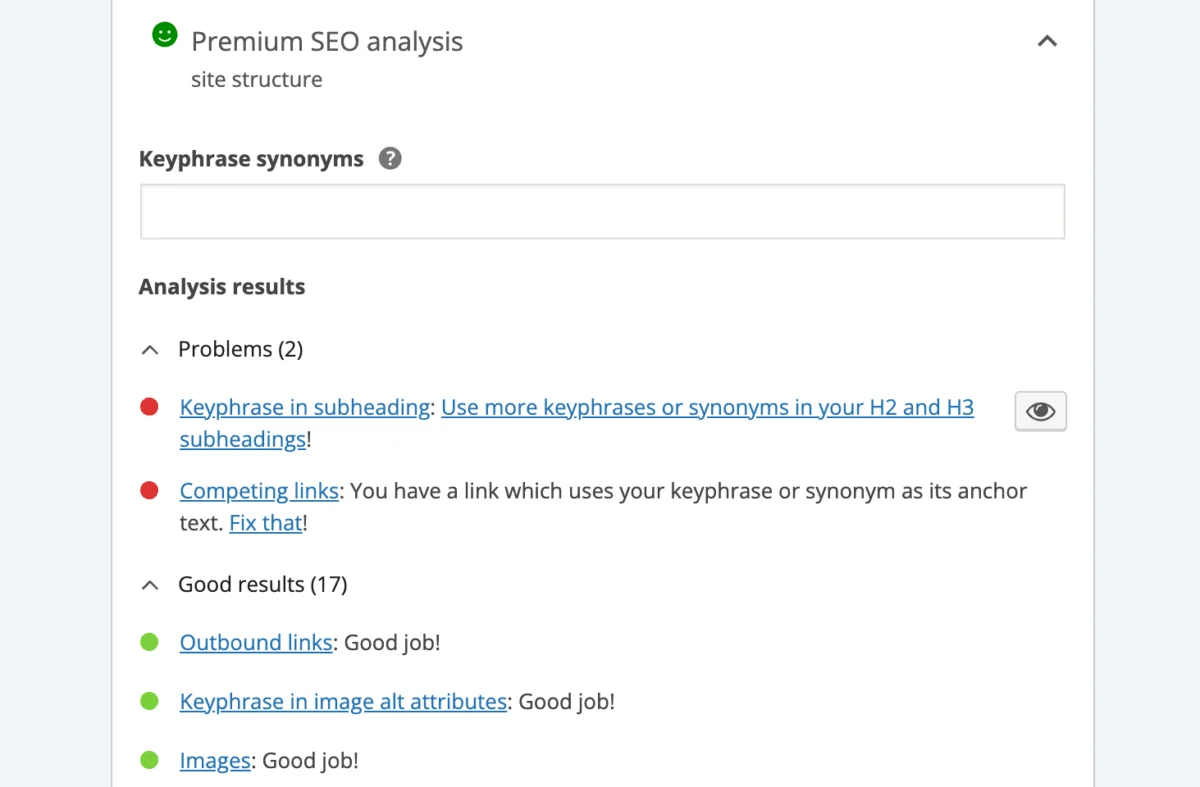
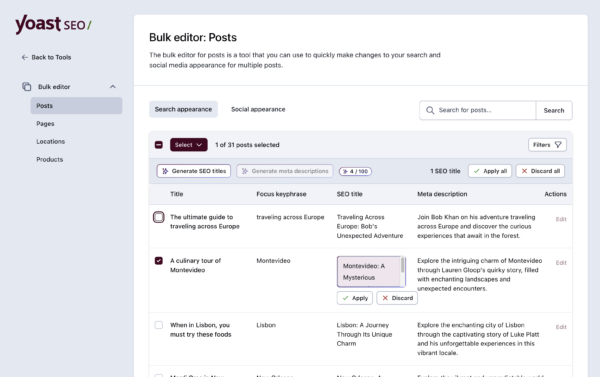
The newly designed Bulk Editor presents a highly focused workspace, displaying only the most critical SEO fields: titles, meta descriptions, and, significantly, focus keyphrases. This integration of focus keyphrases directly into the bulk editing interface marks a pivotal development. For years, SEO professionals have emphasized the importance of aligning content with specific target keywords. Manually reviewing and assigning keyphrases to hundreds or thousands of pages has been a daunting task. Now, users can visualize and modify these crucial elements in a single, intuitive environment.
This refined organization extends to content types, with dedicated editors for posts, pages, products, and custom post types. This segregation is particularly beneficial for websites with diverse content structures, such as publishers managing extensive article archives or online stores with vast product catalogs. By providing content-type-specific views, the editor ensures that users can navigate and optimize their digital assets systematically, regardless of the site’s complexity. For a WordPress site with hundreds of blog posts, dozens of landing pages, and potentially thousands of e-commerce products, this level of segmentation drastically reduces cognitive load and accelerates the optimization workflow. This move reflects an understanding of the diverse needs of Yoast’s user base, ranging from individual bloggers to large-scale enterprises managing complex digital ecosystems.
The ability to manage large volumes of content swiftly and systematically is critical in today’s fast-paced digital environment. Websites are no longer static brochures; they are dynamic, ever-growing entities that require continuous optimization. Inheriting an unoptimized website or undergoing a major content migration often presents an SEO nightmare, requiring significant time and resources to establish a solid baseline. Yoast’s updated Bulk Editor directly addresses this challenge, positioning itself as an indispensable tool for rapidly bringing any website up to an acceptable SEO standard without the need to individually access and edit each piece of content. This efficiency translates directly into cost savings and faster time-to-market for SEO improvements.
New Search and Status Filters: Pinpointing Optimization Needs
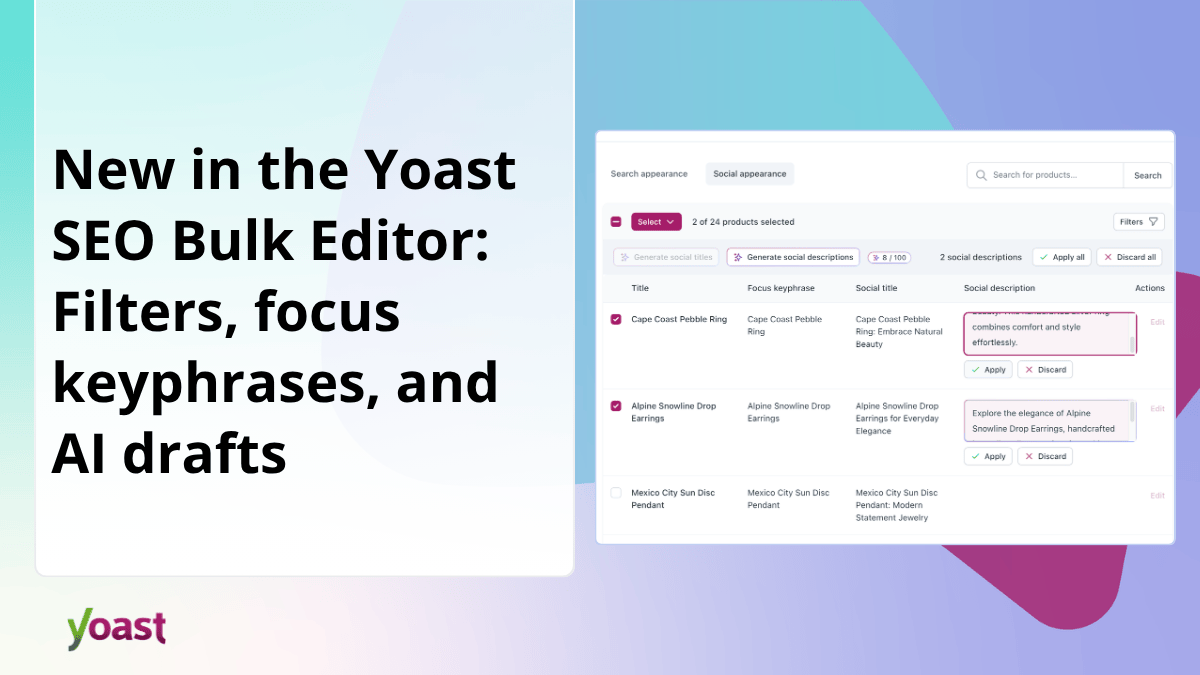
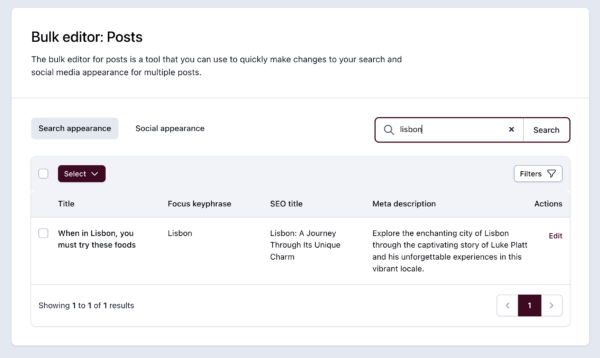
One of the most impactful additions to the Bulk Editor is the introduction of new search and status filters. In the realm of SEO, the adage "you can’t fix what you can’t see" holds true. Many website owners struggle to identify which pages are lacking essential metadata or are in a suboptimal state. The new filters empower users to quickly pinpoint pages that require immediate attention.
For instance, a user can now filter to display every page missing a meta description, an element crucial for click-through rates (CTR) in search engine results. They can also isolate all draft content, posts targeting a specific keyphrase, or pages with particular SEO scores. This granular control over content visibility allows for targeted optimization efforts. Instead of laboriously scrolling through extensive lists or relying on external auditing tools, website administrators can, within seconds, generate a precise list of pages needing work. From this filtered view, they can then review, update, and save changes without ever having to open individual pages in the WordPress editor. This feature alone is projected to save countless hours for SEO professionals and website managers, transforming the audit and remediation process from a reactive, time-consuming chore into a proactive, streamlined workflow.
The strategic importance of these filters cannot be overstated. Search engines like Google increasingly prioritize comprehensive and accurate metadata as indicators of content quality and relevance. A missing meta description not only deprives a page of a crucial snippet in search results but can also lead to Google generating its own, potentially less compelling, description. Similarly, inconsistent keyphrase targeting can dilute SEO efforts across a site. By making these issues immediately visible and actionable, Yoast’s new filters empower users to maintain a higher standard of on-page SEO, ultimately contributing to improved search visibility and organic traffic.
AI Drafts It, You Approve It: The Future of Metadata Generation
Perhaps the most groundbreaking feature introduced in this update is the AI-powered metadata drafting, available to subscribers of Yoast SEO Premium and higher-tier plans. While the ability to identify missing metadata is valuable, the sheer volume of writing hundreds or even thousands of unique, compelling titles and descriptions can be an insurmountable barrier for many. This is where AI steps in.
With this new functionality, users can select content that needs optimization and allow artificial intelligence to generate draft titles and meta descriptions. The AI leverages sophisticated natural language processing (NLP) and machine learning algorithms to analyze the page content and propose metadata that is not only contextually relevant but also optimized for search engines and user engagement. This automation significantly reduces the manual effort involved in crafting metadata, a task often cited as one of the most tedious aspects of SEO.
Crucially, Yoast has implemented a robust "human in the loop" mechanism. Nothing is automatically saved without explicit user permission. Users can review each AI-generated suggestion, apply what they deem appropriate, and easily tweak or discard the rest. Per-row and batch apply/discard controls, coupled with unsaved-changes warnings, ensure that users maintain full control over their content. This approach addresses common concerns about AI generating generic or off-brand content, providing the speed of automation with the precision and brand voice dictated by human oversight. This "confidence, not caution" philosophy allows users to work through hundreds of pages efficiently, knowing that they retain final say over every piece of metadata published.
The integration of AI into the metadata generation process represents a significant step towards democratizing advanced SEO practices. Small businesses and individual website owners, who may lack the resources for dedicated SEO teams or copywriters, can now leverage powerful AI tools to compete more effectively with larger entities. For larger organizations, it frees up SEO specialists from repetitive tasks, allowing them to focus on more strategic initiatives such as keyword research, competitor analysis, and content strategy development. This hybrid approach – AI-powered drafting combined with human review – is increasingly recognized as the optimal model for scaling content creation and optimization while maintaining quality and brand integrity.
New for Stores: Catalog Metadata at Scale for E-commerce
The update holds particular significance for online stores, a sector where managing vast product catalogs presents unique SEO challenges. E-commerce platforms, particularly those built on WooCommerce, often feature thousands of products, each requiring unique and compelling titles and meta descriptions to stand out in search results and attract potential buyers. The task of creating and maintaining this metadata manually is often cited as one of the most time-consuming and tedious jobs in e-commerce.
Yoast’s new release addresses this head-on in two primary ways. First, products now receive their own dedicated view within the Bulk Editor. This means e-commerce managers can specifically filter their product catalog, quickly identifying gaps in metadata or products that need optimization. This focused approach allows for efficient management of product SEO, which is directly tied to product visibility and sales.
Second, the AI drafting capabilities are extended to products and categories for users with Yoast WooCommerce SEO and Yoast SEO AI+ plans. This is a game-changer for online retailers. Imagine an e-commerce store with 5,000 products; manually writing unique, optimized metadata for each one is virtually impossible for most teams. With AI drafting, store managers can now generate, review, and approve product and category metadata at scale. This capability is especially timely as businesses prepare for seasonal peaks like Black Friday, Cyber Monday, or holiday sales, where updated and optimized product listings can significantly impact performance.
The ability to rapidly generate high-quality product metadata ensures that online stores can maintain a competitive edge, improve their product visibility in search engine results, and ultimately drive more qualified traffic and sales. Unique and informative product descriptions and titles are not just an SEO best practice; they are crucial for conveying value to potential customers and reducing bounce rates. By automating this process while retaining human oversight, Yoast empowers e-commerce businesses to scale their SEO efforts effectively without compromising on quality or brand voice.
The Broader Context: Yoast’s Legacy and the Evolving SEO Landscape
This significant update from Yoast is not an isolated event but rather a continuation of the company’s long-standing commitment to democratizing SEO for the WordPress community. Since its inception, Yoast SEO has been instrumental in making complex SEO principles accessible to millions of website owners. This latest evolution of the Bulk Editor reflects a deep understanding of the current challenges faced by users in an increasingly competitive digital environment.
The landscape of SEO has evolved dramatically over the past decade. What was once primarily about keyword stuffing and technical tweaks has matured into a holistic discipline encompassing content quality, user experience, site performance, and nuanced technical optimization. As search engines become more sophisticated, the demands on website owners to provide comprehensive, well-structured, and relevant information have grown exponentially. Managing this complexity, especially for large websites, has become a significant bottleneck.
The introduction of AI into mainstream SEO tools, particularly for content generation tasks like metadata drafting, signifies a broader industry trend. AI is no longer a futuristic concept but a practical tool that, when integrated thoughtfully, can augment human capabilities and dramatically improve efficiency. Yoast’s careful implementation, emphasizing human approval, demonstrates a responsible approach to leveraging AI, ensuring that technology serves as an assistant rather than a complete replacement for human judgment and creativity. This balance is crucial for maintaining the authenticity and brand voice that are paramount for successful digital marketing.
Implications and Future Outlook
The implications of this Yoast SEO Bulk Editor update are far-reaching. For individual website owners and small businesses, it means access to enterprise-level SEO efficiency previously out of reach. For larger organizations, it promises substantial time savings, allowing SEO teams to reallocate resources from repetitive manual tasks to more strategic, high-impact activities. The ability to quickly identify and fix issues, coupled with AI-powered assistance, will lead to more consistent, higher-quality metadata across the web, ultimately benefiting both website owners and search engine users who will encounter more relevant and engaging search results.
This update also sets a new benchmark for WordPress SEO plugins, challenging competitors to innovate further in areas of bulk management and AI integration. As AI technology continues to advance, it is reasonable to expect further enhancements in SEO tools, potentially including AI-powered content recommendations, automated internal linking suggestions, and even more sophisticated metadata generation capabilities that learn from site-specific performance data.
In conclusion, Yoast’s enhanced Bulk Editor with AI-powered metadata, focus keyphrase integration, and advanced filtering represents a pivotal moment in the evolution of WordPress SEO tools. By addressing critical pain points related to scale, efficiency, and metadata quality, Yoast has delivered a powerful solution that will empower a vast array of website owners to optimize their digital presence more effectively and strategically in the years to come. The emphasis on human oversight ensures that while automation accelerates the process, the ultimate control and quality remain firmly in the hands of the user, striking a crucial balance between technological innovation and practical application.