Google’s recent rollout of Gemini 3.8 Flash for subscribers to its AI Mode feature in Search encountered an immediate and significant operational glitch, with early feedback indicating a severe lack of source citations and external links in its generated responses. This unexpected behavior, first highlighted by prominent figures within the search engine optimization (SEO) community, sparked concerns about the model’s reliability and its adherence to the principles of attributing information to its original sources. The issue, while swiftly acknowledged and rectified by Google, cast a temporary shadow over the launch of what is intended to be a faster and more efficient iteration of the company’s advanced AI models within its flagship search product.
The integration of artificial intelligence into core search functionalities represents a pivotal shift in how users interact with information online. Google’s AI Mode, an optional feature that provides AI-generated summaries and synthesized answers directly within search results, is designed to enhance the user experience by offering quick, comprehensive insights. The Gemini 3.8 Flash model, positioned as a lightweight and rapid variant of the larger Gemini family, was introduced with the promise of delivering these AI-powered responses with even greater speed. However, the initial deployment revealed a critical oversight: the model was significantly less likely to cite or link to the underlying sources of its information compared to previous versions, leading to a diminished level of transparency and potential implications for content creators and the broader web ecosystem.
The Evolving Landscape of AI in Search
The introduction of AI into traditional search paradigms is not unique to Google. Competitors like Microsoft have aggressively integrated AI capabilities, such as Copilot, into their Bing search engine, offering AI-generated summaries and conversational interactions. Google itself has been experimenting with its Search Generative Experience (SGE), now often referred to as AI Overviews, which aims to provide comprehensive answers directly at the top of search results, synthesizing information from multiple sources. A cornerstone of these AI-powered search experiences has been the inclusion of citations and links, serving several crucial purposes:
- Transparency and Trust: Users need to understand where the AI’s information originates to assess its credibility and veracity.
- Fact-Checking and Verification: Citations allow users to delve deeper into a topic, verify facts, and explore different perspectives.
- Support for the Open Web: Linking back to original sources is vital for driving traffic to publishers, content creators, and businesses that invest in producing valuable information, thereby sustaining the internet’s content ecosystem.
- Mitigation of "Hallucinations": Large Language Models (LLMs) are prone to generating plausible-sounding but incorrect information (hallucinations). Citations act as a crucial mechanism for users to cross-reference and identify potential inaccuracies.
Google has historically championed the open web and the importance of sending traffic to publishers. Its search algorithms have long prioritized high-quality, authoritative content, and its guidelines often emphasize the importance of unique, valuable information. Therefore, any perceived deviation from robust source attribution in its AI products naturally raises questions about the company’s long-term strategy and its commitment to these foundational principles. The Gemini 3.8 Flash model, being a new iteration, was expected to uphold these standards, especially given its role within an "AI Mode" that fundamentally synthesizes existing web content.
Chronology of the Discovery and Response
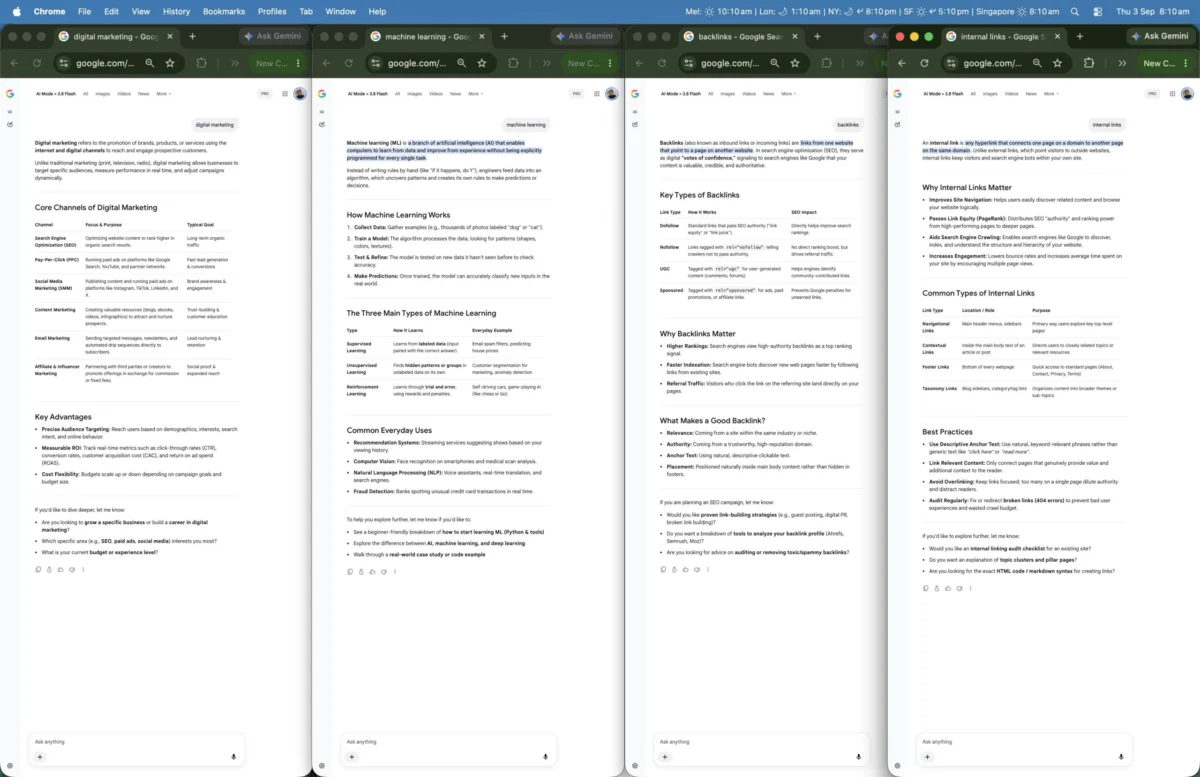
The issue first came to public attention on September 3, 2026, shortly after Gemini 3.8 Flash became available to AI Mode subscribers. Gagan Ghotra, a prominent voice in the digital marketing and SEO community, was among the first to flag the anomaly. Ghotra conducted a series of searches using the new AI model, specifically focusing on "top-of-the-funnel queries" – broad informational questions that typically yield diverse sources. To his surprise, the AI-generated responses consistently lacked any discernible links or citations back to the originating websites.
Ghotra meticulously documented his findings, sharing multiple screenshots on X (formerly Twitter) that visually demonstrated the absence of attribution. These images showed AI Mode answers appearing as standalone blocks of text, devoid of the familiar clickable links or numbered references that typically accompany AI-synthesized content in Google Search. This observation was particularly striking because previous iterations of Google’s AI Mode and SGE had generally included such attributions, albeit with varying degrees of prominence. The implication was clear: if the AI was providing answers without pointing to sources, it could potentially undermine user trust and significantly reduce referral traffic to publishers.
The reports quickly garnered attention, with other SEO professionals and digital analysts independently verifying Ghotra’s observations. Glenn Gabe, another well-respected figure in the SEO landscape, corroborated the findings. Gabe performed his own comparative tests, running identical queries in AI Mode using both the newly deployed Gemini 3.8 Flash and the default AI model. His results mirrored Ghotra’s: the 3.8 Flash version consistently omitted links, while the default model provided them as expected. Gabe also took to X, tweeting screenshots of his comparisons and directly tagging Google executives, including Robby Stein and Rajan Patel, to draw their immediate attention to the discrepancy. His tweet, "Whoa, Gagan is right. See below between default model and 3.8 Flash. What is going on here? First is 3.8 Flash and second is default model," succinctly captured the gravity of the perceived issue.
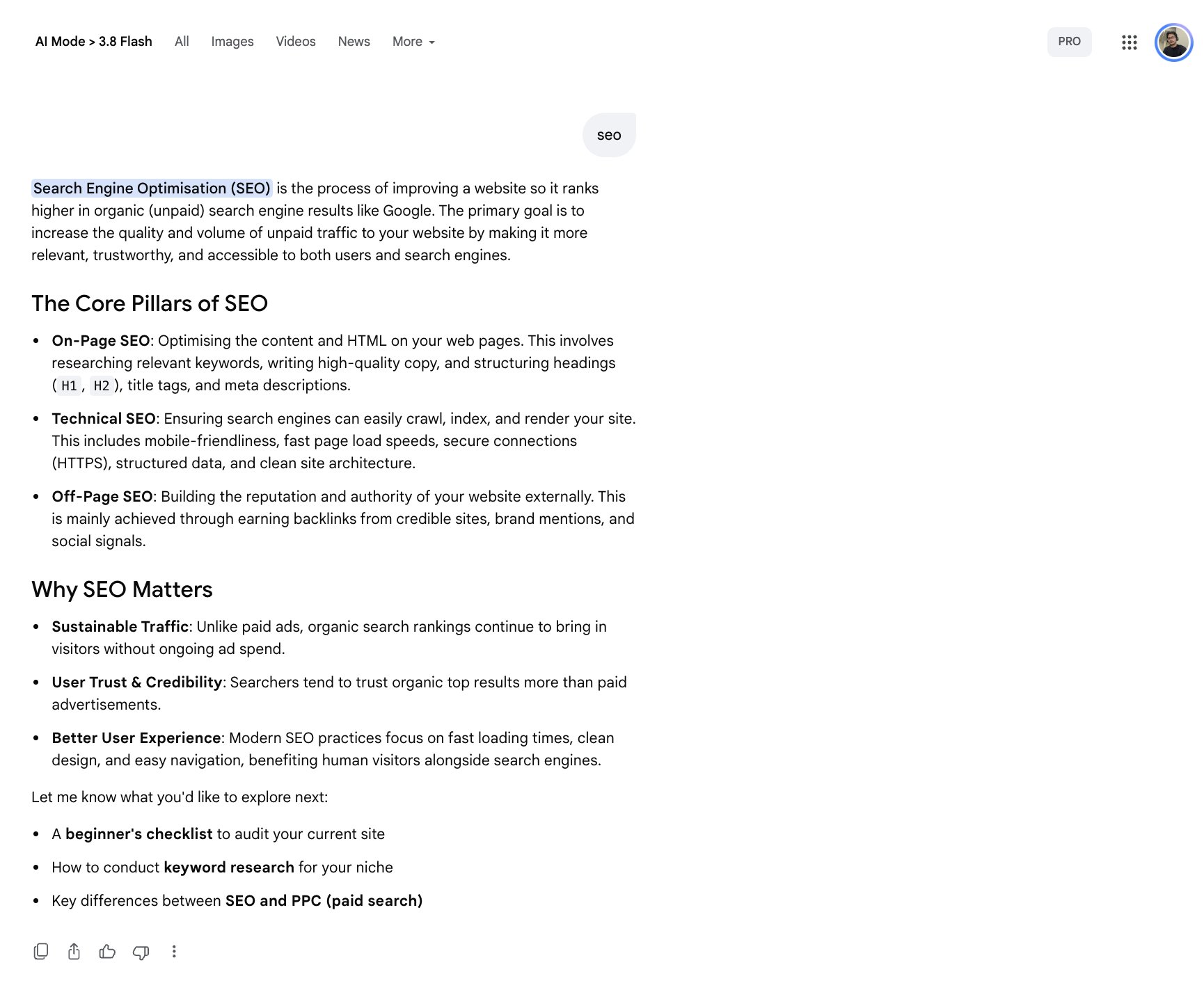
The collective outcry from the SEO community reflected a deeper anxiety surrounding AI’s impact on content discovery and monetization. Publishers and content creators have long relied on Google Search as a primary driver of traffic. The rise of AI Overviews and similar features, which aim to answer questions directly, has already sparked debate about the potential for "zero-click searches" where users find answers without ever visiting a website. An AI model that further strips away attribution would exacerbate these concerns, effectively acting as a content aggregator without reciprocating value to its sources.
Google’s Official Acknowledgment and Swift Resolution
The rapid and widespread reporting of the issue did not go unnoticed by Google. The company’s responsiveness was commendable, particularly given the potential implications for trust and publisher relations. On September 4, 2026, less than 24 hours after the initial reports surfaced, Robby Stein, a key figure at Google, officially responded via X. His statement was direct and unambiguous: "Hey — thanks for flagging. This isn’t working as intended, and we’ll roll out a fix soon."
Stein’s immediate acknowledgment served to alleviate much of the initial concern. His explicit confirmation that the behavior was a bug, rather than an intentional design choice, reassured the community that Google had not deliberately opted to remove source attribution. This rapid communication underscored Google’s understanding of the critical importance of links and citations, both for user experience and for maintaining a healthy relationship with the content ecosystem. The promise of a "fix soon" further indicated that the issue was being prioritized internally.
True to Google’s word, the resolution was implemented with impressive speed. By the morning of September 4, 2026, just hours after Stein’s public response, reports began to emerge that the issue had been resolved. Glenn Gabe, who had initially confirmed Ghotra’s findings, was again among the first to provide an update. He tweeted, "OK, looks like Gemini 3.8 Flash is now providing links. When it first rolled out, there was a bug and there were barely any links being provided… Here is what the AI Mode response…" His follow-up tweet included new screenshots demonstrating that the AI Mode responses powered by Gemini 3.8 Flash were now correctly displaying links and citations, restoring the expected functionality.
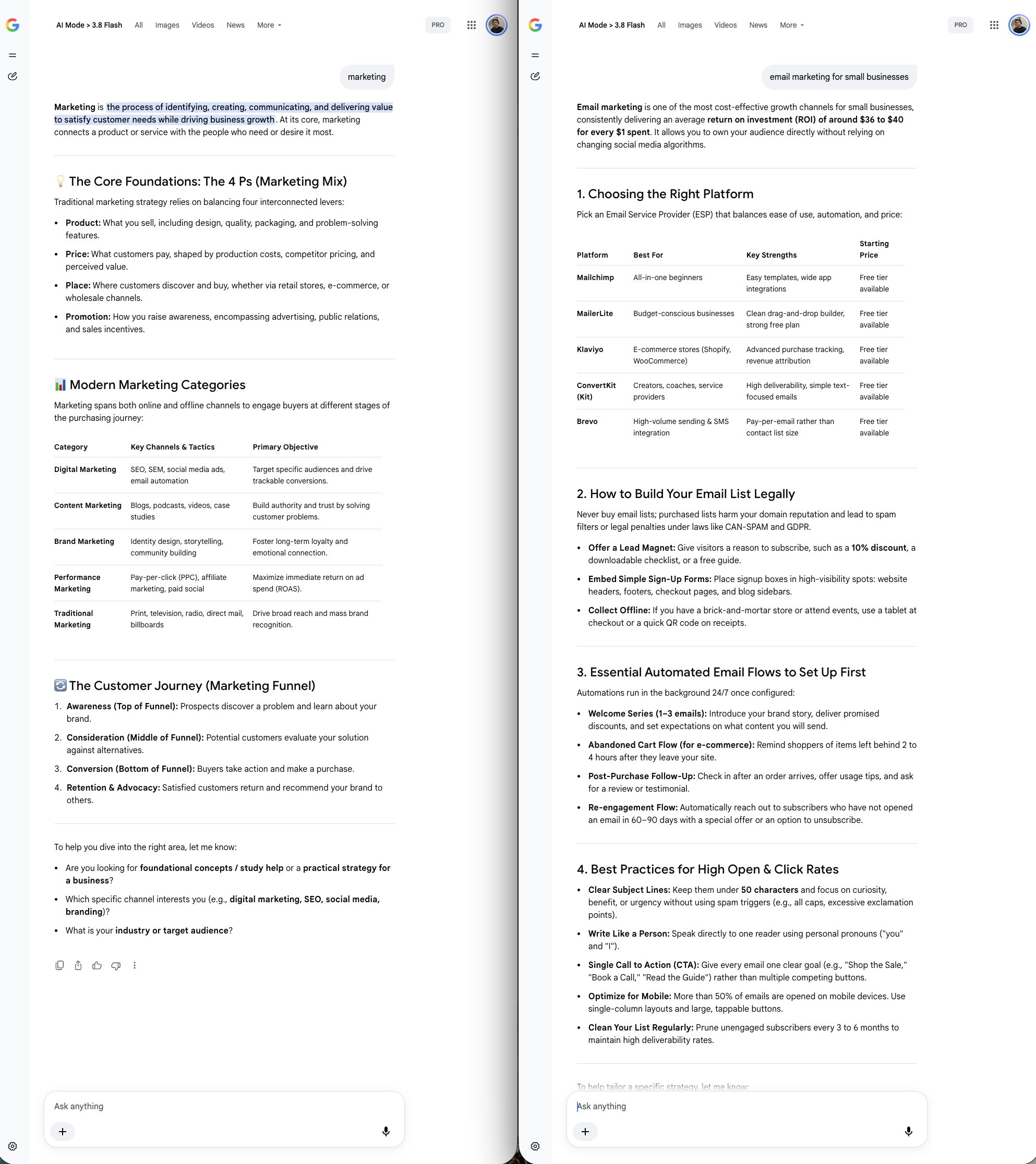
This rapid turnaround highlighted Google’s internal agility in addressing critical bugs within its new product deployments. It suggested that the problem was likely a technical glitch or a configuration error rather than a deep-seated architectural flaw or an intentional policy shift. The swift correction reaffirmed Google’s stated commitment to transparency and supporting the web’s content creators.
Analysis of Implications and Broader Context
While the incident proved to be a temporary technical glitch, its brief existence and swift resolution offer several important insights into the ongoing evolution of AI in search and its broader implications:
- The Fragility of AI Deployment: The episode underscores the inherent complexity and potential for unforeseen issues when deploying advanced AI models at scale. Even with extensive testing, real-world usage can expose unexpected bugs or configuration errors. The "Flash" designation for Gemini 3.8 implies a focus on speed and efficiency, and it’s plausible that a component responsible for citation generation might have been inadvertently overlooked or misconfigured during the optimization process for rapid response delivery.
- The Criticality of Attribution: The immediate and strong reaction from the SEO and publisher communities reinforces the non-negotiable importance of source attribution in AI-generated content. For users, citations are a proxy for reliability and trustworthiness. For content creators, they are the lifeblood of traffic and revenue. Any AI system that fails to provide clear attribution will inevitably face scrutiny and resistance, regardless of its other capabilities. This incident served as a potent reminder to Google that sacrificing attribution, even temporarily due to a bug, is not an acceptable trade-off.
- Trust and Transparency as Core Pillars: The incident, even as a bug, momentarily challenged public trust in Google’s AI products. In an era where "hallucinations" and AI bias are frequent concerns, clear sourcing is paramount. Google’s quick acknowledgment and fix were crucial in mitigating potential damage to user confidence and reinforcing its commitment to responsible AI development. The prompt communication from Robby Stein was particularly effective in restoring faith that the company values transparency.
- Ongoing Debate on AI and the Open Web: This event occurred amidst a broader ongoing debate about the impact of generative AI on the open web. Publishers have expressed concerns about AI models "scraping" their content for training data without adequate compensation or attribution, and about AI Overviews potentially reducing clicks to their sites. While this specific issue was a bug, it fueled existing anxieties and served as a stark example of what a "worst-case scenario" might look like if attribution were to be systematically removed. It highlighted the delicate balance Google must strike between leveraging AI innovation to enhance user experience and preserving the economic viability of the content ecosystem it relies upon.
- The Power of Community Feedback: The incident also showcased the invaluable role of the SEO and digital marketing community in monitoring and providing feedback on Google’s product rollouts. The rapid identification and public reporting by individuals like Gagan Ghotra and Glenn Gabe allowed Google to quickly identify and address a critical flaw that might otherwise have persisted longer, potentially causing greater disruption and erosion of trust. This symbiotic relationship between Google and the expert community remains vital for the healthy evolution of search.
Future Outlook for AI in Search
As Google continues to integrate advanced AI models like Gemini into its search offerings, incidents like the Gemini 3.8 Flash citation bug serve as crucial learning experiences. They underscore the need for:
- Robust Testing Protocols: Even faster deployment cycles for "Flash" models must be accompanied by rigorous testing, especially concerning core functionalities like attribution that impact user trust and publisher relations.
- Clear Communication: Google’s prompt and transparent communication in this instance set a positive precedent. Maintaining open channels with the user and publisher communities will be essential as AI features become more ubiquitous.
- Prioritizing Ethical AI Design: Ensuring that AI models are designed from the ground up with ethical considerations such as attribution, transparency, and fairness in mind is paramount. These are not mere afterthoughts but fundamental requirements for responsible AI deployment.
In conclusion, the temporary failure of Google’s Gemini 3.8 Flash to provide links and citations in AI Mode was a significant, albeit short-lived, operational glitch. Swiftly identified by the keen observations of the SEO community and quickly rectified by Google, the incident underscored the critical importance of source attribution in AI-powered search. It served as a potent reminder that while innovation drives progress, foundational principles of transparency, trust, and support for the open web remain non-negotiable requirements for the successful and ethical integration of artificial intelligence into the fabric of online information discovery.