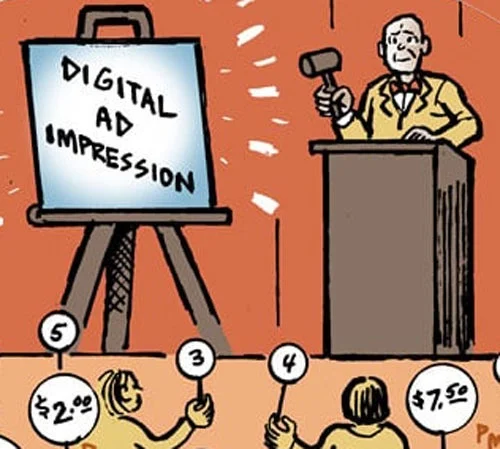
The opaque nature of programmatic advertising, long a point of contention for advertisers and publishers alike, is facing a significant overhaul with the release of new transparency standards by the Media Rating Council (MRC). These groundbreaking guidelines, unveiled last week, aim to demystify the complex "black boxes" of digital ad auctions by establishing a consistent framework for disclosure and introducing a voluntary certification program for platforms that adhere to them. The initiative, driven by a broad coalition of industry stakeholders, seeks to foster greater trust, accountability, and efficiency within the digital advertising ecosystem.
Illuminating the Black Box: The Need for Auction Transparency
For years, the intricate workings of programmatic ad auctions have been shrouded in mystery. Each platform, from demand-side platforms (DSPs) to supply-side platforms (SSPs), operates with its own proprietary rules governing how bids are evaluated and ad space is allocated. This lack of standardization has left many advertisers and publishers in the dark, struggling to understand how their ad dollars are being spent and how their inventory is being sold. The inherent opacity not only breeds suspicion but also hinders effective optimization and strategic decision-making.
Ron Pinelli, the MRC’s Senior Vice President of Digital Research and Standards, emphasized that the goal of these new standards is not to impose a monolithic auction system or a single algorithm upon the industry. Instead, the MRC aims to provide a universal language for explaining auction mechanics. "The standards create a consistent framework for explaining how auctions work," Pinelli stated. "They push platforms to disclose their ‘key decision variables’ for determining results, as well as any changes to their auction rules." This focus on disclosure, rather than dictation, is a crucial element of the MRC’s approach.
However, platforms seeking the MRC’s new transparency seal of approval cannot simply offer vague explanations. The certification process mandates adherence to certain auction best practices, including the adoption of industry-recognized specifications like OpenRTB, some of which the industry has been notably slow to embrace. This dual approach—encouraging disclosure while also promoting the adoption of established, albeit sometimes debated, technical standards—is designed to elevate the overall integrity of digital ad auctions.
Fair Play Demands Clarity: The Core Tenets of the New Standards
The MRC’s new standards require platforms to disclose a comprehensive list of auction parameters to qualify for certification. This includes critical information such as the type of auction employed (first-price, second-price, or modified second-price) and whether factors beyond the bid price, such as demand source priority or seller-defined rules, influence the winning bid. This level of detail is vital for advertisers and publishers to understand the true cost and value of ad placements.
For publishers and SSPs, the standards mandate transparency regarding the use of reserve prices or pricing floors. Crucially, they must apply these floors uniformly to all buyers, preventing discriminatory pricing practices that could disadvantage certain advertisers. This aspect of the standards directly addresses concerns about fairness and equal opportunity within the auction environment.
The genesis of this initiative can be traced back to a collaborative effort spearheaded by Omnicom Media Group, a major agency holding company. In early 2024, Omnicom partnered with the MRC to assemble a steering team that brought together nearly 70 companies and organizations. The roster of participants reads like a who’s who of the digital advertising world, including industry giants like Meta, TikTok, and X, leading publishers such as Hearst, major ad tech vendors like The Trade Desk, and prominent industry trade organizations including the 4A’s, ANA, WFA, and the IAB Tech Lab.
Ben Hovaness, Chief Media Officer of Omnicom-owned OMD Worldwide, has been a driving force behind this project. His fascination with programmatic ad auction theory and his subsequent surprise at the industry’s lack of standardized disclosure mechanisms for auction rules inspired the initiative. Hovaness has been actively engaged in educating Omnicom’s teams on auction mechanics since 2014 and has meticulously collected official auction rule disclosures from major platforms like Google, Meta, and Amazon for Omnicom’s Council on Accountability and Standards in Advertising. In 2023, he formally brought this endeavor to the MRC with the explicit aim of establishing the industry’s first robust standard for auction rules and change disclosures.
Hovaness articulated a core principle driving the project: "It always seemed unreasonable to ask advertisers or agencies to place a bid in an auction where the rules are unknown." He further elaborated that such a scenario not only erodes trust between advertisers and sellers but also "degrades the advertiser-agency relationship." He drew a stark contrast with traditional auction environments, stating, "If you go to Sotheby’s or Christie’s, you get a term sheet at the door that says exactly how the auction works, how much the auction house is taking—all the associated fees and rules. That is how you run a good auction with high integrity." The implication is clear: the digital advertising industry has fallen short of the transparency expected in even the most traditional marketplaces.
The increased transparency facilitated by these standards is expected to empower both buyers and sellers to scrutinify each other’s practices more effectively, fostering greater accountability. Pinelli added that disclosing auction logic will also equip both parties with the insights needed to "optimize their pricing and bidding strategies."
Embracing Industry Standards: Technical Specifications and Compromises
While the MRC standards allow platforms to retain proprietary elements within their auction logic, they stipulate that these must be disclosed. More importantly, a set of fundamental requirements must be met by all participating platforms. Hovaness characterized these as the "bare minimum for eliminating inconsistent—and, in some cases—deliberately deceptive practices from ad auctions."
According to Pinelli, these requirements are also designed to encourage the adoption of updated OpenRTB specifications championed by the IAB Tech Lab. Some of these specifications have faced resistance or sparked considerable debate within the industry.
A prime example is the mandated use of the new video.plcmt field for labeling and decisioning on online video ads. The IAB Tech Lab introduced video.plcmt in 2023 to clearly differentiate between "instream" and "outstream" video ad placements. However, many DSPs and SSPs have continued to rely on the older, now-deprecated video.placement specification, or worse, use both. The new MRC standards aim to finally drive universal adoption of the video.plcmt field.
Navigating Complexities: Transaction IDs and Global Placement IDs
Similarly, the MRC standards now mandate the universal use of Transaction IDs (TIDs), aligning with the IAB Tech Lab’s OpenRTB specification. TIDs were a focal point of a significant industry dispute last year between Prebid.org and The Trade Desk. Prebid initially disabled TIDs by default in an August update, a move that generated considerable controversy. While Prebid later reversed its decision to allow publishers to revert to universal TIDs, it maintained them as disabled by default.
The absence of Prebid from the list of contributors to the MRC’s new transparency standards is a notable omission, especially given its central role in the TID debate. Prebid declined to comment on its nonparticipation.
However, Pinelli assured that the MRC is not prioritizing buy-side concerns. The new transparency standards also require DSPs to submit multiple bids per auction. This provision offers publishers enhanced insight into bidding competition without necessitating bid request duplication or obscuring TIDs, which can facilitate such duplication. The multi-bidding requirement also serves as a compromise for mandating that publishers and SSPs include a Global Placement ID (GPID)—a unique identifier for each ad placement—in every bid request.
The Road Ahead: Adoption Challenges and Future Initiatives
Despite the MRC’s concerted effort to secure broad industry involvement, Prebid is not the only significant entity missing from the list of direct participants. Google and Amazon, two dominant players in the ad-buying landscape and also major sellers of publisher inventory, did not participate in the development process. Both companies have faced scrutiny regarding their auction transparency practices, and neither provided comments by the publication deadline.
Pinelli acknowledged that participation is voluntary. "The MRC can’t compel any organization to [participate]," he stated. He did note, however, that "Many organizations did not participate directly, but commented during the public comment period." This suggests that while direct endorsement might be lacking from some key players, their feedback was still considered.
The MRC emphasizes that platforms will undergo annual reevaluations to ensure ongoing compliance with the transparency accreditation, which operates independently of other MRC accreditations.
Looking forward, the MRC’s transparency steering team is actively developing solutions tailored for mid- and long-tail publishers who may lack the resources to navigate the full accreditation process. Furthermore, the group is engaged in creating new standards for incrementality measurement, another critical area for evaluating advertising effectiveness.
Encouraging widespread adoption of these new standards, a perennial challenge in the ad tech industry, is now a primary focus. Hovaness urged advertisers, particularly larger brands, to leverage their relationships with major sell-side platforms. "If there’s enough advertiser interest," he concluded, "then this is going to move ahead." The collective voice and demand of advertisers are seen as the most potent catalyst for driving the industry towards greater transparency and fairness in digital ad auctions.