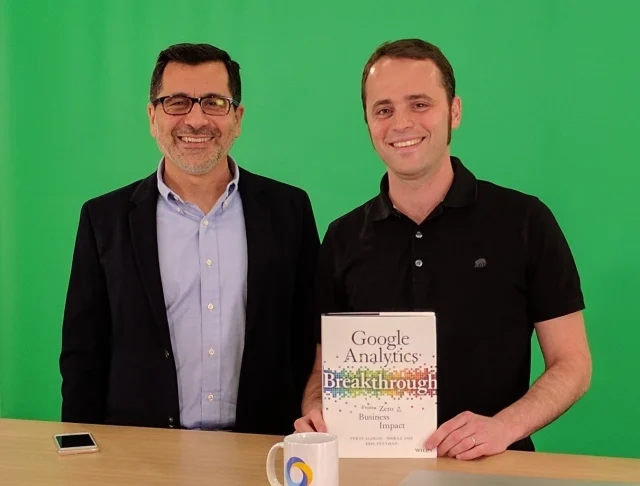
The digital marketing landscape has undergone a radical transformation over the last decade, shifting from a linear model of consumer engagement to a fragmented, multi-device ecosystem. In a comprehensive industry dialogue, Feras Alhlou, Co-Founder and Principal Consultant at E-Nor and co-author of the seminal text Google Analytics Breakthrough, joined forces with industry peers to outline a definitive roadmap for organizations struggling to navigate the complexities of modern data. The discussion emphasized that analytics must no longer be viewed as a peripheral IT function but as a core business process essential for survival in a competitive global market. As organizations move beyond basic data collection, the focus has shifted toward a structured optimization framework that bridges the gap between technical implementation and executive decision-making.
The Evolution of the Analytics Framework
For many years, businesses treated web analytics as a tool for measuring vanity metrics, such as page views and sessions. However, as Alhlou points out, the modern enterprise requires a more sophisticated approach. The proposed optimization framework begins with a dual-layered audit: a technical audit to ensure data integrity and a business audit to ensure alignment with organizational goals. This initial phase is critical because technical accuracy is meaningless if the data being collected does not serve the strategic objectives of the stakeholders.
Engaging stakeholders early in the process allows analysts to identify "what matters most." This collaborative approach ensures that the measurement strategy is not developed in a vacuum. Once the foundational data is verified and the business requirements are mapped, the process moves into the reporting layer. Effective reporting is designed to distill vast quantities of information into digestible formats that highlight performance against Key Performance Indicators (KPIs). Only after these stages are complete can true analysis begin. Unlike reporting, which describes what happened, analysis seeks to explain why it happened and identifies actionable insights that can be leveraged to improve performance. The final, and arguably most impactful, stage of this framework is testing and personalization, where data-driven hypotheses are applied to the user experience to drive measurable business growth.
Navigating the Multi-Channel Data Deluge
The complexity of the current digital environment is a significant departure from the early days of internet marketing. Previously, marketers operated in a world of single devices and limited channels. Today, the consumer journey is non-linear, spanning mobile devices, social media platforms, desktop browsers, and offline interactions. This explosion of touchpoints has created a "data everywhere" scenario, where backend data must be reconciled with front-end user behavior.
To manage this influx, industry experts suggest a focus on context. Understanding the context around data involves recognizing the specific nuances of different platforms and how they contribute to the overall customer lifecycle. For instance, mobile data often reflects different user intents than desktop data, while social media interactions may serve as top-of-funnel awareness rather than direct conversion drivers. By contextualizing data, organizations can avoid the "data swamp" and focus on the signals that actually indicate customer intent and loyalty.
Developing a Strategic Data Roadmap
A recurring theme in the advancement of digital maturity is the necessity of a data roadmap. Alhlou advises organizations to adopt a tiered approach to data integration. The journey typically begins with "owned" data—the analytics derived directly from a company’s own websites and mobile applications. This provides the most direct view of user behavior and is the easiest data set to control and verify.
The second phase of the roadmap involves augmenting these reports with social data. While social media metrics can often be qualitative or "noisy," integrating them with core web analytics allows for a broader understanding of brand sentiment and reach. This layer adds a qualitative dimension to the quantitative data, providing a more holistic view of the brand’s digital footprint.
The final tier of the roadmap incorporates direct "Voice of the Customer" (VoC) feedback. Tools such as Google Surveys have revolutionized this space by making market research accessible and scalable. In the past, conducting comprehensive market research was an expensive, time-consuming endeavor reserved for large corporations with massive budgets. Modern tools allow businesses to run targeted surveys on their own properties or across the broader web to understand the "why" behind user actions. This qualitative data is the missing link for many organizations, providing the context necessary to interpret behavioral trends correctly.
A Chronology of Digital Analytics Maturity
To understand the current state of the industry, it is helpful to look at the timeline of how digital measurement has evolved:
- The Log File Era (Late 1990s): Analytics were primarily server-side, measuring "hits" and file requests. There was little to no understanding of the actual human user.
- The JavaScript Tagging Revolution (Early 2000s): The shift to client-side tracking allowed for the measurement of sessions and pageviews, leading to the rise of platforms like Urchin (the predecessor to Google Analytics).
- The Multi-Screen Shift (2010–2015): As smartphones became ubiquitous, the industry struggled with cross-device tracking. The focus shifted from "visits" to "users."
- The Era of Integration and Personalization (2016–Present): Data silos began to break down. Modern analytics now integrate CRM data, offline sales, and real-time personalization engines to create a unified view of the customer.
This timeline illustrates that the challenges faced by today’s marketers are not just about volume, but about the integration of disparate data sources into a single, cohesive narrative.
Supporting Data and Industry Trends
The shift toward the "Analytics as a Business Process" model is supported by broader industry trends. According to recent market research, data-driven organizations are 23 times more likely to acquire customers and six times as likely to retain those customers compared to their less data-centric peers. Furthermore, a study by Forrester Research indicated that while 74% of firms say they want to be "data-driven," only 29% are successful at connecting analytics to action.
This "action gap" is precisely what the E-Nor Optimization Framework seeks to bridge. By emphasizing the transition from reporting to analysis and finally to testing, the framework ensures that data does not sit idle in a dashboard but is used to actively change the business trajectory. The rise of Google Analytics 360 and its integration with the Google Marketing Platform has further enabled this, providing enterprise-level tools that facilitate seamless transitions between data collection and media activation.
The Role of Market Research in Modern Strategy
One of the most significant insights from Alhlou’s discussion is the democratization of market research. The introduction of agile survey tools has allowed marketers to perform high-speed targeting that was previously impossible. For example, a brand can now target a survey specifically to users who have visited a certain category page but did not make a purchase. This level of granularity allows for "in-the-moment" feedback that can be used to rectify friction points in the user experience immediately.
Market research is no longer a separate department; it is an integrated component of the analytics stack. By combining what people do (behavioral data) with what people say (survey data), businesses can achieve a 360-degree view of their audience. This dual approach mitigates the risks of relying solely on one data type, which can often lead to skewed or incomplete conclusions.
Broader Impact and Implications for the Future
The implications of adopting a rigorous, process-oriented approach to analytics are profound. For the individual marketer, it means a shift in skillset from technical execution to strategic interpretation. For the organization, it means a culture shift where decisions are made based on evidence rather than the "Highest Paid Person’s Opinion" (HiPPO).
As artificial intelligence and machine learning become more integrated into analytics platforms, the role of the human analyst will evolve even further. Predictive analytics will soon become the standard, allowing businesses to anticipate customer needs before they are explicitly expressed. However, even the most advanced AI requires a solid foundation of clean, well-structured data—reaffirming the importance of the audit and measurement strategy phases of Alhlou’s framework.
In conclusion, the path to digital maturity is not found in a single tool or a "silver bullet" technology. Instead, it is found in the disciplined application of a measurement framework that treats data as a continuous business process. By building a roadmap that starts with owned data, incorporates social and qualitative insights, and culminates in a culture of testing, businesses can navigate the data-rich environment of the 21st century with confidence. The collaboration between experts like Feras Alhlou and the broader analytics community continues to provide the blueprints necessary for this digital transformation, ensuring that the vast amounts of data generated every day are finally translated into meaningful business impact.