The digital marketing and search engine landscape witnessed a dynamic week, marked by significant algorithm shifts, new feature rollouts across major platforms, and evolving policy statements that underscore the rapid pace of technological advancement, particularly in artificial intelligence. From Google’s ongoing adjustments to its core search ranking mechanisms and advertising products to Bing’s clarification on penalty enforcement, and crucial developments in AI-powered advertising from ChatGPT and Apple Maps’ advertising policies, the industry is navigating a period of profound transformation.
Major Google Search Algorithm Shifts and SEO Best Practices
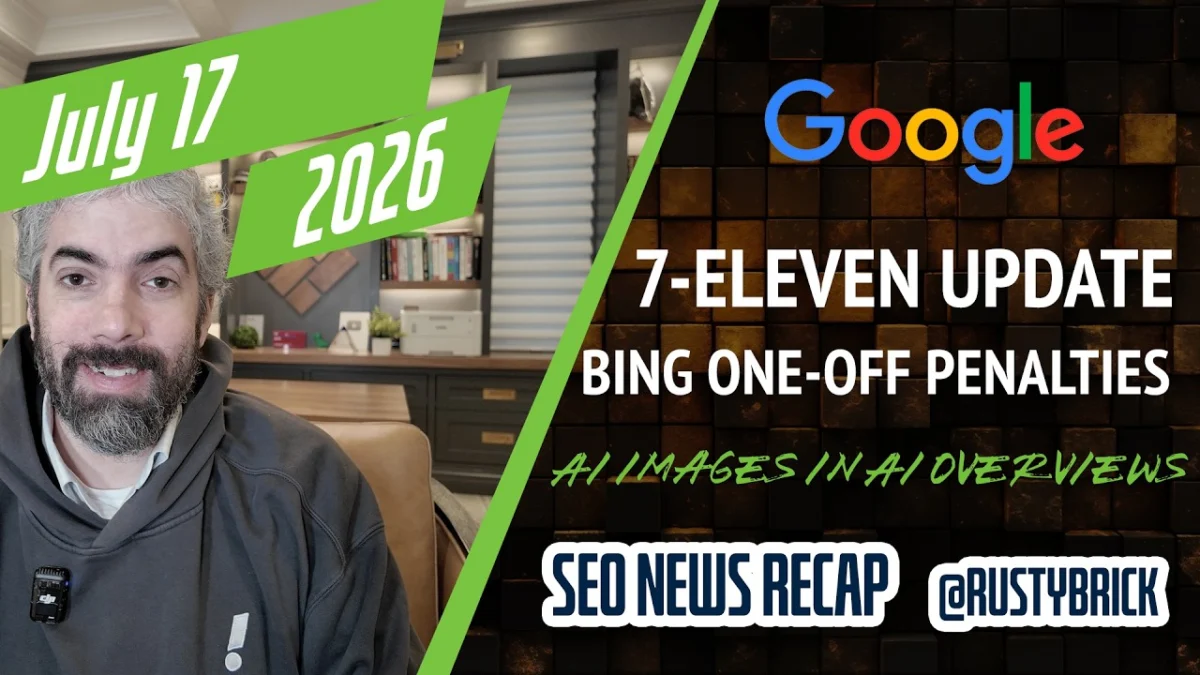
The week commenced with noticeable fluctuations in Google’s search rankings around July 11th, leading many in the search engine optimization (SEO) community to dub this period the "7-Eleven update." This observed volatility, though not officially confirmed by Google as a core update, prompted SEO professionals to scrutinize their analytics for shifts in organic traffic and keyword rankings. Google frequently rolls out minor adjustments and refinements to its ranking algorithms, often without explicit announcements, as part of its continuous effort to improve search relevance and quality. Such unconfirmed updates typically reflect ongoing algorithmic recalibrations designed to combat spam, enhance content quality detection, and better understand user intent, keeping webmasters and digital marketers in a perpetual state of vigilance. The implication for site owners is a continued emphasis on high-quality, user-centric content, robust technical SEO, and diversified traffic acquisition strategies to mitigate the impact of unforeseen algorithmic shifts.
Parallel to these ranking fluctuations, Google provided further insights into its evolving stance on AI-generated content. The company highlighted ongoing quality issues associated with poorly produced AI content, which can, in turn, lead to indexing problems. This reiteration underscores Google’s commitment to prioritizing helpful, reliable, and original content, irrespective of its generation method. While Google has previously stated that AI content is permissible as long as it meets quality guidelines, the continued emphasis on "quality issues" suggests that many AI-generated articles are failing to meet these standards, potentially due to over-reliance on automation without human oversight, lack of originality, or factual inaccuracies. For content creators and publishers leveraging AI tools, this serves as a critical reminder that AI should be seen as an assistive technology rather than a replacement for human expertise and editorial review. The broader implication is a reinforcement of Google’s long-standing E-E-A-T (Experience, Expertise, Authoritativeness, Trustworthiness) guidelines, now extended to the burgeoning field of AI-assisted content creation.
In the realm of technical SEO, Google offered practical advice regarding the lastmod date in sitemaps, recommending against its use if the date is likely to be inaccurate. The lastmod tag is intended to inform search engines about the last modification date of a URL, aiding in crawl prioritization. However, if this date is incorrect or updated indiscriminately without actual content changes, it can mislead search engines and potentially hinder efficient crawling. This guidance reinforces the principle of providing accurate signals to search engines to optimize indexing and ranking. Concurrently, Google reaffirmed the importance of using self-referential canonical tags. A canonical tag specifies the preferred version of a URL when multiple URLs serve identical or very similar content, preventing duplicate content issues. A self-referential canonical tag points to the URL itself, explicitly declaring it as the preferred version. This best practice helps consolidate ranking signals for a single URL, avoiding dilution across multiple versions and ensuring that search engines index the intended page. These technical clarifications underscore Google’s ongoing effort to guide webmasters toward optimal site configurations that facilitate better understanding and indexing of web content.
Bing’s Approach to Search Penalties
In a notable clarification, Bing stated that it does not engage in "one-off" search penalties, asserting that such an approach is not scalable. This statement provides a distinct philosophical contrast to common perceptions of Google’s penalty system, which has historically been associated with manual actions and targeted algorithmic penalties for specific webspam violations. Bing’s position suggests a preference for more integrated, systemic algorithmic adjustments that impact a broader range of sites based on general quality metrics, rather than isolated, site-specific punitive measures. The concept of "scalability" implies that Bing’s ranking algorithms are designed to automatically identify and devalue low-quality or manipulative content across its index through continuous algorithmic evaluation, rather than requiring individual human review or targeted algorithmic interventions for every identified infraction. This approach aligns with Bing’s overall strategy to present a transparent and consistent framework for webmasters, emphasizing adherence to general webmaster guidelines for organic ranking rather than fearing sudden, individual site penalties. For SEOs managing properties on Bing, this statement reinforces the importance of foundational SEO practices and content quality as integral to sustained visibility on the platform.
The Evolution of Visual Search: Google Images at 25 and AI Integration
Google Images marked its 25th anniversary, celebrating a quarter-century of visual search with the launch of a brand new image search homepage. Since its inception in 2001, born out of a need to find images of Jennifer Lopez’s iconic green dress, Google Images has evolved significantly, becoming an indispensable tool for users seeking visual information and a critical channel for content discovery for publishers. The redesigned homepage likely aims to enhance user experience, offering more intuitive navigation, improved filtering options, and potentially richer integration with other Google products. This milestone highlights the enduring importance of visual content in the digital ecosystem and Google’s continuous investment in improving image search capabilities.
Looking ahead, Google AI Overviews are poised to integrate AI-generated images into their responses, signaling a significant step in the convergence of generative AI and search. AI Overviews, which provide summarized answers directly within search results, will leverage AI to create relevant visual content alongside textual summaries. This development promises to enrich the user experience by offering a more comprehensive and visually engaging answer to complex queries. However, it also raises important questions about the authenticity, source attribution, and potential for misinformation associated with AI-generated visuals. Content creators and image rights holders are likely to monitor this integration closely, as it represents a new frontier in how visual information is consumed and perceived within the search landscape. The move aligns with Google’s broader strategy to embed generative AI across its product suite, transforming how users interact with information and how information is presented.
Comprehensive Updates Across the Google Ads Ecosystem
The Google Ads platform, a cornerstone of digital advertising, rolled out a series of updates impacting various aspects of campaign management, performance reporting, and user experience. One notable area of discussion revolved around Smart Bidding, with Google asserting it was not making broader updates, despite palpable dissatisfaction within the PPC (Pay-Per-Click) industry. Smart Bidding, which leverages machine learning to optimize bids in real-time for conversions, has been a subject of ongoing debate among advertisers. While designed to improve efficiency and performance, concerns often arise regarding lack of transparency into bidding decisions, perceived loss of control, and difficulties in troubleshooting performance issues. The industry’s discontent, despite Google’s assurances, points to a persistent tension between automated optimization and advertisers’ desire for granular control and deeper insights into algorithmic black boxes. This ongoing dialogue underscores the critical need for Google to balance sophisticated AI-driven solutions with advertiser trust and usability.
In a move set to benefit local businesses, Google Ads announced that local inventory ads (LIAs) will be activated for Shopping campaigns in August. LIAs allow retailers to showcase products available in their physical stores, bridging the gap between online search and offline purchases. This integration within Shopping campaigns streamlines the advertising process for multi-channel retailers, enabling them to reach nearby customers actively searching for products they carry. The timing of this rollout is strategic, aligning with evolving consumer behaviors that often involve online research followed by in-store visits, especially for urgent purchases or items requiring physical inspection.
Further enhancing reporting capabilities, Google Ads’ Performance Max (PMax) product reporting will now incorporate data from "all networks." PMax campaigns are designed to maximize performance across all Google Ads inventory, including Search, Display, YouTube, Gmail, and Discover. Expanding reporting to encompass all networks provides advertisers with a more holistic view of their campaign performance, enabling better optimization decisions and a more accurate understanding of return on investment across Google’s extensive advertising ecosystem. This update addresses previous feedback from advertisers seeking more comprehensive visibility into PMax’s multi-channel reach.
Security and accountability were also addressed, as Google Ads began requiring justifications when removing access from users. This new procedural step adds a layer of oversight and documentation, enhancing account security and audit trails. For agencies and businesses managing multiple user accounts, this ensures that access changes are deliberate and properly recorded, reducing the risk of unauthorized modifications or accidental access revocations.
Conversion tracking, a fundamental component of measuring campaign success, gained new status options in Google Ads. These new statuses likely provide more detailed insights into the health and configuration of conversion actions, helping advertisers quickly identify and resolve potential tracking issues. Accurate conversion tracking is paramount for effective campaign optimization and accurate ROI measurement, making these enhancements valuable for maintaining data integrity.
Finally, Google Ads introduced new previews for assets, text customizations, and final URL expansion. These preview features empower advertisers to visualize how their ads will appear across various formats and placements before going live. This capability is crucial for ensuring brand consistency, optimizing ad creative for different contexts, and catching potential errors early, ultimately leading to more effective and aesthetically pleasing ad campaigns. The ability to preview final URL expansion also helps advertisers understand how dynamic URL parameters might affect landing page experience.
Google Business Profiles and Local SEO
For local businesses, Google Business Profiles (GBP) saw the activation of a new "Collected Info" screen for some users. This screen likely centralizes various pieces of information Google collects or infers about a business, providing owners with a more comprehensive overview of their profile data. The accuracy and completeness of GBP listings are vital for local SEO, influencing visibility in local search results and Google Maps. Simultaneously, Google confirmed it is actively working on a reviews bug, with a fix expected soon. Online reviews are a critical factor in local search rankings and consumer trust, making the timely resolution of any review-related issues paramount for businesses relying on GBP for reputation management and customer engagement.
Apple Maps Advertising: Strategic Policy Shifts
In a significant policy announcement that sent ripples through the local services sector, Apple Maps Ads explicitly prohibited home services ads. This decision carries substantial implications for businesses such as plumbers, electricians, landscapers, and HVAC technicians who heavily rely on location-based advertising to reach local customers. Unlike Google Maps or Yelp, which often feature prominent home services advertisements, Apple’s move signals a distinct strategic direction for its advertising platform. The prohibition could be driven by various factors, including a desire to maintain a cleaner, less cluttered user experience, concerns about lead quality or vetting processes for home service providers, or a focus on other ad verticals deemed more aligned with Apple’s brand image. For home service businesses, this policy change necessitates a recalibration of their digital advertising strategies, potentially shifting resources towards other platforms where such ads are permitted, or exploring alternative ways to gain visibility within the Apple ecosystem, such as enhanced organic listings or directory integrations. This move also highlights the increasing diversification of advertising policies across major tech platforms, requiring advertisers to tailor their approaches for each channel.
ChatGPT Ads: Advancing AI in Advertising
The burgeoning field of AI-driven advertising saw considerable advancements from ChatGPT Ads, which introduced several new features aimed at providing advertisers with more granular control and deeper performance insights. Key among these were new options for location, audience, and negative keyword exclusions. These features are fundamental for effective ad targeting, allowing advertisers to precisely define who sees their ads, where they are seen, and what search queries should not trigger their ads. The addition of negative keyword exclusions is particularly crucial for preventing wasteful ad spend on irrelevant searches, a common challenge in keyword-based advertising.
Furthermore, ChatGPT Ads rolled out new attributed sales value and sales ROAS (Return on Ad Spend) metrics, alongside a new product detail level screen. These enhancements signify a critical step towards more sophisticated performance measurement within AI advertising platforms. Attributed sales value provides a clearer picture of the direct revenue generated by ad campaigns, while sales ROAS offers a vital metric for evaluating campaign profitability. The product detail level screen likely allows advertisers to dive into the performance of individual products or services, enabling more granular optimization and inventory management. These metrics are essential for advertisers to demonstrate clear ROI and refine their strategies, bringing ChatGPT Ads closer to the robust reporting capabilities offered by established platforms like Google Ads and Meta Ads. These developments underscore the rapid maturation of AI-powered advertising solutions, as they move beyond basic ad generation to comprehensive campaign management and performance analytics.
The Broader AI Answer Engine Landscape
Amidst these platform-specific updates, the broader trend towards AI-driven information retrieval continues to accelerate, exemplified by initiatives like Yahoo Scout. As an AI answer engine, Yahoo Scout is designed to provide clear, trustworthy responses with transparent, cited sources and helpful visuals across various topics, including news, local recommendations, entertainment, and technology. Backed by three decades of Yahoo Search expertise, Scout.com represents a competitive response to the evolving search paradigm, where users increasingly seek direct answers rather than just lists of links. The rise of such AI answer engines underscores a fundamental shift in user expectations and the ongoing innovation aimed at making information more accessible, understandable, and actionable. This landscape of AI-powered search and advertising is characterized by continuous evolution, driven by technological breakthroughs and a relentless pursuit of enhanced user experience and advertiser effectiveness.
The past week’s developments across Google, Bing, Apple, and ChatGPT collectively paint a picture of an industry in constant flux, heavily influenced by artificial intelligence and a drive for more refined, user-centric, and measurable digital experiences. From algorithmic adjustments impacting search rankings to nuanced advertising policy shifts and powerful new AI-driven ad features, digital marketers and businesses must remain agile and informed to navigate this complex and ever-changing environment successfully.


 Jia Lissa
 Siti Muinah