For too long, social media was often perceived as a ‘fun’ department, characterized by viral memes, engaging banter, and brand visibility metrics like likes and shares. While these elements still hold value, the landscape of digital marketing has irrevocably shifted, repositioning social media as a critical, performance-driven channel directly contributing to business growth and revenue. This evolution demands a rigorous, data-centric approach, moving beyond superficial engagement to quantifiable results.
The Paradigm Shift: From Cost Center to Profit Driver

The concept of performance marketing underpins this transformation. Unlike traditional marketing, which often focuses on broad awareness campaigns with less direct accountability, performance marketing is a results-driven approach where expenditures are tied directly to measurable actions. This includes clicks, leads generated, or outright sales. The fundamental difference lies in payment: marketers only pay when a desired action occurs, making every dollar spent directly accountable to a tangible outcome.
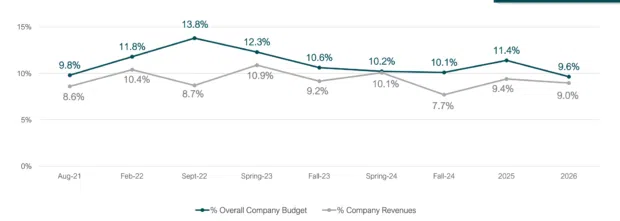
Historically, traditional marketing goals, such as “brand awareness,” while important, have struggled to demonstrate a clear link to specific revenue targets. This disconnect often led to marketing being viewed as a cost center—an essential but nebulous expenditure. This perception has tangible consequences for marketing departments, particularly during economic downturns. A notable trend from the CMO Survey indicates that when profits fall short of expectations, marketing expenses are cut approximately 45% of the time, a higher rate than any other category. This vulnerability underscores the urgent need for marketing, and social media in particular, to prove its direct value to the bottom line.
Performance marketing fundamentally alters this narrative. By linking marketing efforts directly to sales, leads, and customer acquisition costs, it elevates the marketing department from a cost center to a high-ROI profit center. Modern marketing tools, equipped with sophisticated tracking, analytics, research capabilities, and advanced attribution reporting, convert raw data into actionable insights. This data-driven approach not only validates marketing spend but also provides invaluable intelligence that can inform and elevate strategies across the entire organization.

The Evolution of Social Media Marketing: A Chronology
The journey of social media from a niche communication tool to a strategic business asset has been swift and dynamic:
- Early 2000s: The Dawn of Social Presence: Platforms like MySpace and later Facebook emerged, primarily for personal networking. Businesses tentatively joined, seeing social media as a new frontier for “brand presence” and informal communication. Metrics were rudimentary, focusing on follower counts and basic engagement.
- Late 2000s – Early 2010s: The Rise of Engagement: Twitter, Instagram, and LinkedIn gained prominence. Brands started to grasp the power of direct audience interaction. The emphasis was on generating likes, comments, and shares—dubbed “vanity metrics”—to foster a sense of community and brand affinity. While valuable for brand building, the direct financial impact remained largely unquantified.
- Mid-2010s: Introduction of Paid Social and Basic Analytics: Social platforms began offering robust advertising tools. This marked a crucial turning point, allowing businesses to target specific demographics and objectives. Basic analytics dashboards provided insights into reach and engagement, but comprehensive ROI tracking was still nascent. Marketing budgets for social media, while growing, often faced scrutiny due to the difficulty in demonstrating direct revenue contributions.
- Late 2010s – Early 2020s: The Performance Imperative: With increasing competition and pressure for accountability, the focus shifted dramatically. Social media marketers were challenged to demonstrate how their efforts translated into leads, conversions, and sales. Advanced analytics, attribution models, and integration with CRM systems became essential. The perception of social media as merely a “brand awareness” tool began to erode.
- Mid-2020s and Beyond: Integrated Performance Ecosystems: The current era emphasizes a fully integrated performance ecosystem. Social media is no longer an isolated channel but a vital component of the broader marketing funnel, from top-of-funnel awareness to bottom-of-funnel conversions. AI-powered tools enhance content creation, optimization, and audience understanding. The demand for clear, demonstrable ROI is higher than ever, especially as overall marketing budgets faced a decline to 9.6% of overall company budgets in 2026, their lowest level since 2021, according to The CMO Survey. This tightening of budgets further underscores the necessity for social media to prove its worth as a profit center.
Strategies for Performance-Driven Social Media
Transforming social media into a performance marketing channel requires a systematic approach, aligning social initiatives with overarching business objectives and rigorously tracking relevant data.
1. Align Social Goals with Business Objectives:
The foundation of performance-driven social media is a clear alignment of social media goals with broader business objectives such such as revenue growth, profitability, market share expansion, or customer lifetime value (CLTV). For instance, an emerging brand might prioritize pure business growth, while a mature enterprise might focus on profitable growth or customer retention. Understanding the organization’s Key Performance Indicators (KPIs) and Objectives and Key Results (OKRs) is paramount. Social media goals should be crafted to directly support these higher-level metrics. For example, if the company’s objective is to increase sales by 15%, a social media goal might be to drive 20% more qualified leads to the sales team through specific campaigns. Regular quarterly check-ins with wider business teams are essential to ensure social strategies remain agile and responsive to evolving company needs.
2. Implement Robust Data Tracking and Measurement:
Effective performance measurement hinges on a comprehensive data tracking system. This goes beyond simple platform analytics.

-
Track Key Social Media Metrics: Focus on metrics that directly correlate with business objectives. These include:
- Click-Through Rate (CTR): Measures the effectiveness of calls to action in driving traffic.
- Conversion Rate: The percentage of clicks that result in a desired action (e.g., purchase, sign-up).
- Leads Generated: Quantifies the number of potential customers acquired through social channels.
- Customer Acquisition Cost (CAC): The cost to acquire one new customer via social media.
- Return on Ad Spend (ROAS): Direct revenue generated per dollar spent on social ads.
- Customer Lifetime Value (CLTV): The total revenue a customer is expected to generate over their relationship with the brand, influenced by social engagement and retention efforts.
- Social Share of Voice: Measures brand mentions relative to competitors, indicating market presence.
- Sentiment Analysis: Gauges public perception and brand health.
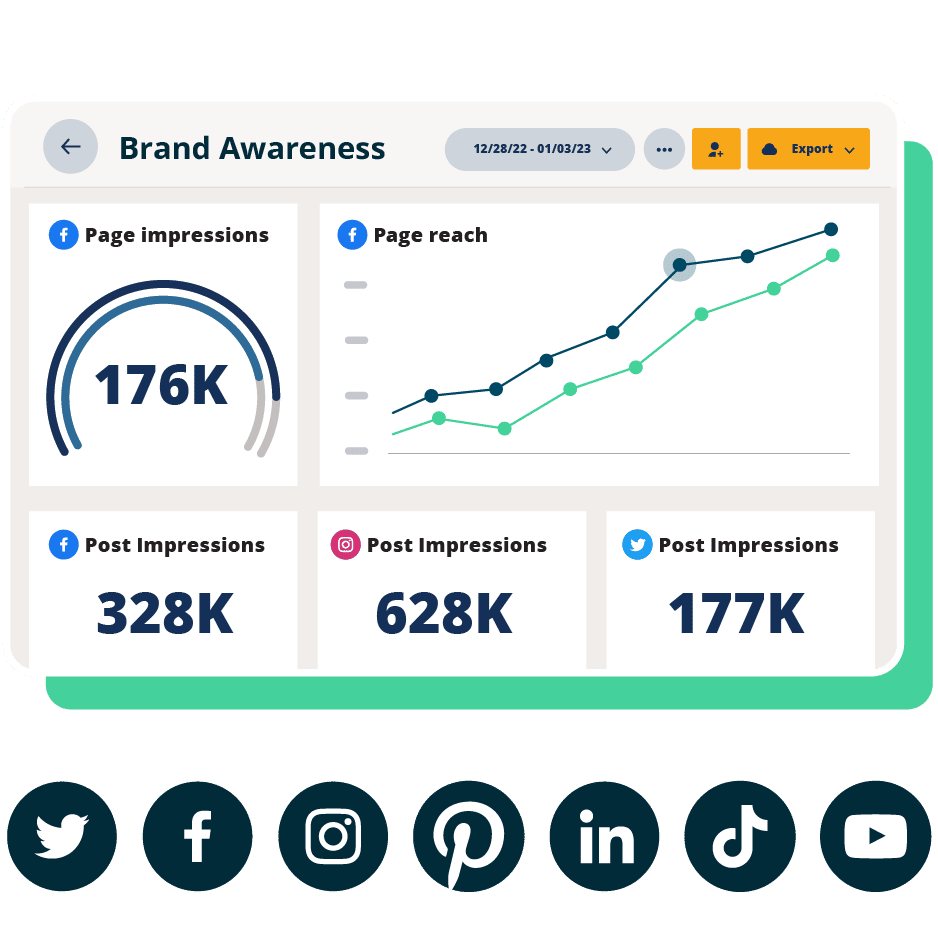
Platforms like Hootsuite provide integrated dashboards to track these metrics, allowing for custom reporting and easy visualization of performance data.
-
Leverage Social Listening for Strategic Insights: Social listening tools offer an invaluable stream of real-time customer and industry intelligence. By monitoring conversations about the brand, competitors, industry trends, and keywords, businesses can:
- Identify emerging market trends and product gaps.
- Understand customer pain points and preferences for product development.
- Monitor brand health and sentiment, anticipating and mitigating potential crises.
- Discover potential influencers and brand advocates.
- Gain competitive intelligence on competitor strategies and customer perceptions.
This intelligence empowers not just the social team but also product development, sales, and customer service departments, turning social media into a cross-functional intelligence hub.
-
Clarify Audience Demographics and Psychographics: Social media platforms are rich sources of audience data. Analyzing demographics (age, gender, location, income) and psychographics (interests, behaviors, values) helps refine targeting across all marketing efforts. Combining this with social listening data enables the creation of detailed customer personas, leading to more personalized and effective campaigns.

-
Establish Advanced Attribution Models: The customer journey is rarely linear. Attribution models are crucial for understanding how various touchpoints, including social media, contribute to conversions. Moving beyond last-click attribution, which only credits the final interaction, multi-touch attribution models (e.g., linear, time decay, U-shaped) provide a more holistic view of social media’s impact throughout the sales funnel. Integrating social data with tools like Google Analytics allows marketers to map the customer journey and demonstrate social media’s influence on top-of-funnel engagement and subsequent conversions, often requiring collaboration with data analysts and marketing operations teams.
3. Analyze and Interpret Results for Continuous Optimization:
Data collection is only the first step; deriving actionable insights from it is where true performance lies.
- Regular Dashboard Review: Establish a consistent cadence for reviewing performance dashboards. Daily checks for post-level metrics (engagement, CTR) allow for immediate adjustments, while weekly or monthly reviews are suitable for trend analysis (conversion rates, revenue generated). Rapid response to shifts in social sentiment can avert potential brand crises.
- Benchmark Against Internal and External Standards: Contextualize performance data by benchmarking against historical results (baselines) and industry competitors. This clarifies expectations, identifies areas of strength and weakness, and reveals opportunities for improvement. Tools offering competitive analysis and industry benchmarks are invaluable here.
4. Report on Return on Investment (ROI):
Quantifying social media’s financial impact is critical for securing budget and executive buy-in.

- Calculate Net Revenue Contribution: Begin with the basic ROI calculation: net revenue generated by social marketing minus the total cost of social marketing.
- Quantify Cost Savings and Intangible Value: Beyond direct revenue, highlight cost savings social media brings, such as reduced customer service costs (through social support), lower market research expenses (via social listening), or increased brand advocacy leading to lower advertising spend.
- Strategic Impact: Present how social media performance moves the needle on larger organizational goals, demonstrating its role as a strategic asset.
5. Leverage Proven Performance Marketing Tactics on Social:
Several established performance marketing tactics can be adapted for social media to drive concrete results.
- A/B Testing: Social media’s immediate feedback loop makes it ideal for A/B testing. Test single variables (e.g., headline, image, call-to-action, time of day) to understand what resonates best with the audience and drives desired actions. AI copywriting tools can significantly aid in generating multiple content variations efficiently.
- Smart Content Distribution: Avoid simply cross-posting identical content across all platforms. Tailor content formats and messaging to each platform’s unique audience and functionality. For example, a blog post could be promoted with a short video on TikTok, an infographic carousel on Instagram, a poll on X (Twitter), and a thought leadership piece on LinkedIn. Additionally, amplify social content through traditional channels (website embeds, email signatures) and implement employee advocacy programs to extend reach through trusted networks.
- Affiliate Marketing: Partner with influencers, brand ambassadors, or even loyal customers to promote products or services in exchange for a commission on sales. This model inherently ensures positive ROI as payment is contingent on a successful conversion.
- Conversion Rate Optimization (CRO): Focus content creation not just on engagement, but specifically on prompting a conversion event. This involves offering valuable resources like whitepapers, exclusive webinars, or free trials in exchange for contact information, coupled with clear calls to action. Collaborating with the broader marketing team to develop these high-value resources is crucial.
6. Document and Share Success Stories:
While data is essential, compelling success stories provide a human element that resonates with stakeholders. A Gartner report indicates that over half of non-marketing leaders believe marketing inflates its importance in cross-functional initiatives. Well-documented success stories are powerful rebuttals. Regularly monitor dashboards for spikes in conversions or revenue and trace them back to specific campaigns or posts. Highlight instances where social media content led to significant media coverage, celebrity endorsements, or viral moments, quantifying the organizational value of such exposure.
7. Make Strategic Recommendations:
As social media professionals hone their performance skills, they transition from mere executors to strategic advisors. The unique intelligence gleaned from A/B testing, performance tracking, and social listening positions the social team as experts capable of identifying trends, opportunities, and potential threats before they fully materialize. Translating these findings into actionable strategic recommendations—from optimizing specific campaigns to advocating for major strategic shifts—is how social media professionals earn a seat at the executive table and build a compelling case for increased budgets. This proactive approach ensures continuous improvement in social performance and fosters a more satisfying and impactful role within the organization.

Enabling Performance with Integrated Social Media Management Tools
Achieving this level of performance management requires sophisticated tools that streamline workflows and provide deep analytical capabilities. Integrated platforms like Hootsuite offer a comprehensive suite of features designed to support a performance-driven social media strategy.
Hootsuite’s analytics and reporting functionalities enable marketers to select and track critical metrics, generating professional, customizable reports for various stakeholder groups, which can be automated for regular delivery. Advanced Analytics includes built-in ROI analysis, allowing businesses to track total spend against total return based on factors like brand affinity, awareness, conversation, and intent, thereby demystifying value calculations.
The platform also offers powerful social listening tools, such as Quick Search, for identifying trending topics, brands, and events, or for deeper, personalized insights into brand mentions and sentiment. This includes competitive analysis on up to 20 brands, tracking share of voice, and benchmarking performance against industry averages.
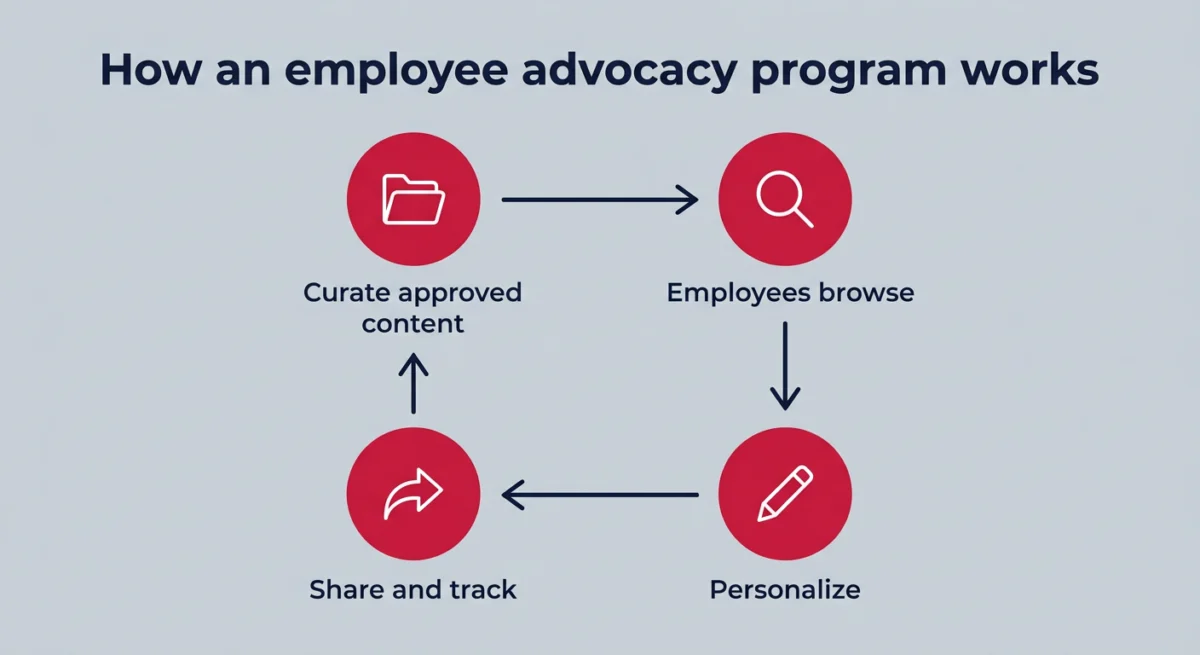
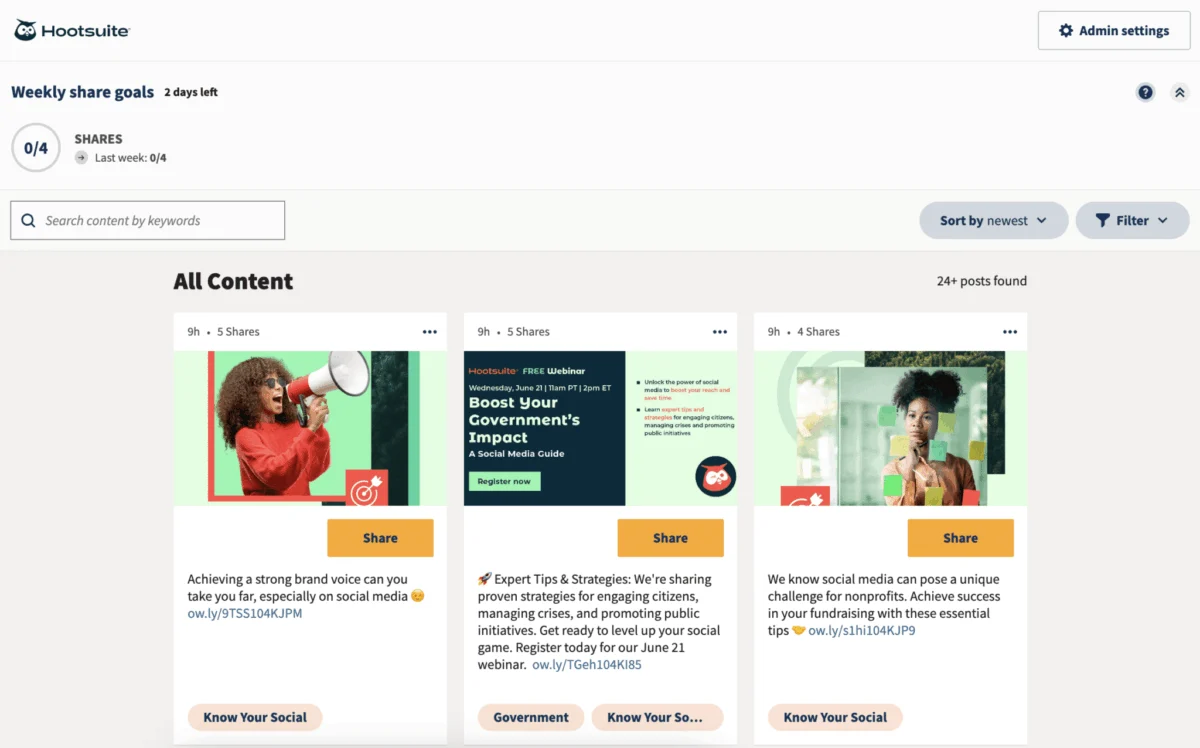
For content amplification, Hootsuite Amplify facilitates employee advocacy programs, making it easy for staff across all departments to share approved, brand-safe content, extending reach and fostering internal engagement. On the paid social front, Hootsuite Social Advertising centralizes the management of paid and organic campaigns across platforms. This allows for efficient budget reallocation and the ability to auto-boost high-performing organic posts to maximize reach and conversions.
Finally, AI-powered tools like OwlyWriter AI enhance team productivity by generating content iterations for A/B testing and repurposing top-performing posts for optimal cross-platform distribution. By bringing scheduling, analytics, social listening, and advertising management into a single dashboard, Hootsuite empowers enterprise teams to manage and optimize social media performance holistically and efficiently.

The shift to performance-driven social media is no longer an option but a strategic imperative. Brands that embrace this change, leveraging data and integrated tools, will not only prove the undeniable value of their social efforts but also gain a significant competitive edge in an increasingly data-centric market.