

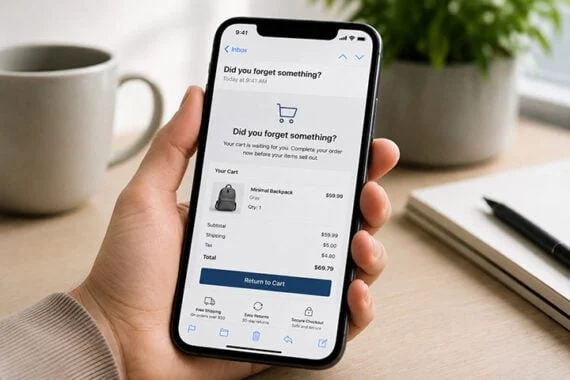
For decades, the digital marketplace has grappled with a persistent challenge: the abandoned shopping cart. While the convenience of online shopping has revolutionized retail, a significant portion of potential sales still evaporate before checkout. Effective cart recovery, a cornerstone of e-commerce strategy, extends far beyond mere reminders. It involves a sophisticated interplay of product details, customer reassurance, and strategically deployed incentives to dismantle barriers and guide shoppers back to the point of conversion. The visual of a smartphone displaying an abandoned cart message has become emblematic of this ongoing effort, highlighting a tactic that has remained crucial throughout the evolution of online commerce.
The Persistent Problem of Unfinished Transactions
The fundamental issue with traditional cart recovery is its inherent limitation: it records an outcome, not a reason. An e-commerce platform can meticulously track which items a shopper has placed in their virtual cart and subsequently left behind, but it struggles to immediately decipher the underlying motivation for this decision. This lack of insight into the "why" behind an abandonment poses a significant hurdle for merchants aiming to optimize their recovery efforts.
The obstacles preventing a completed purchase typically coalesce into three broad categories:
- Economic Hesitation: This encompasses concerns about pricing, unexpected shipping costs, the absence of desired discounts, or a general perception that the total cost is too high for the perceived value. Shoppers might compare prices across multiple retailers, get sticker shock at the final checkout total, or simply be waiting for a better deal.
- Usability and Trust Issues: This group of obstacles relates to the online shopping experience itself. It can include a complicated checkout process, a lack of trust in the website’s security, insufficient product information or imagery, a desire for more detailed reviews, or concerns about return policies. A confusing navigation, a lengthy form-filling process, or a lack of clear contact information can all contribute to a shopper’s unease.
- Decision Paralysis and External Factors: Sometimes, the abandonment is not a definitive rejection but a pause in the decision-making process. Shoppers may be researching alternatives, waiting for feedback from others, experiencing technical glitches, or simply getting distracted. They might intend to return later but forget, or they may be comparing options and haven’t yet settled on a final choice.
Evolving Tactics for Re-engaging Shoppers
Given these multifaceted obstacles, the recovery tactics employed by e-commerce businesses have evolved to address specific pain points. While each tactic holds the potential to salvage a sale, it’s crucial to recognize that no single approach is universally effective for every abandoned cart scenario.
- Product Reminders: The most basic form of recovery, this tactic simply reiterates the items left in the cart, often accompanied by product images and brief descriptions. Its primary goal is to jog the shopper’s memory.
- Incentivized Offers: This strategy involves presenting a discount, free shipping, or a special bundled deal to entice the shopper to complete their purchase. These offers are often tiered, with larger discounts or more attractive incentives reserved for higher-value carts or repeat abandonments.
- Urgency and Scarcity: Creating a sense of limited availability or a time-sensitive offer can prompt immediate action. Phrases like "limited stock" or "offer ends soon" aim to overcome procrastination.
- Social Proof and Reviews: Highlighting positive customer reviews, testimonials, or star ratings associated with the abandoned products can build confidence and alleviate concerns about quality or satisfaction.
- Addressing Specific Concerns: More advanced tactics attempt to preemptively address common abandonment reasons, such as offering customer support contact details to resolve shipping queries or providing clear links to return policies to assuage fears about buyer’s remorse.
The Vast Untapped Opportunity
The sheer scale of abandoned carts represents a significant revenue leakage for online retailers. According to the Baymard Institute, a leading e-commerce research firm, approximately 70% of online shopping carts are abandoned before a purchase is completed. This translates to billions of dollars in lost potential revenue annually, making cart recovery a critical focus for marketing and sales departments.
Consequently, most e-commerce marketers have, at some point, implemented automated recovery sequences. Abandoned cart emails remain the foundational channel for this effort. Industry data suggests an average open rate of around 50.5% for these emails, with a conversion rate of approximately 10.7%. However, emerging channels are demonstrating even greater potential. SMS and direct phone outreach, when executed effectively, can often outperform email in terms of engagement and direct recovery rates, reflecting a growing consumer preference for immediate and personalized communication.
The Limitations of Fixed Recovery Sequences
A significant portion of cart recovery automations operate on predefined, fixed sequences. These systems rely on pre-set triggers and branching logic, where a merchant dictates the delay before sending a message, crafts the content of those messages, and establishes the conditions under which an offer will be presented.
While these rule-based systems offer a degree of manageability, they necessitate that merchants attempt to anticipate every conceivable variation in customer behavior and product-specific concerns. In a large catalog, products can differ vastly in terms of profit margins, typical consideration periods, and the unique customer anxieties they might elicit. A single, static recovery sequence is ill-equipped to reflect this inherent diversity.
Moreover, fixed sequences often make broad, generalized assumptions about the reasons for abandonment. An automation might dispatch a discount coupon to a shopper who had no intention of purchasing immediately and was simply browsing, or it could heavily emphasize product features to someone whose primary concern was an unexpectedly high shipping cost. This lack of personalization can lead to wasted marketing efforts and potentially dilute the effectiveness of incentives for shoppers who genuinely require them.

Ultimately, to truly enhance cart conversions and recovery rates, marketers are faced with two primary strategic pathways: rigorous manual optimization or the adoption of Artificial Intelligence (AI)-driven decisioning.
The Path of Manual Optimization
For merchants who opt for a manual approach to refining their cart recovery strategies, focusing on four key areas can yield significant improvements:
- Segmentation and Personalization: Instead of a one-size-fits-all approach, segmenting audiences based on factors like cart value, customer history, or the type of products abandoned allows for more tailored messaging. Personalizing emails with the customer’s name, referencing specific product details, and aligning the recovery offer with the perceived value of the cart can dramatically increase relevance.
- A/B Testing and Iteration: Continuous testing of different email subject lines, message content, offer types, and sending times is crucial. This iterative process allows merchants to identify what resonates best with their specific customer base. For instance, testing a "10% off" offer against "free shipping" for a particular product category can reveal which incentive is more effective.
- Channel Optimization: Experimenting with different communication channels beyond email is essential. This includes SMS messages, push notifications for app users, or even personalized retargeting ads on social media platforms. Understanding where customers are most receptive to communication is key.
- Customer Journey Mapping: Deeper analysis of the entire customer journey, from initial website visit to cart abandonment, can uncover specific friction points. This might involve reviewing website analytics for drop-off rates at particular stages of the checkout process or analyzing customer support logs for recurring issues.
Manual optimization necessitates a commitment to robust measurement. Key performance indicators (KPIs) such as revenue per recipient provide a clear picture of the financial return generated by each recovery sequence. Furthermore, employing control groups—a segment of customers who do not receive recovery messages—is vital to accurately assess whether the outreach is truly generating incremental sales or merely capturing revenue from shoppers who would have converted regardless. This rigorous analysis ensures that marketing spend is directed effectively and that recovery efforts are genuinely driving additional business.
The Emergence of AI Decisioning
The second, more technologically advanced option for improving cart recovery lies in what customer engagement platforms term "AI decisioning." This approach leverages artificial intelligence to dynamically evaluate a multitude of signals and select the most opportune recovery strategy for each individual shopper.
An AI decision system meticulously analyzes a complex array of data points, including customer behavior, cart contents, historical purchase patterns, and real-time website interactions. It then compares these insights against a library of approved recovery tactics and predetermined strategic parameters set by the merchant. Based on this analysis, the AI selects the most appropriate message, offer, and precise timing, all designed to maximize the likelihood of achieving the merchant’s defined objective—typically, a completed purchase.
Merchants retain ultimate control over the overarching strategy. They define the approved recovery tactics, such as simple reminders, product reassurance messages, free shipping promotions, or specific discount percentages. Crucially, they also establish critical boundaries, including acceptable margin limits for discounts, maximum message frequency to avoid customer annoyance, and eligibility criteria for promotional offers.
Within these parameters, the AI operates as an intelligent agent, making granular decisions for each shopper. It can factor in the value of the abandoned cart, the specific product categories involved, the shopper’s past purchasing behavior, and their recent online activity leading up to the abandonment. For example, if a shopper has a history of purchasing discounted items, the AI might prioritize offering a coupon. Conversely, if the cart contains high-consideration items, the AI might opt for a message focused on product benefits or customer testimonials.
This represents a significant departure from conventional email automation, which relies on rigid, pre-programmed sequences. AI decisioning, in contrast, is adaptive and learning. It doesn’t just execute pre-written instructions; it evaluates the effectiveness of various choices for each individual shopper and continuously learns from the outcomes—successful purchases, ignored messages, and continued abandonments. While an AI model may not explicitly understand a shopper’s subjective reason for leaving, it can make highly informed attempts to address likely obstacles by drawing on patterns and correlations observed in past successful recoveries under similar circumstances. This data-driven approach allows for a more nuanced and effective recovery process that adapts to the complexities of individual customer behavior.
The Future of Cart Recovery: Intelligent Engagement
In conclusion, the evolution of e-commerce has underscored the fact that effective cart recovery must transcend simple reminders. Whether businesses choose to meticulously refine their sequences through manual optimization or embrace the sophisticated capabilities of AI decisioning, the ultimate objective remains the same: to identify the most probable barrier preventing a purchase and strategically remove it.
The data is clear: a substantial portion of potential revenue is lost to abandoned carts. By leveraging product details, providing targeted reassurance, and employing judicious incentives, retailers can transform these lost opportunities into valuable sales. The ongoing development in AI and machine learning promises even more personalized and effective strategies, ensuring that cart recovery continues to be a dynamic and essential component of a successful online retail operation. The future lies in intelligent, adaptive engagement that understands and responds to the nuanced needs of each individual shopper, ultimately driving both customer satisfaction and business growth.








